
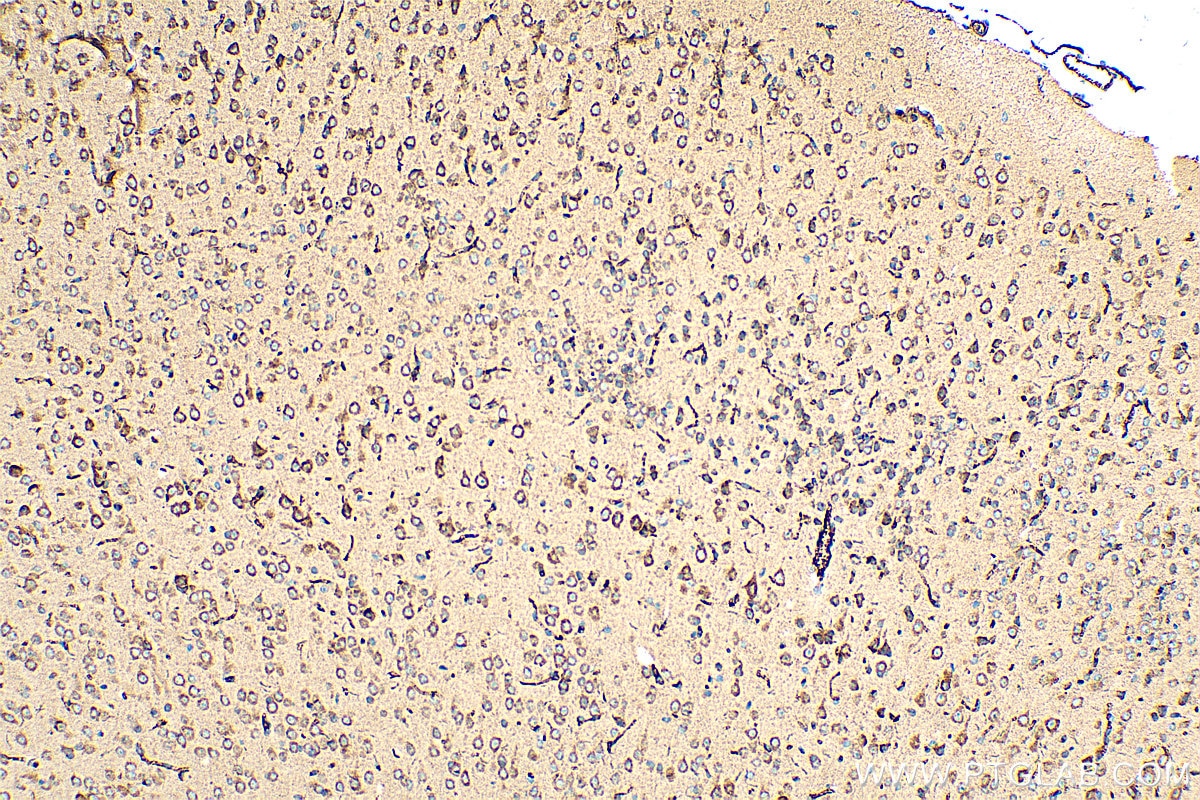
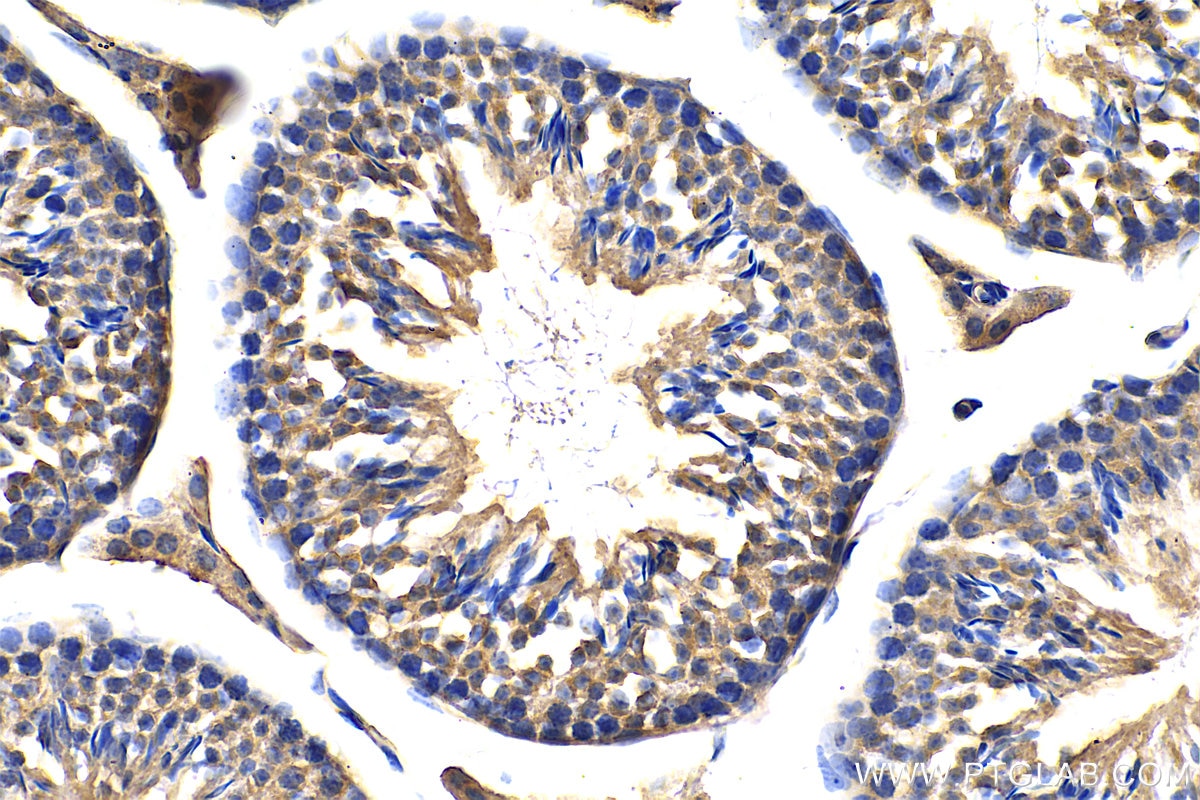

Tested Applications
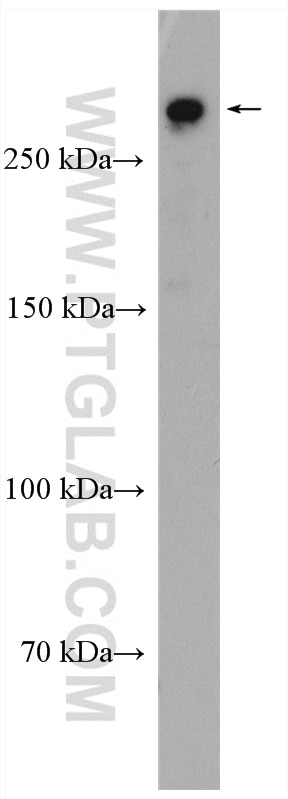
| Positive WB detected in | HEK-293T cells |
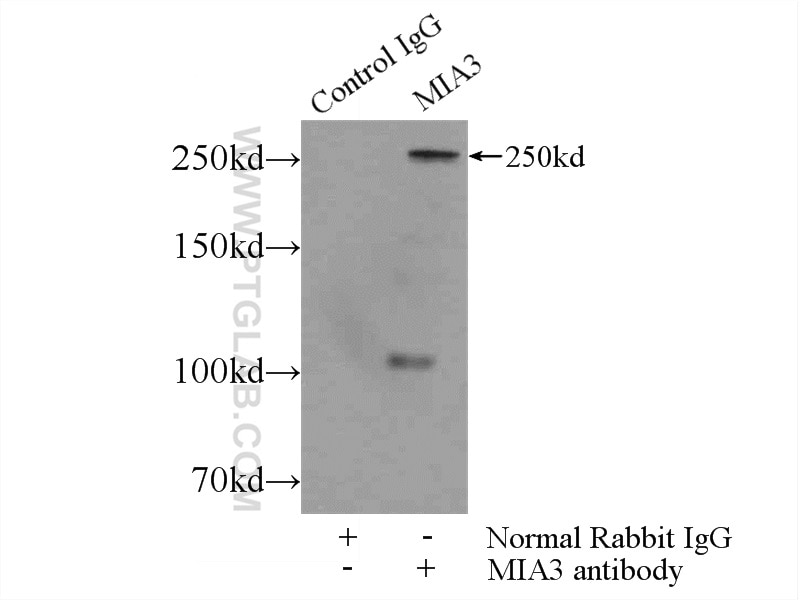
| Positive IP detected in | HeLa cells |
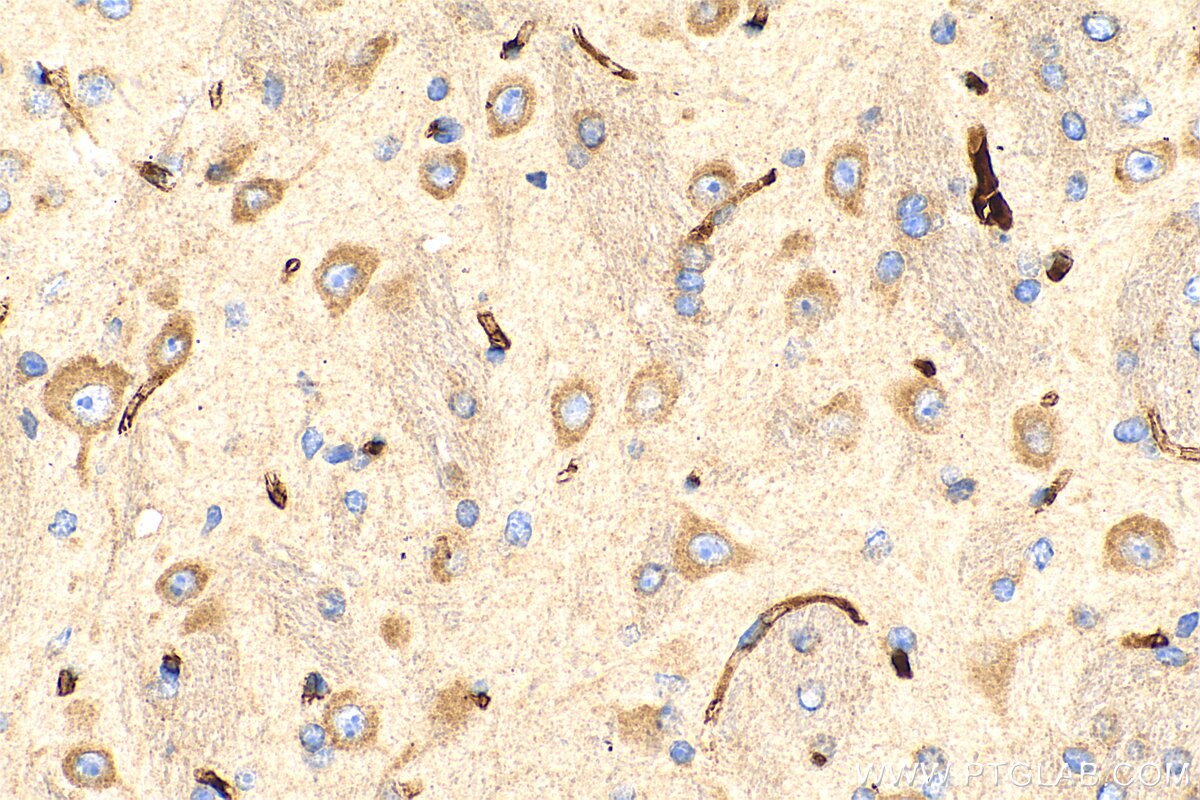
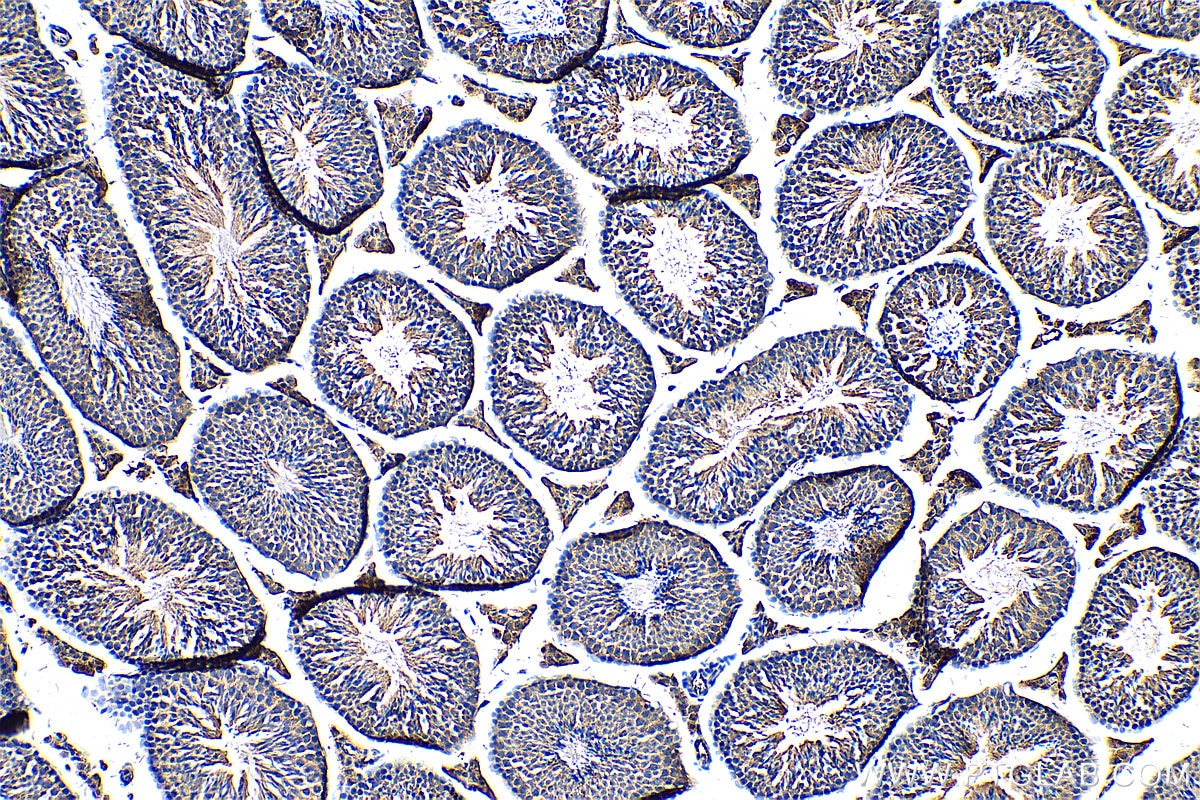
| Positive IHC detected in | mouse brain tissue, mouse testis tissue Note: suggested antigen retrieval with TE buffer pH 9.0; (*) Alternatively, antigen retrieval may be performed with citrate buffer pH 6.0 |
Recommended dilution
| Application | Dilution |
|---|---|
| Western Blot (WB) | WB : 1:500-1:1000 |
| Immunoprecipitation (IP) | IP : 0.5-4.0 ug for 1.0-3.0 mg of total protein lysate |
| Immunohistochemistry (IHC) | IHC : 1:50-1:500 |
| It is recommended that this reagent should be titrated in each testing system to obtain optimal results. | |
| Sample-dependent, Check data in validation data gallery. | |
Product Information
17481-1-AP targets MIA3 in WB, IHC, IF, IP, CoIP, ELISA applications and shows reactivity with human, mouse, rat samples.
| Tested Reactivity | human, mouse, rat |
| Cited Reactivity | human, zebrafish |
| Host / Isotype | Rabbit / IgG |
| Class | Polyclonal |
| Type | Antibody |
| Immunogen |
CatNo: Ag11514 Product name: Recombinant human MIA3 protein Source: e coli.-derived, PGEX-4T Tag: GST Domain: 118-467 aa of BC047116 Sequence: KAVSAAEEVKTYKRRIEEMEDELQKTERSFKNQIATHEKKAHENWLKARAAERAIAEEKREAANLRHKLLELTQKMAMLQEEPVIVKPMPGKPNTQNPPRRCPLSQNGSFGPSPVSGGECSPPLTVEPPVRPLSATLNRRDMPRSEFGSVDGPLPHPRWSAEASGEPSPSDPGSGTATMMNSSSRGSSPTRVLDEGKVNMAPKGPPPFPGVPLMSTPMGGPVPPPIRYGPPPQLCGPFGPRPLPPPFGPGMRPPLGLREFAPGVPPGRRDLPLHPRGFLPGHAPFRPLGSLGPREYFIPGTRLPPPTHGPQEYPPPPAVRDLLPSGSRDEPPPASQSTSQDCSQALKQSP Predict reactive species |
| Full Name | melanoma inhibitory activity family, member 3 |
| Calculated Molecular Weight | 214 kDa |
| Observed Molecular Weight | 300 kDa |
| GenBank Accession Number | BC047116 |
| Gene Symbol | MIA3 |
| Gene ID (NCBI) | 375056 |
| RRID | AB_2878411 |
| Conjugate | Unconjugated |
| Form | Liquid |
| Purification Method | Antigen affinity purification |
| UNIPROT ID | Q5JRA6 |
| Storage Buffer | PBS with 0.02% sodium azide and 50% glycerol, pH 7.3. |
| Storage Conditions | Store at -20°C. Stable for one year after shipment. Aliquoting is unnecessary for -20oC storage. 20ul sizes contain 0.1% BSA. |
Background Information
Melanoma inhibitory activity member 3 (MIA3/TANGO1) is an evolutionarily conserved endoplasmic reticulum resident transmembrane protein.
Protocols
| Product Specific Protocols | |
|---|---|
| IHC protocol for MIA3 antibody 17481-1-AP | Download protocol |
| IP protocol for MIA3 antibody 17481-1-AP | Download protocol |
| WB protocol for MIA3 antibody 17481-1-AP | Download protocol |
| Standard Protocols | |
|---|---|
| Click here to view our Standard Protocols |
Publications
What published studies show
The MIA3 Polyclonal antibody (Cat# 17481-1-AP) has 5 citations spanning Arthritis & Rheumatology, Development Cell, Frontiers in Endocrinology, Molecular and Cellular Biochemistry, and eLife. Research fields include systemic sclerosis and fibrosis, endoplasmic reticulum cargo secretion, vascular biology and neointimal formation, hepatocellular carcinoma progression, and skeletal muscle development. Applications cited include WB, IF, IHC, and CoIP, with species covering human and zebrafish.
| Species | Application | Title |
|---|---|---|
Arthritis Rheumatol Caspase-1 Enhances TANGO1 Expression to Promote Procollagen Export from the Endoplasmic Reticulum in Systemic Sclerosis Contributing to Fibrosis
| ||
Dev Cell Endoplasmic reticulum exit sites are segregated for secretion based on cargo size | ||
Front Endocrinol (Lausanne) MIA SH3 Domain ER Export Factor 3 Deficiency Prevents Neointimal Formation by Restoring BAT-Like PVAT and Decreasing VSMC Proliferation and Migration.
| ||
Mol Cell Biochem MIA3 promotes the degradation of GSH (glutathione) by binding to CHAC1, thereby promoting the progression of hepatocellular carcinoma
| ||
Elife Dynamic regulation of inter-organelle communication by ubiquitylation controls skeletal muscle development and disease onset |







