

Tested Applications
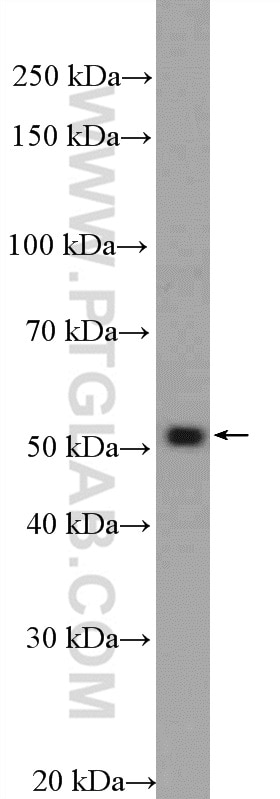
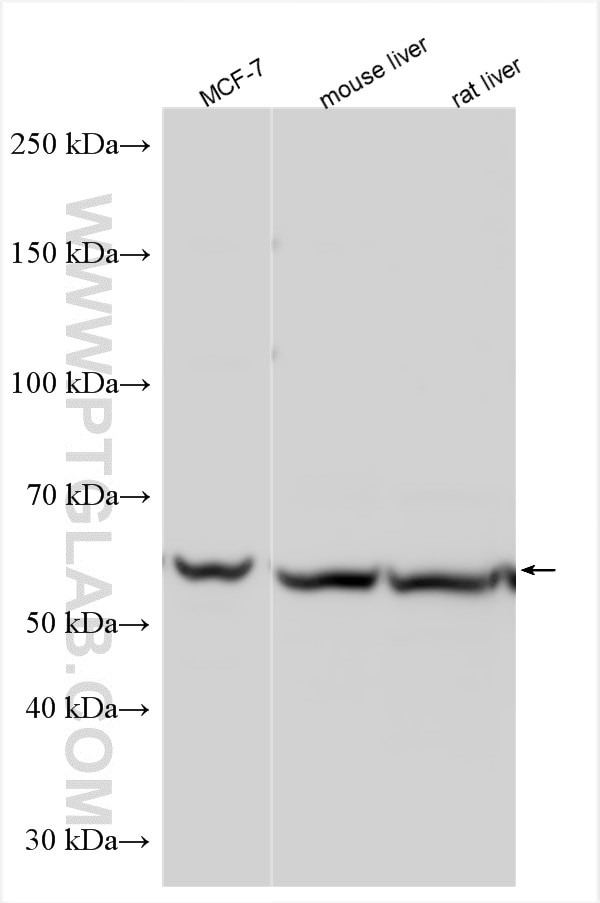
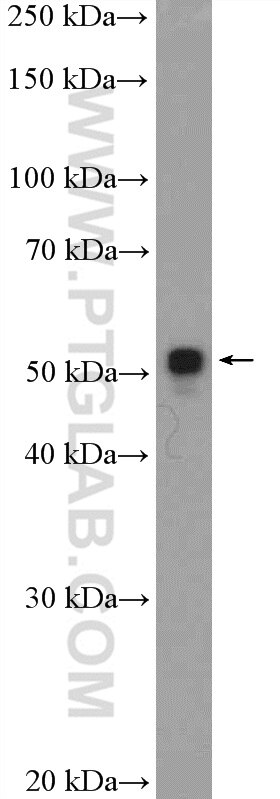
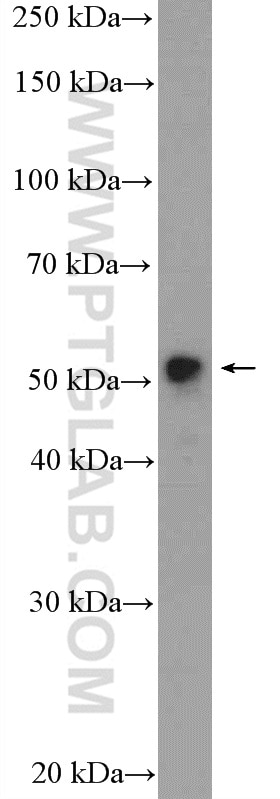
| Positive WB detected in | HeLa cells, MCF-7 cells, rat liver tissue, mouse liver tissue |
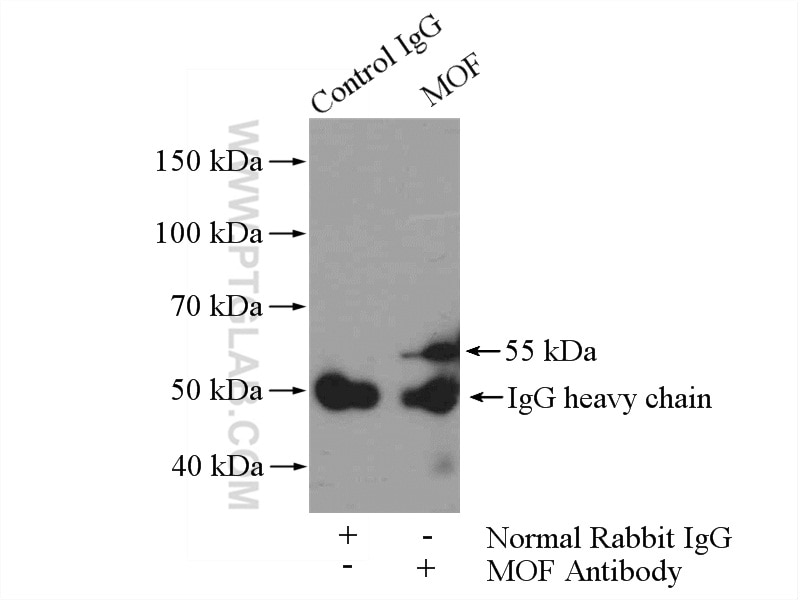
| Positive IP detected in | HeLa cells |
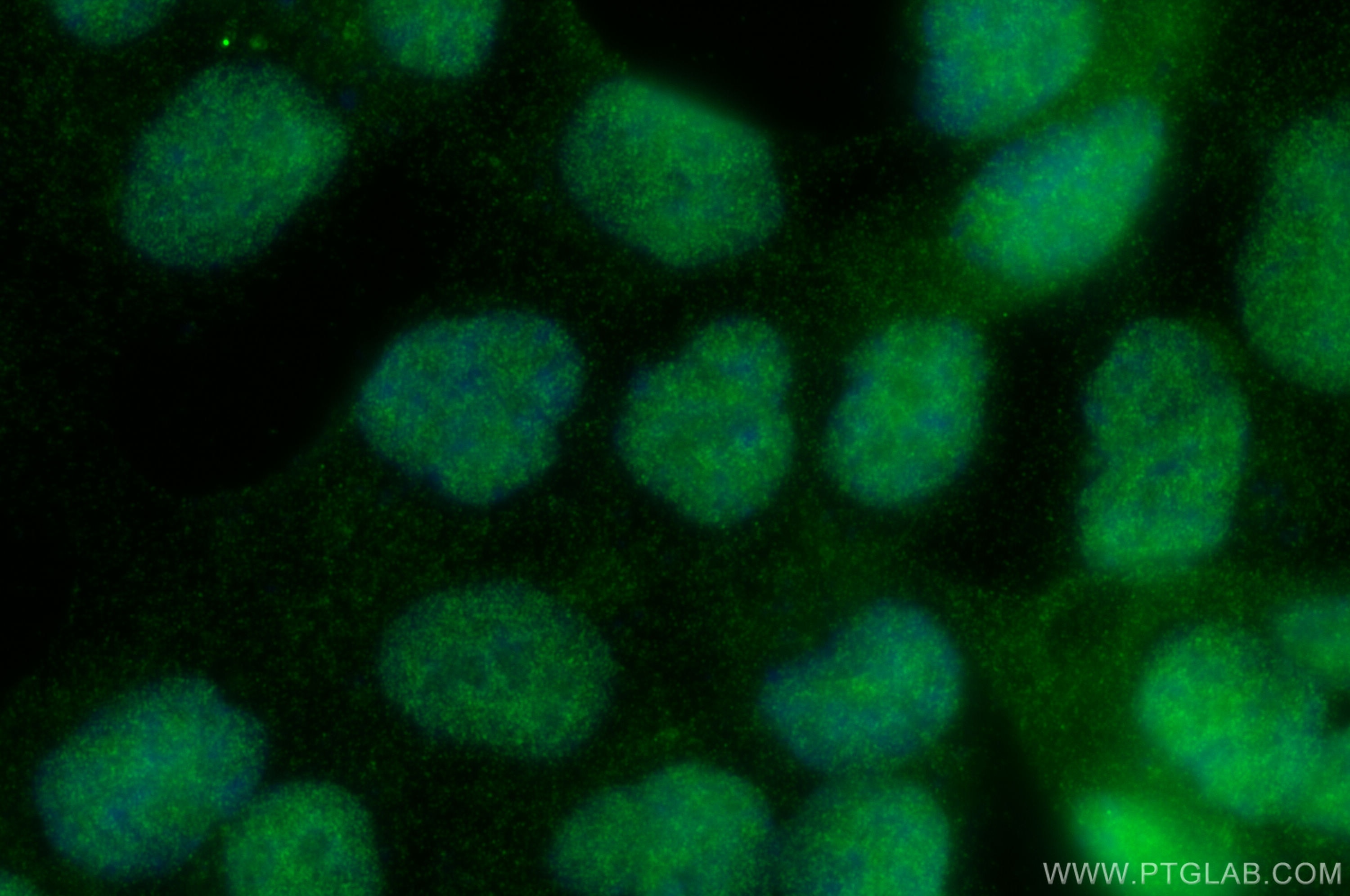
| Positive IF/ICC detected in | HCT 116 cells |
Recommended dilution
| Application | Dilution |
|---|---|
| Western Blot (WB) | WB : 1:1000-1:6000 |
| Immunoprecipitation (IP) | IP : 0.5-4.0 ug for 1.0-3.0 mg of total protein lysate |
| Immunofluorescence (IF)/ICC | IF/ICC : 1:200-1:800 |
| It is recommended that this reagent should be titrated in each testing system to obtain optimal results. | |
| Sample-dependent, Check data in validation data gallery. | |
Product Information
13842-1-AP targets MOF in WB, IF/ICC, IP, ChIP, ELISA applications and shows reactivity with human, mouse, rat samples.
| Tested Reactivity | human, mouse, rat |
| Cited Reactivity | human, mouse, rat, silkworm |
| Host / Isotype | Rabbit / IgG |
| Class | Polyclonal |
| Type | Antibody |
| Immunogen |
CatNo: Ag4802 Product name: Recombinant human MOF protein Source: e coli.-derived, PGEX-4T Tag: GST Domain: 118-467 aa of BC037773 Sequence: AVQKNSEKYLSELAEQPERKITRNQKRKHDEINHVQKTYAEMDPTTAALEKEHEAITKVKYVDKIHIGNYEIDAWYFSPFPEDYGKQPKLWLCEYCLKYMKYEKSYRFHLGQCQWRQPPGKEIYRKSNISVYEVDGKDHKIYCQNLCLLAKLFLDHKTLYFDVEPFVFYILTEVDRQGAHIVGYFSKEKESPDGNNVACILTLPPYQRRGYGKFLIAFSYELSKLESTVGSPEKPLSDLGKLSYRSYWSWVLLEILRDFRGTLSIKDLSQMTSITQNDIISTLQSLNMVKYWKGQHVICVTPKLVEEHLKSAQYKKPPITGGWGAAVCRGRWGSVSMWTGRSQGLLIAVT Predict reactive species |
| Full Name | MYST histone acetyltransferase 1 |
| Calculated Molecular Weight | 467 aa, 53 kDa |
| Observed Molecular Weight | 52 kDa |
| GenBank Accession Number | BC037773 |
| Gene Symbol | KAT8/MOF |
| Gene ID (NCBI) | 84148 |
| RRID | AB_2146894 |
| Conjugate | Unconjugated |
| Form | Liquid |
| Purification Method | Antigen affinity purification |
| UNIPROT ID | Q9H7Z6 |
| Storage Buffer | PBS with 0.02% sodium azide and 50% glycerol, pH 7.3. |
| Storage Conditions | Store at -20°C. Stable for one year after shipment. Aliquoting is unnecessary for -20oC storage. 20ul sizes contain 0.1% BSA. |
Background Information
MOF, also known as MYST1, KAT8, is a member of the MYST acetyltransferase family, which is homologous to Drosophila males absent on the first (MOF) protein. Deletion of MYST1 in cells leads to genomic instability, spontaneous chromosomal aberration, cell cycle defects, reduced transcription of certain genes and defective DNA damage repair (PMID: 32711345). MYST1 dually localizes to the nucleus and mitochondria of human cancer cells (PMID: 37813994). Western blot analysis detected MOF at an apparent molecular mass of 52 kDa.
Protocols
| Product Specific Protocols | |
|---|---|
| IF protocol for MOF antibody 13842-1-AP | Download protocol |
| IP protocol for MOF antibody 13842-1-AP | Download protocol |
| WB protocol for MOF antibody 13842-1-AP | Download protocol |
| Standard Protocols | |
|---|---|
| Click here to view our Standard Protocols |
Publications
What published studies show
The MOF Polyclonal antibody (Cat# 13842-1-AP) has 17 citations across journals including Nature, Autophagy, Nature Communications, Cell Discovery, Redox Biology, Advanced Science, Cell Reports, JCI Insight, Molecular & Cellular Proteomics, FASEB Journal, and Stem Cells. Research fields span copper signaling and inflammation, autophagy/MTORC1 regulation, histone acetylation, chemoresistance, viral replication, rheumatoid arthritis, embryonic development, colitis, lung cancer, oral squamous cell carcinoma, and stem cell reprogramming.
| Species | Application | Title |
|---|---|---|
Autophagy KAT7-mediated CANX (calnexin) crotonylation regulates leucine-stimulated MTORC1 activity. | ||
Nat Commun Identification of genes associated with cortical malformation using a transposon-mediated somatic mutagenesis screen in mice. | ||
Cell Discov Lysine butyrylation of HSP90 regulated by KAT8 and HDAC11 confers chemoresistance | ||
Redox Biol Serum response factor (SRF) promotes ROS generation and hepatic stellate cell activation by epigenetically stimulating NCF1/2 transcription.
| ||
Adv Sci (Weinh) Targeting Intratumoral Copper Inhibits Tumor Progression via p62-Mediated EZH2 Degradation and Potentiates Anti-PD-1 Immunotherapy in Oral Squamous Cell Carcinoma |







