

Tested Applications
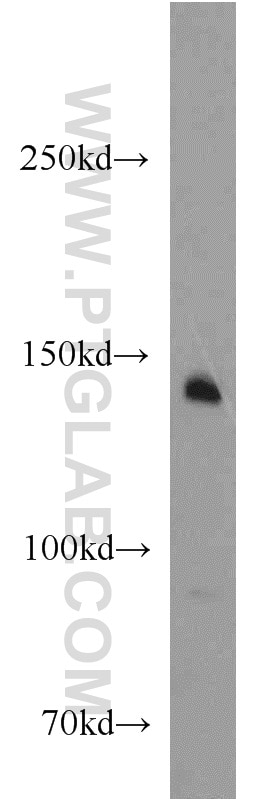
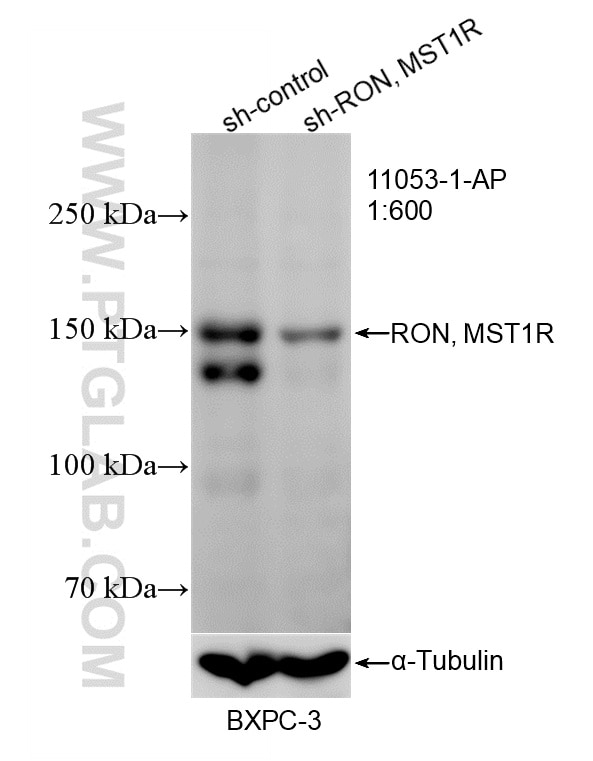
| Positive WB detected in | mouse lung tissue, BxPC-3 cells |
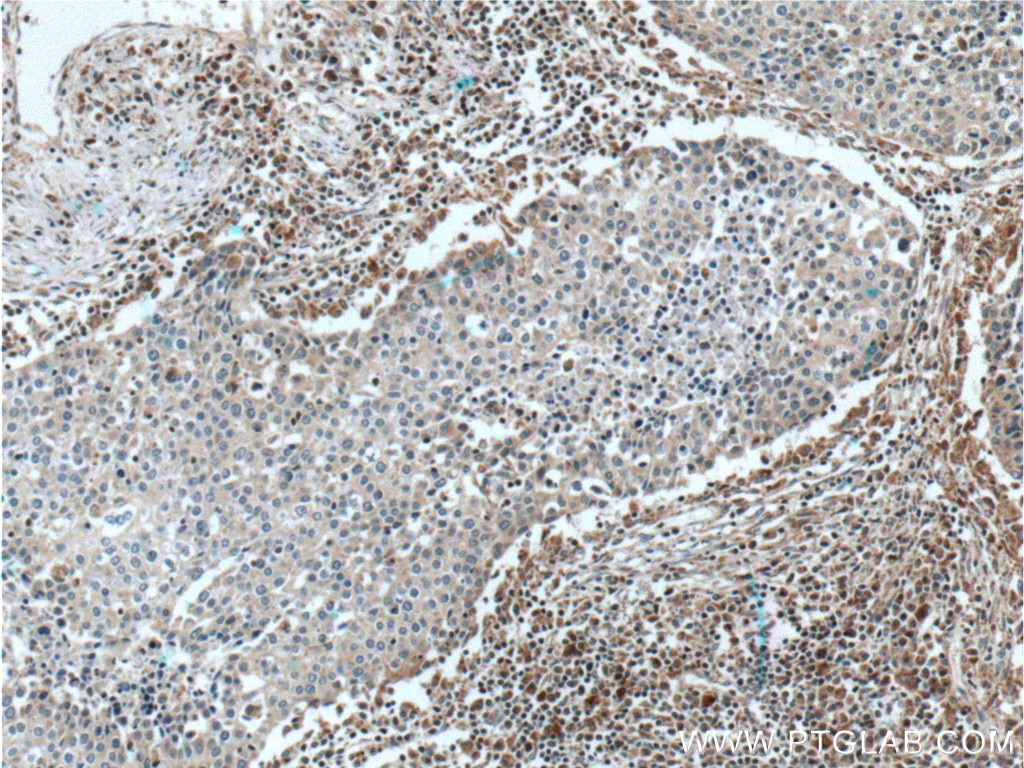
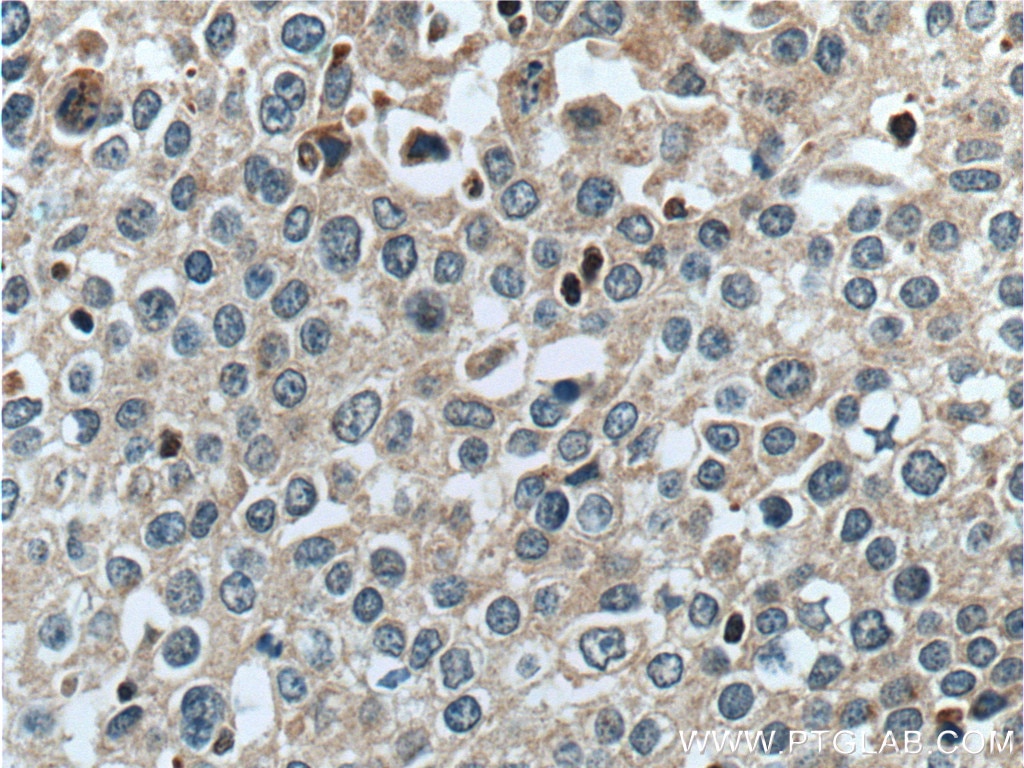
| Positive IHC detected in | human lung cancer tissue Note: suggested antigen retrieval with TE buffer pH 9.0; (*) Alternatively, antigen retrieval may be performed with citrate buffer pH 6.0 |
Recommended dilution
| Application | Dilution |
|---|---|
| Western Blot (WB) | WB : 1:500-1:1000 |
| Immunohistochemistry (IHC) | IHC : 1:50-1:500 |
| It is recommended that this reagent should be titrated in each testing system to obtain optimal results. | |
| Sample-dependent, Check data in validation data gallery. | |
Product Information
11053-1-AP targets RON/MST1R in WB, IHC, ELISA applications and shows reactivity with human, mouse, rat samples.
| Tested Reactivity | human, mouse, rat |
| Cited Reactivity | human, mouse |
| Host / Isotype | Rabbit / IgG |
| Class | Polyclonal |
| Type | Antibody |
| Immunogen |
CatNo: Ag1537 Product name: Recombinant human RON, MST1R protein Source: e coli.-derived, PGEX-4T Tag: GST Domain: 1038-1332 aa of BQ936677 NM_002447 Sequence: ASFSDSEDESCVPLLRKESIQLRDLDSALLAEVKDVLIPHERVVTHSDRVIGKGHFGVVYHGEYIDQAQNRIQCAIKSLSRITEMQQVEAFLREGLLMRGLNHPNVLALIGIMLPPEGLPHVLLPYMCHGDLLQFIRSPQRNPTVKDLISFGLQVARGMEYLAEQKFVHRDLAARNCMLDESFTVKVADFGLARDILDREYYSVQQHRHARLPVKWMALESLQTYRFTTKSDVWSFGVLLWELLTRGAPPYRHIDPFDLTHFLAQGRRLPQPEYCPDSLYQVMQQCWEADPAVRP Predict reactive species |
| Full Name | macrophage stimulating 1 receptor (c-met-related tyrosine kinase) |
| Calculated Molecular Weight | 152 kDa |
| Observed Molecular Weight | 140 kDa |
| GenBank Accession Number | BQ936677 NM_002447 |
| Gene Symbol | RON |
| Gene ID (NCBI) | 4486 |
| RRID | AB_874180 |
| Conjugate | Unconjugated |
| Form | Liquid |
| Purification Method | Antigen affinity purification |
| UNIPROT ID | Q04912 |
| Storage Buffer | PBS with 0.02% sodium azide and 50% glycerol, pH 7.3. |
| Storage Conditions | Store at -20°C. Stable for one year after shipment. Aliquoting is unnecessary for -20oC storage. 20ul sizes contain 0.1% BSA. |
Background Information
RON (also referred to as MST1R, or CD136) is a receptor tyrosine kinase that belongs to the MET proto-oncogene family. The precursor RON is produced as a glycosylated, single chain that is cleaved into a 185-kDa heterodimer of α (35 kDa) and β (150 kDa) subunits connected by a disulfide bond (PMID: 8062829). It is activated upon binding to its ligand, macrophage-stimulating protein (MSP, also known as MST1 and HGFL). RON signalling is essential for embryonic development and regulates many physiological processes including cell survival, migration and differentiation.
Protocols
| Product Specific Protocols | |
|---|---|
| IHC protocol for RON/MST1R antibody 11053-1-AP | Download protocol |
| WB protocol for RON/MST1R antibody 11053-1-AP | Download protocol |
| Standard Protocols | |
|---|---|
| Click here to view our Standard Protocols |
Publications
What published studies show
The RON/MST1R Polyclonal antibody (Cat# 11053-1-AP) has 2 total citations. One appears in Theranostics (2025, IF 14.9), studying c-MET PROTAC degraders for osteosarcoma therapy using human samples by WB. The other is in Mol Ther Oncolytics (2021, IF 4.12), investigating the RUNX1/EGFR pathway, STAT3 activation, and mTORC1-driven tumor growth in mouse models by WB. Both citations relate to cancer research, specifically oncology and targeted therapy, with applications in Western blot analysis.
| Species | Application | Title |
|---|---|---|
Theranostics Development of dual aptamers-functionalized c-MET PROTAC degraders for targeted therapy of osteosarcoma | ||
Mol Ther Oncolytics RUNX1/EGFR pathway contributes to STAT3 activation and tumor growth caused by hyperactivated mTORC1. |





