

Tested Applications
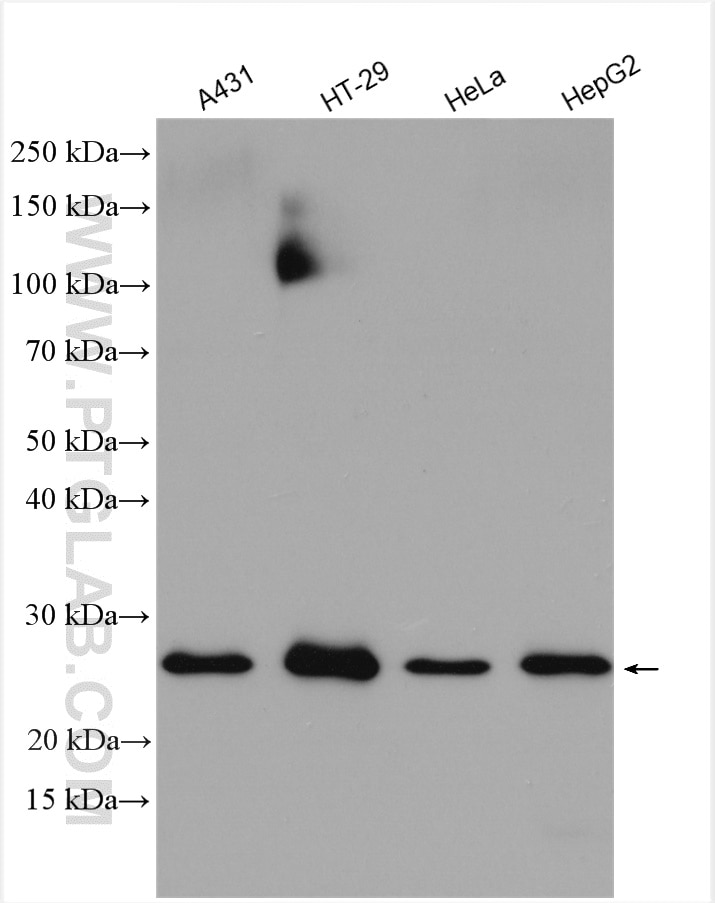
| Positive WB detected in | A431 cells, human preadipocyte cells, HT-29 cells, HeLa cells, HepG2 cells |
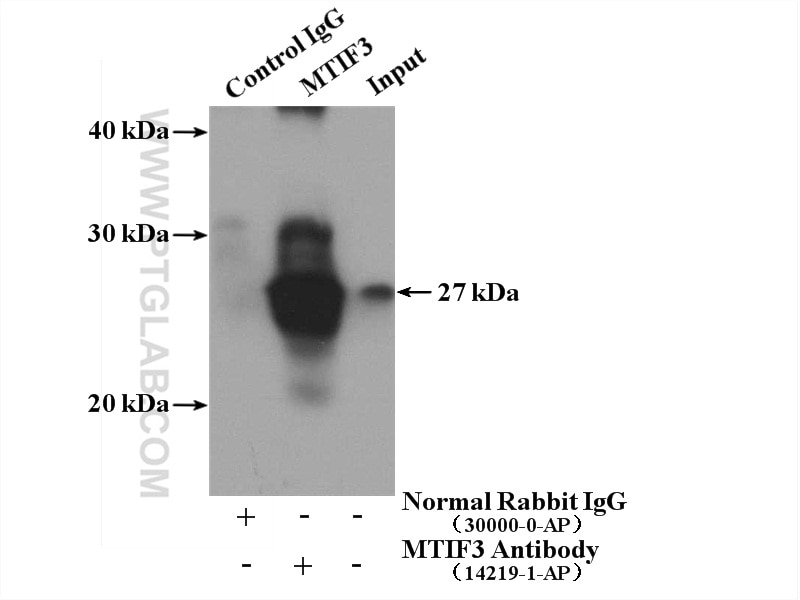
| Positive IP detected in | HeLa cells |
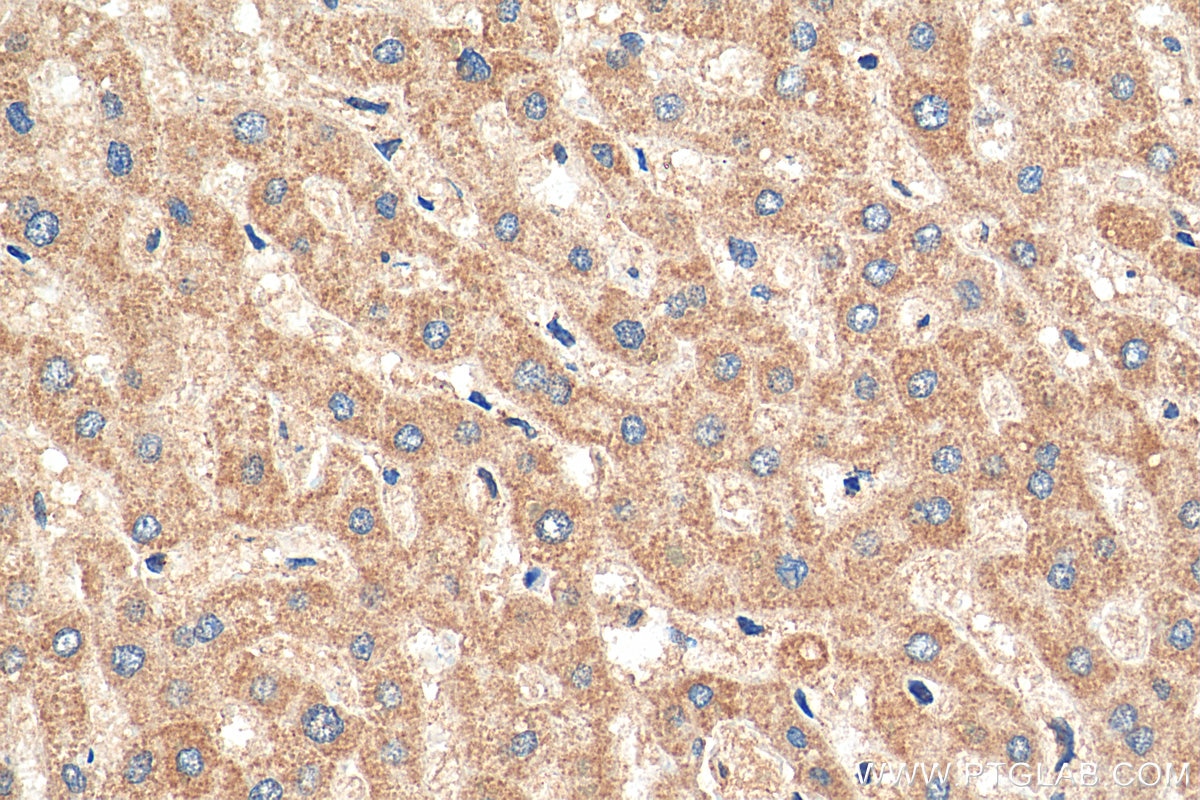
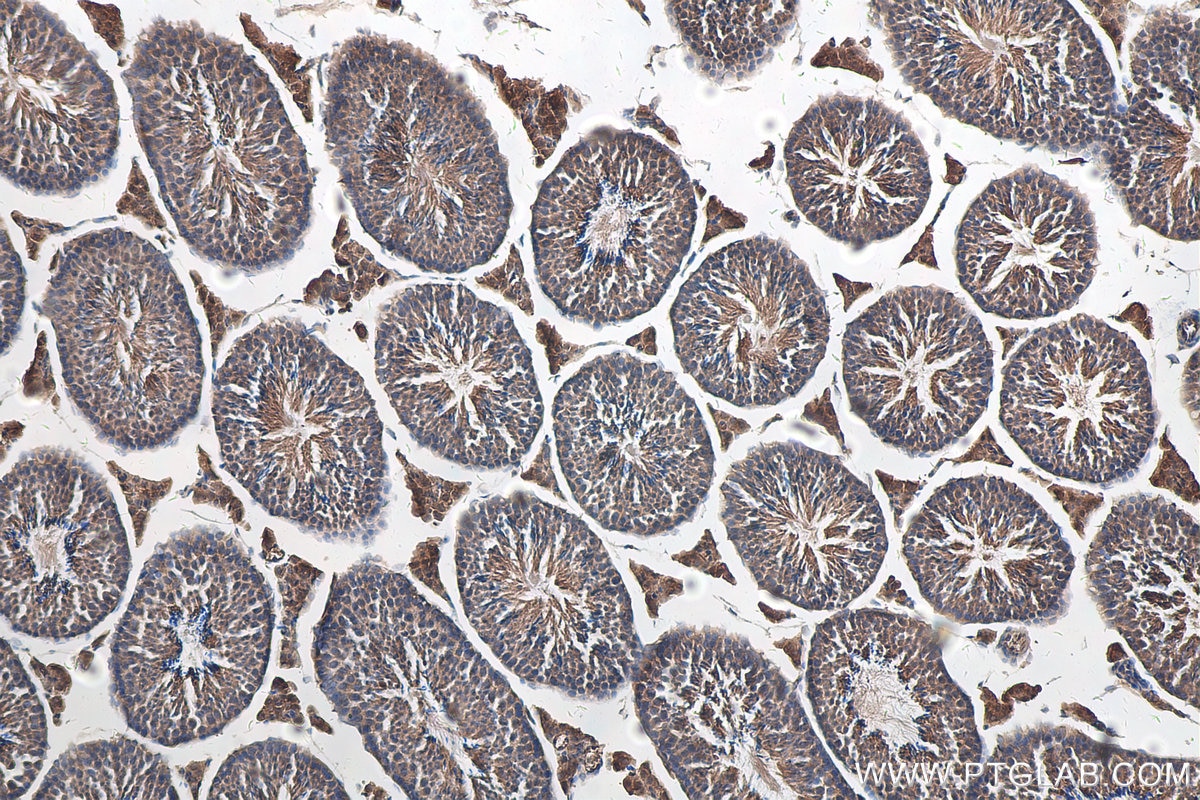
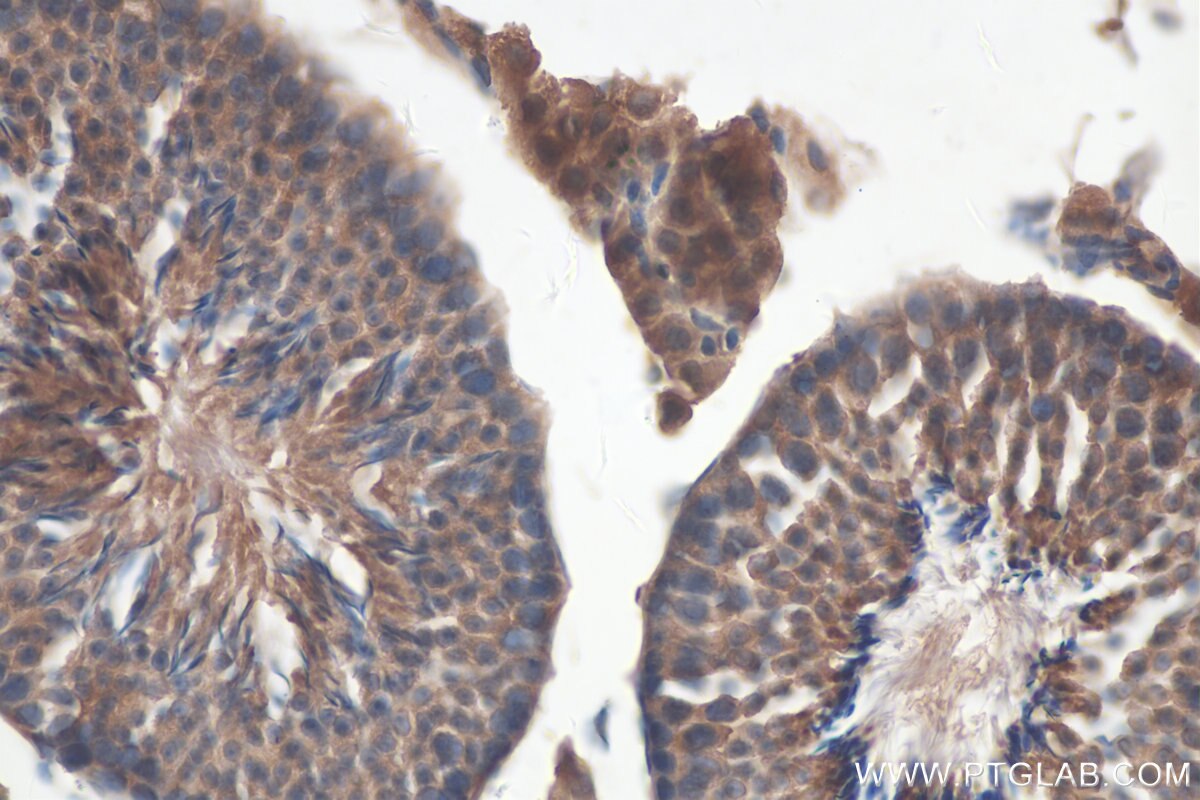
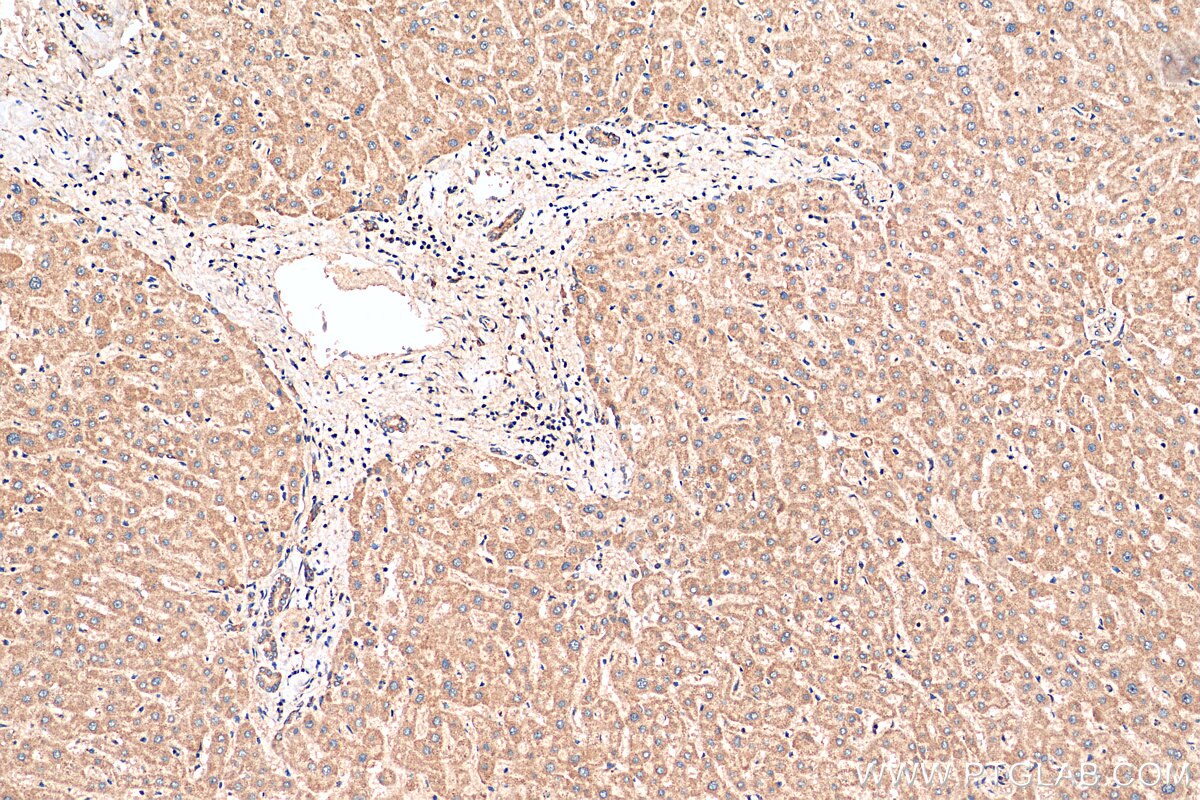
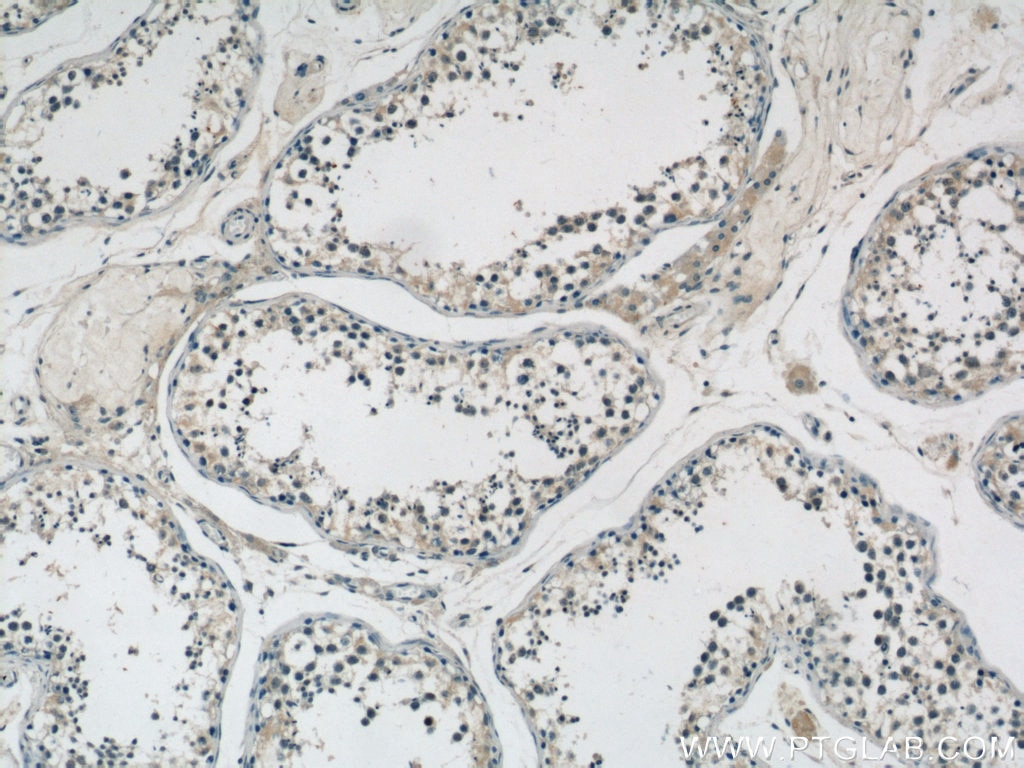
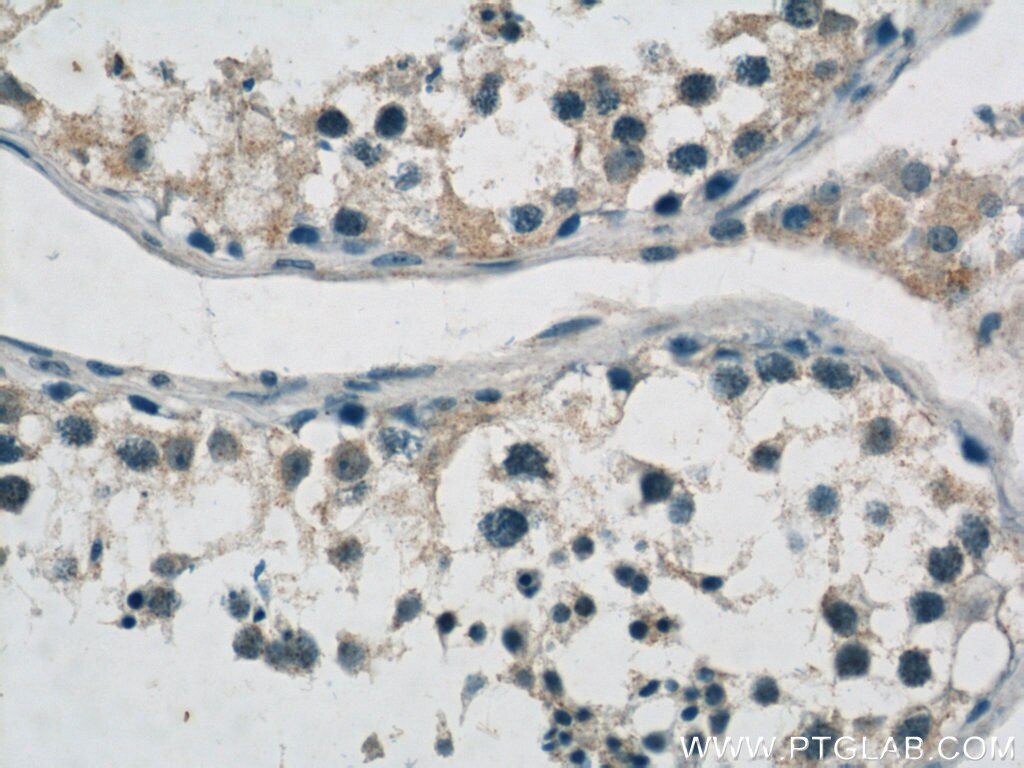
| Positive IHC detected in | human liver tissue, mouse testis tissue, human testis tissue Note: suggested antigen retrieval with TE buffer pH 9.0; (*) Alternatively, antigen retrieval may be performed with citrate buffer pH 6.0 |
Recommended dilution
| Application | Dilution |
|---|---|
| Western Blot (WB) | WB : 1:500-1:2000 |
| Immunoprecipitation (IP) | IP : 0.5-4.0 ug for 1.0-3.0 mg of total protein lysate |
| Immunohistochemistry (IHC) | IHC : 1:50-1:500 |
| It is recommended that this reagent should be titrated in each testing system to obtain optimal results. | |
| Sample-dependent, Check data in validation data gallery. | |
Product Information
14219-1-AP targets MTIF3 in WB, IHC, IP, ELISA applications and shows reactivity with human, mouse samples.
| Tested Reactivity | human, mouse |
| Cited Reactivity | human, mouse, rat |
| Host / Isotype | Rabbit / IgG |
| Class | Polyclonal |
| Type | Antibody |
| Immunogen |
CatNo: Ag5457 Product name: Recombinant human MTIF3 protein Source: e coli.-derived, PGEX-4T Tag: GST Domain: 1-278 aa of BC046166 Sequence: MAALFLKRLTLQTVKSENSCIRCFGKHILQKTAPAQLSPIASAPRLSFLIHAKAFSTAEDTQNEGKKIKKNKTAFSNVGRKISQRVIHLFDEKGNDLGNMHRANVIRLMDERDLRLVQRNTSTEPAEYQLMTGLQILQERQRLREMEKANPKTGPTLRKELILSSNIGQHDLDTKTKQIQQWIKKKHLVQITIKKGKNVDVSENEMEEIFHQILQTMPGIATFSSRPQAVQGGKALMCVLRALSKNEEKAYKETQETQERDTLNKDHGNDKESNVLHQ Predict reactive species |
| Full Name | mitochondrial translational initiation factor 3 |
| Calculated Molecular Weight | 32 kDa |
| Observed Molecular Weight | 29 kDa |
| GenBank Accession Number | BC046166 |
| Gene Symbol | MTIF3 |
| Gene ID (NCBI) | 219402 |
| RRID | AB_10638621 |
| Conjugate | Unconjugated |
| Form | Liquid |
| Purification Method | Antigen affinity purification |
| UNIPROT ID | Q9H2K0 |
| Storage Buffer | PBS with 0.02% sodium azide and 50% glycerol, pH 7.3. |
| Storage Conditions | Store at -20°C. Stable for one year after shipment. Aliquoting is unnecessary for -20oC storage. 20ul sizes contain 0.1% BSA. |
Background Information
MTIF3, also named as DC38, belongs to the IF-3 family. MTIF3 encodes a 29 kDa protein that promotes formation of the initiation complex on the mitochondrial 55S ribosome, thereby playing an active role in initiation of translation. Like bacterial IF3, MTIF3 is believed to bind first to the small mitoribosomal subunit to keep it dissociated from the large subunit during initiation. After binding of MTIF3, mRNA and formylated initiator methionyl-tRNA (fMet-tRNAifMet) bind to the small mitoribosomal subunit. The large subunit then joins the small subunit to form an elongation-competent ribosome (PMID:20887776, 31350787).
Protocols
| Product Specific Protocols | |
|---|---|
| IHC protocol for MTIF3 antibody 14219-1-AP | Download protocol |
| IP protocol for MTIF3 antibody 14219-1-AP | Download protocol |
| WB protocol for MTIF3 antibody 14219-1-AP | Download protocol |
| Standard Protocols | |
|---|---|
| Click here to view our Standard Protocols |
Publications
What published studies show
The MTIF3 Polyclonal antibody (Cat# 14219-1-AP) has 12 citations published in journals including Molecular Cell, Science Advances, EMBO Journal, EMBO Reports, Cell Reports, Scientific Reports, Journal of Hazardous Materials, Science of the Total Environment, Ecotoxicology and Environmental Safety, American Journal of Surgical Pathology, Clinical Immunology, and eLife. Research fields span mitochondrial translation, neurotoxicity, neuroinflammation, cancer, diabetes, and adipocyte biology.
| Species | Application | Title |
|---|---|---|
Mol Cell Monitoring the complexity and dynamics of mitochondrial translation.
| ||
Sci Adv Fidelity of translation initiation is required for coordinated respiratory complex assembly. | ||
J Hazard Mater ZLN005 alleviates PBDE-47 induced impairment of mitochondrial translation and neurotoxicity through PGC-1α/ERRα axis | ||
Sci Total Environ Fluoride impairs mitochondrial translation by targeting miR-221-3p/c-Fos/RMND1 axis contributing to neurodevelopment defects | ||
EMBO J Stress signaling and cellular proliferation reverse the effects of mitochondrial mistranslation. | ||
Cell Rep A generalized strategy to kill leukemic cells by targeting the regulatory systems governing mitochondrial membrane potential. |
Reviews
What customers say
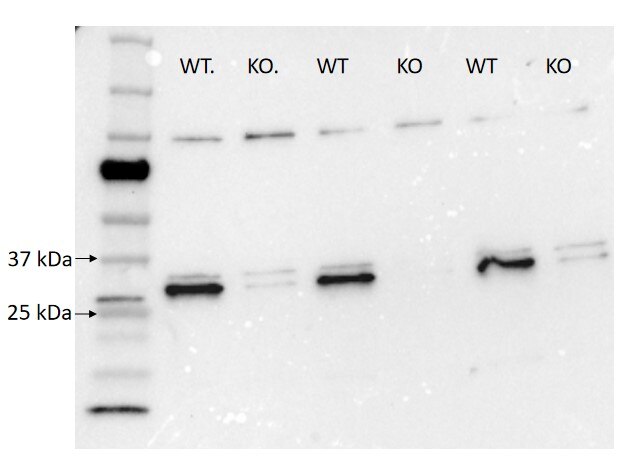
One reviewer (Mi Huang, Feb 2023) rated this antibody 4/5 stars after using it at 1:1000 dilution for Western Blot on adipocytes. They reported it produced a specific band consistent with expectations from knockout samples, outperforming alternatives from other suppliers. However, they noted some non-specific bands were observed and recommended using a knockout control to validate the target band.
The reviews below have been submitted by verified Proteintech customers who received an incentive for providing their feedback.
Mi (Verified Customer) (02-10-2023) | It works pretty well! We tried different antibodies from other suppliers, and this one gives a specific band, as we expected from the knockout samples. Although, we did observe some non-specific bands, having a knockout control would validate the target band.
|










