
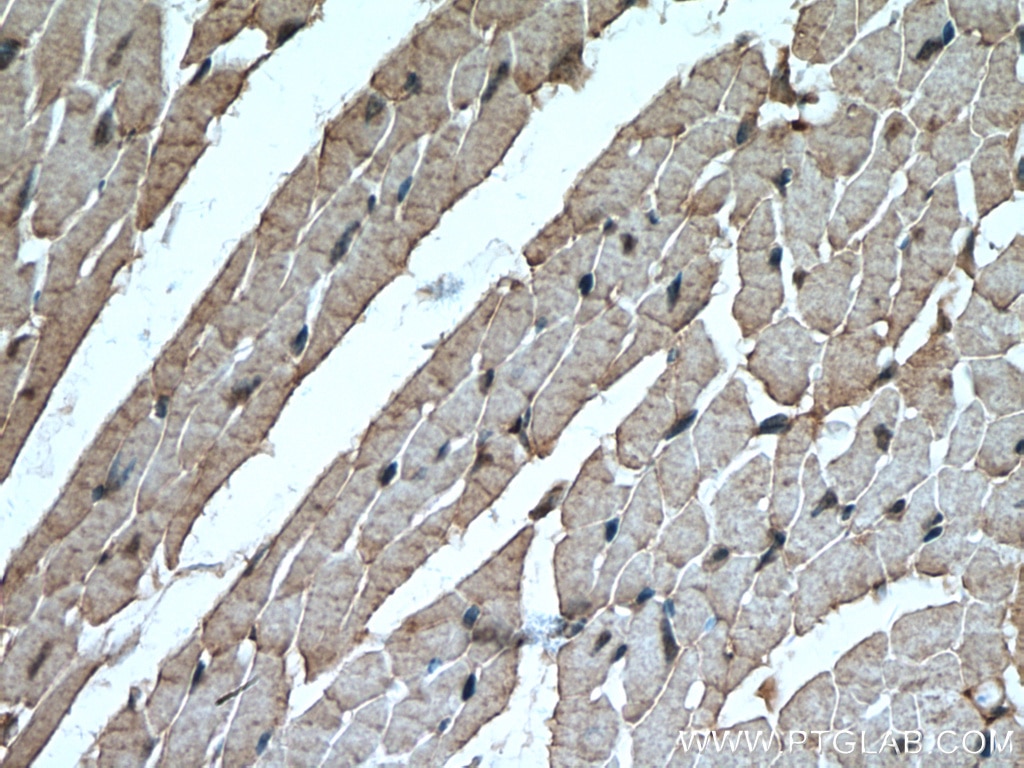

Tested Applications
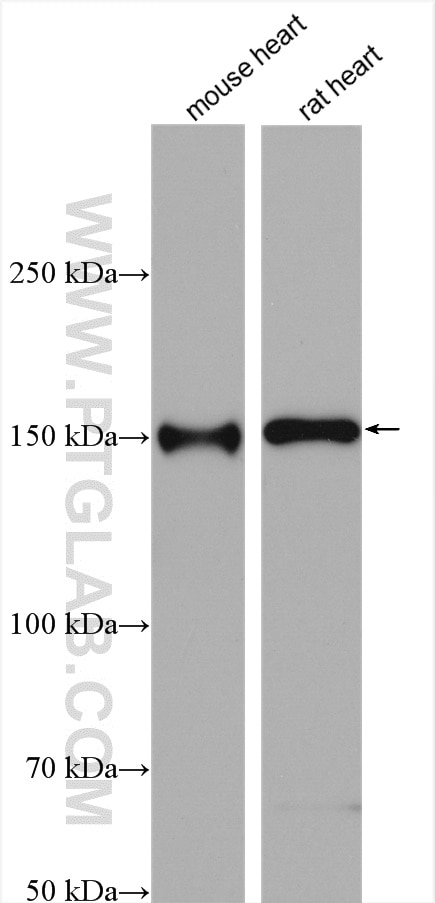
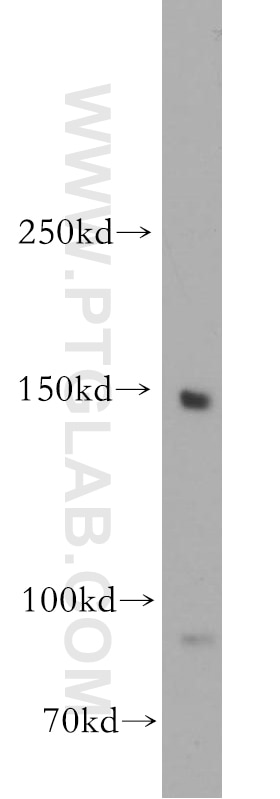
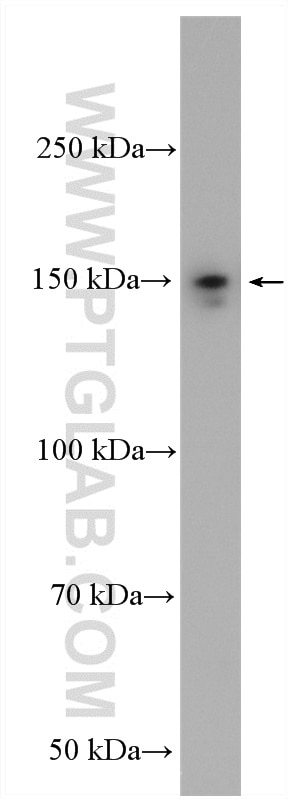
| Positive WB detected in | mouse heart tissue, rat heart tissue, human heart tissue |
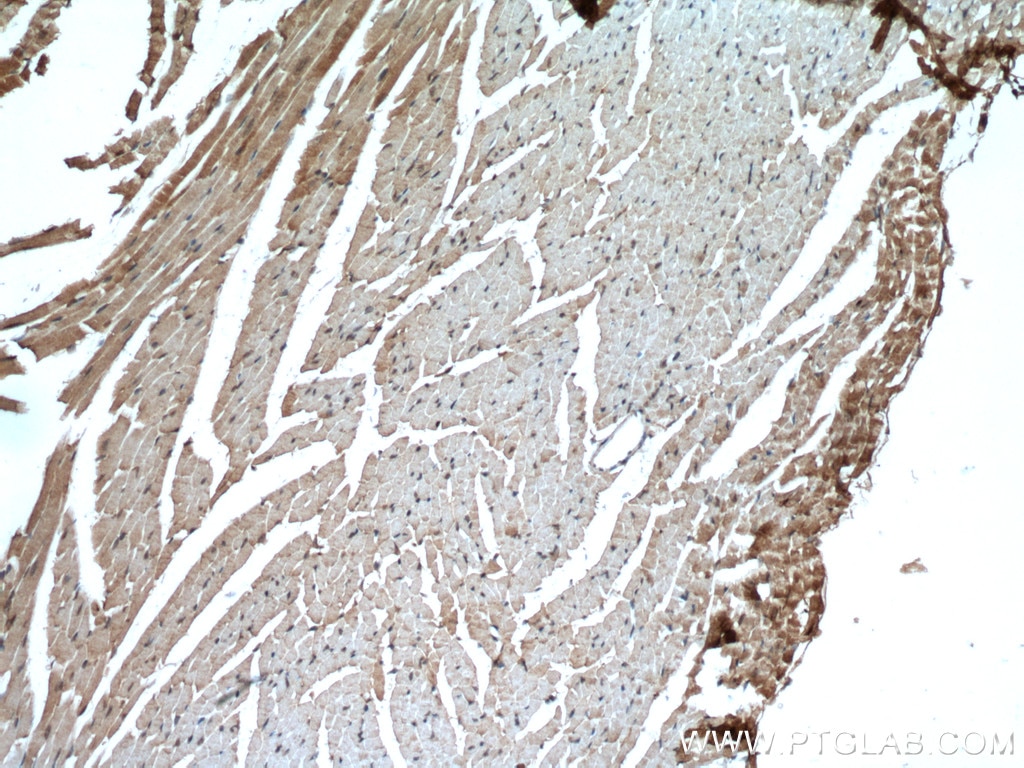
| Positive IHC detected in | mouse heart tissue Note: suggested antigen retrieval with TE buffer pH 9.0; (*) Alternatively, antigen retrieval may be performed with citrate buffer pH 6.0 |
Recommended dilution
| Application | Dilution |
|---|---|
| Western Blot (WB) | WB : 1:500-1:3000 |
| Immunohistochemistry (IHC) | IHC : 1:50-1:500 |
| It is recommended that this reagent should be titrated in each testing system to obtain optimal results. | |
| Sample-dependent, Check data in validation data gallery. | |
Product Information
19977-1-AP targets MYBPC3 in WB, IHC, ELISA applications and shows reactivity with human, mouse, rat samples.
| Tested Reactivity | human, mouse, rat |
| Cited Reactivity | human, mouse |
| Host / Isotype | Rabbit / IgG |
| Class | Polyclonal |
| Type | Antibody |
| Immunogen |
Peptide Predict reactive species |
| Full Name | myosin binding protein C, cardiac |
| Calculated Molecular Weight | 141 kDa |
| Observed Molecular Weight | 141-150 kDa |
| GenBank Accession Number | NM_000256 |
| Gene Symbol | MYBPC3 |
| Gene ID (NCBI) | 4607 |
| RRID | AB_10858232 |
| Conjugate | Unconjugated |
| Form | Liquid |
| Purification Method | Antigen affinity purification |
| UNIPROT ID | Q14896 |
| Storage Buffer | PBS with 0.02% sodium azide and 50% glycerol, pH 7.3. |
| Storage Conditions | Store at -20°C. Stable for one year after shipment. Aliquoting is unnecessary for -20oC storage. 20ul sizes contain 0.1% BSA. |
Background Information
MYBPC3 belongs to the immunoglobulin superfamily and MyBP family. MYBPC3 located in the crossbridge region of vertebrate striated muscle a bands. In vitro it binds MHC, F-actin and native thin filaments, and modifies the activity of actin-activated myosin ATPase. It may modulate muscle contraction or may play a more structural role. Defects in MYBPC3 are the cause of cardiomyopathy familial hypertrophic type 4 (CMH4). The antibody detects the full length form and the degradation bands around 28-54 kDa in SDS-PAGE.(PMID: 22076249)
Protocols
| Product Specific Protocols | |
|---|---|
| IHC protocol for MYBPC3 antibody 19977-1-AP | Download protocol |
| WB protocol for MYBPC3 antibody 19977-1-AP | Download protocol |
| Standard Protocols | |
|---|---|
| Click here to view our Standard Protocols |
Publications
What published studies show
MYBPC3 Antibody (Cat# 19977-1-AP) has 6 total citations published in J Mol Cell Cardiol, FASEB J, J Biol Chem, Front Cardiovasc Med (×2), and PLoS One. The associated research fields include cardiovascular disease, hypertrophic cardiomyopathy, heart failure, cardiac molecular biology, and sudden cardiac death. Applications cited include WB and IHC in mouse and human samples.
| Species | Application | Title |
|---|---|---|
J Mol Cell Cardiol Catecholaminergic stress results in signs of heart failure in PP2A-PR72 overexpressor mice. | ||
FASEB J Amplified pathogenic actions of angiotensin II in cysteine-rich LIM-only protein 4-negative mouse hearts. | ||
J Biol Chem Proximity-dependent proteomics and network analysis of adenylyl cyclase isoforms 5, 6, and 9 in cardiomyocytes | ||
Front Cardiovasc Med Case Report: Identification of the First Synonymous Variant of Myosin Binding Protein C3 (c.24A>C, p.P8P) Altering RNA Splicing in a Cardiomyopathy and Sudden Cardiac Death Case. | ||
Front Cardiovasc Med Hypercontractile cardiac phenotype in mice overexpressing the regulatory subunit PR72 of protein phosphatase 2A | ||
PLoS One A novel variant in MYBPC3 causes hypertrophic cardiomyopathy by haploinsufficiency. |






