The Proteintech guarantee covers Proteintech antibodies in any species and any application, including those not listed on the datasheet. If the antibody doesn’t perform, you can receive a hassle-free refund or credit note.
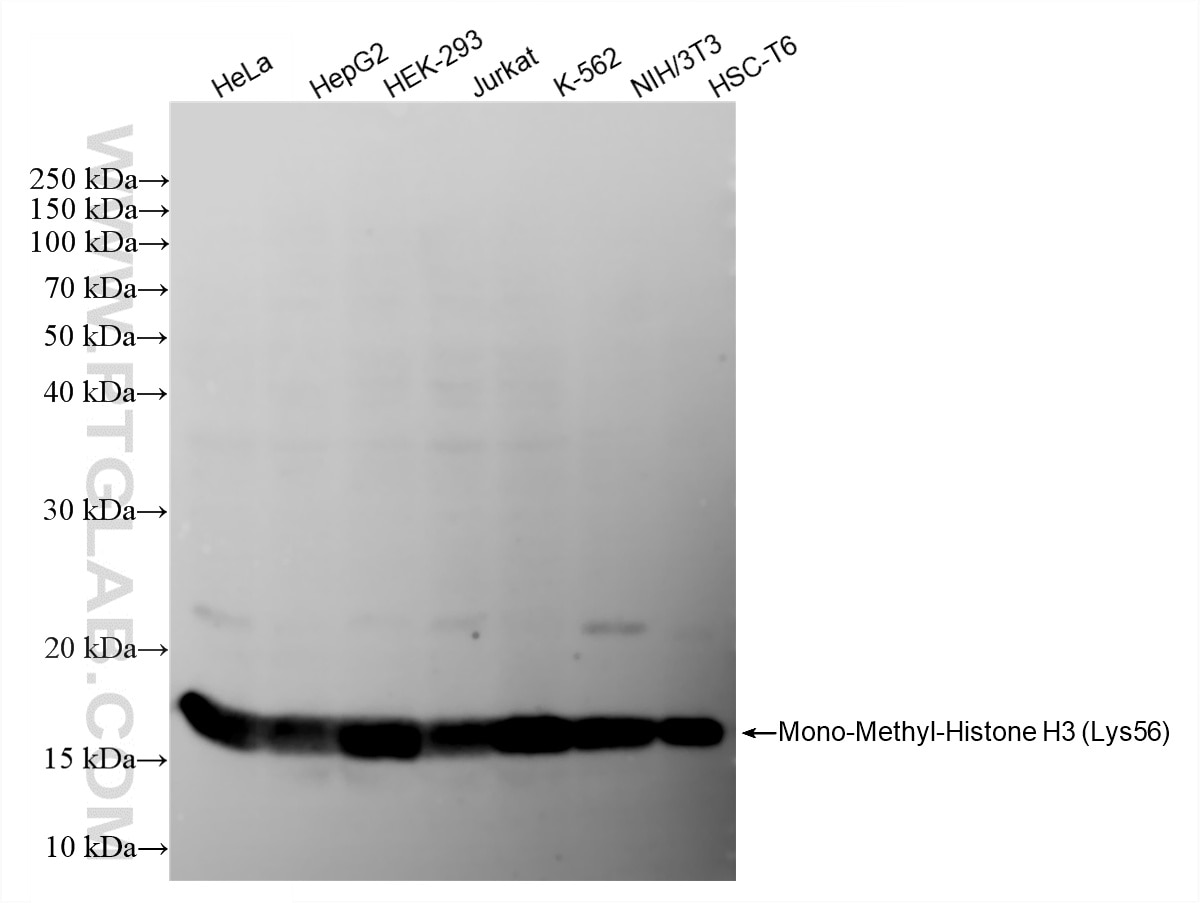
Various lysates were subjected to SDS PAGE followed by western blot with 87727-1-RR (Mono-Methyl-Histone H3 (Lys56) antibody) at dilution of 1:3000 incubated at room temperature for 1.5 hours.
This validation data has been generated in-house and reviewed by Proteintech scientists. Find out more on our antibody validation policy
Various lysates were subjected to SDS PAGE followed by western blot with 87727-1-RR (Mono-Methyl-Histone H3 (Lys56) antibody) at dilution of 1:3000 incubated at room temperature for 1.5 hours.
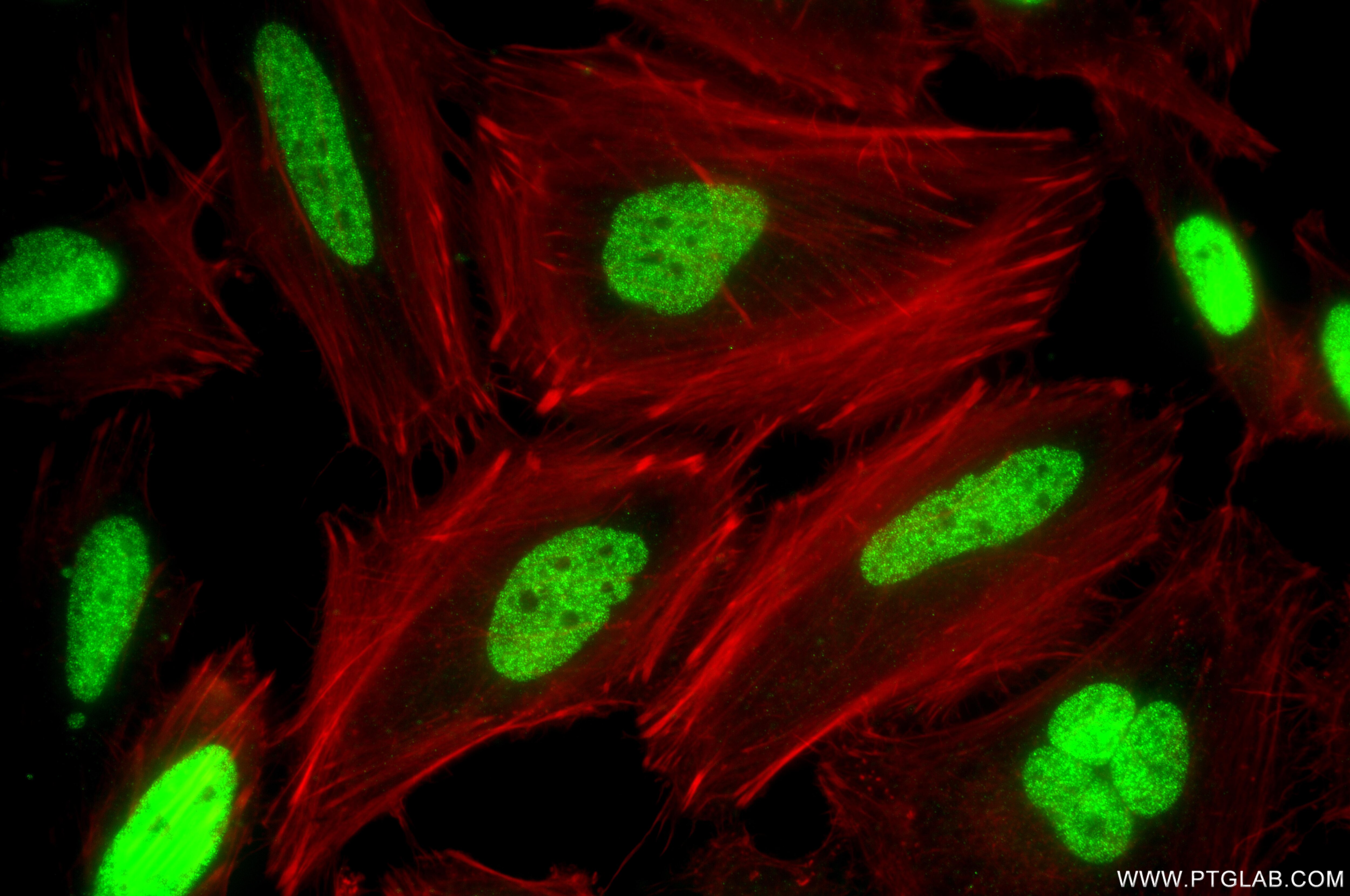
IF Staining of HeLa using 87727-1-RR
Immunofluorescent analysis of (4% PFA) fixed HeLa cells using Mono-Methyl-Histone H3 (Lys56) antibody (87727-1-RR, Clone: 253281A4 ) at dilution of 1:1000 and CoraLite®488-Conjugated Goat Anti-Rabbit IgG(H+L) (SA00013-2), CL594-Phalloidin (red).
This validation data has been generated in-house and reviewed by Proteintech scientists. Find out more on our antibody validation policy
Immunofluorescent analysis of (4% PFA) fixed HeLa cells using Mono-Methyl-Histone H3 (Lys56) antibody (87727-1-RR, Clone: 253281A4 ) at dilution of 1:1000 and CoraLite®488-Conjugated Goat Anti-Rabbit IgG(H+L) (SA00013-2), CL594-Phalloidin (red).
Dot Blot experiment of / using 87727-1-RR
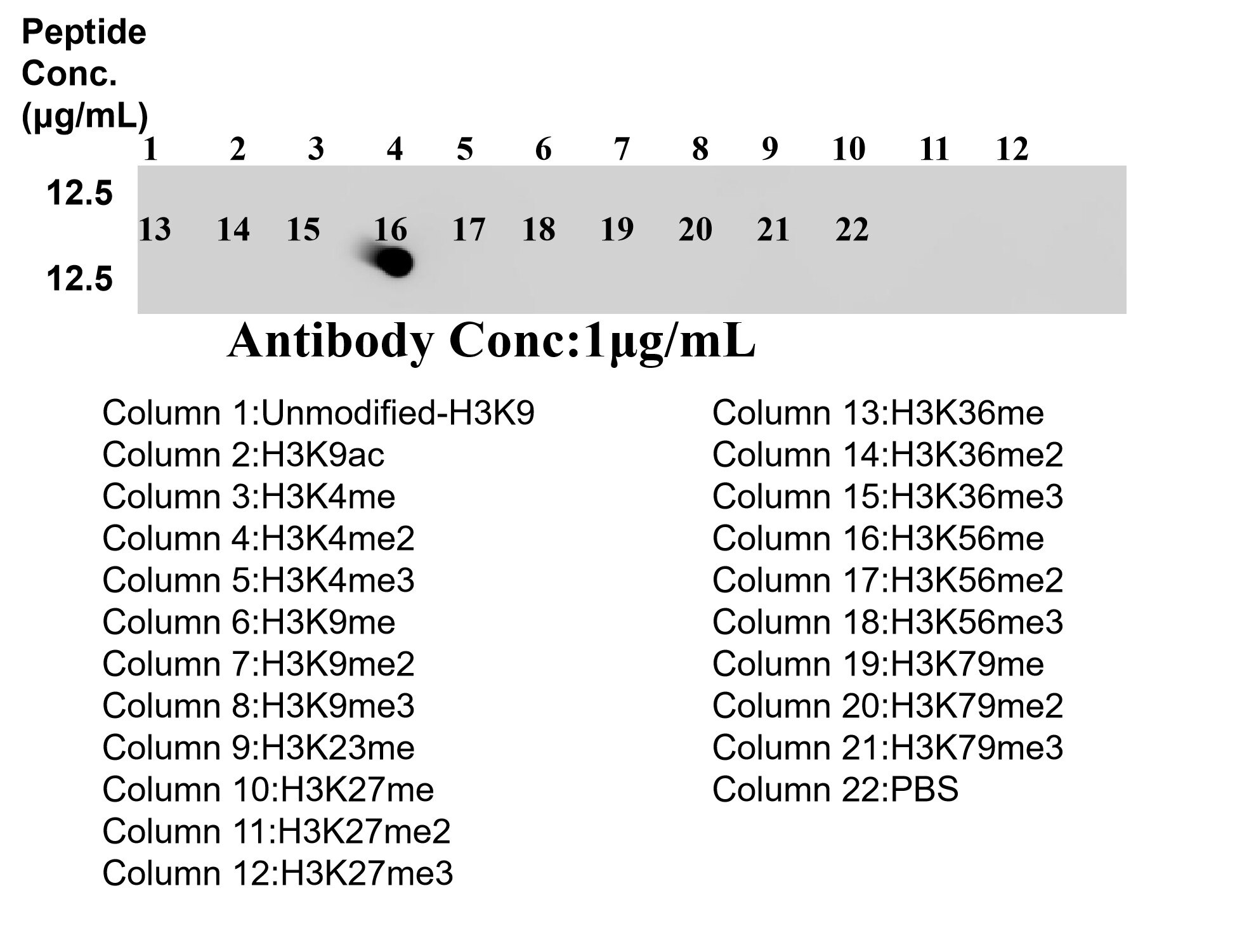
Dot blot analysis was used to confirm the specificity of 87727-1-RR Mono-Methyl-Histone H3 (Lys56) antibody. Peptides were spotted onto NC and probed with antibody at 1 µg/mL.The amount of peptide (μg/mL) spotted is indicated next to each row.
This validation data has been generated in-house and reviewed by Proteintech scientists. Find out more on our antibody validation policy
Dot blot analysis was used to confirm the specificity of 87727-1-RR Mono-Methyl-Histone H3 (Lys56) antibody. Peptides were spotted onto NC and probed with antibody at 1 µg/mL.The amount of peptide (μg/mL) spotted is indicated next to each row.
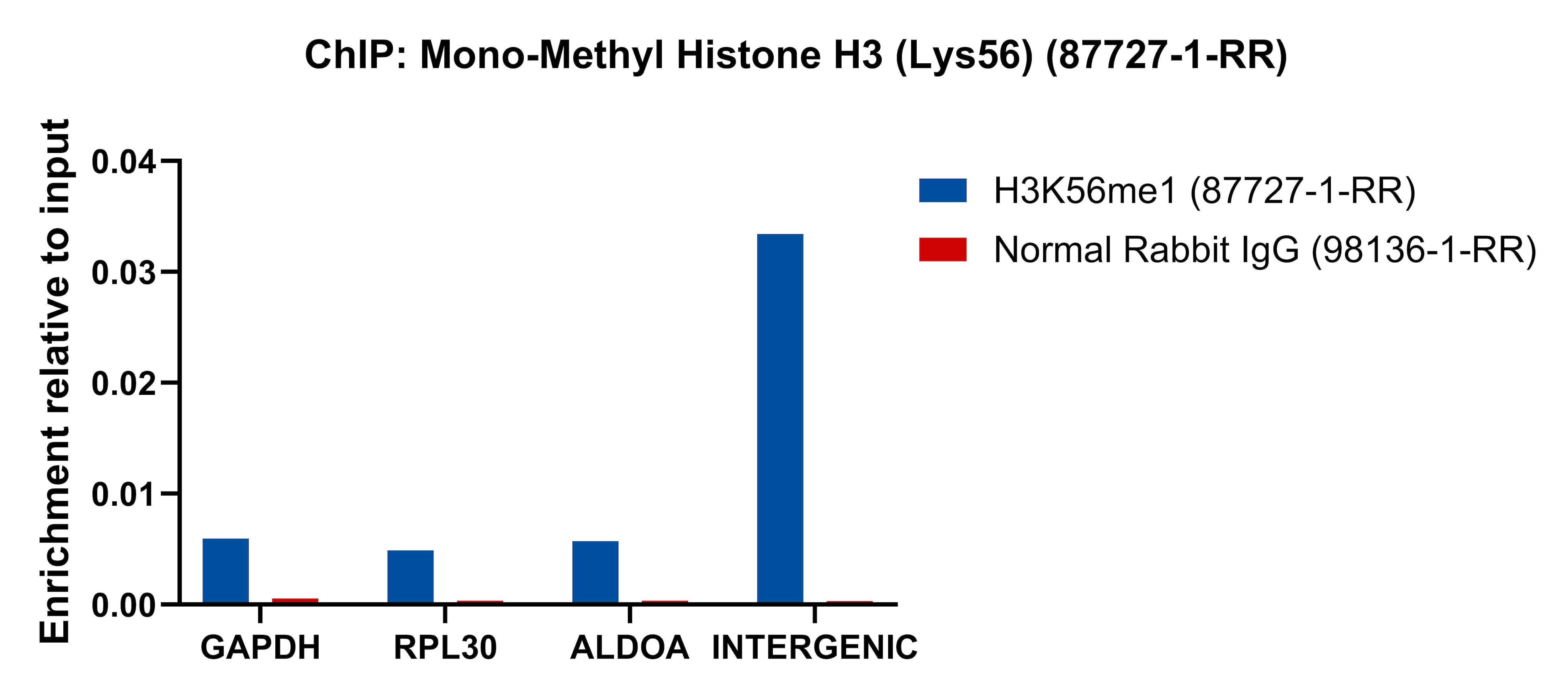
ChIP experiment of HeLa using 87727-1-RR
Chromatin was prepared from HeLa cells. Cells were fixed with formaldehyde for 10 minutes. The ChIP was performed with 15 µg of cross-linked chromatin, 5 µg of Mono-Methyl-Histone-H3 (Lys56) (87727-1-RR) or 5 ug of Normal Rabbit IgG (98136-1-RR), and 20 µl of Protein A Magarose Beads. The immunoprecipitated DNA was quantified by real-time PCR.
This validation data has been generated in-house and reviewed by Proteintech scientists. Find out more on our antibody validation policy
Chromatin was prepared from HeLa cells. Cells were fixed with formaldehyde for 10 minutes. The ChIP was performed with 15 µg of cross-linked chromatin, 5 µg of Mono-Methyl-Histone-H3 (Lys56) (87727-1-RR) or 5 ug of Normal Rabbit IgG (98136-1-RR), and 20 µl of Protein A Magarose Beads. The immunoprecipitated DNA was quantified by real-time PCR.
PBS with 0.02% sodium azide and 50% glycerol, pH 7.3.
Storage Conditions
Store at -20°C. Stable for one year after shipment. Aliquoting is unnecessary for -20oC storage. 20ul sizes contain 0.1% BSA.
Background Information
Histones are small, highly basic proteins that consist of a globular domain with unstructured N- and C-terminal tails protruding from the main structure. Histone H3 is one of the five main histones that are responsible for the nucleosome structure of the chromosomal fiber in eukaryotes. Two molecules of each of the four core histones (H2A, H2B, H3, and H4) form an octamer, around which approximately 146 bp of DNA is wrapped in repeating units, called nucleosomes. In addition to their role in DNA compartmentalization, histones also play crucial roles in various biologic processes, including gene expression and regulation, DNA repair, chromatin condensation, cell cycle progression, chromosome segregation, and apoptosis. The ability of histones to regulate chromatin dynamics primarily originates from various posttranslational modifications carried out by histone-modifying enzymes.
Protocols
Product Specific Protocols
IF protocol for Mono-Methyl-Histone H3 (Lys56) antibody 87727-1-RR
This validation data has been generated in-house and reviewed by Proteintech scientists.
Find out more on our antibody validation policy
WB Figures
WB analysis using 87727-1-RR
Various lysates were subjected to SDS PAGE followed by western blot with 87727-1-RR (Mono-Methyl-Histone H3 (Lys56) antibody) at dilution of 1:3000 incubated at room temperature for 1.5 hours.
IF/ICC Figures
IF Staining of HeLa using 87727-1-RR
Immunofluorescent analysis of (4% PFA) fixed HeLa cells using Mono-Methyl-Histone H3 (Lys56) antibody (87727-1-RR, Clone: 253281A4 ) at dilution of 1:1000 and CoraLite®488-Conjugated Goat Anti-Rabbit IgG(H+L) (SA00013-2), CL594-Phalloidin (red).
DOT BLOT Figures
Dot Blot experiment of / using 87727-1-RR
Dot blot analysis was used to confirm the specificity of 87727-1-RR Mono-Methyl-Histone H3 (Lys56) antibody. Peptides were spotted onto NC and probed with antibody at 1 µg/mL.The amount of peptide (μg/mL) spotted is indicated next to each row.
CHIP-QPCR Figures
ChIP experiment of HeLa using 87727-1-RR
Chromatin was prepared from HeLa cells. Cells were fixed with formaldehyde for 10 minutes. The ChIP was performed with 15 µg of cross-linked chromatin, 5 µg of Mono-Methyl-Histone-H3 (Lys56) (87727-1-RR) or 5 ug of Normal Rabbit IgG (98136-1-RR), and 20 µl of Protein A Magarose Beads. The immunoprecipitated DNA was quantified by real-time PCR.
The species listed in Tested Reactivity are in-house verified and applicable species. For unlisted species, please refer to the homology analysis of the immunogen sequence and related species. For rabbit polyclonal antibodies, homology >70% is recommended. For mouse monoclonal antibodies and rabbit recombinant antibodies, homology >90% is recommended. Generally, the higher the homology, the greater the applicability. However, there will be certain differences in protein expression in different species, tissues or cells. Therefore, the homology analysis results are for reference only and do not serve as a guarantee.
At Proteintech, we pride ourselves on our antibody quality, customer service and transparency. As such, we are comparing our antibodies with other vendors, enabling easy identification and comparisons of key data to help you choose the suitable antibody for your needs.
We have selected the top cited antibodies from these vendors for you to compare.