

Tested Applications
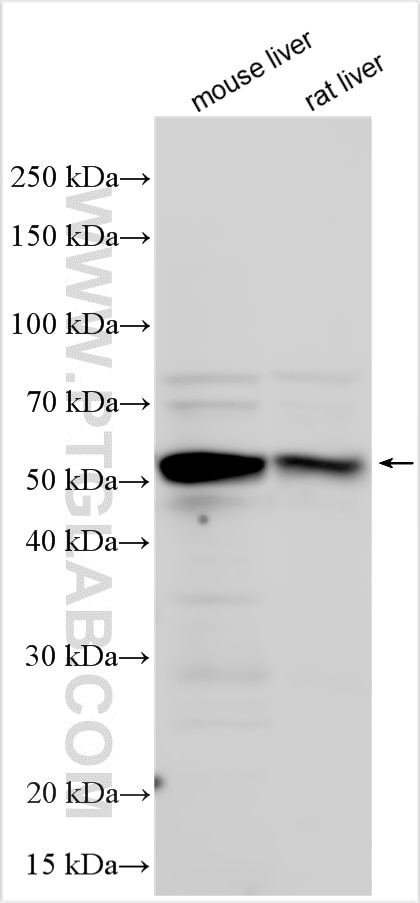
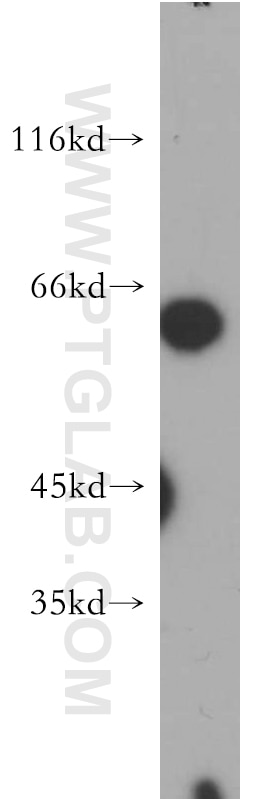
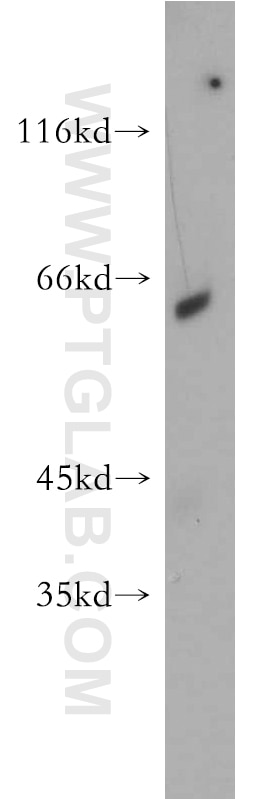
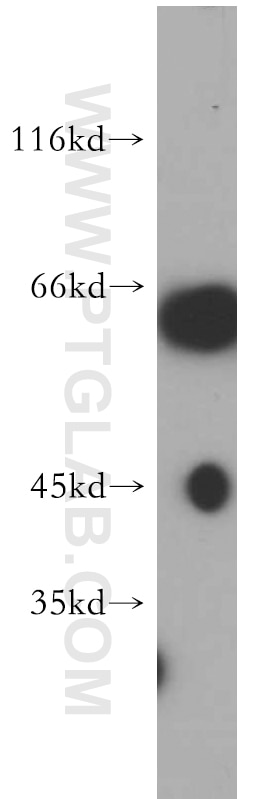
| Positive WB detected in | mouse liver tissue, Jurkat cells, HepG2 cells, L02 cells, rat liver tissue |
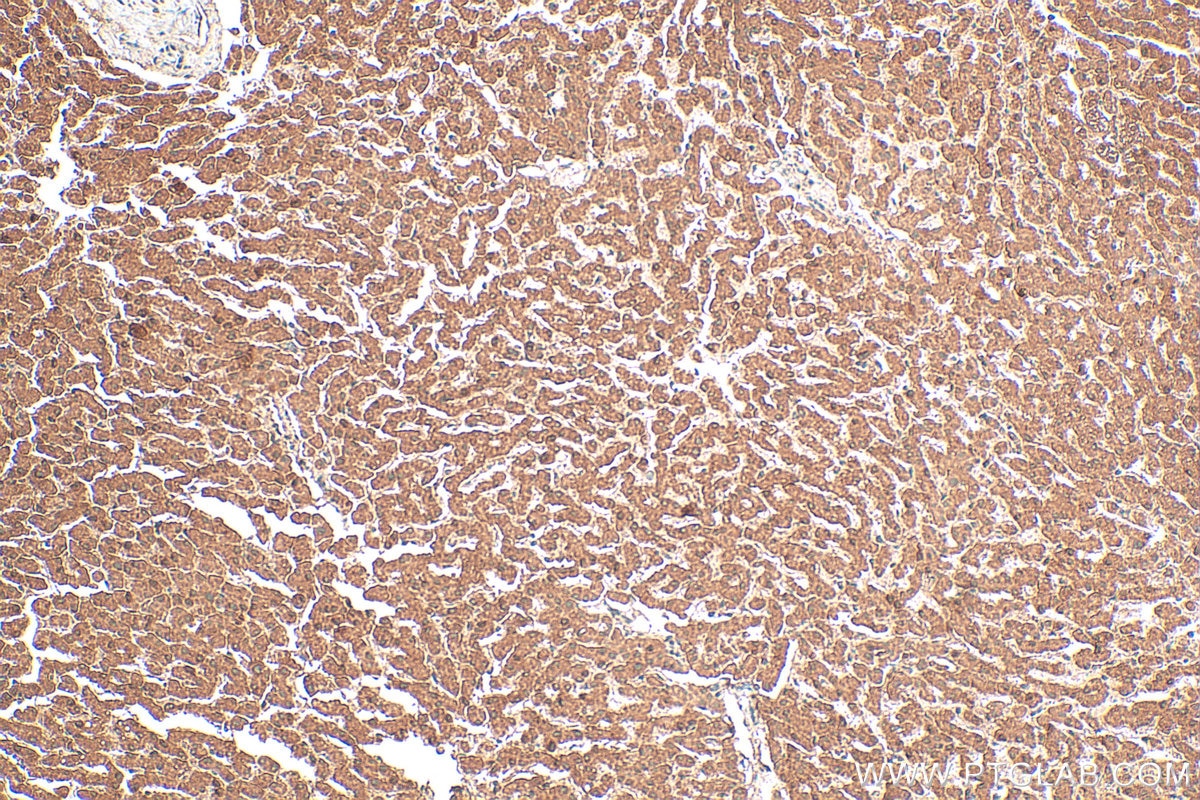
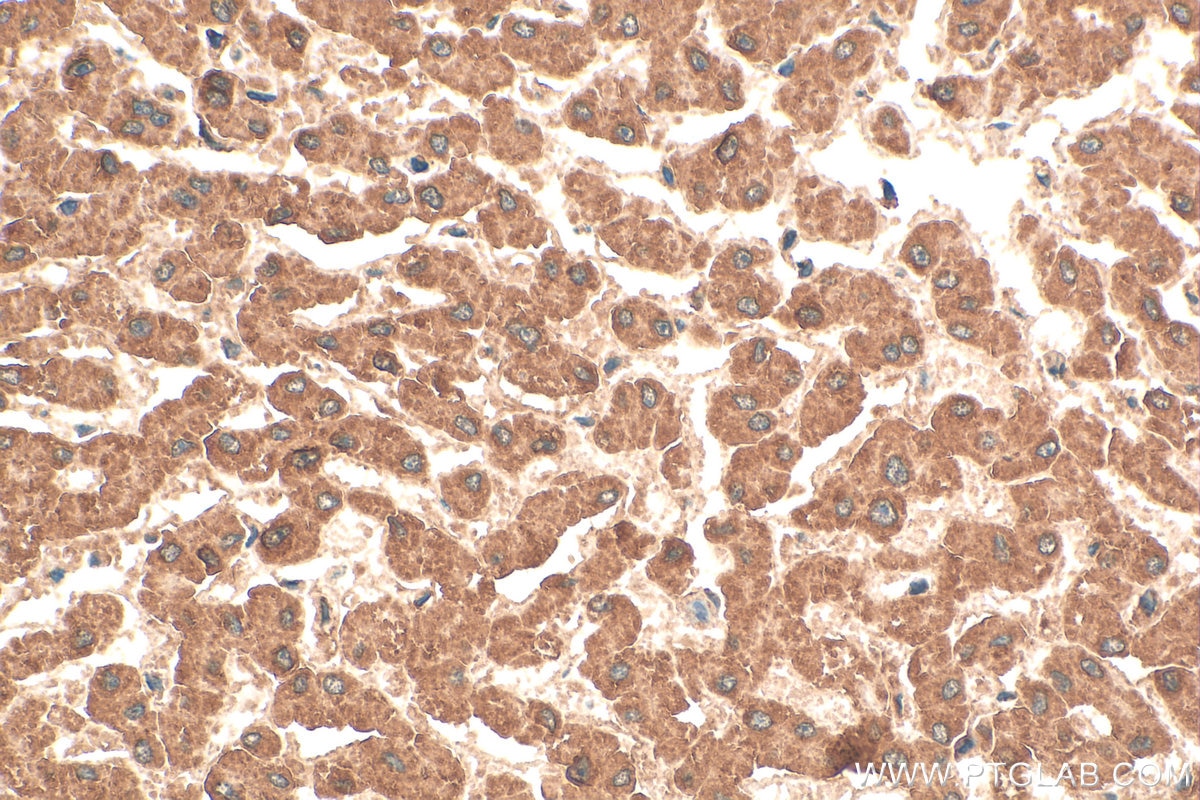
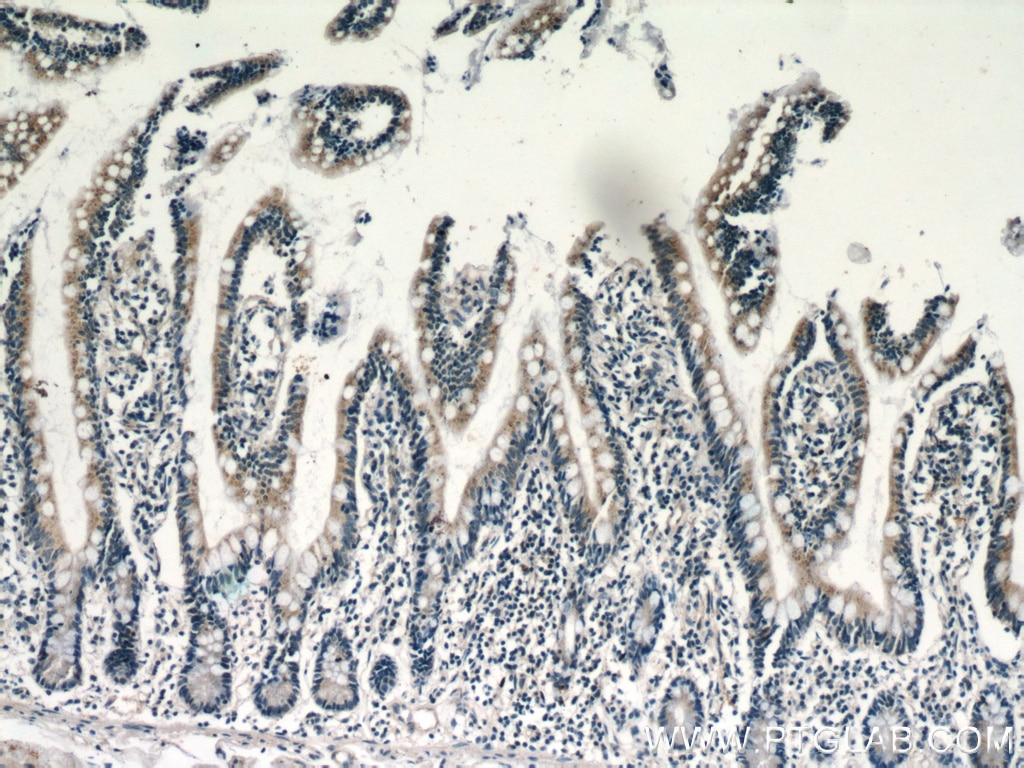
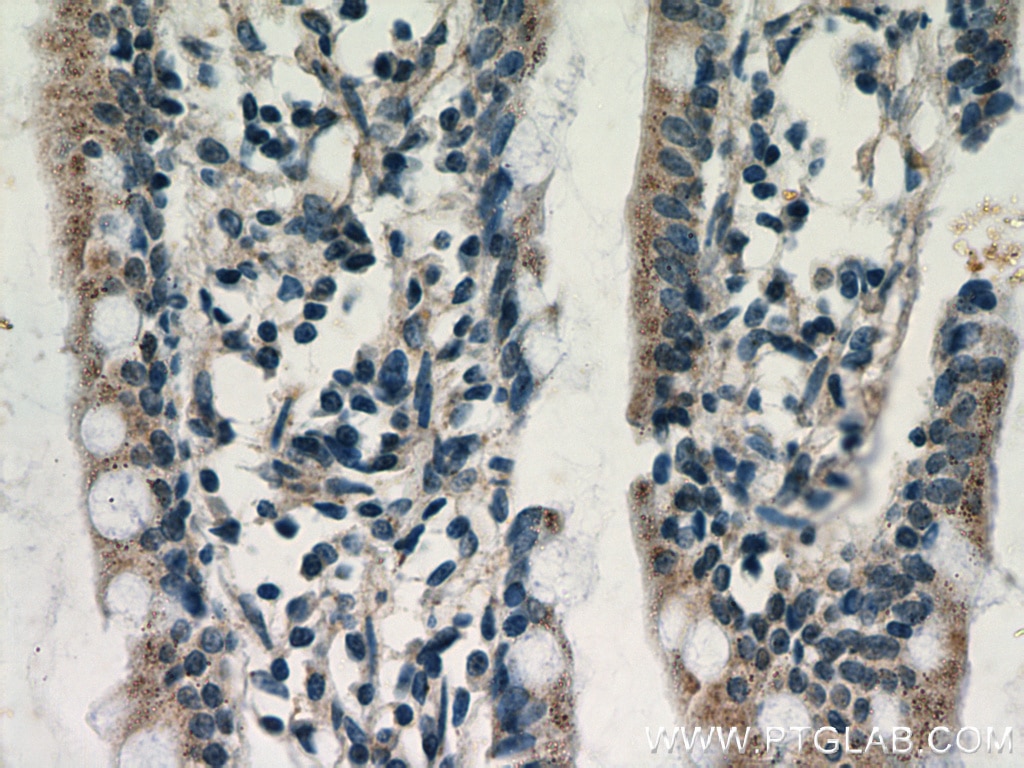
| Positive IHC detected in | human liver tissue, human small intestine tissue Note: suggested antigen retrieval with TE buffer pH 9.0; (*) Alternatively, antigen retrieval may be performed with citrate buffer pH 6.0 |
Recommended dilution
| Application | Dilution |
|---|---|
| Western Blot (WB) | WB : 1:1000-1:6000 |
| Immunohistochemistry (IHC) | IHC : 1:50-1:500 |
| It is recommended that this reagent should be titrated in each testing system to obtain optimal results. | |
| Sample-dependent, Check data in validation data gallery. | |
Product Information
21566-1-AP targets NAGS in WB, IHC, ELISA applications and shows reactivity with human, mouse, rat samples.
| Tested Reactivity | human, mouse, rat |
| Cited Reactivity | human, mouse, rat, pig |
| Host / Isotype | Rabbit / IgG |
| Class | Polyclonal |
| Type | Antibody |
| Immunogen |
CatNo: Ag16073 Product name: Recombinant human NAGS protein Source: e coli.-derived, PGEX-4T Tag: GST Domain: 1-368 aa of BC111713 Sequence: MDMKPLVVLGLPAPTAPSGCLSFWEAKAQLAKSCKVLVDALRHNAAAAVPFFGGGSVLRAAEPAPHASYGGIVSVETDLLQWCLESGSIPILCPIGETAARRSVLLDSLEVTASLAKALRPTKIIFLNNTGGLRDSSHKVLSNVNLPADLDLVCNAEWVSTKERQQMRLIVDVLSRLPHHSSAVITAASTLLTELFSNKGSGTLFKNAERMLRVRSLDKLDQGRLVDLVNASFGKKLRDDYLASLRPRLHSIYVSEGYNAAAILTMEPVLGGTPYLDKFVVSSSRQGQGSGQMLWECLRRDLQTLFWRSRVTNPINPWYFKHSDGSFSNKQWIFFWFGLADIRDSYELVNHAKGLPDSFHKPASDPGS Predict reactive species |
| Full Name | N-acetylglutamate synthase |
| Calculated Molecular Weight | 534 aa, 58 kDa |
| Observed Molecular Weight | 58-66 kDa |
| GenBank Accession Number | BC111713 |
| Gene Symbol | NAGS |
| Gene ID (NCBI) | 162417 |
| RRID | AB_10733886 |
| Conjugate | Unconjugated |
| Form | Liquid |
| Purification Method | Antigen affinity purification |
| UNIPROT ID | Q8N159 |
| Storage Buffer | PBS with 0.02% sodium azide and 50% glycerol, pH 7.3. |
| Storage Conditions | Store at -20°C. Stable for one year after shipment. Aliquoting is unnecessary for -20oC storage. 20ul sizes contain 0.1% BSA. |
Background Information
N-acetylglutamate synthase, also known as NAGS, is a mitochondrial enzyme that catalyzes the formation of N-acetylglutamate (NAG) from glutamate and acetyl coenzyme-A. NAGS is the key enzyme for regulating the hepatic urea cycle and is also highly expressed in the kidney and gut. Deficiency of NAGS leads to hyperammonemia due to decreased activity of CPSI deprived of its cofactor NAG(PMID:12459178,12754705).
Protocols
| Product Specific Protocols | |
|---|---|
| IHC protocol for NAGS antibody 21566-1-AP | Download protocol |
| WB protocol for NAGS antibody 21566-1-AP | Download protocol |
| Standard Protocols | |
|---|---|
| Click here to view our Standard Protocols |
Publications
What published studies show
The NAGS Polyclonal antibody (Cat# 21566-1-AP) has 4 total citations. These appear in Molecular Metabolism, Drug Design, Development and Therapy, IMetaOmics, and Heliyon. The cited research spans hepatic ureagenesis and metabolic regulation, drug mechanisms in tetrodotoxin poisoning, viral pathogenicity (SADS-CoV), and machine-learning-based diagnosis of non-alcoholic fatty liver disease. Applications cited include WB and IHC across mouse, rat, pig, and human species.
| Species | Application | Title |
|---|---|---|
Mol Metab SWI/SNF complex subunit BAF60a represses hepatic ureagenesis through a crosstalk between YB-1 and PGC-1α. | ||
Drug Des Devel Ther The Potential Mechanisms of Althaea rosea (Linn.) Cavan. Flower in Alleviating Tetrodotoxin Poisoning: An Integrated Metabolomics, Network Pharmacology and Experimental Validation | ||
IMetaOmics Effects of SADS-CoV accessory proteins NS3a, NS7a, and NS7b on viral pathogenicity: A multi-omics investigation. | ||
Heliyon Machine learning deciphers the significance of mitochondrial regulators on the diagnosis and subtype classification in non-alcoholic fatty liver disease |
Reviews
What customers say
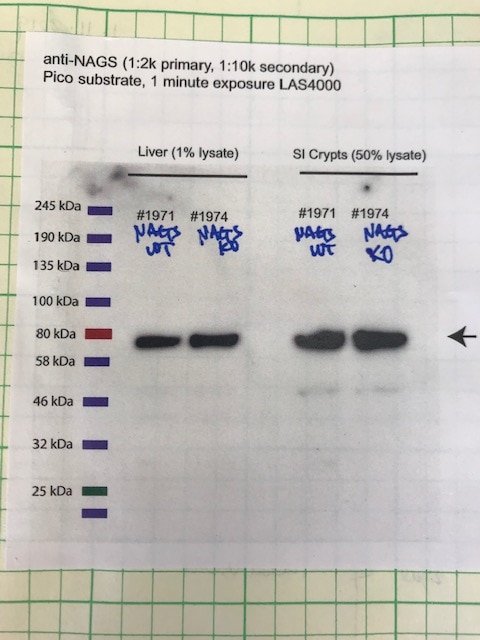
The single review for this product reports a negative experience with Western Blot at a 1:2000 dilution on mouse liver and intestine samples. The reviewer observed a strong band at an incorrect size in a NAGS knockout model and expressed concern that the antibody did not perform as intended. Overall, the feedback indicates the product failed to meet expectations for the specific experimental application described.
The reviews below have been submitted by verified Proteintech customers who received an incentive for providing their feedback.
Heaji (Verified Customer) (09-30-2019) | As shown in the image the antibody recognizes a strong band of the wrong size in the NAGS knockout model -- I don't think this works as intended. Thank you.
 |









