



Tested Applications
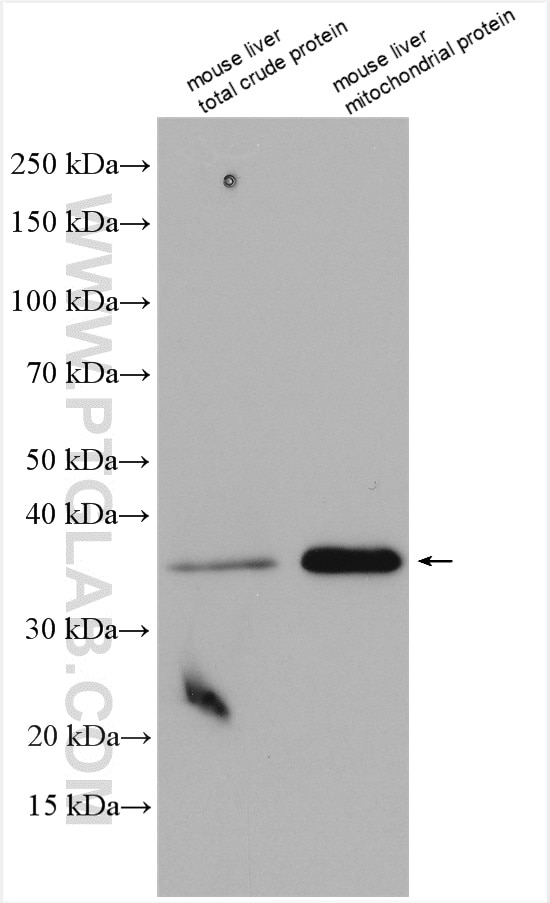
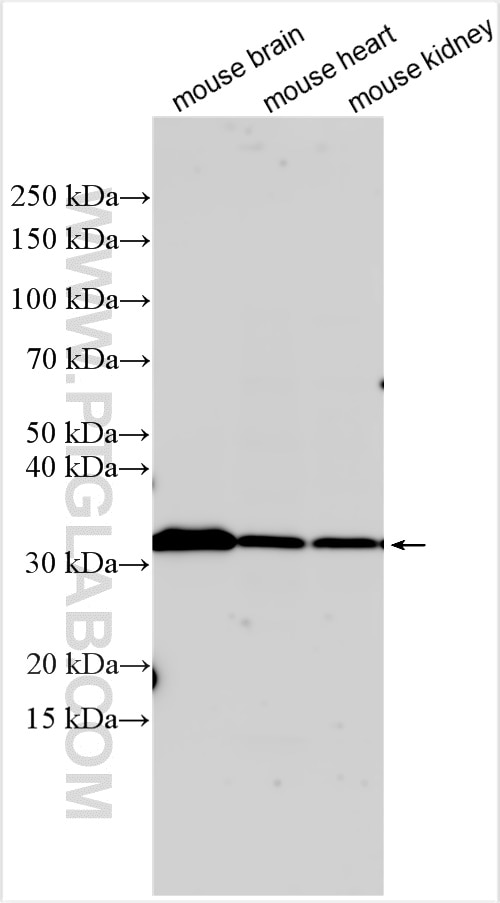
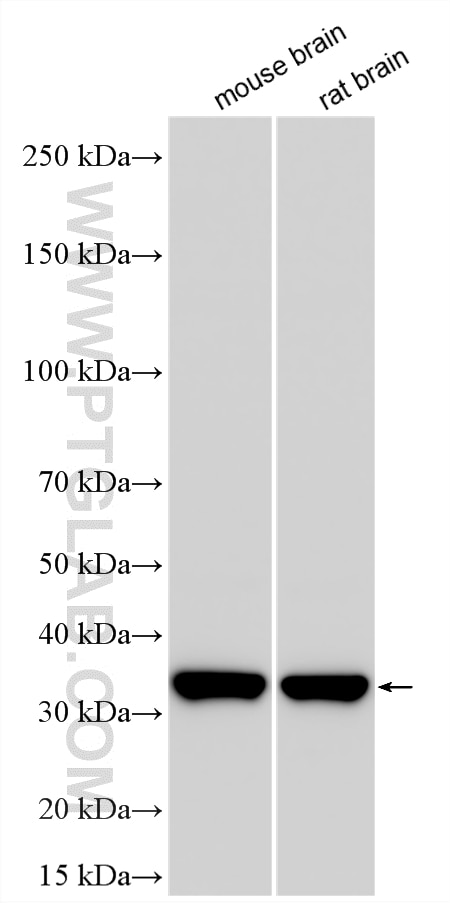
| Positive WB detected in | mouse brain tissue, mouse liver tissue, mouse liver mitochondria, mouse heart tissue, mouse kidney tissue, rat brain tissue |
| Positive IHC detected in | human stomach cancer tissue, human heart tissue, mouse stomach tissue, rat stomach tissue Note: suggested antigen retrieval with TE buffer pH 9.0; (*) Alternatively, antigen retrieval may be performed with citrate buffer pH 6.0 |
Recommended dilution
| Application | Dilution |
|---|---|
| Western Blot (WB) | WB : 1:1000-1:6000 |
| Immunohistochemistry (IHC) | IHC : 1:250-1:1000 |
| It is recommended that this reagent should be titrated in each testing system to obtain optimal results. | |
| Sample-dependent, Check data in validation data gallery. | |
Product Information
19703-1-AP targets ND1 in WB, IHC, IF, IP, ELISA applications and shows reactivity with human, mouse, rat samples.
| Tested Reactivity | human, mouse, rat |
| Cited Reactivity | human, mouse, rat, pig, hamster |
| Host / Isotype | Rabbit / IgG |
| Class | Polyclonal |
| Type | Antibody |
| Immunogen |
Peptide Predict reactive species |
| Full Name | NADH dehydrogenase, subunit 1 (complex I) |
| Calculated Molecular Weight | 36 kDa |
| Observed Molecular Weight | 28-38 kDa |
| GenBank Accession Number | NC_012920 |
| Gene Symbol | ND1 |
| Gene ID (NCBI) | 4535 |
| RRID | AB_10637853 |
| Conjugate | Unconjugated |
| Form | Liquid |
| Purification Method | Antigen affinity purification |
| UNIPROT ID | P03886 |
| Storage Buffer | PBS with 0.02% sodium azide and 50% glycerol, pH 7.3. |
| Storage Conditions | Store at -20°C. Stable for one year after shipment. Aliquoting is unnecessary for -20oC storage. 20ul sizes contain 0.1% BSA. |
Background Information
ND1 belongs to the complex I subunit 1 family. ND1 is a core subunit of the mitochondrial membrane respiratory chain NADH dehydrogenase (Complex I) that is believed to belong to the minimal assembly required for catalysis. Complex I functions in the transfer of electrons from NADH to the respiratory chain. The immediate electron acceptor for the enzyme is believed to be ubiquinone.
Protocols
| Product Specific Protocols | |
|---|---|
| IHC protocol for ND1 antibody 19703-1-AP | Download protocol |
| WB protocol for ND1 antibody 19703-1-AP | Download protocol |
| Standard Protocols | |
|---|---|
| Click here to view our Standard Protocols |
Publications
What published studies show
The ND1 Polyclonal antibody (catalog number 19703-1-AP) has 111 total citations. These appear in high-impact journals including Nature, Cell, Science Advances, Nature Communications, Signal Transduction and Targeted Therapy, Circulation, Cell Metabolism, EMBO Journal, and Journal of Biological Chemistry. Research fields span mitochondrial biology and oxidative phosphorylation, mitochondrial DNA mutations (e.g., Leber's hereditary optic neuropathy), cancer metabolism, diabetic kidney disease, cardiovascular disorders, neurodegeneration, and reproductive biology. Applications are predominantly Western blot, with some IHC, IF, and IP.
| Species | Application | Title |
|---|---|---|
Signal Transduct Target Ther Targeting N(1)-methyladenosine modification in osteoblasts through tRNA methyltransferase 10C reverses mitochondrial dysfunction and ameliorates osteoporosis. | ||
Signal Transduct Target Ther Fructose directly remodels the translocase of the outer membrane to impair oxidative phosphorylation in podocytes | ||
Cell MicroRNA Directly Enhances Mitochondrial Translation during Muscle Differentiation.
| ||
Cell Dynamic mapping of proteome trafficking within and between living cells by TransitID |
Reviews
What customers say
Reviews are mixed. One user found the antibody works well with A549 cells and lung tissue at 1:500 dilution, though background was somewhat elevated in A549 lysates. Another user reported detecting ND2 (not ND1) in mouse liver and heart lysates, raising specificity concerns. A third user experienced significant background in Western blot with human ES2 cells, making band identification difficult. A fourth user reported no signal in zebrafish for both WB and IF despite following the recommended protocol. Overall, performance appears cell-type and species-dependent, with background and specificity issues noted in several applications.
The reviews below have been submitted by verified Proteintech customers who received an incentive for providing their feedback.
Lenie (Verified Customer) (10-30-2025) | Both WB and IF no result on zebrafish even though protocol was followed.
|
Tania (Verified Customer) (03-05-2022) | a lot of background. difficult to say each band is the correct one.
|
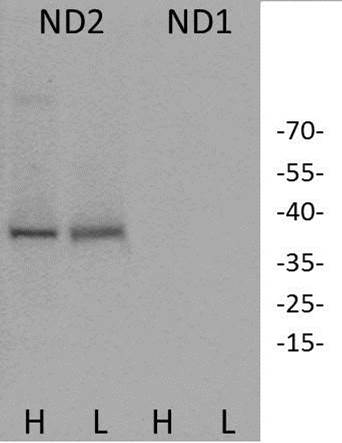
Daniel (Verified Customer) (10-01-2019) | ND2 was detected in both liver (L) and heart (H) lysate from a wildtype mouse. No ND1 was detected in samples processed in parallel.
 |
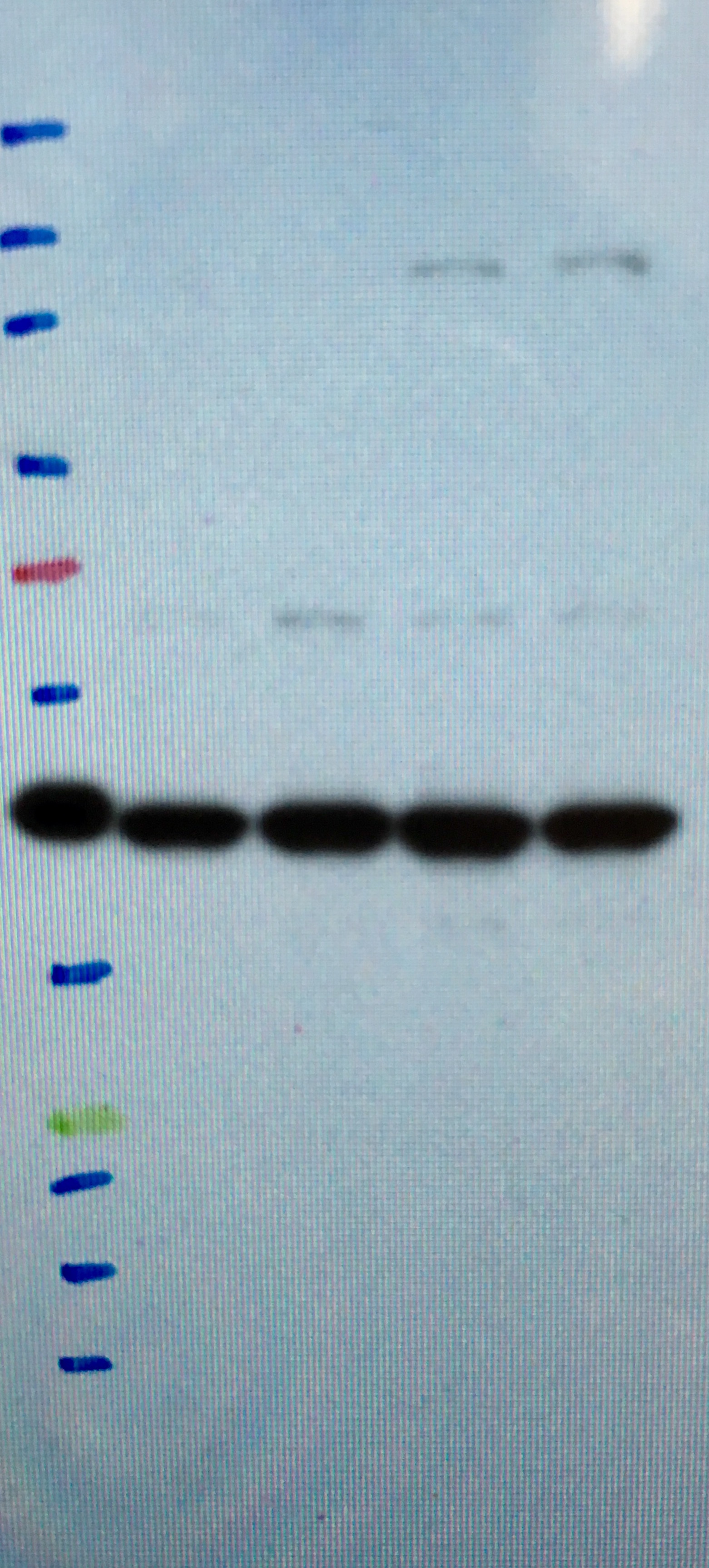
Loukmane (Verified Customer) (08-10-2018) | It works very well with A549 and lung tissue, although with the former the background is higherThe image shows ND1 in whole A549 lysate
 |





