
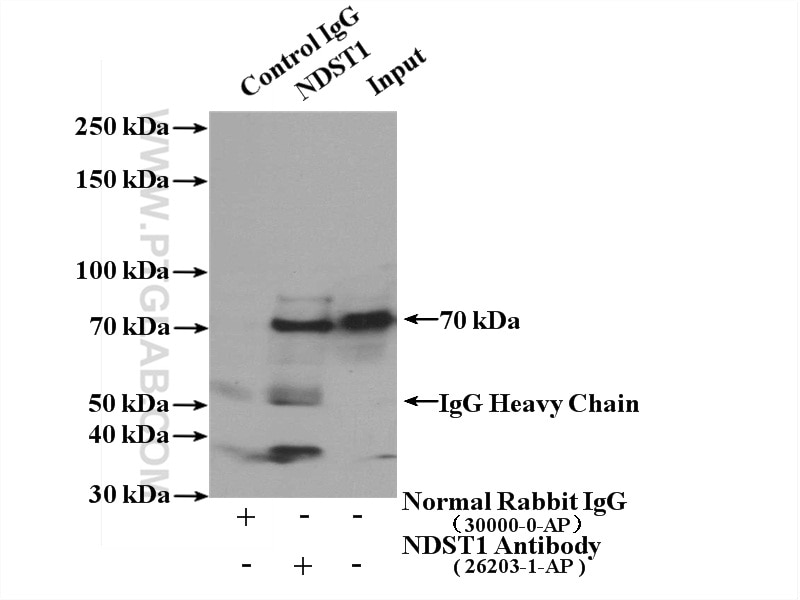

Tested Applications
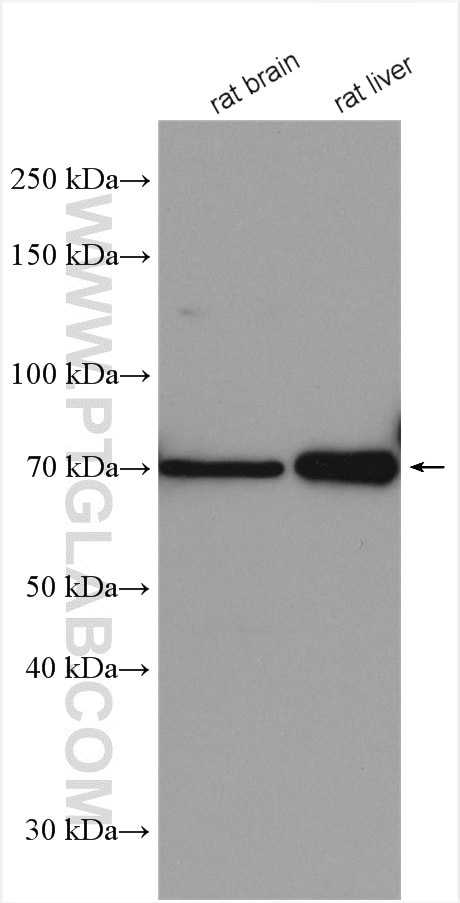
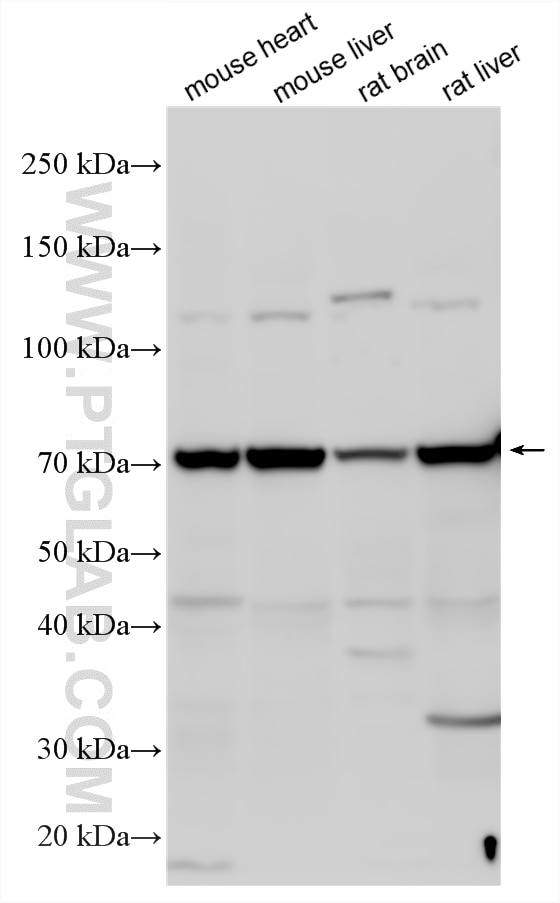
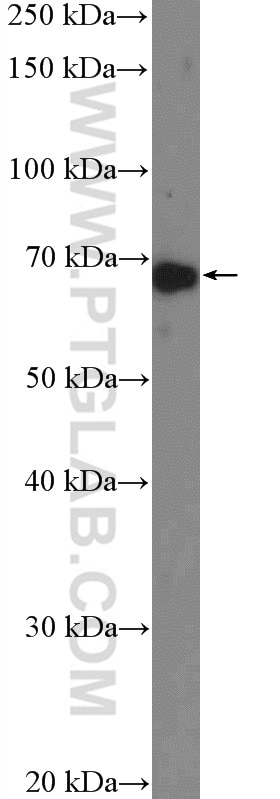
| Positive WB detected in | rat brain tissue, mouse heart tissue, mouse liver tissue, rat liver tissue |
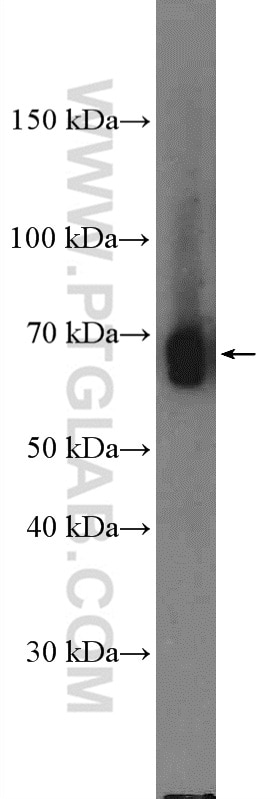
| Positive IP detected in | mouse liver tissue |
Recommended dilution
| Application | Dilution |
|---|---|
| Western Blot (WB) | WB : 1:500-1:1000 |
| Immunoprecipitation (IP) | IP : 0.5-4.0 ug for 1.0-3.0 mg of total protein lysate |
| It is recommended that this reagent should be titrated in each testing system to obtain optimal results. | |
| Sample-dependent, Check data in validation data gallery. | |
Product Information
26203-1-AP targets NDST1 in WB, IHC, IF, IP, ELISA applications and shows reactivity with human, mouse, rat samples.
| Tested Reactivity | human, mouse, rat |
| Cited Reactivity | human, mouse, rat |
| Host / Isotype | Rabbit / IgG |
| Class | Polyclonal |
| Type | Antibody |
| Immunogen |
CatNo: Ag24422 Product name: Recombinant human NDST1 protein Source: e coli.-derived, PET30a Tag: 6*His Domain: 38-90 aa of BC012888 Sequence: LYGWKRGLEPSADAPEPDCGDPPPVAPSRLLPLKPVQAATPSRTDPLVLVFVE Predict reactive species |
| Full Name | N-deacetylase/N-sulfotransferase (heparan glucosaminyl) 1 |
| Calculated Molecular Weight | 882 aa, 101 kDa |
| Observed Molecular Weight | 68-70 kDa |
| GenBank Accession Number | BC012888 |
| Gene Symbol | NDST1 |
| Gene ID (NCBI) | 3340 |
| RRID | AB_2880423 |
| Conjugate | Unconjugated |
| Form | Liquid |
| Purification Method | Antigen affinity purification |
| UNIPROT ID | P52848 |
| Storage Buffer | PBS with 0.02% sodium azide and 50% glycerol, pH 7.3. |
| Storage Conditions | Store at -20°C. Stable for one year after shipment. Aliquoting is unnecessary for -20oC storage. 20ul sizes contain 0.1% BSA. |
Background Information
NDST1 encodes the bifunctional GlcNAc N-deacetylase/N-sulfotransferase NDST1, which has an important function in the generation of sulfated ligandbinding sites during heparan sulfate biosynthesis. NDST1 is a type II transmembrane protein that resides in the Golgi apparatus and catalyzes both N-deacetylation and N-sulfation of N-acetylglucosamine (GlcNAc) units of the HS polysaccharide chain (PMID: 25125150). In mice, Ndst1 is crucial for embryonic development and homozygous null mutations are perinatally lethal (PMID: 16020517, 38129107).
Protocols
| Product Specific Protocols | |
|---|---|
| IP protocol for NDST1 antibody 26203-1-AP | Download protocol |
| WB protocol for NDST1 antibody 26203-1-AP | Download protocol |
| Standard Protocols | |
|---|---|
| Click here to view our Standard Protocols |
Publications
What published studies show
NDST1 Polyclonal antibody (Cat# 26203-1-AP) has 22 citations published in journals including Nature Communications, Journal of Extracellular Vesicles, Advanced Science, Oncogene, Annals of Neurology, Experimental Molecular Medicine, and Journal of Nanobiotechnology. Associated research fields encompass extracellular vesicle and migrasome biology, neurology (Parkinson's disease, nerve regeneration), oncology (renal cell carcinoma, glioblastoma, nasopharyngeal carcinoma), nephrology (diabetic kidney disease, lupus nephritis), post-infarction cardiac injury, and reproductive immunology.
| Species | Application | Title |
|---|---|---|
J Extracell Vesicles M2 Macrophage-Derived Migrasomes Mediate Ischaemia-Induced Retinal Neovascularization by Targeting TREM2. | ||
J Extracell Vesicles Quantification of urinary podocyte-derived migrasomes for the diagnosis of kidney disease | ||
Nat Commun Macrophage lineage cells-derived migrasomes activate complement-dependent blood-brain barrier damage in cerebral amyloid angiopathy mouse model | ||
Exp Mol Med PGC-1α mediates migrasome secretion accelerating macrophage-myofibroblast transition and contributing to sepsis-associated pulmonary fibrosis | ||
J Nanobiotechnology TSPAN4-positive migrasome derived from retinal pigmented epithelium cells contributes to the development of proliferative vitreoretinopathy | ||
J Nanobiotechnology A migrasome-based osteoinductive strategy: reprogramming the bone microenvironment for accelerated coupling of angiogenesis and osteogenesis. |






