
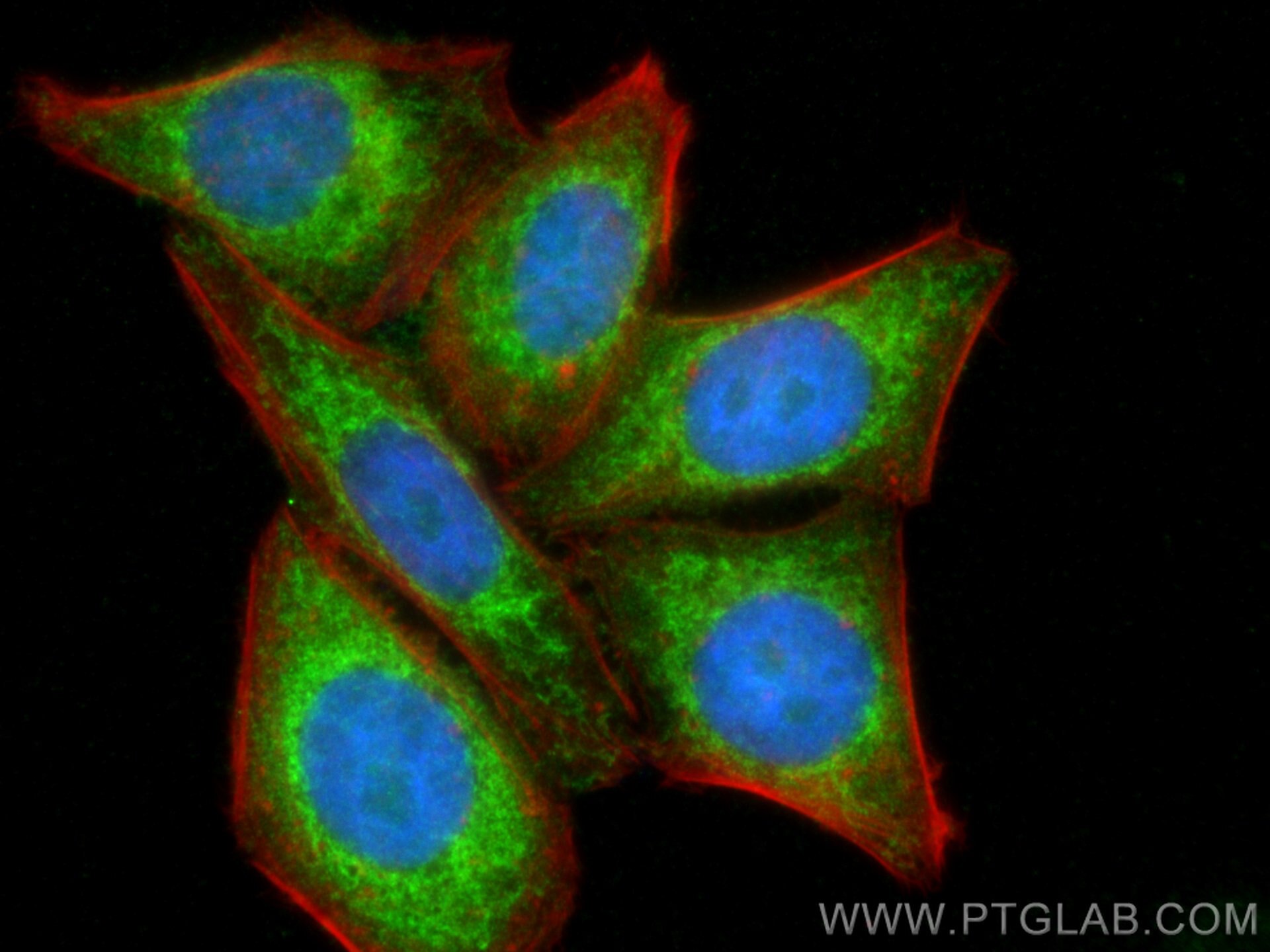

Tested Applications
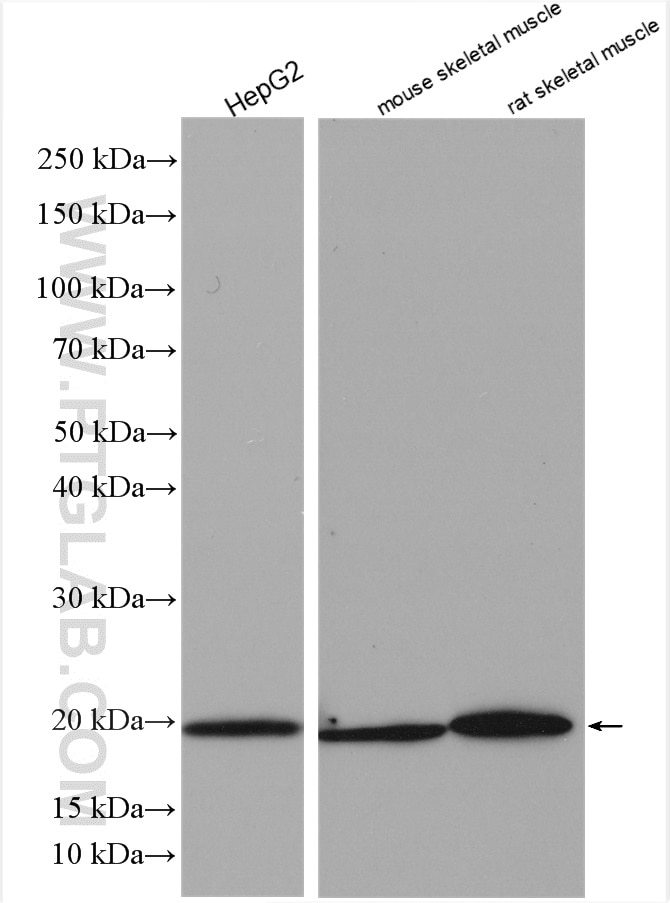
| Positive WB detected in | HepG2 cells, mouse skeletal muscle tissue, rat skeletal muscle tissue |
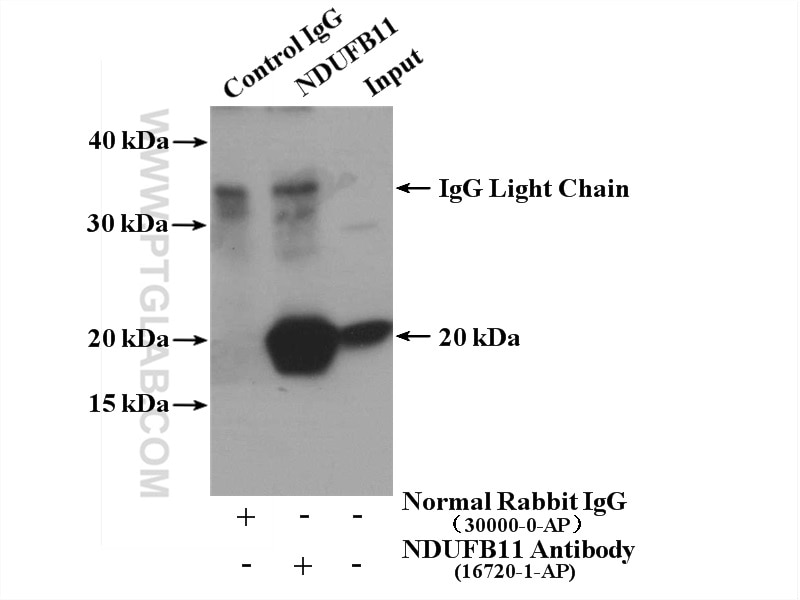
| Positive IP detected in | mouse skeletal muscle tissue |
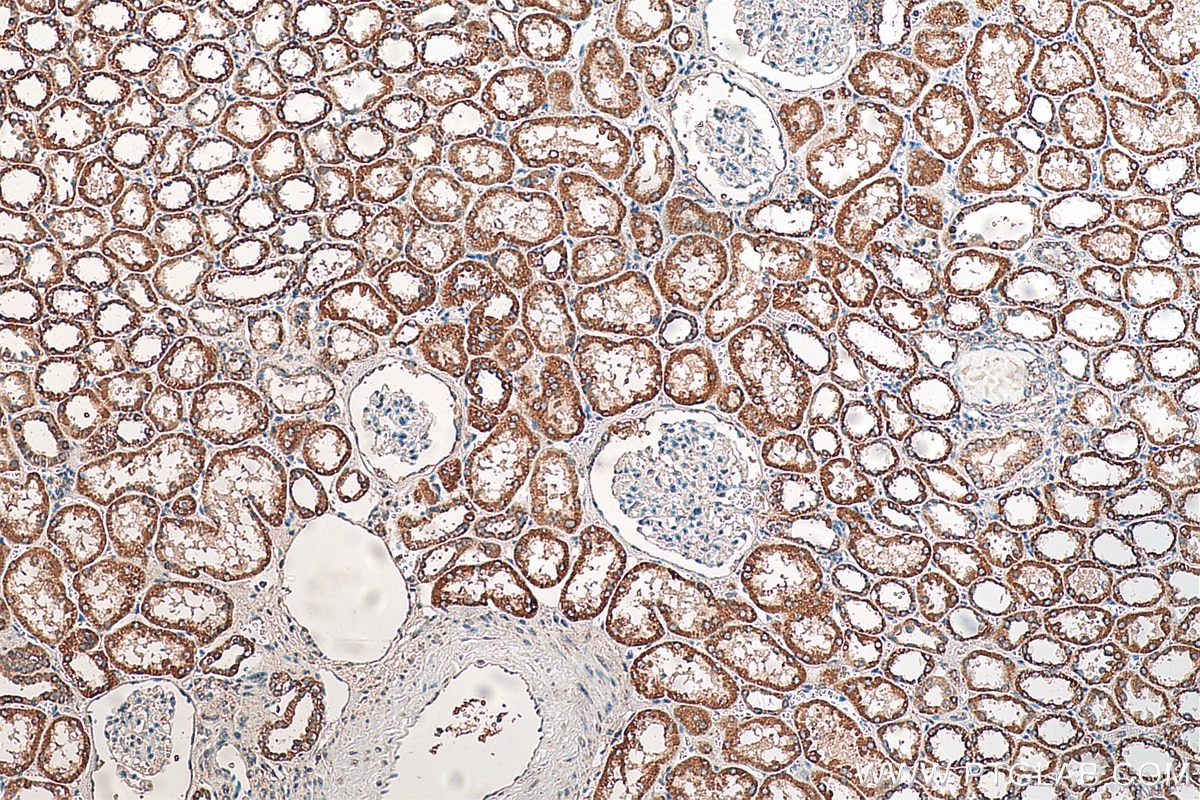
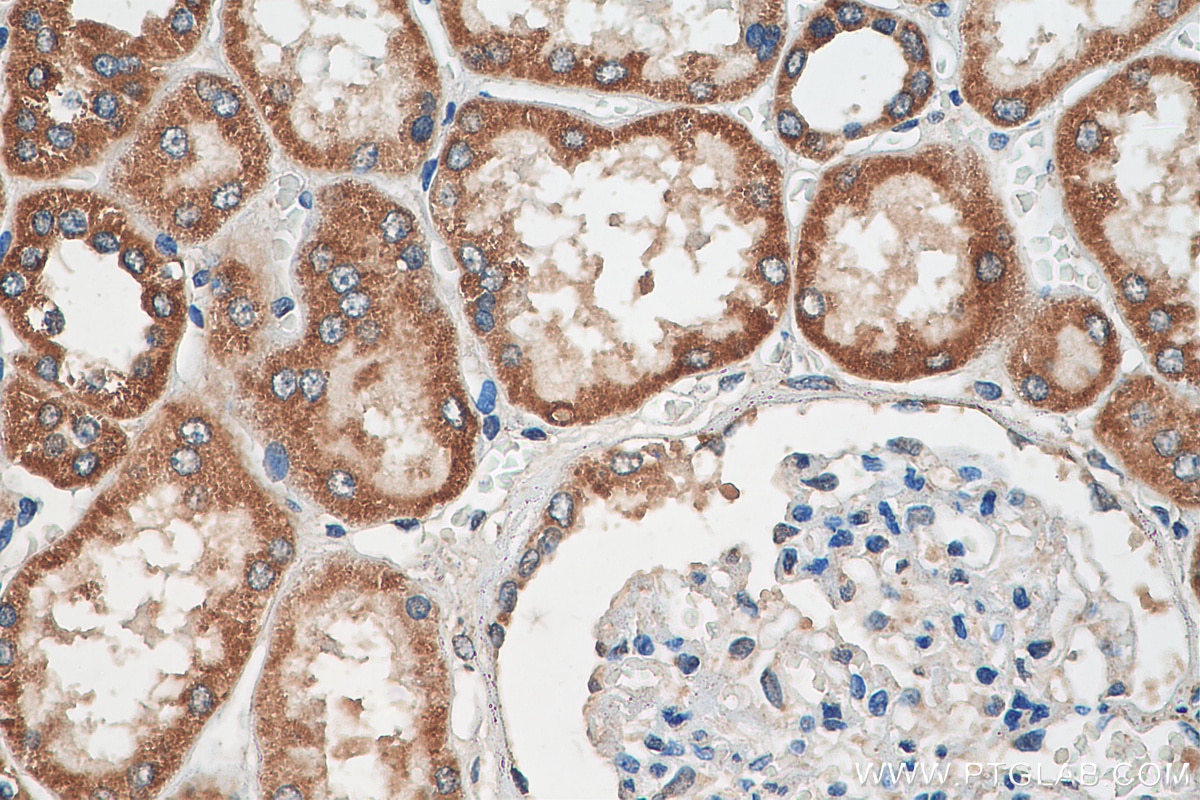
| Positive IHC detected in | human kidney tissue Note: suggested antigen retrieval with TE buffer pH 9.0; (*) Alternatively, antigen retrieval may be performed with citrate buffer pH 6.0 |
| Positive IF/ICC detected in | HepG2 cells |
Recommended dilution
| Application | Dilution |
|---|---|
| Western Blot (WB) | WB : 1:1000-1:4000 |
| Immunoprecipitation (IP) | IP : 0.5-4.0 ug for 1.0-3.0 mg of total protein lysate |
| Immunohistochemistry (IHC) | IHC : 1:50-1:500 |
| Immunofluorescence (IF)/ICC | IF/ICC : 1:50-1:500 |
| It is recommended that this reagent should be titrated in each testing system to obtain optimal results. | |
| Sample-dependent, Check data in validation data gallery. | |
Product Information
16720-1-AP targets NDUFB11 in WB, IHC, IF/ICC, IP, ELISA applications and shows reactivity with human, mouse, rat samples.
| Tested Reactivity | human, mouse, rat |
| Cited Reactivity | human, mouse |
| Host / Isotype | Rabbit / IgG |
| Class | Polyclonal |
| Type | Antibody |
| Immunogen |
CatNo: Ag10159 Product name: Recombinant human NDUFB11 protein Source: e coli.-derived, PGEX-4T Tag: GST Domain: 30-163 aa of BC107805 Sequence: ESSFSRTVVAPSAVAGKRPPEPTTPWQEDPEPEDENLYEKNPDSHGYDKDPVLDVWNMRLVFFFGVSIILVLGSTFVAYLPDYRCTGCPRAWDGMKEWSRREAERLVKYREANGLPIMESNCFDPSKIQLPEDE Predict reactive species |
| Full Name | NADH dehydrogenase (ubiquinone) 1 beta subcomplex, 11, 17.3kDa |
| Calculated Molecular Weight | 163 aa, 18 kDa |
| Observed Molecular Weight | 18-20 kDa |
| GenBank Accession Number | BC107805 |
| Gene Symbol | NDUFB11 |
| Gene ID (NCBI) | 54539 |
| RRID | AB_2298378 |
| Conjugate | Unconjugated |
| Form | Liquid |
| Purification Method | Antigen affinity purification |
| UNIPROT ID | Q9NX14 |
| Storage Buffer | PBS with 0.02% sodium azide and 50% glycerol, pH 7.3. |
| Storage Conditions | Store at -20°C. Stable for one year after shipment. Aliquoting is unnecessary for -20oC storage. 20ul sizes contain 0.1% BSA. |
Background Information
NDUFB11(NADH dehydrogenase [ubiquinone] 1 beta subcomplex subunit 11, mitochondrial) is also named as neuronal protein 17.3(Np17.3) and belongs to the complex I NDUFB11 subunit family. This protein is involved in the transfer of electrons from NADH to the respiratory chain and play a role in the growth, maintenance, and survival of neurons. NDUFB11 has 2 isoforms produced by alternative splicing.
Protocols
| Product Specific Protocols | |
|---|---|
| IF protocol for NDUFB11 antibody 16720-1-AP | Download protocol |
| IHC protocol for NDUFB11 antibody 16720-1-AP | Download protocol |
| IP protocol for NDUFB11 antibody 16720-1-AP | Download protocol |
| WB protocol for NDUFB11 antibody 16720-1-AP | Download protocol |
| Standard Protocols | |
|---|---|
| Click here to view our Standard Protocols |
Publications
What published studies show
The NDUFB11 Polyclonal antibody (Cat# 16720-1-AP) has 15 total citations. These appear in journals including Cancer Research, Molecular Cell, EMBO Journal, EMBO Molecular Medicine, Cell Reports, American Journal of Human Genetics, Geroscience, BBA, Scientific Reports, iScience, Journal of Biological Chemistry, Clinical Genetics, bioRxiv, and EMBO Reports. Research fields span mitochondrial complex I biology, oxidative phosphorylation, mitochondrial disease genetics, and cancer metabolism.
| Species | Application | Title |
|---|---|---|
Cancer Res Oxidative Phosphorylation is a Metabolic Vulnerability of Endocrine Therapy-Tolerant Persister Cells in ER+ Breast Cancer
| ||
Mol Cell Identification of TMEM126A as OXA1L-interacting protein reveals cotranslational quality control in mitochondria | ||
EMBO J Respiratory supercomplexes act as a platform for complex III-mediated maturation of human mitochondrial complexes I and IV. | ||
EMBO Mol Med miR-181a/b downregulation exerts a protective action on mitochondrial disease models. | ||
Cell Rep NDUFS3 depletion permits complex I maturation and reveals TMEM126A/OPA7 as an assembly factor binding the ND4-module intermediate. | ||
Am J Hum Genet Mutations in NDUFB11, Encoding a Complex I Component of the Mitochondrial Respiratory Chain, Cause Microphthalmia with Linear Skin Defects Syndrome.
|






