

Tested Applications
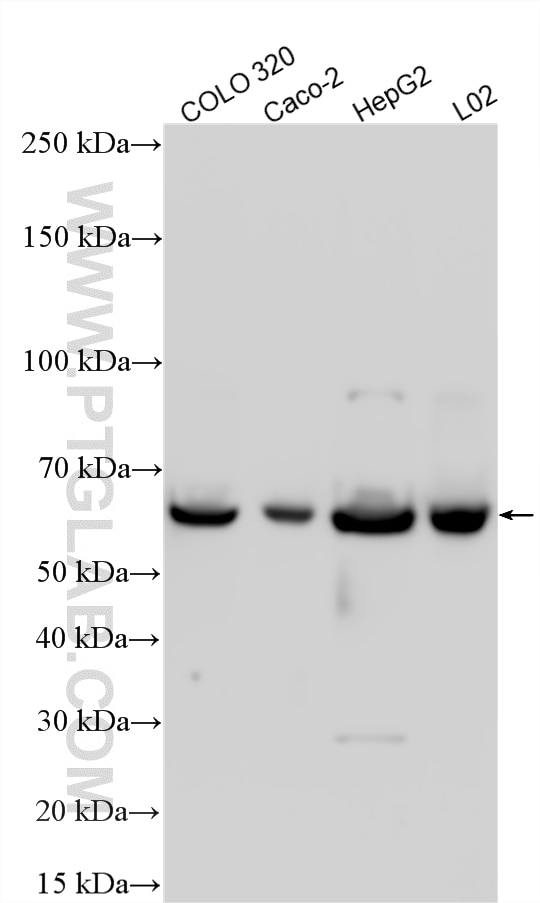
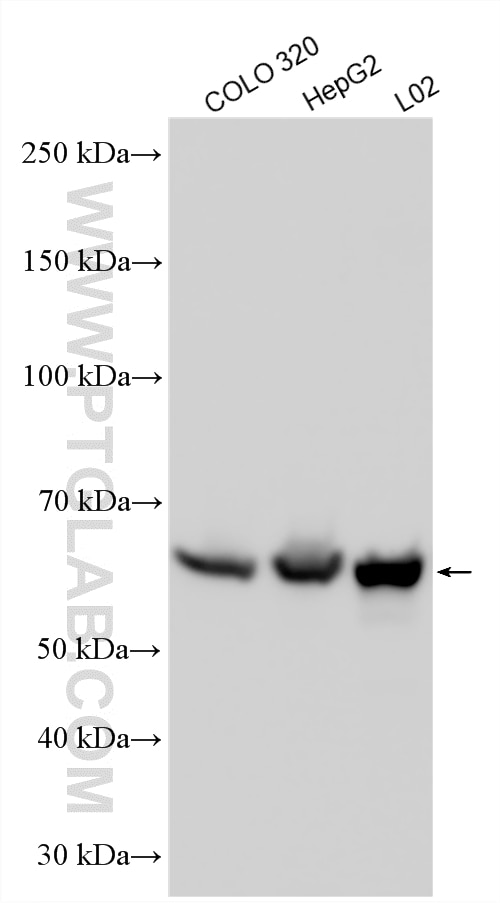
| Positive WB detected in | COLO 320 cells, Caco-2 cells, HepG2 cells, L02 cells |
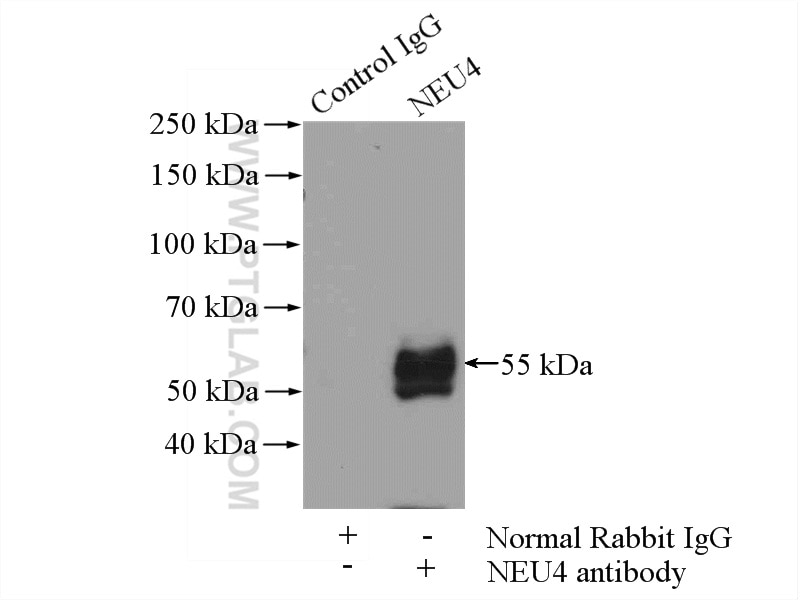
| Positive IP detected in | L02 cells |
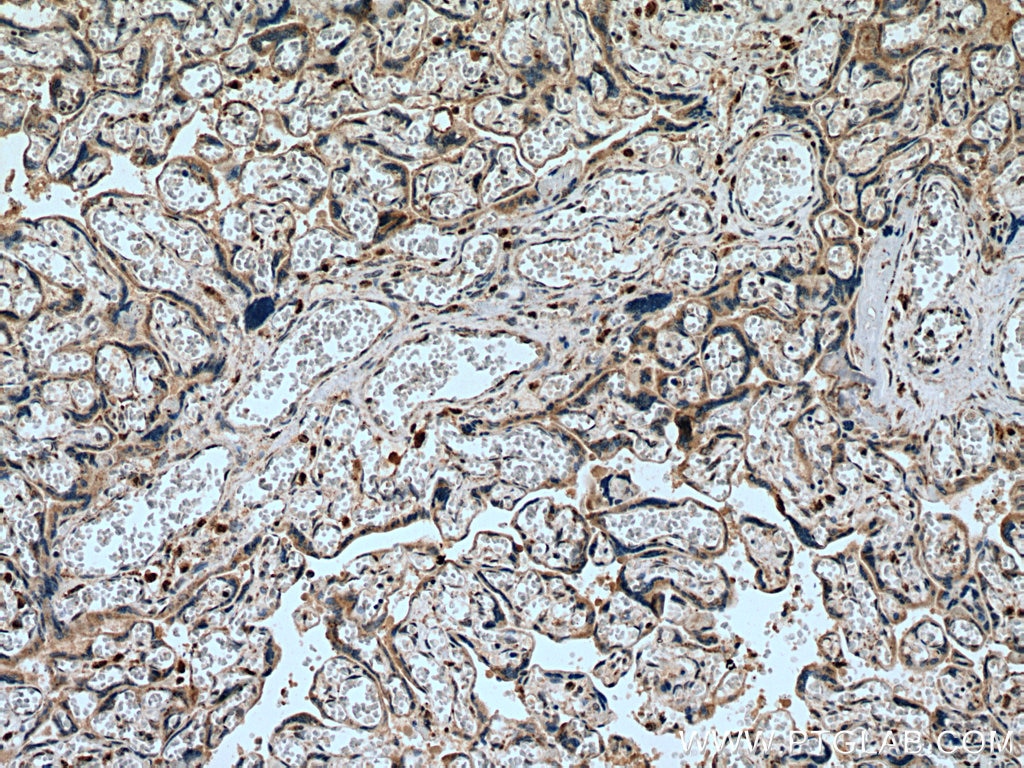
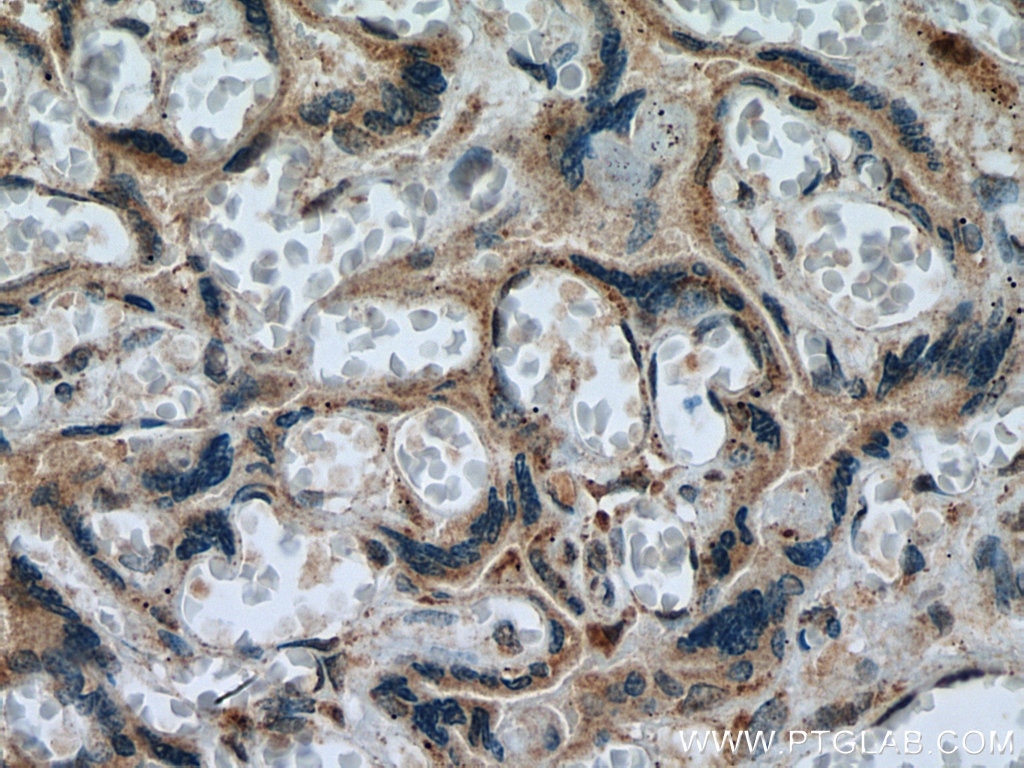
| Positive IHC detected in | human placenta tissue Note: suggested antigen retrieval with TE buffer pH 9.0; (*) Alternatively, antigen retrieval may be performed with citrate buffer pH 6.0 |
Recommended dilution
| Application | Dilution |
|---|---|
| Western Blot (WB) | WB : 1:1000-1:8000 |
| Immunoprecipitation (IP) | IP : 0.5-4.0 ug for 1.0-3.0 mg of total protein lysate |
| Immunohistochemistry (IHC) | IHC : 1:50-1:500 |
| It is recommended that this reagent should be titrated in each testing system to obtain optimal results. | |
| Sample-dependent, Check data in validation data gallery. | |
Product Information
12995-1-AP targets NEU4 in WB, IHC, IF, IP, ELISA applications and shows reactivity with human samples.
| Tested Reactivity | human |
| Cited Reactivity | human, mouse, rat |
| Host / Isotype | Rabbit / IgG |
| Class | Polyclonal |
| Type | Antibody |
| Immunogen |
CatNo: Ag3657 Product name: Recombinant human NEU4 protein Source: e coli.-derived, PGEX-4T Tag: GST Domain: 158-496 aa of BC012899 Sequence: AIGGAVQDWATFAVGPGHGVQLPSGRLLVPAYTYRVDRRECFGKICRTSPHSFAFYSDDHGRTWRCGGLVPNLRSGECQLAAVDGGQAGSFLYCNARSPLGSRVQALSTDEGTSFLPAERVASLPETAWGCQGSIVGFPAPAPNRPRDDSWSVGPGSPLQPPLLGPGVHEPPEEAAVDPRGGQVPGGPFSRLQPRGDGPRQPGPRPGVSGDVGSWTLALPMPFAAPPQSPTWLLYSHPVGRRARLHMGIRLSQSPLDPRSWTEPWVIYEGPSGYSDLASIGPAPEGGLVFACLYESGARTSYDEISFCTFSLREVLENVPASPKPPNLGDKPRGCCWPS Predict reactive species |
| Full Name | sialidase 4 |
| Calculated Molecular Weight | 496 aa, 53 kDa |
| Observed Molecular Weight | 52-55 kDa |
| GenBank Accession Number | BC012899 |
| Gene Symbol | NEU4 |
| Gene ID (NCBI) | 129807 |
| RRID | AB_2149206 |
| Conjugate | Unconjugated |
| Form | Liquid |
| Purification Method | Antigen affinity purification |
| UNIPROT ID | Q8WWR8 |
| Storage Buffer | PBS with 0.02% sodium azide and 50% glycerol, pH 7.3. |
| Storage Conditions | Store at -20°C. Stable for one year after shipment. Aliquoting is unnecessary for -20oC storage. 20ul sizes contain 0.1% BSA. |
Background Information
NEU4, also named as LP5125, belongs to a family of glycohydrolytic enzymes, which remove terminal sialic acid residues from various sialo derivatives, such as glycoproteins, glycolipids, oligosaccharides, and gangliosides. It may function in lysosomal catabolism of sialylated glycoconjugates. NEU4 has a broad substrate specificity being active on glycoproteins, oligosaccharides and sialylated glycolipids.
Protocols
| Product Specific Protocols | |
|---|---|
| IHC protocol for NEU4 antibody 12995-1-AP | Download protocol |
| IP protocol for NEU4 antibody 12995-1-AP | Download protocol |
| WB protocol for NEU4 antibody 12995-1-AP | Download protocol |
| Standard Protocols | |
|---|---|
| Click here to view our Standard Protocols |
Publications
What published studies show
The NEU4 Polyclonal antibody (Cat# 12995-1-AP) has 14 citations. These appear in journals including Advanced Science, EBioMedicine, Oncogene, EMBO Molecular Medicine, PLoS Biology, Cell Signaling, BBA Advances, Journal of Biological Chemistry, Glycoconjugate Journal, and Biochemical and Biophysical Research Communications. Research fields span kidney fibrosis, hearing loss, ovarian and breast cancer, neuronal migration, pancreatic cancer, insulin resistance, apoptosis, macrophage function, toll-like receptor signaling, and angiogenesis.
| Species | Application | Title |
|---|---|---|
EBioMedicine The landscape of gene mutations in a cohort of 3353 Han Chinese children with nonsyndromic hearing loss.
| ||
Oncogene NEU4-mediated desialylation enhances the activation of the oncogenic receptors for the dissemination of ovarian carcinoma
| ||
EMBO Mol Med Neuraminidase inhibition promotes the collective migration of neurons and recovery of brain function | ||
PLoS Biol The mTORC2 subunit RICTOR drives breast cancer progression by promoting ganglioside biosynthesis through transcriptional and epigenetic mechanisms. | ||
Cell Signal Neu1 sialidase and matrix metalloproteinase-9 cross-talk is essential for neurotrophin activation of Trk receptors and cellular signaling. |






