

Tested Applications
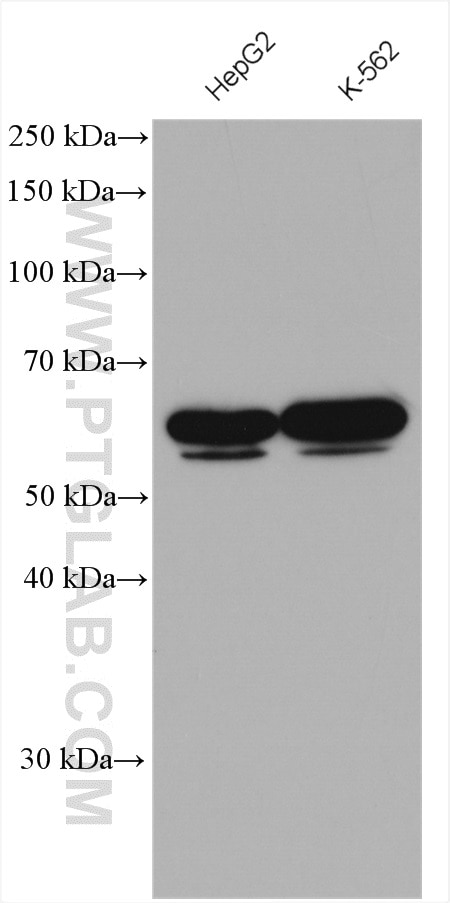
| Positive WB detected in | HepG2 cells, K562 cells |
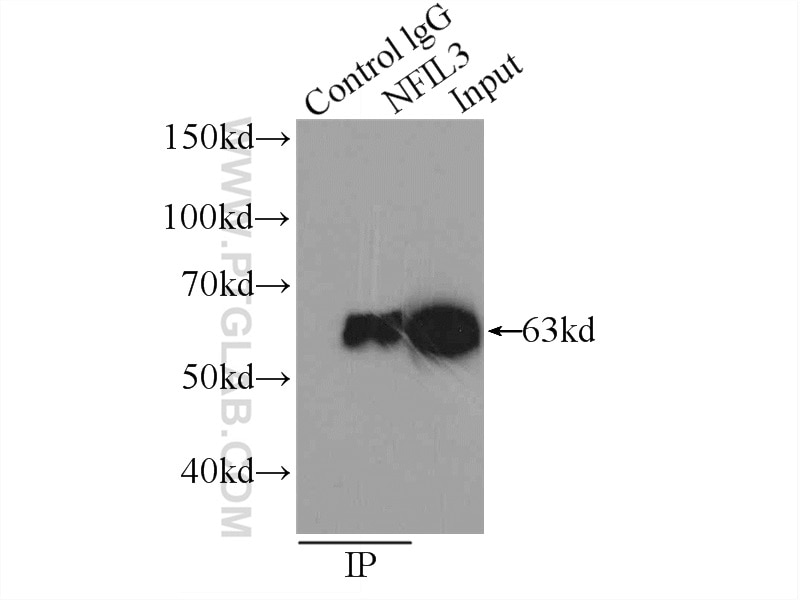
| Positive IP detected in | HeLa cells |
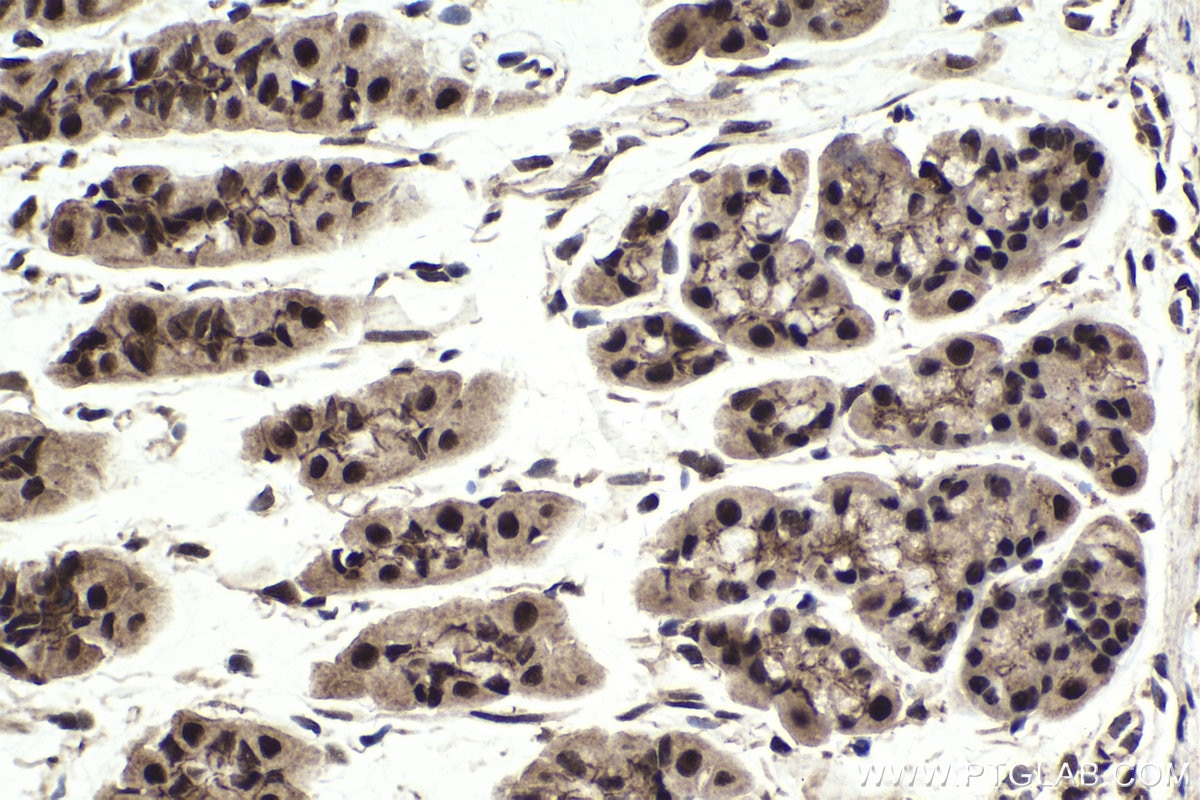
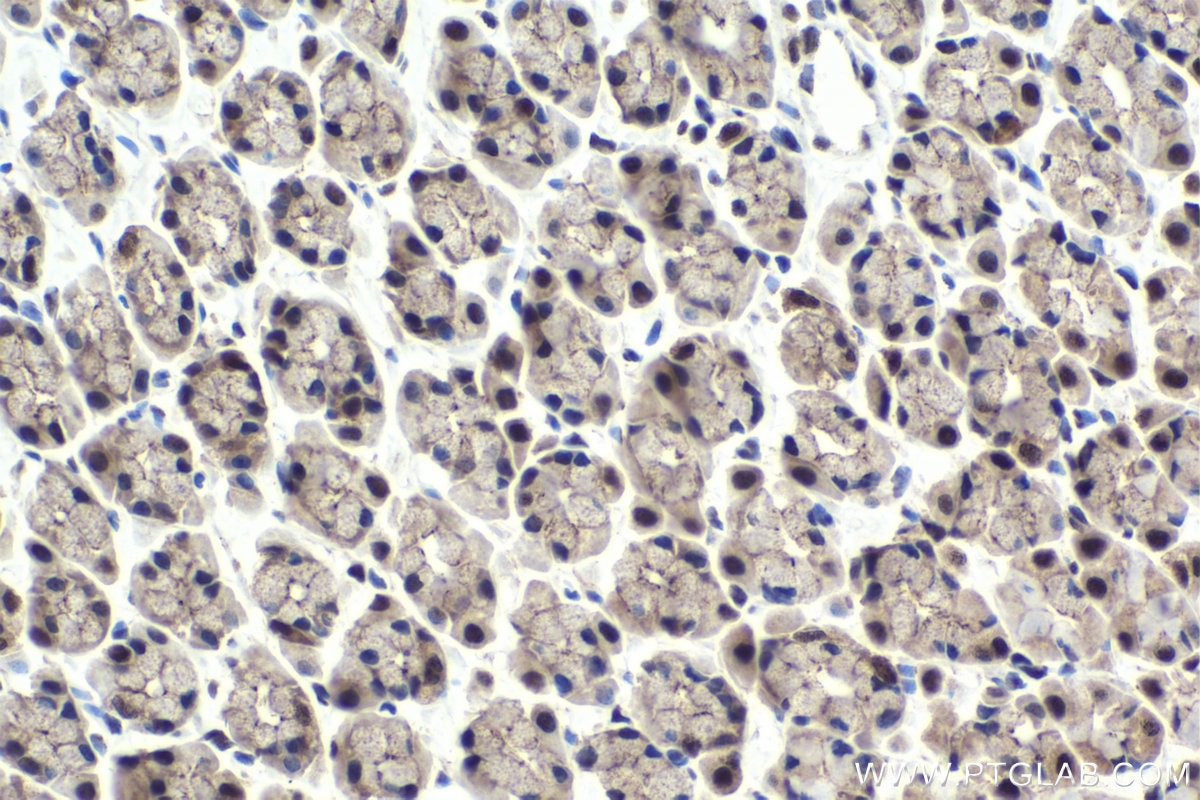
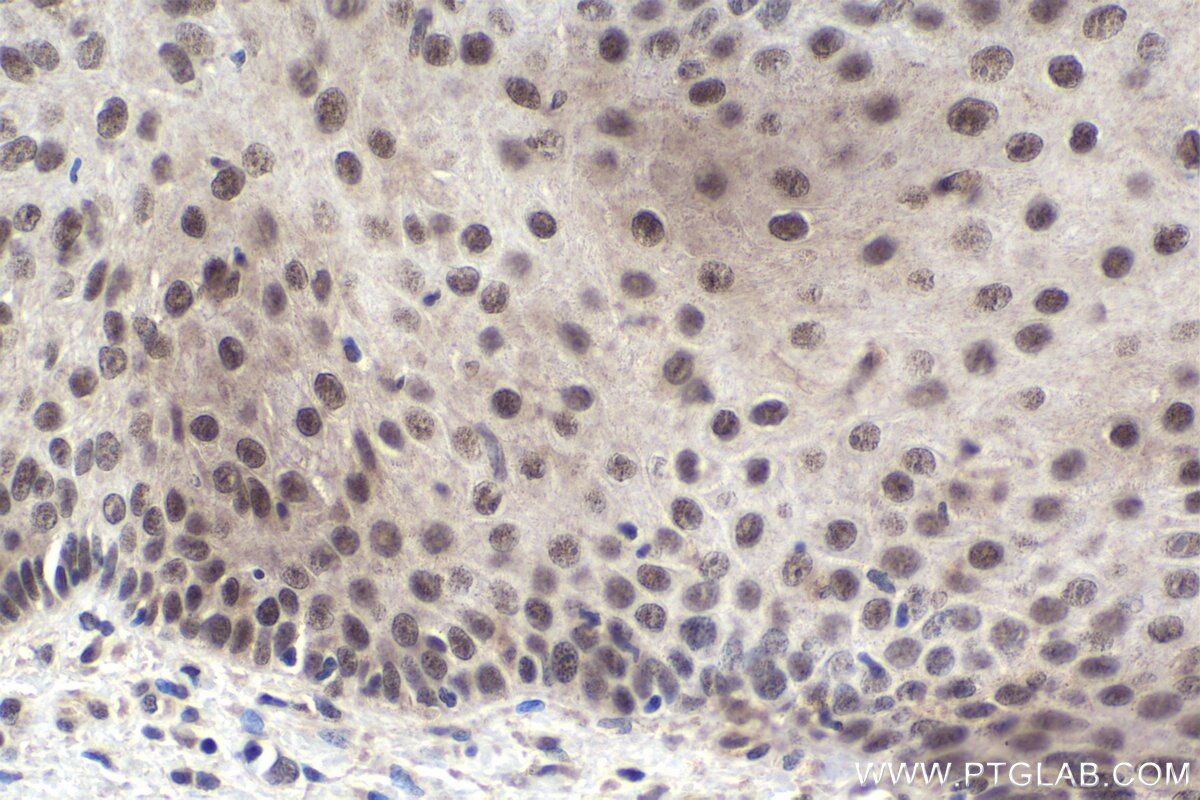
| Positive IHC detected in | mouse stomach tissue, human skin cancer tissue, rat stomach tissue Note: suggested antigen retrieval with TE buffer pH 9.0; (*) Alternatively, antigen retrieval may be performed with citrate buffer pH 6.0 |
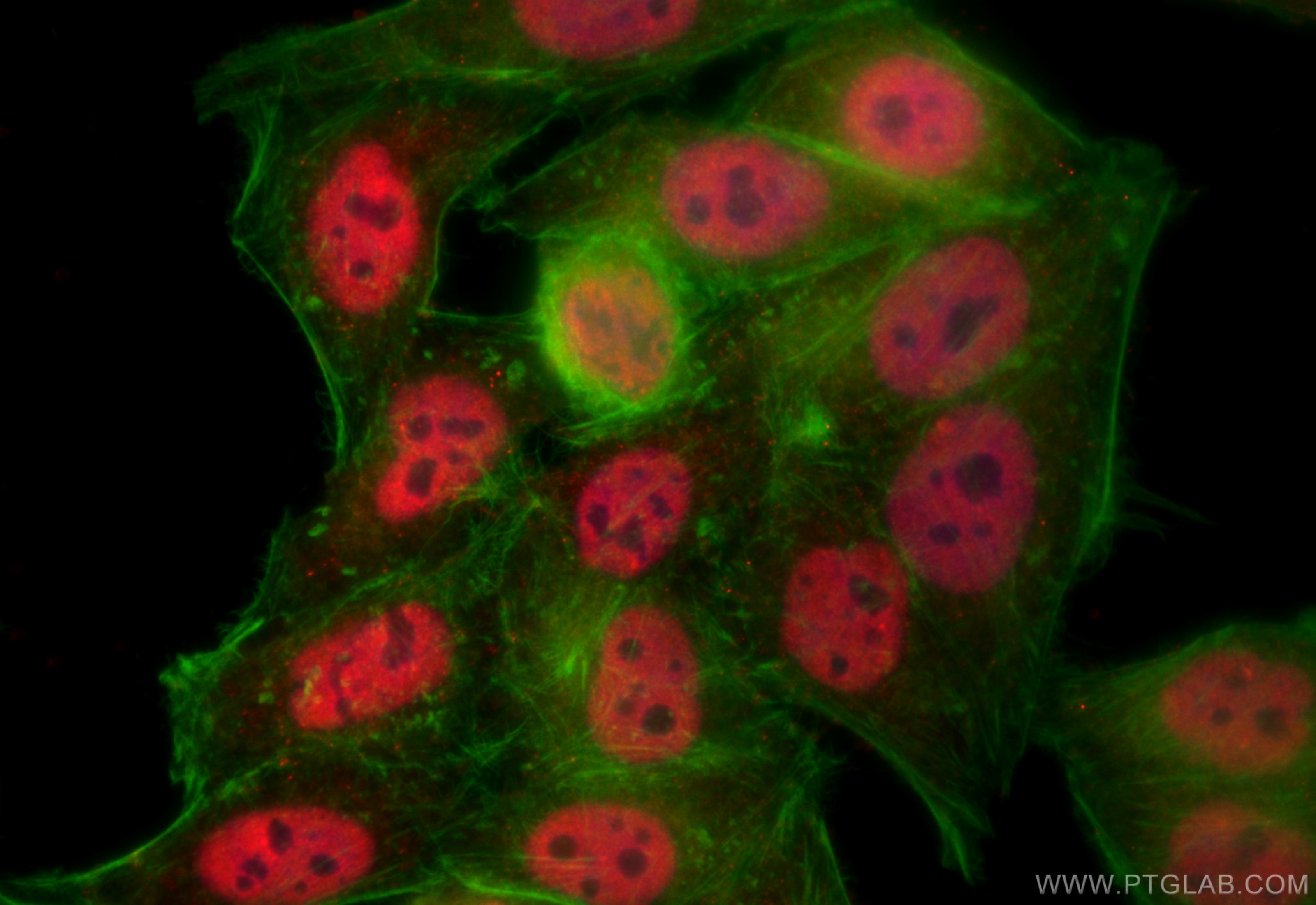
| Positive IF/ICC detected in | HepG2 cells |
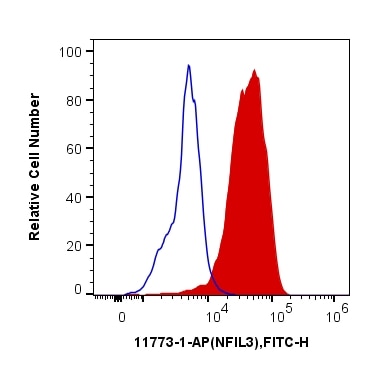
| Positive FC (Intra) detected in | NK92, NK92 cells |
Recommended dilution
| Application | Dilution |
|---|---|
| Western Blot (WB) | WB : 1:1000-1:6000 |
| Immunoprecipitation (IP) | IP : 0.5-4.0 ug for 1.0-3.0 mg of total protein lysate |
| Immunohistochemistry (IHC) | IHC : 1:500-1:2000 |
| Immunofluorescence (IF)/ICC | IF/ICC : 1:400-1:1600 |
| Flow Cytometry (FC) (INTRA) | FC (INTRA) : 0.40 ug per 10^6 cells in a 100 µl suspension |
| It is recommended that this reagent should be titrated in each testing system to obtain optimal results. | |
| Sample-dependent, Check data in validation data gallery. | |
Product Information
11773-1-AP targets NFIL3 in WB, IHC, IF/ICC, FC (Intra), IP, chIP, ELISA applications and shows reactivity with human, mouse, rat samples.
| Tested Reactivity | human, mouse, rat |
| Cited Reactivity | human, mouse, rat |
| Host / Isotype | Rabbit / IgG |
| Class | Polyclonal |
| Type | Antibody |
| Immunogen |
CatNo: Ag2380 Product name: Recombinant human NFIL3 protein Source: e coli.-derived, PGEX-4T Tag: GST Domain: 113-462 aa of BC008197 Sequence: ATLKAELLSLKLKFGLISSTAYAQEIQKLSNSTAVYFQDYQTSKSNVSSFVDEHEPSMVSSSCISVIKHSPQSSLSDVSEVSSVEHTQESSVQGSCRSPENKFQIIKQEPMELESYTREPRDDRGSYTASIYQNYMGNSFSGYSHSPPLLQVNRSSSNSPRTSETDDGVVGKSSDGEDEQQVPKGPIHSPVELKHVHATVVKVPEVNSSALPHKLRIKAKAMQIKVEAFDNEFEATQKLSSPIDMTSKRHFELEKHSAPSMVHSSLTPFSVQVTNIQDWSLKSEHWHQKELSGKTQNSFKTGVVEMKDSGYKVSDPENLYLKQGIANLSAEVVSLKRLIATQPISASDSG Predict reactive species |
| Full Name | nuclear factor, interleukin 3 regulated |
| Calculated Molecular Weight | 462 aa, 51 kDa |
| Observed Molecular Weight | 55-60 kDa |
| GenBank Accession Number | BC008197 |
| Gene Symbol | NFIL3 |
| Gene ID (NCBI) | 4783 |
| RRID | AB_2267287 |
| Conjugate | Unconjugated |
| Form | Liquid |
| Purification Method | Antigen affinity purification |
| UNIPROT ID | Q16649 |
| Storage Buffer | PBS with 0.02% sodium azide and 50% glycerol, pH 7.3. |
| Storage Conditions | Store at -20°C. Stable for one year after shipment. Aliquoting is unnecessary for -20oC storage. 20ul sizes contain 0.1% BSA. |
Background Information
NFIL3, also named as E4BP4 and IL3BP1, belongs to the bZIP family and NFIL3 subfamily. It represses transcription from promoters with activating transcription factor (ATF) sites. NFIL3 activates transcription from the interleukin-3 promoter in T-cells. It competes for the same consensus-binding site with PAR DNA-binding factors (DBP, HLF and TEF). It is a component of the circadian clock that acts as a negative regulator for the circadian expression of PER2 oscillation in the cell-autonomous core clock. NFIL3 protects pro-B cells from programmed cell death. It is a key regulator of TH2 responses(PMID:21499227). The calculated molecular weight of NFIL3 is 51 kDa, but the modified NFIL3 is about 55-60 kDa.
Protocols
| Product Specific Protocols | |
|---|---|
| FC protocol for NFIL3 antibody 11773-1-AP | Download protocol |
| IF protocol for NFIL3 antibody 11773-1-AP | Download protocol |
| IHC protocol for NFIL3 antibody 11773-1-AP | Download protocol |
| IP protocol for NFIL3 antibody 11773-1-AP | Download protocol |
| WB protocol for NFIL3 antibody 11773-1-AP | Download protocol |
| Standard Protocols | |
|---|---|
| Click here to view our Standard Protocols |
Publications
What published studies show
The NFIL3 Polyclonal antibody (Cat# 11773-1-AP) has 33 citations across journals including Cell Metabolism, Metabolism, Theranostics, J Exp Clin Cancer Res, Brain, Cell Commun Signal, J Transl Med, Atherosclerosis, Antioxid Redox Signal, Biochem Pharmacol, Mol Metab, Commun Biol, Neuropharmacology, and Cell Host Microbe. Research fields span circadian rhythm, cancer (TNBC, osteosarcoma, glioblastoma, myeloma), inflammation, atherosclerosis, diabetes, metabolic regulation, neurology, and immune response.
| Species | Application | Title |
|---|---|---|
Cell Metab Multi-omic human pancreatic islet endoplasmic reticulum and cytokine stress response mapping provides type 2 diabetes genetic insights | ||
Metabolism Dysregulation of CRY1 impairs brain thyroid hormone pathway and promotes anxiety-like behavior in male mice | ||
Theranostics The Circadian Clock Gene Bmal1 Controls Intestinal Exporter MRP2 and Drug Disposition. | ||
J Exp Clin Cancer Res Elevated expression of the rhythm gene NFIL3 promotes the progression of TNBC by activating NF-κB signaling through suppression of NFKBIA transcription. | ||
Brain Mislocated FUS is sufficient for gain-of-toxic-function amyotrophic lateral sclerosis phenotypes in mice. | ||
Cell Commun Signal Disruption of the biorhythm in gastric epithelial cell triggers inflammation in Helicobacter pylori-associated gastritis by aberrantly regulating NFIL3 via CagA activated ERK-SP1 pathway |








