

Tested Applications
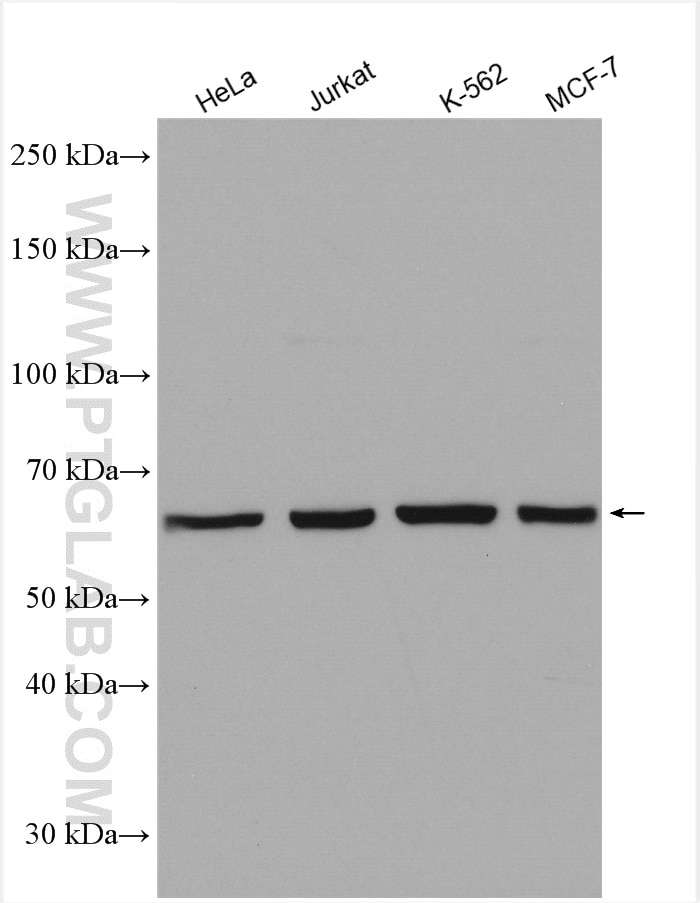
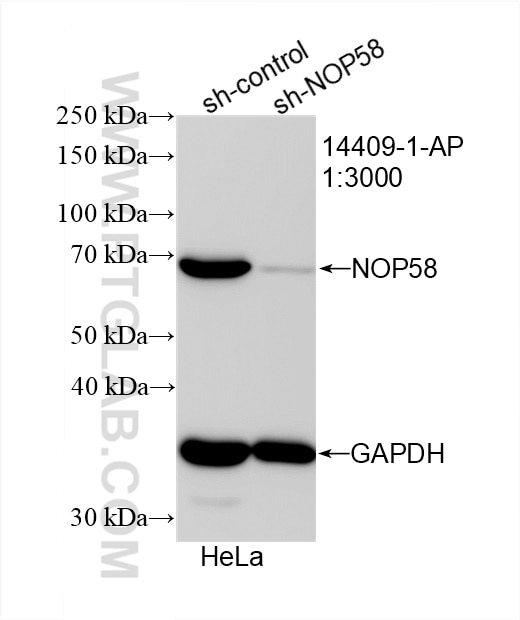
| Positive WB detected in | HeLa cells, Jurkat cells, K-562 cells, MCF-7 cells |
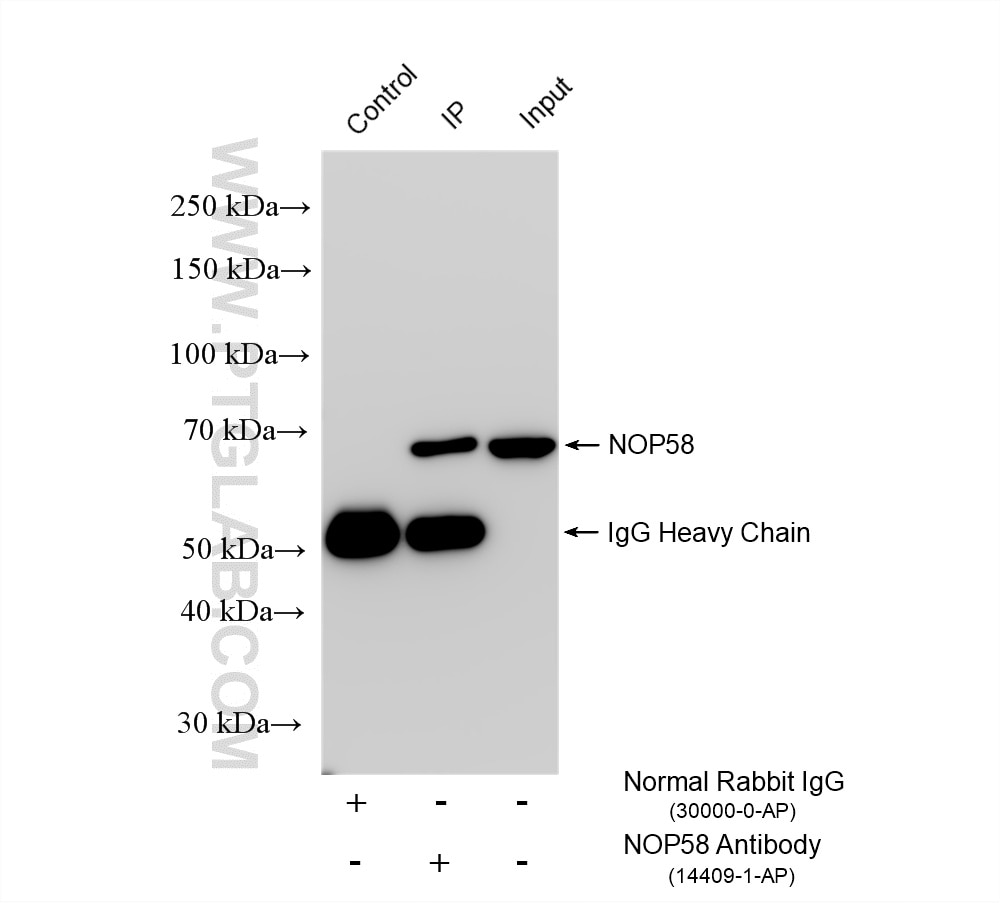
| Positive IP detected in | HeLa cells |
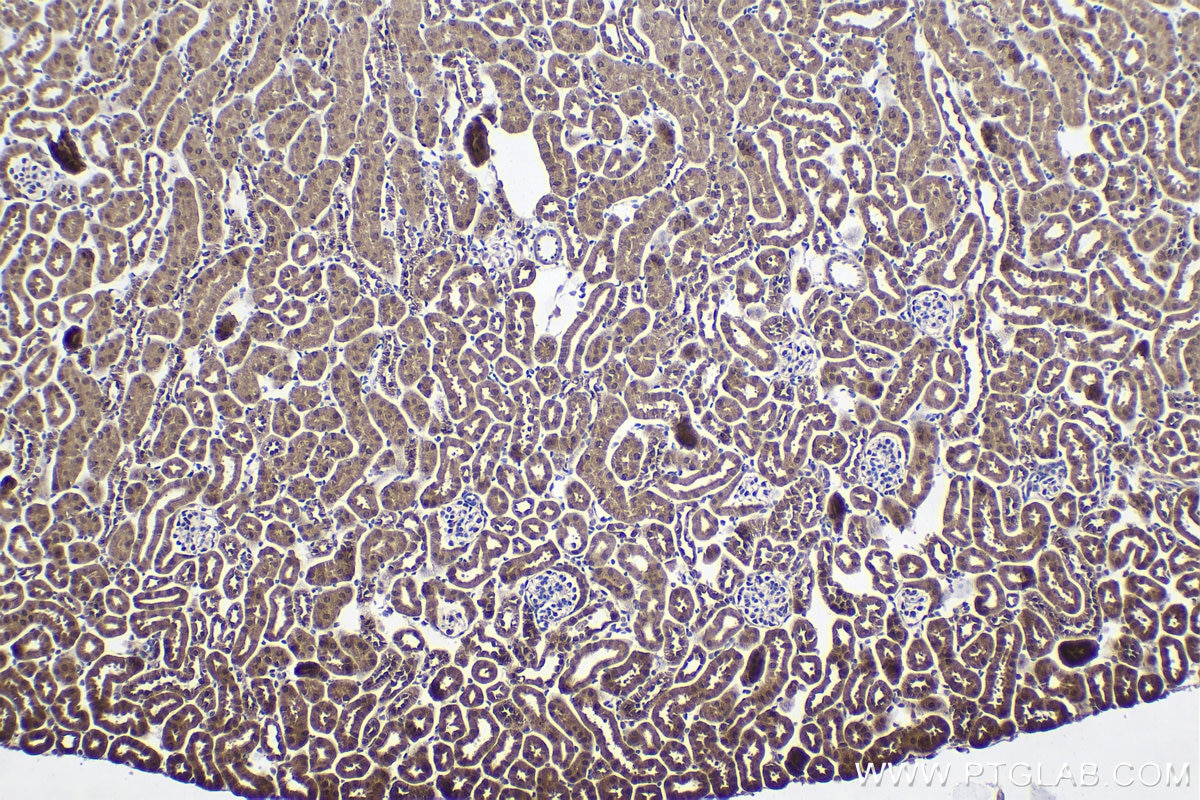
| Positive IHC detected in | mouse kidney tissue Note: suggested antigen retrieval with TE buffer pH 9.0; (*) Alternatively, antigen retrieval may be performed with citrate buffer pH 6.0 |
Recommended dilution
| Application | Dilution |
|---|---|
| Western Blot (WB) | WB : 1:2000-1:12000 |
| Immunoprecipitation (IP) | IP : 0.5-4.0 ug for 1.0-3.0 mg of total protein lysate |
| Immunohistochemistry (IHC) | IHC : 1:2000-1:8000 |
| It is recommended that this reagent should be titrated in each testing system to obtain optimal results. | |
| Sample-dependent, Check data in validation data gallery. | |
Product Information
14409-1-AP targets NOP58 in WB, IHC, IF, IP, CoIP, RIP, ELISA applications and shows reactivity with human, mouse, rat samples.
| Tested Reactivity | human, mouse, rat |
| Cited Reactivity | human, mouse |
| Host / Isotype | Rabbit / IgG |
| Class | Polyclonal |
| Type | Antibody |
| Immunogen |
CatNo: Ag5740 Product name: Recombinant human NOP58 protein Source: e coli.-derived, PET28a Tag: 6*His Domain: 279-529 aa of BC032592 Sequence: MMAIAPNVTVMVGELVGARLIAHAGSLLNLAKHAASTVQILGAEKALFRALKSRRDTPKYGLIYHASLVGQTSPKHKGKISRMLAAKTVLAIRYDAFGEDSSSAMGVENRAKLEARLRTLEDRGIRKISGTGKALAKTEKYEHKSEVKTYDPSGDSTLPTCSKKRKIEQVDKEDEITEKKAKKAKIKVKVEEEEEEKVAEEEETSVKKKKKRGKKKHIKEEPLSEEEPCTSTAIASPEKKKKKKKKRENED Predict reactive species |
| Full Name | NOP58 ribonucleoprotein homolog (yeast) |
| Calculated Molecular Weight | 60 kDa |
| Observed Molecular Weight | 60 kDa |
| GenBank Accession Number | BC032592 |
| Gene Symbol | NOP58 |
| Gene ID (NCBI) | 51602 |
| RRID | AB_2152331 |
| Conjugate | Unconjugated |
| Form | Liquid |
| Purification Method | Antigen affinity purification |
| UNIPROT ID | Q9Y2X3 |
| Storage Buffer | PBS with 0.02% sodium azide and 50% glycerol, pH 7.3. |
| Storage Conditions | Store at -20°C. Stable for one year after shipment. Aliquoting is unnecessary for -20oC storage. 20ul sizes contain 0.1% BSA. |
Background Information
The box C/D snoRNPs,is named for the short, conserved box C (UGAUGA) and box D (CUGA) sequences present in their RNA moiety. The box C/D sequences are also required for multiple aspects. of snoRNA biogenesis, including: RNA stability, intronic processing, nucleolar targeting, nuclear retention, and 59 trimethylguanosine cap formation [PMID:9649444,8878486]. Nop58 is a component common to the box C/D small nucleolar ribonucleoproteins [PMID:10606270].
Protocols
| Product Specific Protocols | |
|---|---|
| IF protocol for NOP58 antibody 14409-1-AP | Download protocol |
| IHC protocol for NOP58 antibody 14409-1-AP | Download protocol |
| IP protocol for NOP58 antibody 14409-1-AP | Download protocol |
| WB protocol for NOP58 antibody 14409-1-AP | Download protocol |
| Standard Protocols | |
|---|---|
| Click here to view our Standard Protocols |
Publications
What published studies show
The NOP58 Polyclonal antibody (Cat# 14409-1-AP) has 6 citations published in EMBO Reports, iScience, Journal of Virology, Digestive Diseases and Sciences, medRxiv, and eLife. Research fields span mRNA stress granule localization, nucleolar pre-rRNA processing, viral protein–RNA interactome, colorectal cancer progression, snoRNP assembly in PEHO syndrome, and embryonic stem cell biology. Applications cited include WB, RIP, CoIP, and IF in human and mouse samples.
| Species | Application | Title |
|---|---|---|
iScience BMAL1 Associates with NOP58 in the Nucleolus and Contributes to Pre-rRNA Processing. | ||
J Virol Protein-RNA Interactome Analysis Reveals Wide Association of Kaposi's Sarcoma-Associated Herpesvirus ORF57 with Host Noncoding RNAs and Polysomes. | ||
Dig Dis Sci CYP1B1-AS1 Delays the Malignant Progression of Colorectal Cancer by Binding with NOP58 | ||
medRxiv New ZNHIT3 Variants Disrupting snoRNP Assembly Cause Prenatal PEHO Syndrome with Isolated Hydrops | ||
Elife The dyskerin ribonucleoprotein complex as an OCT4/SOX2 coactivator in embryonic stem cells. |
Reviews
What customers say
The single review for this product is a 5-star rating from an immunoprecipitation experiment performed on mouse liver tissue. The user reported using 4 µg of antibody per sample, incubated overnight at 4 °C, and was satisfied with the results. Overall, the feedback is positive, indicating the antibody performed well for IP applications in mouse liver lysates.
The reviews below have been submitted by verified Proteintech customers who received an incentive for providing their feedback.
Marlene (Verified Customer) (02-25-2019) | Immunoprecipitation:From mouse liver lysate4ug of antibody per sampleIncubated overnight at 4C
|





