
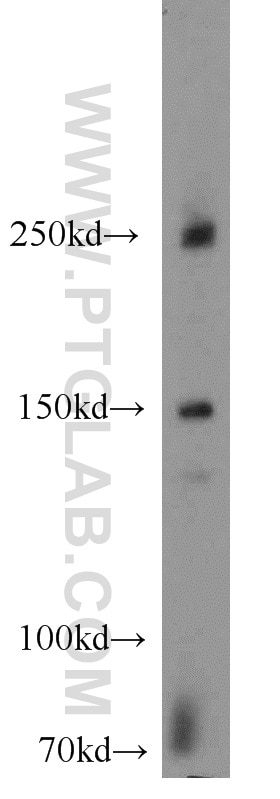
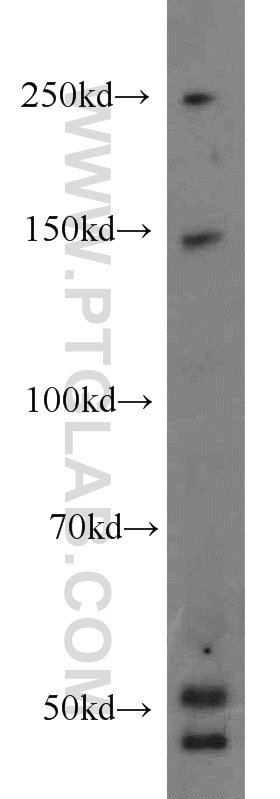
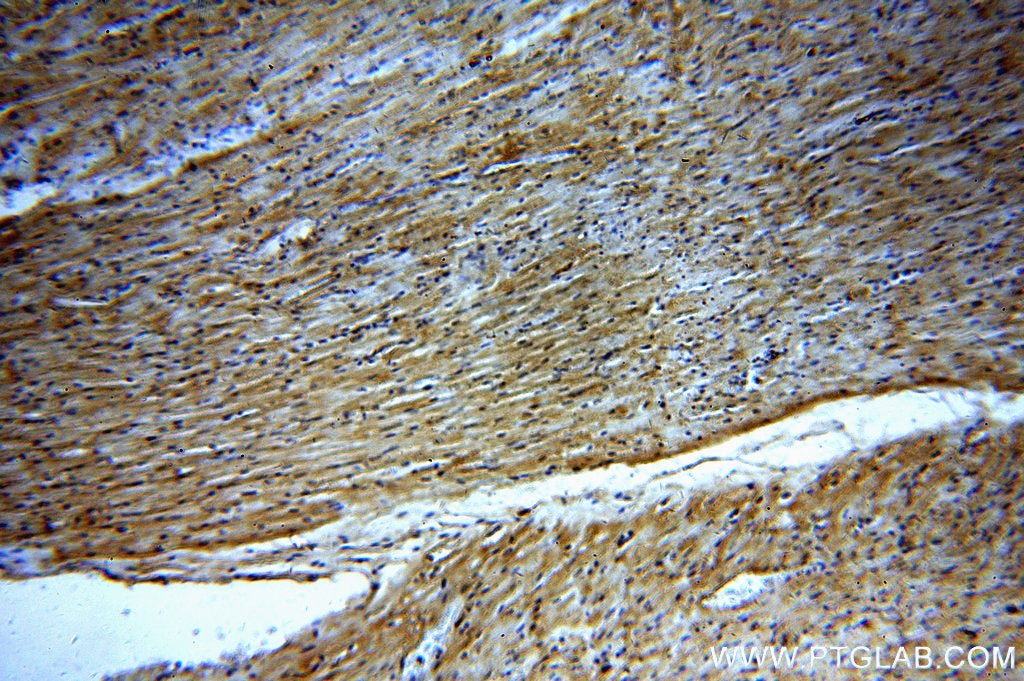
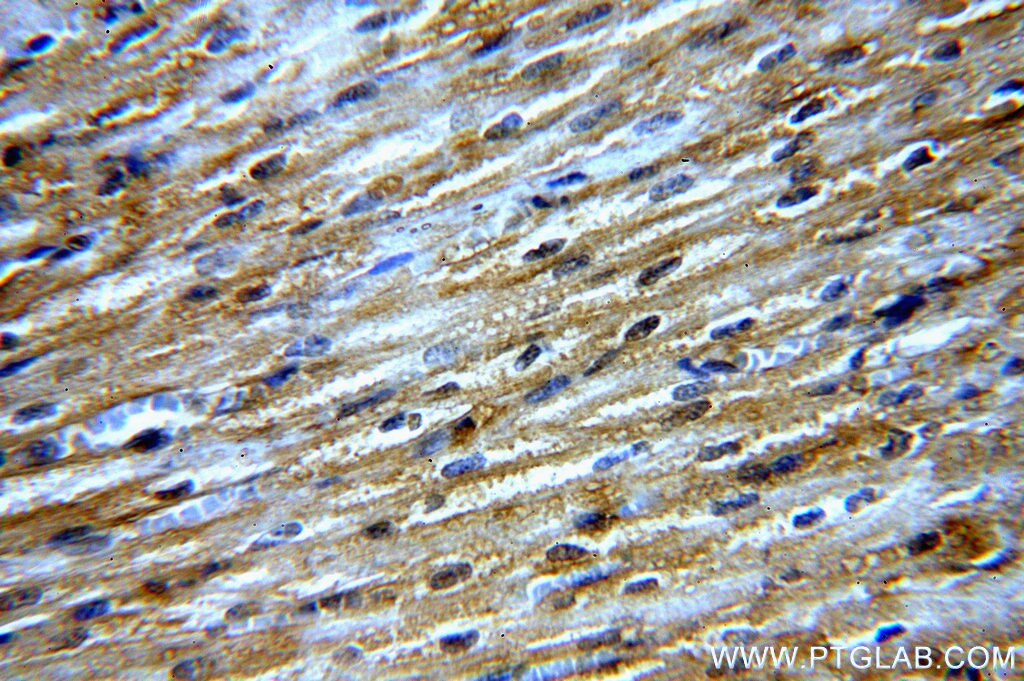

Tested Applications
| Positive WB detected in | mouse brain tissue, Y79 cells |
| Positive IHC detected in | human heart tissue Note: suggested antigen retrieval with TE buffer pH 9.0; (*) Alternatively, antigen retrieval may be performed with citrate buffer pH 6.0 |
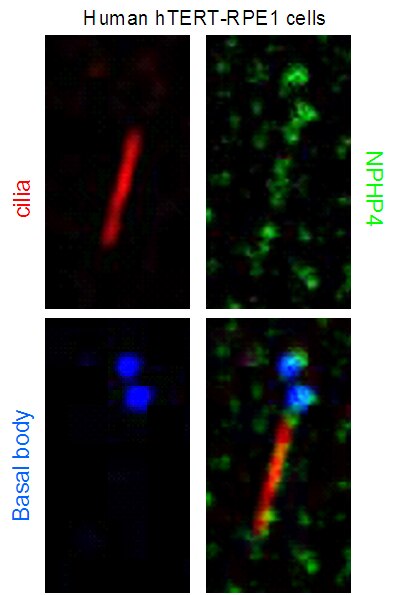
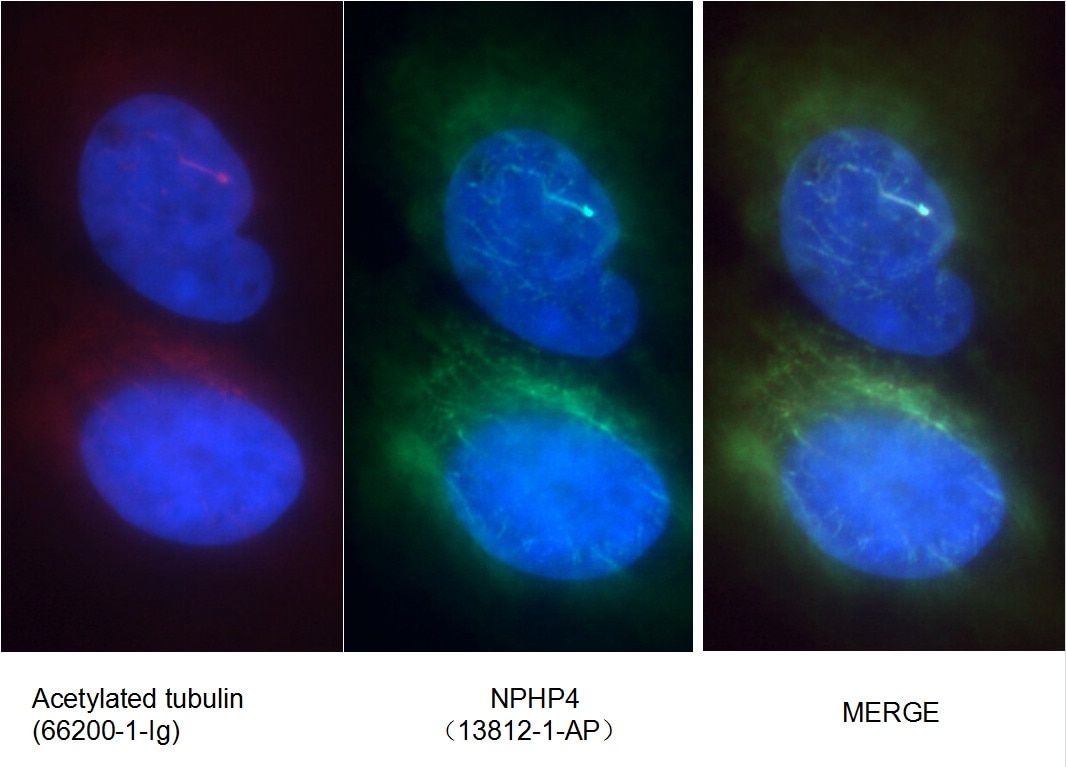
| Positive IF/ICC detected in | hTERT-RPE1 cells, MDCK cells |
Recommended dilution
| Application | Dilution |
|---|---|
| Western Blot (WB) | WB : 1:500-1:1000 |
| Immunohistochemistry (IHC) | IHC : 1:20-1:200 |
| Immunofluorescence (IF)/ICC | IF/ICC : 1:10-1:100 |
| It is recommended that this reagent should be titrated in each testing system to obtain optimal results. | |
| Sample-dependent, Check data in validation data gallery. | |
Product Information
13812-1-AP targets NPHP4 in WB, IHC, IF/ICC, ELISA applications and shows reactivity with human, mouse, canine samples.
| Tested Reactivity | human, mouse, canine |
| Cited Reactivity | human, mouse |
| Host / Isotype | Rabbit / IgG |
| Class | Polyclonal |
| Type | Antibody |
| Immunogen |
CatNo: Ag4875 Product name: Recombinant human NPHP4 protein Source: e coli.-derived, PGEX-4T Tag: GST Domain: 1-350 aa of BC040520 Sequence: MNDWHRIFTQNVLVPPHPQRARQPWKESTAFQCVLKWLDGPVIRQGVLEVLSEVECHLRVSFFDVTYRHFFGRTWKTTVKPTKRPPSRIVFNEPLYFHTSLNHPHIVAVVEVVAEGKKRDGSLQTLSCGFGILRIFSNQPDSPISASQDKRLRLYHGTPRALLHPLLQDPAEQNRHMTLIENCSLQYTLKPHPALEPAFHLLPENLLVSGLQQIPGLLPAHGESGDALRKPRLQKPITGHLDDLFFTLYPSLEKFEEELLELHVQDHFQEGCGPLDGGALEILERRLRVGVHNGLGFVQRPQVVVLVPEMDVALTRSASFSRKVVSSSKTSSGSQALVLRSRLRLPEMVG Predict reactive species |
| Full Name | nephronophthisis 4 |
| Calculated Molecular Weight | 1426 aa, 158 kDa |
| Observed Molecular Weight | 150 kDa |
| GenBank Accession Number | BC040520 |
| Gene Symbol | NPHP4 |
| Gene ID (NCBI) | 261734 |
| RRID | AB_10640302 |
| Conjugate | Unconjugated |
| Form | Liquid |
| Purification Method | Antigen affinity purification |
| UNIPROT ID | O75161 |
| Storage Buffer | PBS with 0.02% sodium azide and 50% glycerol, pH 7.3. |
| Storage Conditions | Store at -20°C. Stable for one year after shipment. Aliquoting is unnecessary for -20oC storage. 20ul sizes contain 0.1% BSA. |
Background Information
NPHP4, also named as KIAA0673, is a cilia-associated protein which involved in the organization of apical junctions in kidney cells together with NPHP1 and RPGRIP1L/NPHP8. It is necessary for normal photoreceptor ribbon synapse maintenance and outer segment formation, and for sperm development.
Protocols
| Product Specific Protocols | |
|---|---|
| IF protocol for NPHP4 antibody 13812-1-AP | Download protocol |
| IHC protocol for NPHP4 antibody 13812-1-AP | Download protocol |
| WB protocol for NPHP4 antibody 13812-1-AP | Download protocol |
| Standard Protocols | |
|---|---|
| Click here to view our Standard Protocols |
Publications
What published studies show
The NPHP4 Polyclonal antibody (Cat# 13812-1-AP) has 14 citations. These appear in journals including Nature Genetics, Nature Cell Biology, Nature Communications, Journal of Clinical Investigation, Science Advances, eLife, EMBO Reports, Journal of Cell Biology, Genetics, iScience, Biophysical Journal, Molecular Biology of the Cell, and Nephrology. The research fields are predominantly centered on ciliogenesis, primary cilia biogenesis, ciliary protein trafficking, axoneme assembly, and ciliopathies.
| Species | Application | Title |
|---|---|---|
Nat Genet A transition zone complex regulates mammalian ciliogenesis and ciliary membrane composition. | ||
Nat Commun Microtubule asters anchored by FSD1 control axoneme assembly and ciliogenesis. | ||
J Clin Invest Loss of RPGR disrupts motile cilia and causes primary ciliary dyskinesia by affecting F-actin dynamics. | ||
Sci Adv Ciliopathy protein HYLS1 coordinates the biogenesis and signaling of primary cilia by activating the ciliary lipid kinase PIPKIγ. | ||
Genetics Primary Cilium Formation and Ciliary Protein Trafficking Is Regulated by the Atypical MAP Kinase MAPK15 in Caenorhabditis elegans and Human Cells. |







