
Tested Applications
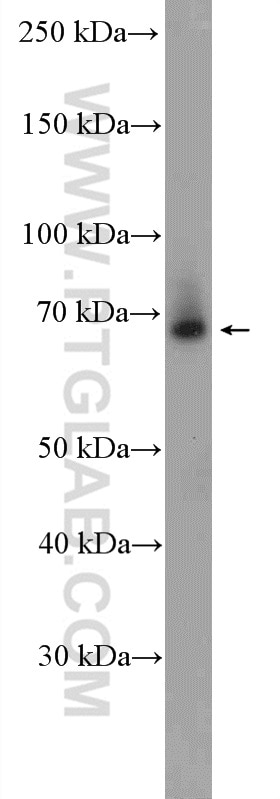
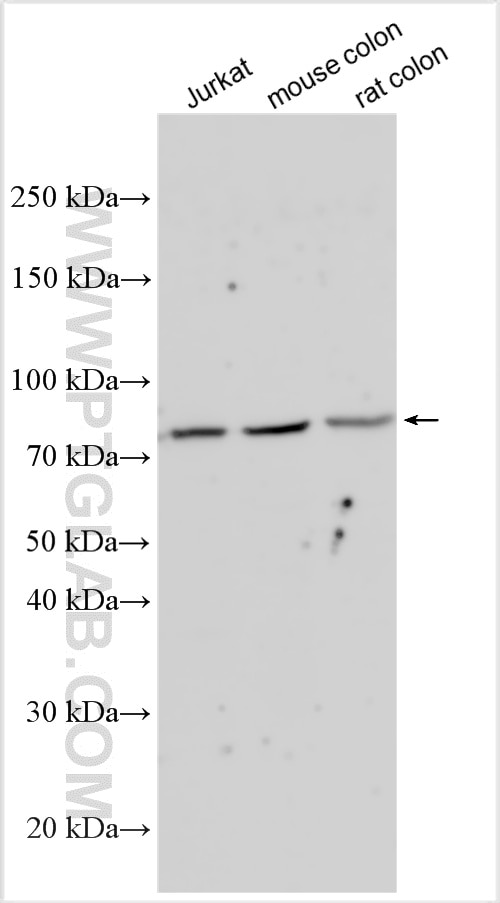
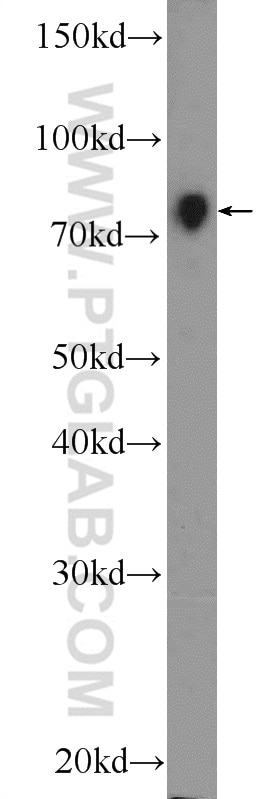
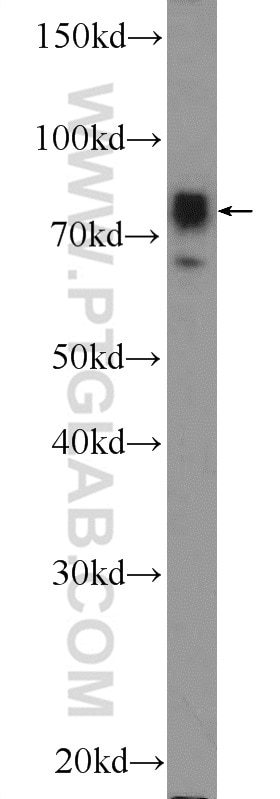
| Positive WB detected in | Jurkat cells, HeLa cells, mouse colon tissue, rat colon tissue |
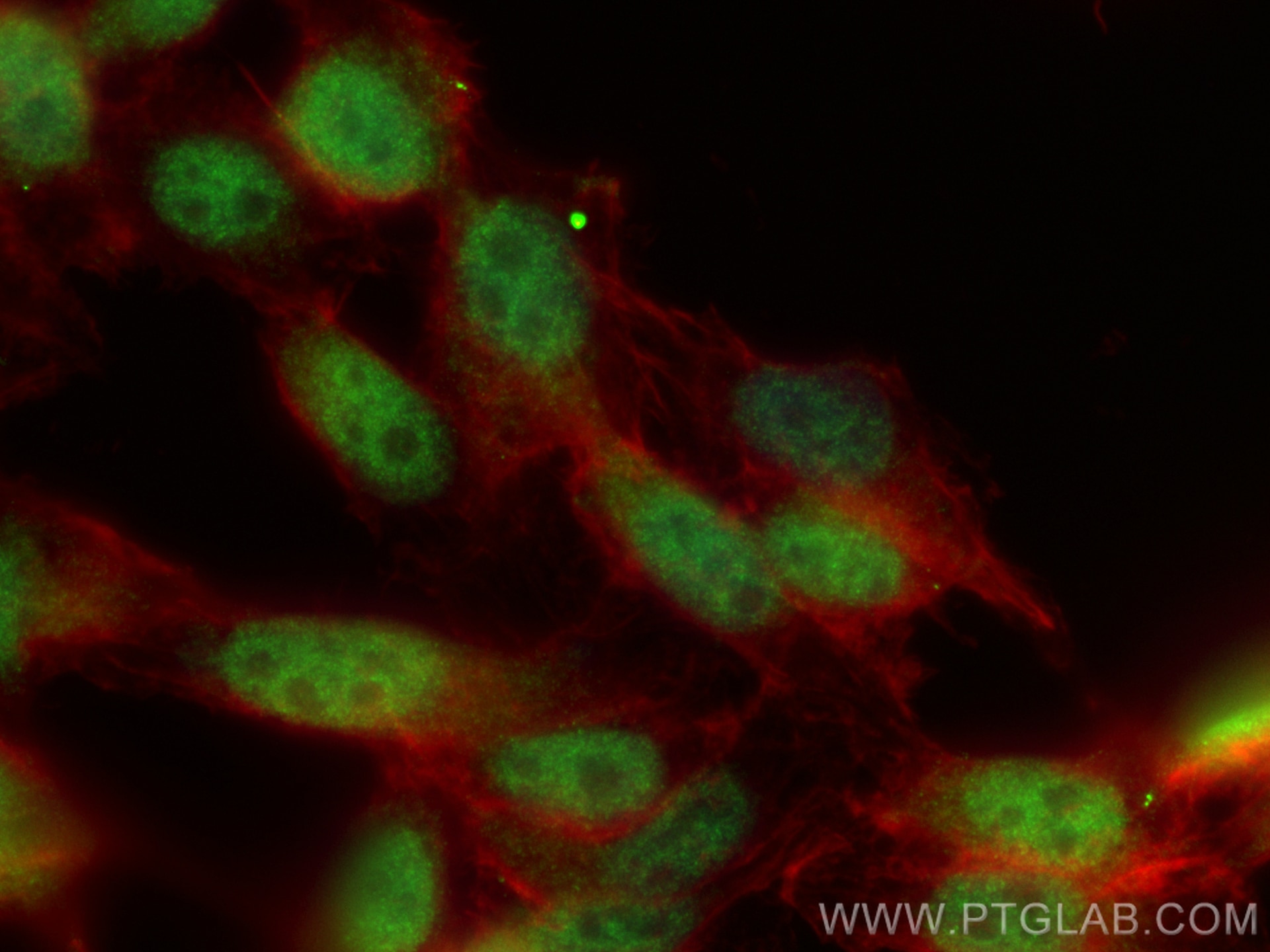
| Positive IF/ICC detected in | PC-3 cells |
Recommended dilution
| Application | Dilution |
|---|---|
| Western Blot (WB) | WB : 1:500-1:2000 |
| Immunofluorescence (IF)/ICC | IF/ICC : 1:200-1:800 |
| It is recommended that this reagent should be titrated in each testing system to obtain optimal results. | |
| Sample-dependent, Check data in validation data gallery. | |
Product Information
13906-1-AP targets NR1D2 in WB, IHC, IF/ICC, ELISA applications and shows reactivity with human, mouse, rat samples.
| Tested Reactivity | human, mouse, rat |
| Cited Reactivity | human, mouse, rat |
| Host / Isotype | Rabbit / IgG |
| Class | Polyclonal |
| Type | Antibody |
| Immunogen |
CatNo: Ag4881 Product name: Recombinant human NR1D2 protein Source: e coli.-derived, PGEX-4T Tag: GST Domain: 1-351 aa of BC045613 Sequence: MEVNAGGVIAYISSSSSASSHASCHSEGSENSFQSSSSSVPSSPNSSNSDTNGNPKNGDLANIEGILKNDRIDCSMKTSKSSAPGMTKSHSGVTKFSGMVLLCKVCGDVASGFHYGVHACEGCKGFFRRSIQQNIQYKKCLKNENCSIMRMNRNRCQQCRFKKCLSVGMSRDAVRFGRIPKREKQRMLIEMQSAMKTMMNSQFSGHLQNDTLVEHHEQTALPAQEQLRPKPQLEQENIKSSSPPSSDFAKEEVIGMVTRAHKDTFMYNQEQQENSAESMQPKRGERIRKNMEQYNLNHDHCGNGLSSHFPCSESQQHLNGQFKGRNIMHYPNGHAICIANGHCMNFSNAYT Predict reactive species |
| Full Name | nuclear receptor subfamily 1, group D, member 2 |
| Calculated Molecular Weight | 579 aa, 65 kDa |
| Observed Molecular Weight | 70 kDa |
| GenBank Accession Number | BC045613 |
| Gene Symbol | NR1D2 |
| Gene ID (NCBI) | 9975 |
| RRID | AB_2877986 |
| Conjugate | Unconjugated |
| Form | Liquid |
| Purification Method | Antigen affinity purification |
| UNIPROT ID | Q14995 |
| Storage Buffer | PBS with 0.02% sodium azide and 50% glycerol, pH 7.3. |
| Storage Conditions | Store at -20°C. Stable for one year after shipment. Aliquoting is unnecessary for -20oC storage. 20ul sizes contain 0.1% BSA. |
Background Information
NR1D2 (Nuclear Receptor Subfamily 1 Group D Member 2), also known as Rev-erbβ, is a nuclear receptor that functions as a heme-dependent transcriptional repressor and plays a critical role in regulating circadian rhythms and metabolic homeostasis. As an integral component of the circadian clock, NR1D2 forms a negative feedback loop by repressing the expression of core clock genes such as BMAL1 and CLOCK. It exerts its repressive function by binding to specific DNA response elements and recruiting corepressor complexes like NCOR1/HDAC3. Beyond its role in circadian regulation, NR1D2 is involved in lipid and energy metabolism, inflammatory responses, and mitochondrial function. The protein is widely expressed in tissues such as skeletal muscle, brown adipose tissue, and the heart, where it helps coordinate physiological processes with the daily light-dark cycle.
Protocols
| Product Specific Protocols | |
|---|---|
| IF protocol for NR1D2 antibody 13906-1-AP | Download protocol |
| WB protocol for NR1D2 antibody 13906-1-AP | Download protocol |
| Standard Protocols | |
|---|---|
| Click here to view our Standard Protocols |
Publications
What published studies show
| Species | Application | Title |
|---|---|---|
Am J Physiol Heart Circ Physiol Differential effects of REV-ERBα/β agonism on cardiac gene expression, metabolism, and contractile function in a mouse model of circadian disruption. | ||
Xenobiotica Identification of rhythmic human CYPs and their circadian regulators using synchronized hepatoma cells. | ||
NPJ Biol Timing Sleep CHRONO regulates the circadian clock via the REV-ERBα - BMAL1 loop. | ||
J Physiol Biochem Time-of-day-dependent effects of exercise on the hepatic clock and proteome in high-fat diet-fed mice. | ||
NPJ Biofilms Microbiomes Alleviation of Limosilactobacillus reuteri in polycystic ovary syndrome protects against circadian dysrhythmia-induced dyslipidemia via capric acid and GALR1 signaling |






