

Tested Applications
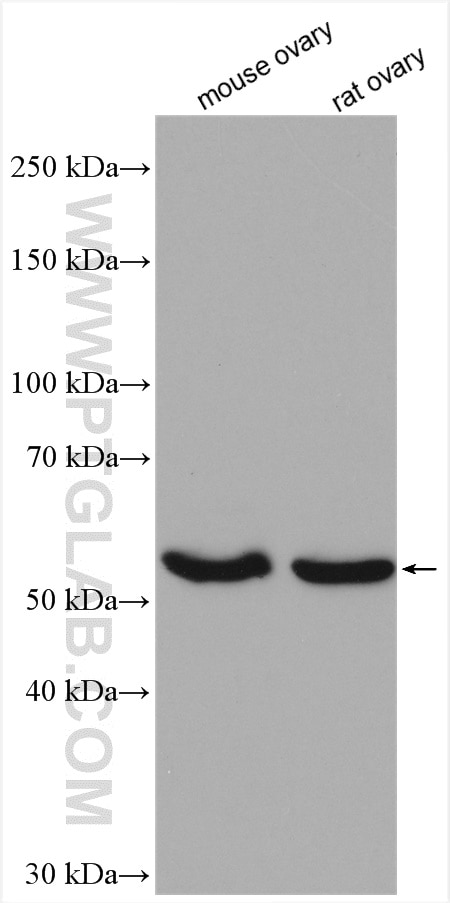
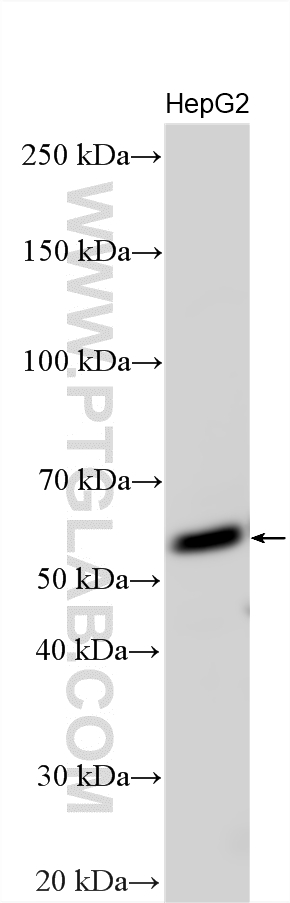
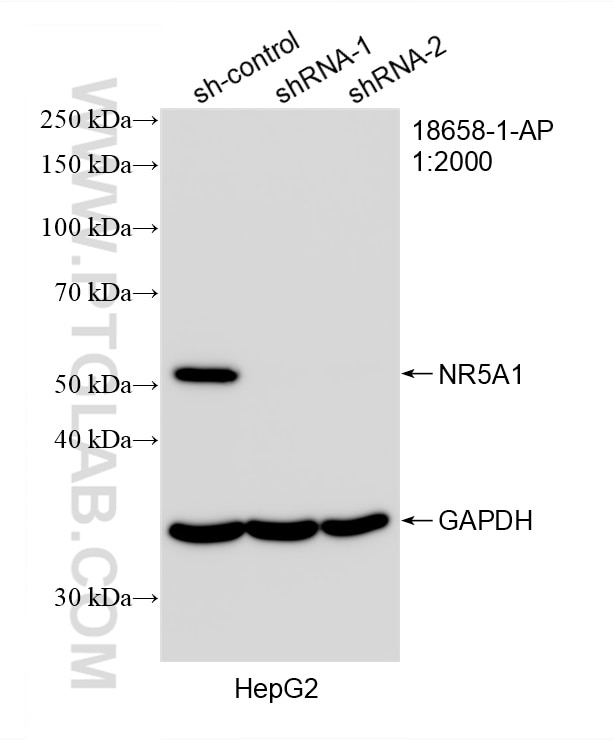
| Positive WB detected in | HepG2 cells, mouse ovary tissue, rat ovary tissue |
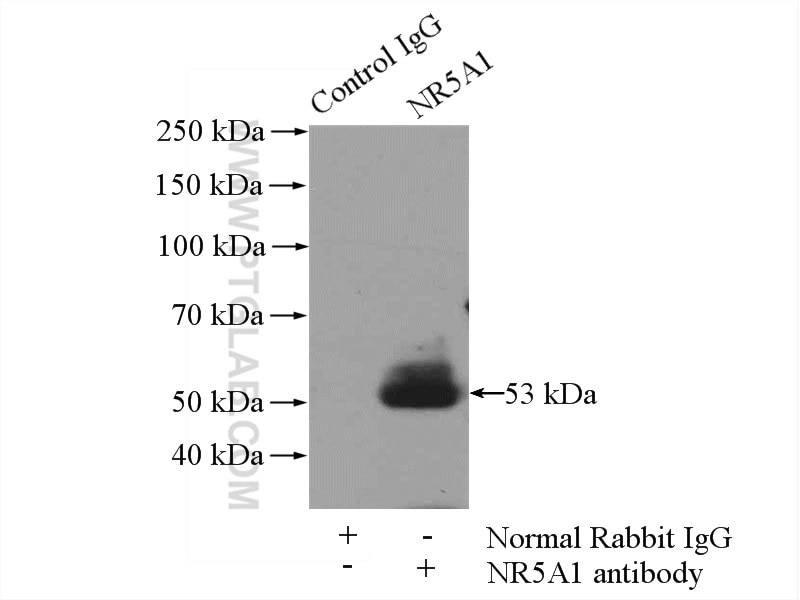
| Positive IP detected in | A2780 cells |
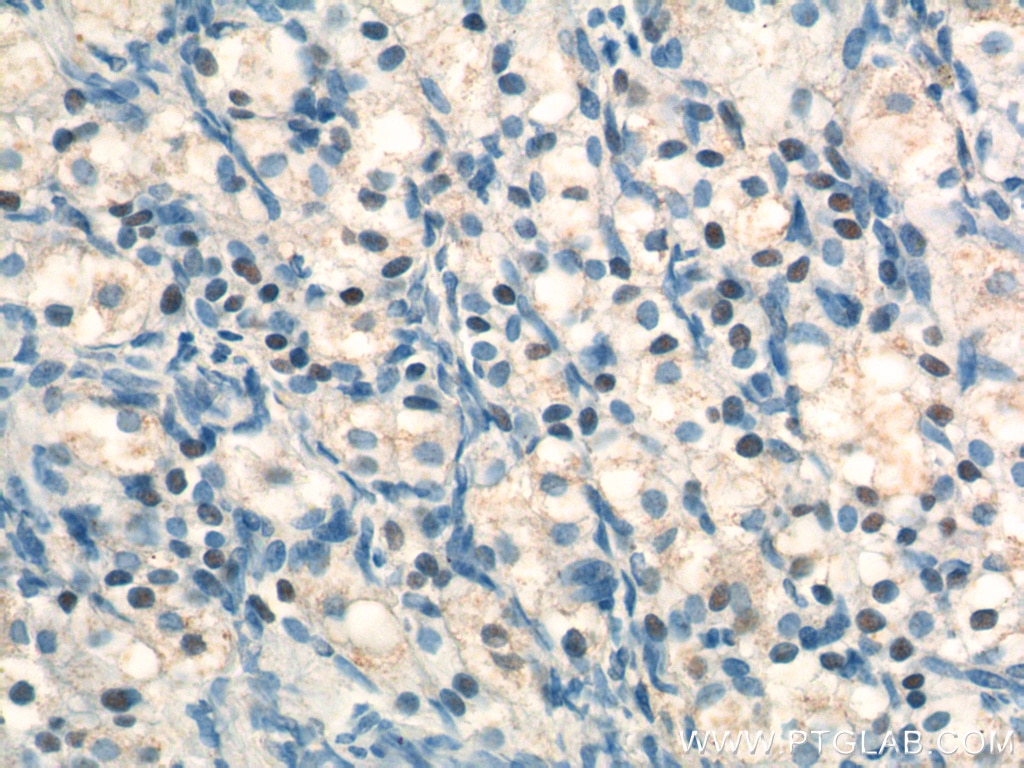
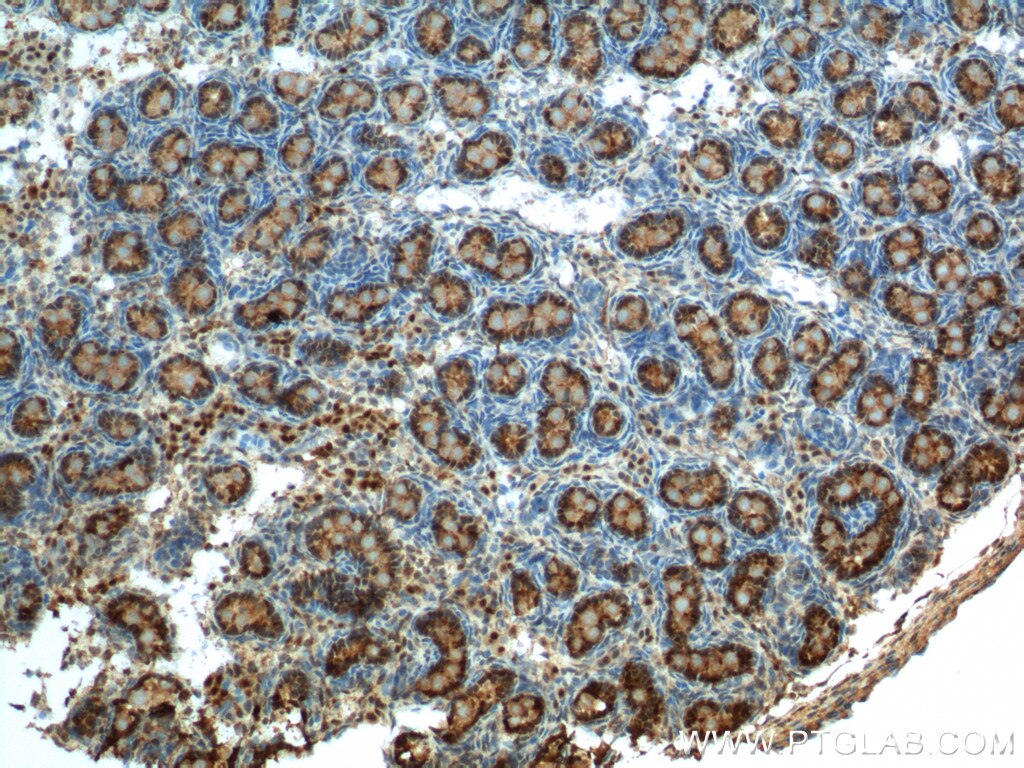
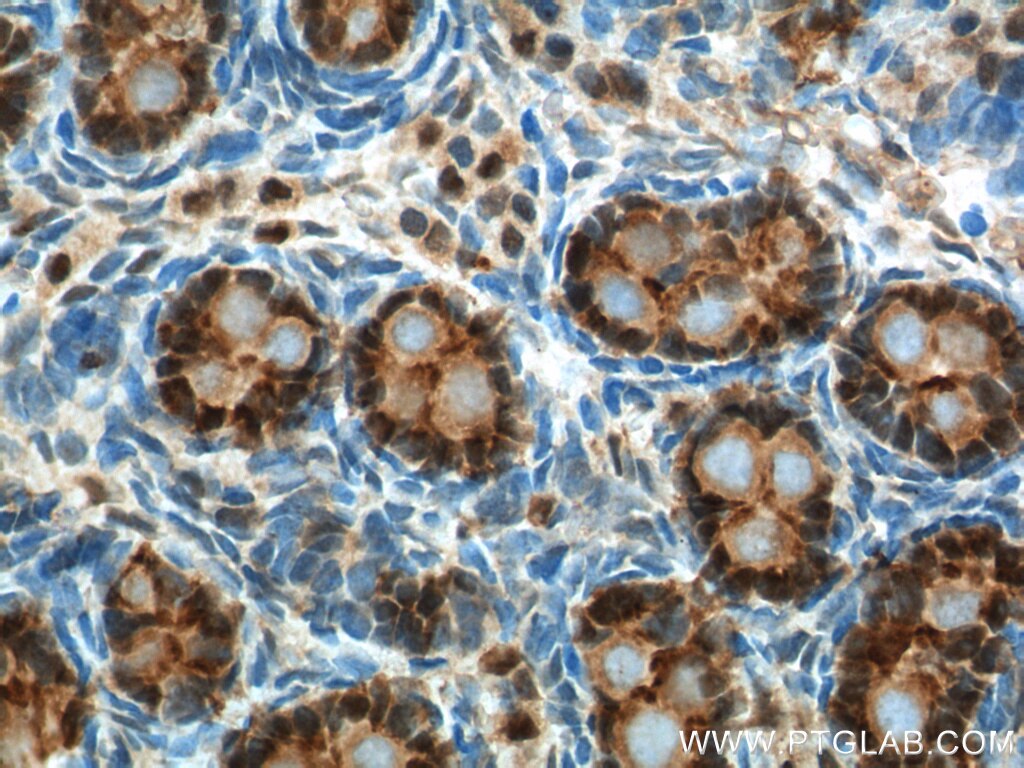
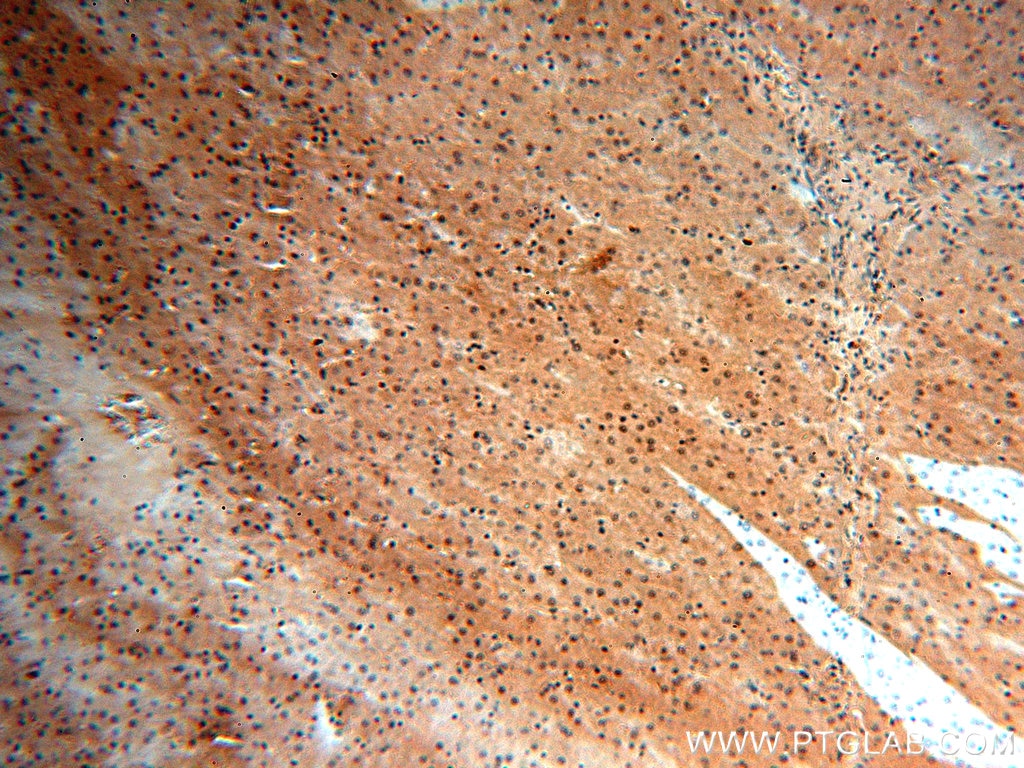
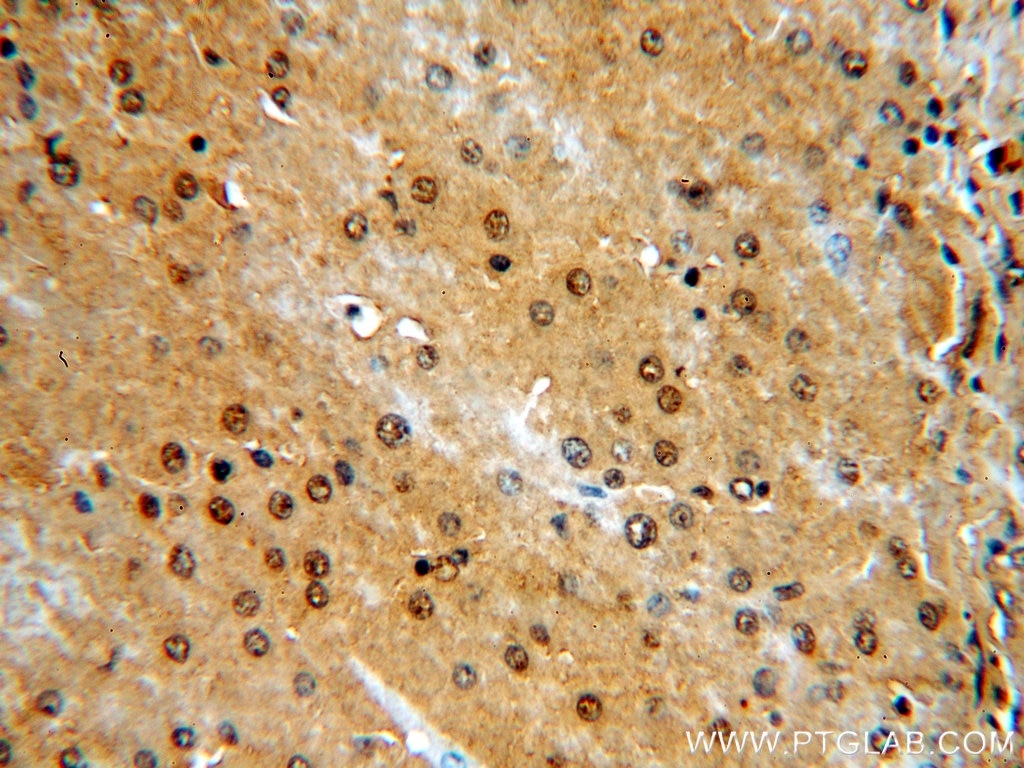
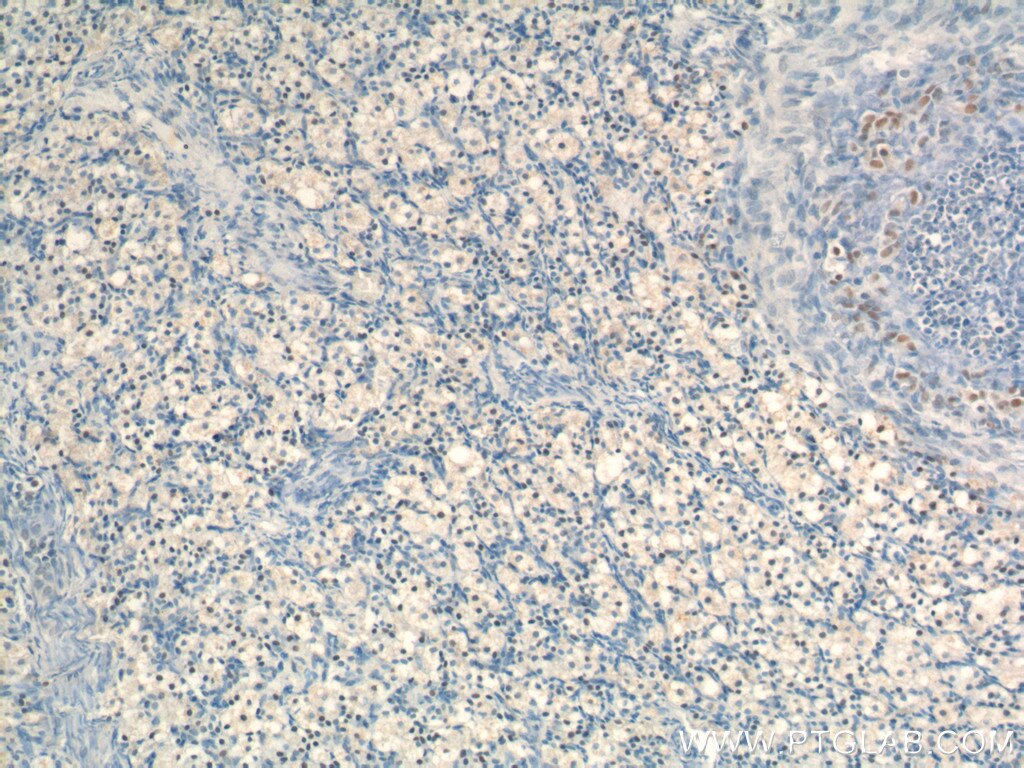
| Positive IHC detected in | human ovary tissue, human liver tissue, rat testis tissue Note: suggested antigen retrieval with TE buffer pH 9.0; (*) Alternatively, antigen retrieval may be performed with citrate buffer pH 6.0 |
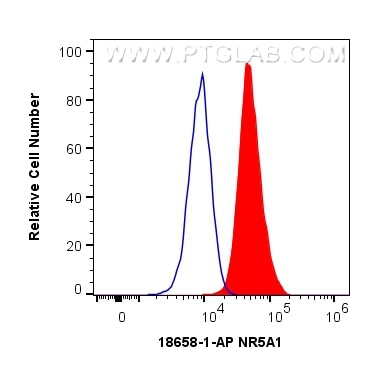
| Positive FC (Intra) detected in | HepG2 cells |
Recommended dilution
| Application | Dilution |
|---|---|
| Western Blot (WB) | WB : 1:1000-1:4000 |
| Immunoprecipitation (IP) | IP : 0.5-4.0 ug for 1.0-3.0 mg of total protein lysate |
| Immunohistochemistry (IHC) | IHC : 1:50-1:500 |
| Flow Cytometry (FC) (INTRA) | FC (INTRA) : 0.40 ug per 10^6 cells in a 100 µl suspension |
| It is recommended that this reagent should be titrated in each testing system to obtain optimal results. | |
| Sample-dependent, Check data in validation data gallery. | |
Product Information
18658-1-AP targets NR5A1 in WB, IHC, IF, FC (Intra), IP, CoIP, ChIP, ELISA applications and shows reactivity with human, mouse, rat samples.
| Tested Reactivity | human, mouse, rat |
| Cited Reactivity | human, mouse, rat, pig, goat, camel, ondatra zibethicus |
| Host / Isotype | Rabbit / IgG |
| Class | Polyclonal |
| Type | Antibody |
| Immunogen |
CatNo: Ag13252 Product name: Recombinant human NR5A1 protein Source: e coli.-derived, PET28a Tag: 6*His Domain: 1-349 aa of BC032501 Sequence: MDYSYDEDLDELCPVCGDKVSGYHYGLLTCESCKGFFKRTVQNNKHYTCTESQSCKIDKTQRKRCPFCRFQKCLTVGMRLEAVRADRMRGGRNKFGPMYKRDRALKQQKKAQIRANGFKLETGPPMGVPPPPPPAPDYVLPPSLHGPEPKGLAAGPPAGPLGDFGAPALPMAVPGAHGPLAGYLYPAFPGRAIKSEYPEPYASPPQPGLPYGYPEPFSGGPNVPELILQLLQLEPDEDQVRARILGCLQEPTKSRPDQPAAFGLLCRMADQTFISIVDWARRCMVFKELEVADQMTLLQNCWSELLVFDHIYRQVQHGKEGSILLVTGQEVELTTVATQAGSLLHSLVL Predict reactive species |
| Full Name | nuclear receptor subfamily 5, group A, member 1 |
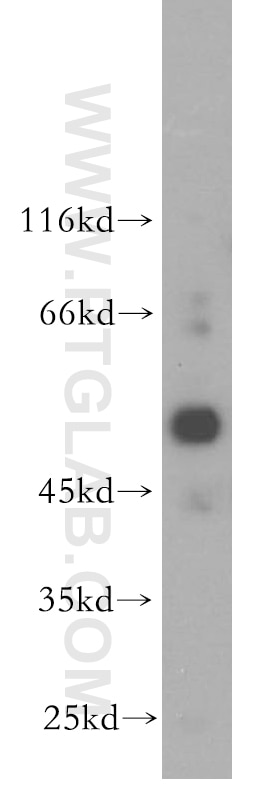
| Calculated Molecular Weight | 52 kDa |
| Observed Molecular Weight | 52 kDa |
| GenBank Accession Number | BC032501 |
| Gene Symbol | NR5A1 |
| Gene ID (NCBI) | 2516 |
| RRID | AB_10596916 |
| Conjugate | Unconjugated |
| Form | Liquid |
| Purification Method | Antigen affinity purification |
| UNIPROT ID | Q13285 |
| Storage Buffer | PBS with 0.02% sodium azide and 50% glycerol, pH 7.3. |
| Storage Conditions | Store at -20°C. Stable for one year after shipment. Aliquoting is unnecessary for -20oC storage. 20ul sizes contain 0.1% BSA. |
Background Information
Steroidogenic factor-1 (SF-1,STF-1), also known as NR5A1, regulates multiple genes involved in the adrenal and gonadal development and in the biosynthesis of a variety of hormones, including adrenal and gonadal steroids, anti-Mullerian hormone (AMH), and gonadotropins. SF-1 belongs to the fushi tarazu factor-1 (FTZ-F1) subfamily of orphan nuclear receptors. Initially identified as a tissue-specific transcriptional regulator of cytochrome P450 steroid hydroxylases, research studies of both global and tissue-specific knockout mice have demonstrated that SF-1 is required for the development of adrenal glands, gonads, ventromedial hypothalamus, and for the proper functioning of pituitary gonadotropes. Indeed, humans with mutations that render SF-1 transcriptionally inactive can present with testicular failure, ovarian failure, and adrenal insufficiency. Furthermore, dysregulation of SF-1 has been linked to diseases such as endometriosis and adrenocortical carcinoma.Like other nuclear hormone receptors, SF-1 has a modular domain structure composed of an N-terminal zinc finger DNA-binding domain, a ligand-binding domain, a C-terminal AF-2 activation domain, and a hinge region with AF-1-like activation activity. SF-1 also contains a fushi tarazu factor 1 box, which functions as an accessory DNA binding domain. SF-1 is primarily phosphorylated at Ser203, which is thought to enhance its transcriptional activity by promoting complex formation with transcriptional cofactors. In addition to phosphorylation at Ser203, SF-1 is subject to SUMO conjugation and acetylation at ε-amino groups of target lysine residues. Whereas SUMOylation represses SF-1 function, acetylation enhances its transcriptional activity.In the adult ovary, SF-1 localizes to theca/interstitial cells.
Protocols
| Product Specific Protocols | |
|---|---|
| FC protocol for NR5A1 antibody 18658-1-AP | Download protocol |
| IHC protocol for NR5A1 antibody 18658-1-AP | Download protocol |
| IP protocol for NR5A1 antibody 18658-1-AP | Download protocol |
| WB protocol for NR5A1 antibody 18658-1-AP | Download protocol |
| Standard Protocols | |
|---|---|
| Click here to view our Standard Protocols |
Publications
What published studies show
18658-1-AP is a rabbit monoclonal antibody targeting SF-1 (Steroidogenic Factor 1/NR5A1), with 34 total citations. Citations appear in journals including J Adv Res, Phytomedicine, J Hazard Mater, J Ethnopharmacol, FASEB J, Cell Signal, Sci Rep, Elife, Toxicol Appl Pharmacol, J Steroid Biochem Mol Biol, and Invest Ophthalmol Vis Sci. Research fields span endocrinology, steroidogenesis, reproductive biology, toxicology, ophthalmology, cancer, and developmental biology.
| Species | Application | Title |
|---|---|---|
J Adv Res SLC7A11 as a therapeutic target to attenuate phthalates-driven testosterone level decline in mice. | ||
Phytomedicine Gut microbiota-metabolite crosstalk mediates icariin's protection against obesity-induced spermatogenic dysfunction through NF-κB/AMH axis in Sertoli cells. | ||
J Hazard Mater GRP78/IRE1 and cGAS/STING pathway crosstalk through CHOP facilitates iodoacetic acid-mediated testosterone decline | ||
Int J Biol Macromol Luoshi Neiyi prescription mitigates endometriosis by modulating nuclear receptor subfamily 5 group A member 1 methylation. | ||
Antioxidants (Basel) Parthenolide Restores Testosterone Biosynthesis After Nanoplastic Exposure by Blocking ROS-Driven NF-κB Nuclear Translocation. | ||
Environ Pollut DEHP-mediated oxidative stress leads to impaired testosterone synthesis in Leydig cells through the cAMP/PKA/SF-1/StAR pathway |













