
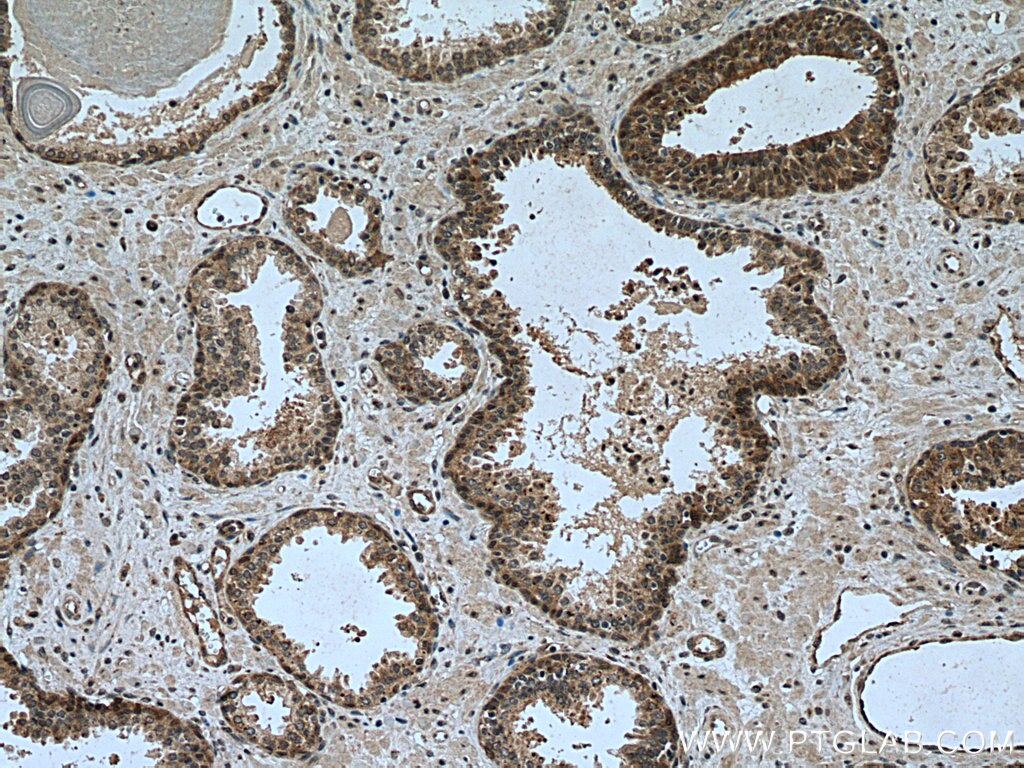
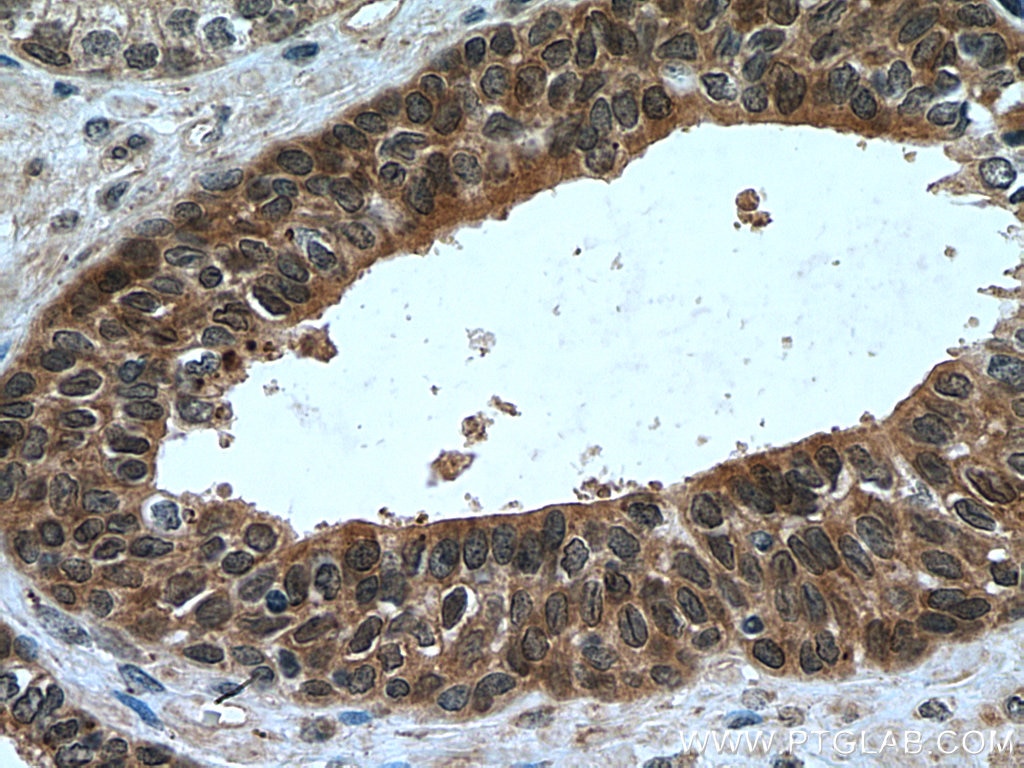

Tested Applications
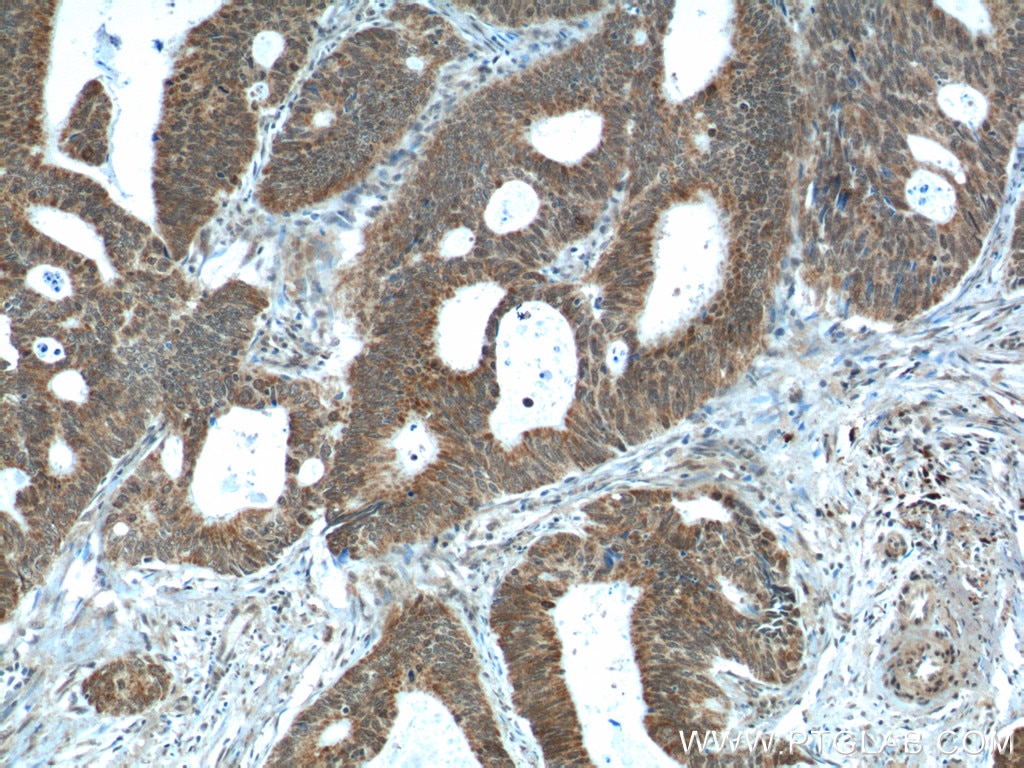
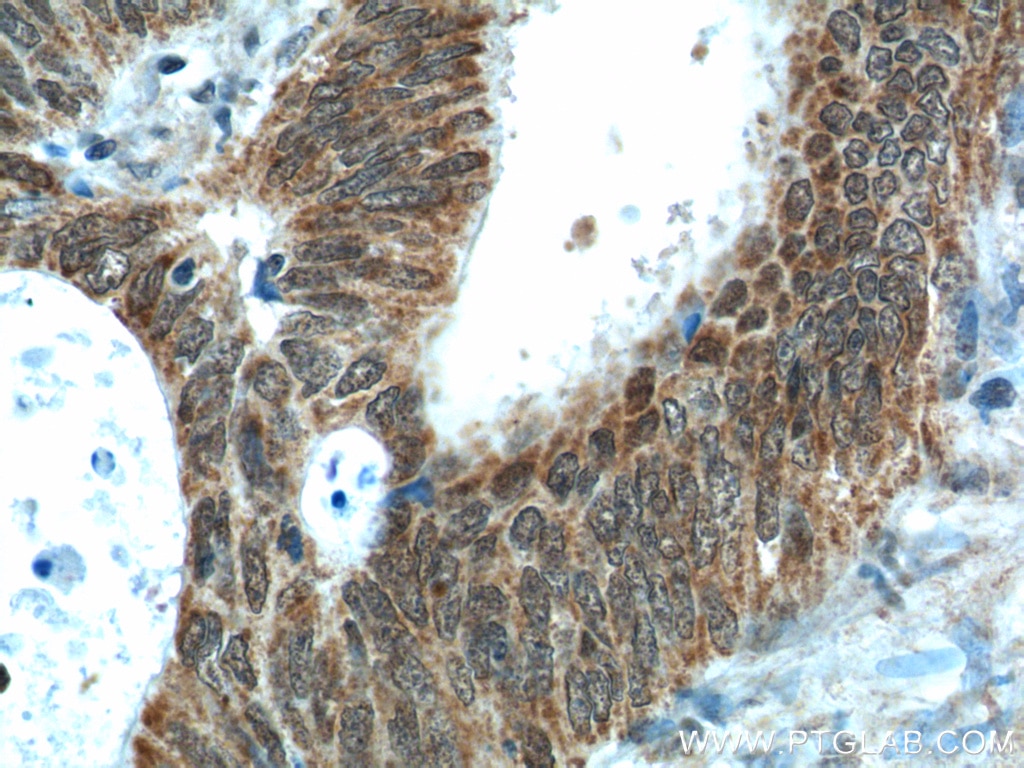
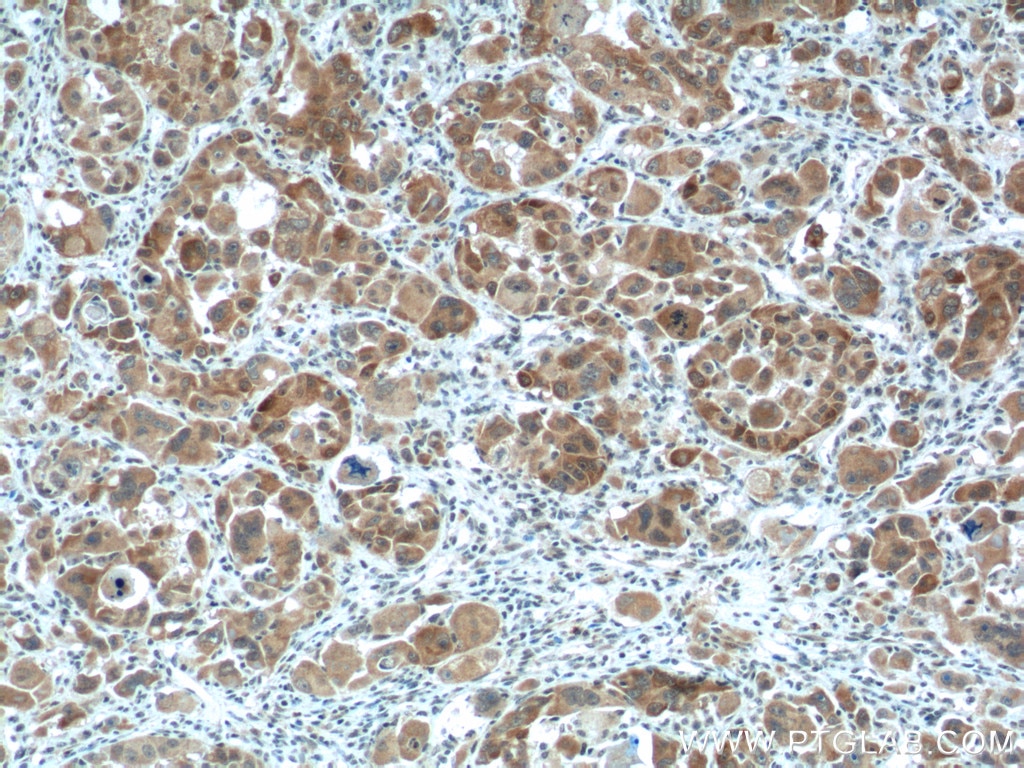
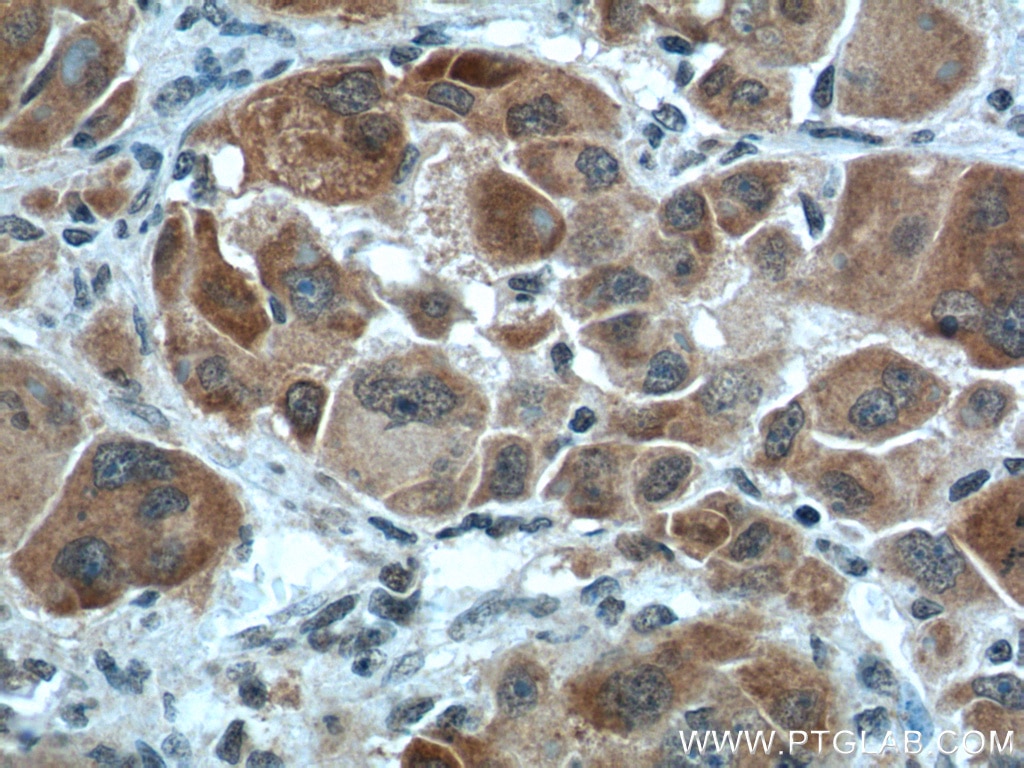
| Positive IHC detected in | human colon cancer tissue, human prostate cancer tissue, human liver cancer tissue Note: suggested antigen retrieval with TE buffer pH 9.0; (*) Alternatively, antigen retrieval may be performed with citrate buffer pH 6.0 |
Recommended dilution
| Application | Dilution |
|---|---|
| Immunohistochemistry (IHC) | IHC : 1:20-1:200 |
| It is recommended that this reagent should be titrated in each testing system to obtain optimal results. | |
| Sample-dependent, Check data in validation data gallery. | |
Product Information
15056-1-AP targets NUPR1 in WB, IHC, IF, CoIP, ELISA applications and shows reactivity with human samples.
| Tested Reactivity | human |
| Cited Reactivity | human, mouse, rat |
| Host / Isotype | Rabbit / IgG |
| Class | Polyclonal |
| Type | Antibody |
| Immunogen |
CatNo: Ag7039 Product name: Recombinant human NUPR1 protein Source: e coli.-derived, PGEX-4T Tag: GST Domain: 1-82 aa of BC002434 Sequence: MATFPPATSAPQQPPGPEDEDSSLDESDLYSLAHSYLGGGGRKGRTKREAAANTNRPSPGGHERKLVTKLQNSERKKRGARR Predict reactive species |
| Full Name | nuclear protein 1 |
| Calculated Molecular Weight | 8 kDa |
| GenBank Accession Number | BC002434 |
| Gene Symbol | NUPR1 |
| Gene ID (NCBI) | 26471 |
| RRID | AB_2878104 |
| Conjugate | Unconjugated |
| Form | Liquid |
| Purification Method | Antigen affinity purification |
| UNIPROT ID | O60356 |
| Storage Buffer | PBS with 0.02% sodium azide and 50% glycerol, pH 7.3. |
| Storage Conditions | Store at -20°C. Stable for one year after shipment. Aliquoting is unnecessary for -20oC storage. 20ul sizes contain 0.1% BSA. |
Background Information
NUPR1, also named as COM1 and P8, is a small nuclear protein that is responsive to various stress stimuli. NUPR1 can be induced by hypoxia, oxidative stress, while the expression is low in physiological condition. It is associated with chemoresistance in multiple malignancies. The predicted MW of NUPR1 is 8 kDa and we also detectet bands around 17 and 38 kDa, which are similar to the papers(PMID: 29130426, 27336713, 28694771, 22961798). NUPR1 was also found in a complex with ANXA2, TRIM21, YBX1, S100A9, HSPA8, HSPA9, HSPA4, HSPA5, and ESR1, suggesting that these proteins might play a role in its functional regulation (PMID: 33542201), and it can also form a complex with PADI4 and plays crucial functions in modulating DNA-repair, favoring metastasis, or facilitating citrullination of other proteins (PMID: 36858171).
Protocols
| Product Specific Protocols | |
|---|---|
| IHC protocol for NUPR1 antibody 15056-1-AP | Download protocol |
| Standard Protocols | |
|---|---|
| Click here to view our Standard Protocols |
Publications
What published studies show
The NUPR1 antibody (Cat# 15056-1-AP) has 26 citations across journals including Molecular Cancer, Redox Biology, Theranostics, Cancer Letters, Cell Death Discovery, BMC Medicine, and others. Research fields span oncology (hepatocellular, colorectal, prostate, bladder, breast, and lung cancers), ferroptosis, autophagy, iron homeostasis, radiation resistance, and neurological/cardiovascular conditions such as epilepsy and pulmonary embolism. Applications include WB, IHC, IF, and CoIP in human, mouse, and rat models.
| Species | Application | Title |
|---|---|---|
Mol Cancer CircPIAS1 promotes hepatocellular carcinoma progression by inhibiting ferroptosis via the miR-455-3p/NUPR1/FTH1 axis | ||
Redox Biol FTO facilitates colorectal cancer chemoresistance via regulation of NUPR1-dependent iron homeostasis
| ||
Theranostics Histone H4K8 lactylation promotes glioblastoma progression by inducing NUPR1-mediated autophagosome‒lysosome fusion.
| ||
Cancer Lett SETD4 inhibits prostate cancer development by promoting H3K27me3-mediated NUPR1 transcriptional repression and cell cycle arrest | ||
Cell Death Discov The interplay of transcriptional coregulator NUPR1 with SREBP1 promotes hepatocellular carcinoma progression via upregulation of lipogenesis
| ||
BMC Med NUPR1 contributes to radiation resistance by maintaining ROS homeostasis via AhR/CYP signal axis in hepatocellular carcinoma
|







