

Tested Applications
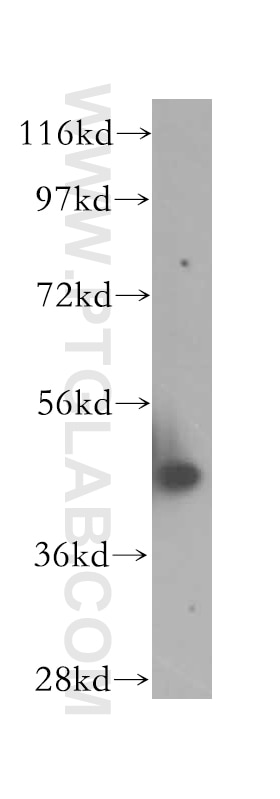
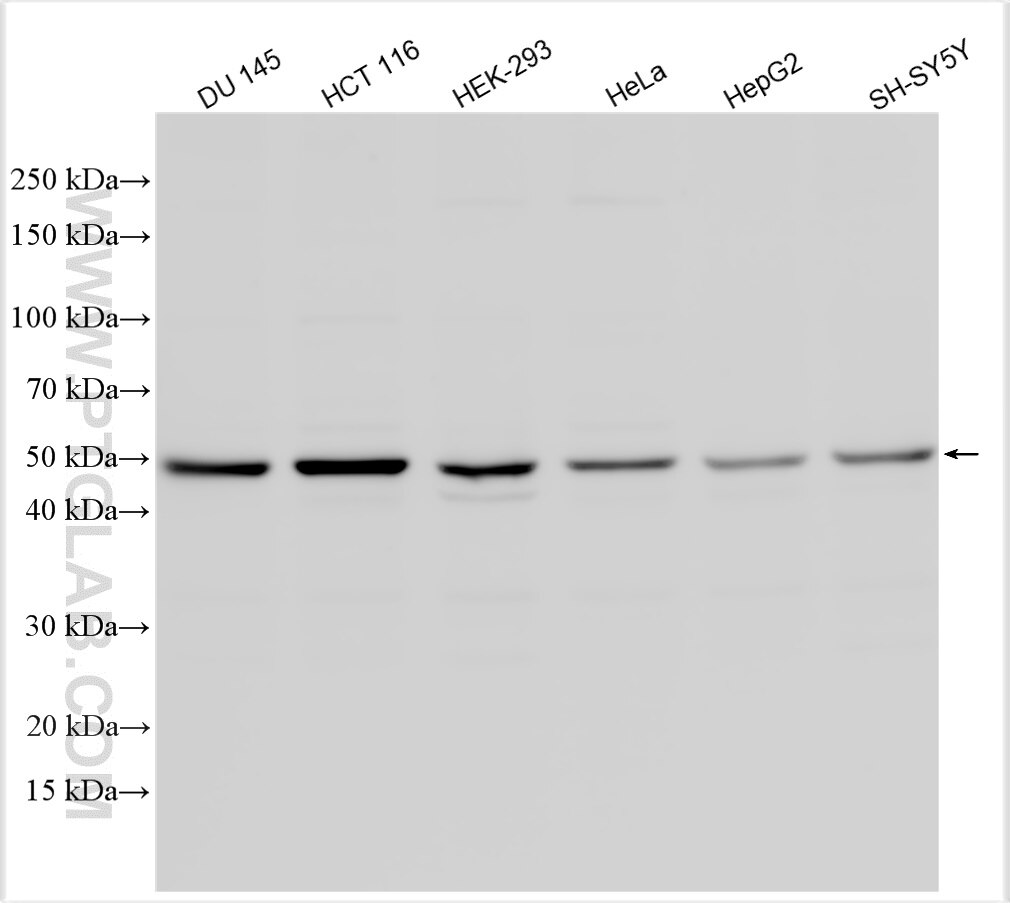
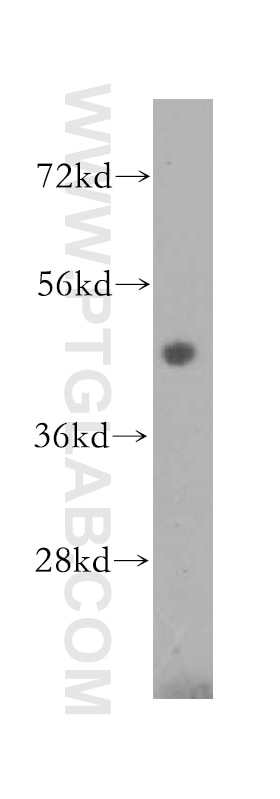
| Positive WB detected in | DU 145 cells, HeLa cells, human heart tissue, HCT 116 cells, HEK-293 cells, HepG2 cells, SH-SY5Y cells |
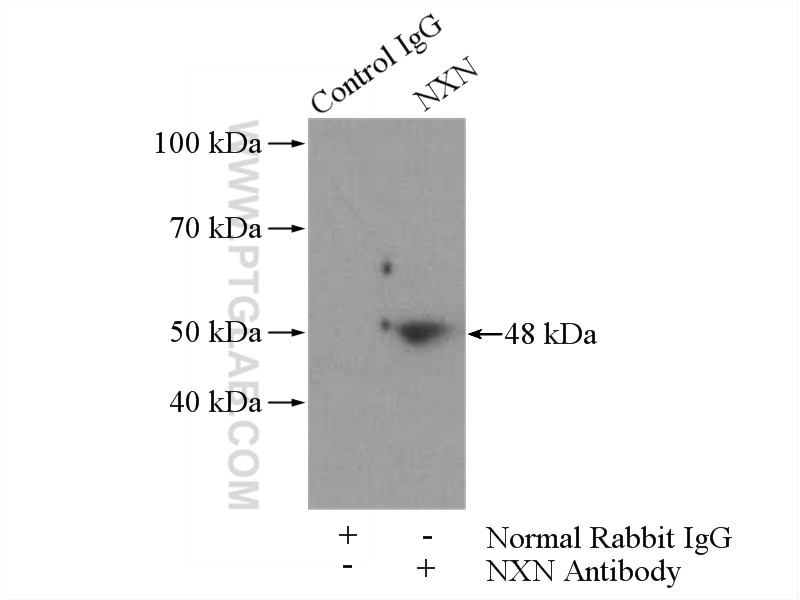
| Positive IP detected in | HeLa cells |
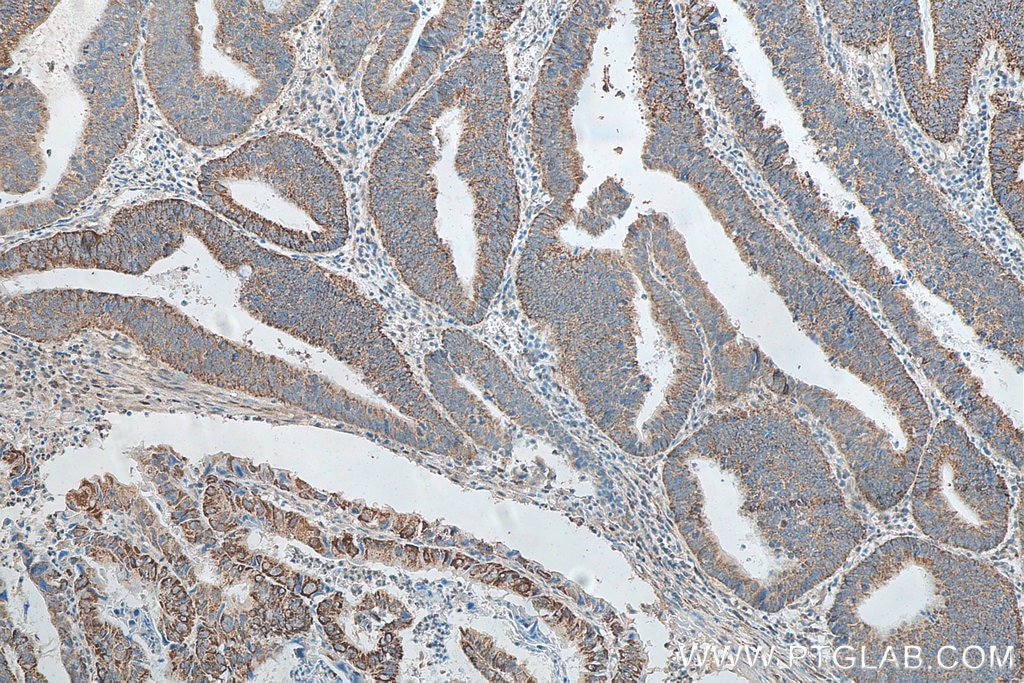
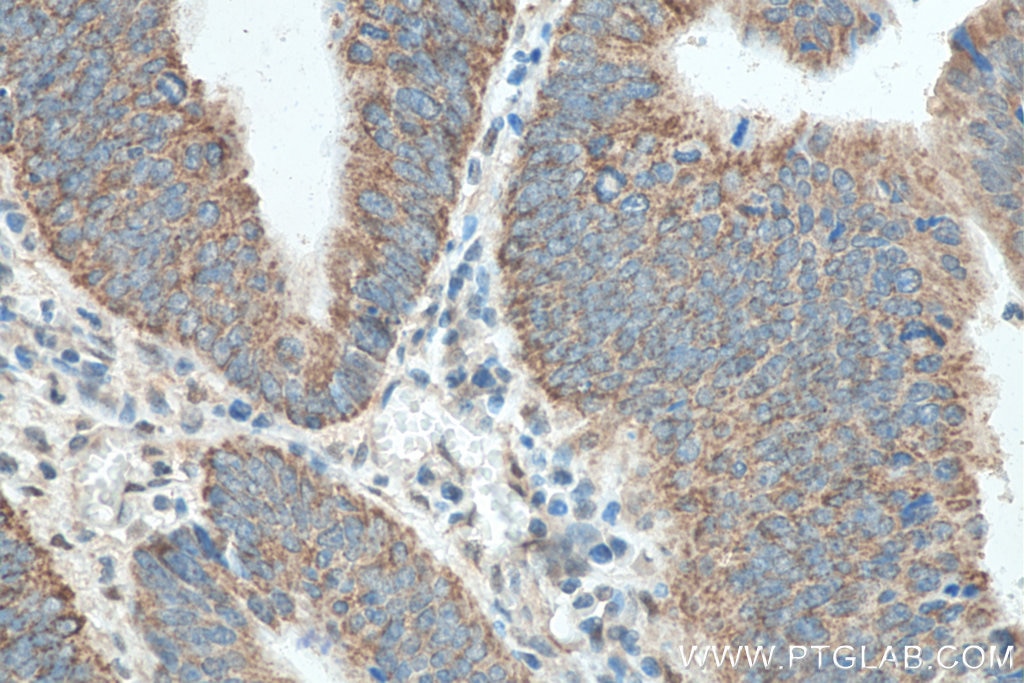
| Positive IHC detected in | human colon cancer tissue Note: suggested antigen retrieval with TE buffer pH 9.0; (*) Alternatively, antigen retrieval may be performed with citrate buffer pH 6.0 |
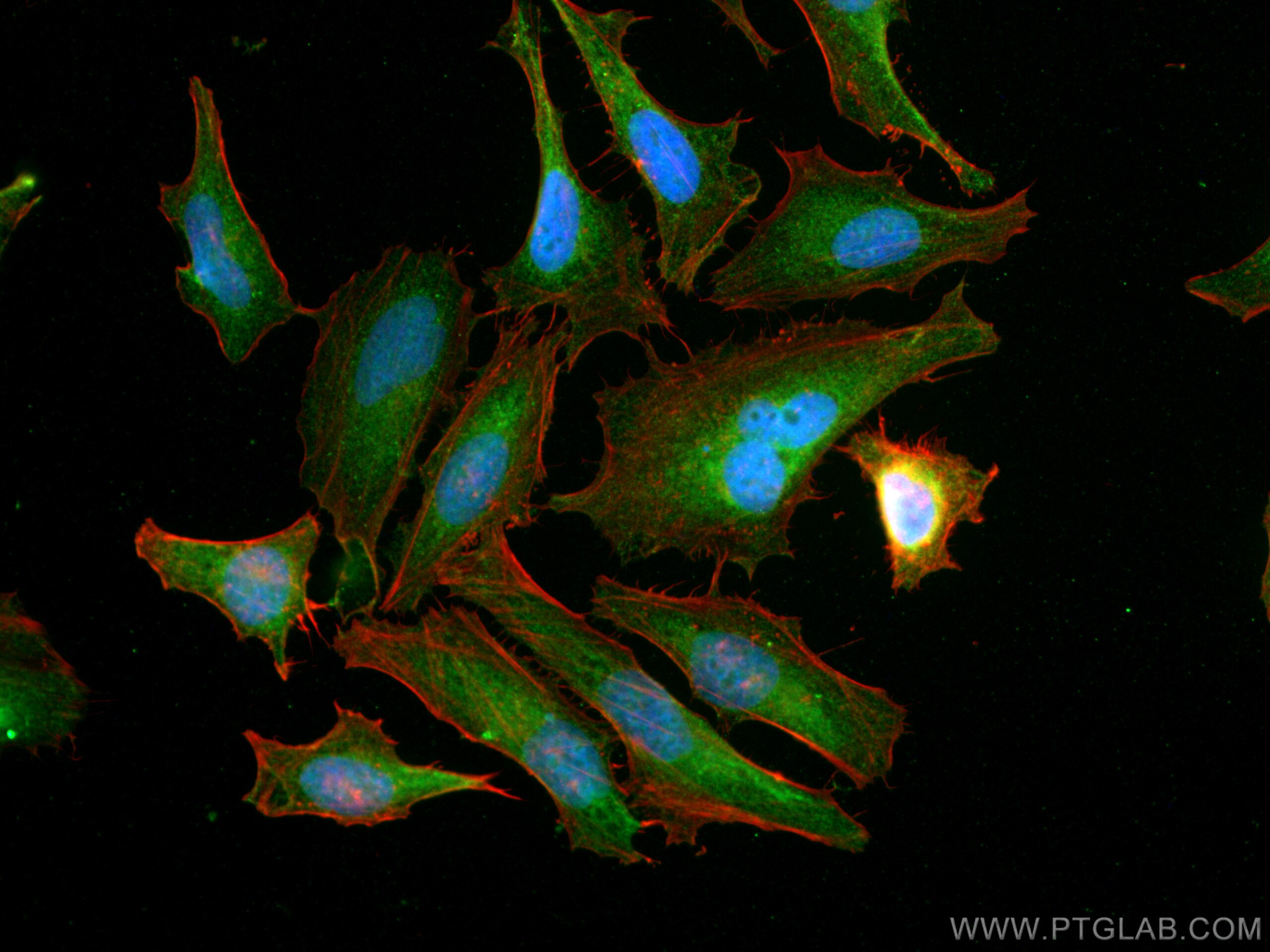
| Positive IF/ICC detected in | HeLa cells |
Recommended dilution
| Application | Dilution |
|---|---|
| Western Blot (WB) | WB : 1:1000-1:6000 |
| Immunoprecipitation (IP) | IP : 0.5-4.0 ug for 1.0-3.0 mg of total protein lysate |
| Immunohistochemistry (IHC) | IHC : 1:50-1:500 |
| Immunofluorescence (IF)/ICC | IF/ICC : 1:50-1:500 |
| It is recommended that this reagent should be titrated in each testing system to obtain optimal results. | |
| Sample-dependent, Check data in validation data gallery. | |
Product Information
16128-1-AP targets NXN in WB, IHC, IF/ICC, IP, ELISA applications and shows reactivity with human, mouse, rat samples.
| Tested Reactivity | human, mouse, rat |
| Cited Reactivity | human, mouse, rat |
| Host / Isotype | Rabbit / IgG |
| Class | Polyclonal |
| Type | Antibody |
| Immunogen |
CatNo: Ag9113 Product name: Recombinant human NXN protein Source: e coli.-derived, PGEX-4T Tag: GST Domain: 1-326 aa of BC009327 Sequence: ADVSLHRNPATLKLWNKYRISNIPSLIFLDATTGKVVCRNGLLVIRDDPEGLEFPWGPKPFREVIAGPLLRNNGQSLESSSLEGSHVGVYFSAHWCPPCRSLTRVLVESYRKIKEAGQNFEIIFVSADRSEESFKQYFSEMPWLAVPYTDEARRSRLNRLYGIQGIPTLIMLDPQGEVITRQGRVEVLNDEDCREFPWHPKPVLELSDSNAAQLNEGPCLVLFVDSEDDGESEAAKQLIQPIAEKIIAKYKAKEEEAPLLFFVAGEDDMTDSLRDYTNLPEAAPLLTILDMSARAKYVMDVEEITPAIVEAFVNDFLAEKLKPEPI Predict reactive species |
| Full Name | nucleoredoxin |
| Calculated Molecular Weight | 435 aa, 48 kDa |
| Observed Molecular Weight | 48 kDa |
| GenBank Accession Number | BC009327 |
| Gene Symbol | NXN |
| Gene ID (NCBI) | 64359 |
| RRID | AB_2158114 |
| Conjugate | Unconjugated |
| Form | Liquid |
| Purification Method | Antigen affinity purification |
| UNIPROT ID | Q6DKJ4 |
| Storage Buffer | PBS with 0.02% sodium azide and 50% glycerol, pH 7.3. |
| Storage Conditions | Store at -20°C. Stable for one year after shipment. Aliquoting is unnecessary for -20oC storage. 20ul sizes contain 0.1% BSA. |
Background Information
Nucleoredoxin (NRX/NXN), a relatively uncharacterized member of the TRX family protein, has recently been reported to regulate the Wnt/β-catenin pathway, which itself regulates cell fate and early development, in a redox-dependent manner(PMID:17567240). Northern blot analysis detected several nucleoredoxin splice variants in adult mouse tissues, with highest expression in testis and skin and lowest expression in liver(PMID:9119370). It has 3 isoforms produced by alternative splicing. This antibody is specific to NXN.
Protocols
| Product Specific Protocols | |
|---|---|
| IF protocol for NXN antibody 16128-1-AP | Download protocol |
| IHC protocol for NXN antibody 16128-1-AP | Download protocol |
| IP protocol for NXN antibody 16128-1-AP | Download protocol |
| WB protocol for NXN antibody 16128-1-AP | Download protocol |
| Standard Protocols | |
|---|---|
| Click here to view our Standard Protocols |
Publications
What published studies show
The anti-Nucleoredoxin antibody (Cat# 16128-1-AP) has 8 total citations appearing in Cell Death & Disease, Antioxidants, Free Radical Biology and Medicine, Science Signaling, Journal of Experimental Botany, Oxidative Medicine and Cellular Longevity, and FASEB Journal. Associated research fields include hepatocellular carcinoma metastasis, retinal pigmented epithelium differentiation, mitochondrial oxidative stress, epidermal and hair follicle development, seed germination, neuronal biology, and Wnt-β-catenin redox signaling.
| Species | Application | Title |
|---|---|---|
Cell Death Dis NXN suppresses metastasis of hepatocellular carcinoma by promoting degradation of Snail through binding to DUB3. | ||
Antioxidants (Basel) Enzymatic Depletion of Mitochondrial Inorganic Polyphosphate (polyP) Increases the Generation of Reactive Oxygen Species (ROS) and the Activity of the Pentose Phosphate Pathway (PPP) in Mammalian Cells. | ||
Antioxidants (Basel) Nucleoredoxin Plays a Key Role in the Maintenance of Retinal Pigmented Epithelium Differentiation.
| ||
Free Radic Biol Med Oxidative stress as a candidate mechanism for accelerated neuroectodermal differentiation due to trisomy 21. | ||
Sci Signal Mitochondrial reactive oxygen species promote epidermal differentiation and hair follicle development. | ||
J Exp Bot Redox-mediated regulation of ABSCISIC ACID-INSENSITIVE 5 affects seed germination and seedling development in Arabidopsis. |








