
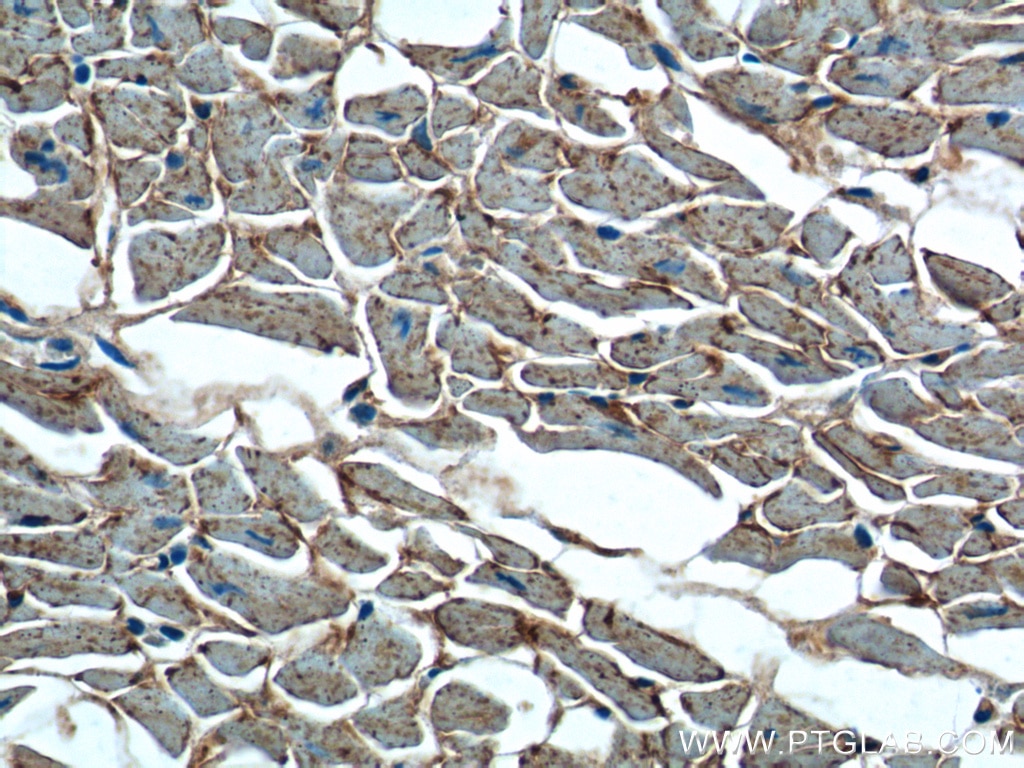


Tested Applications
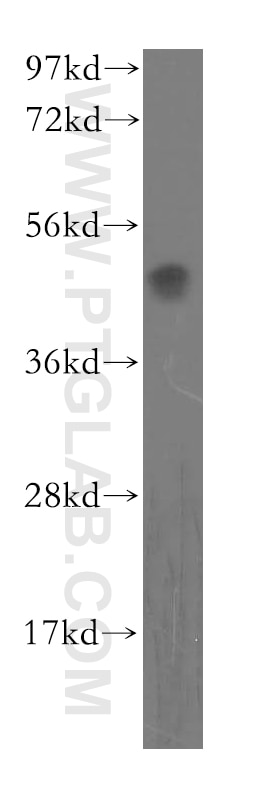
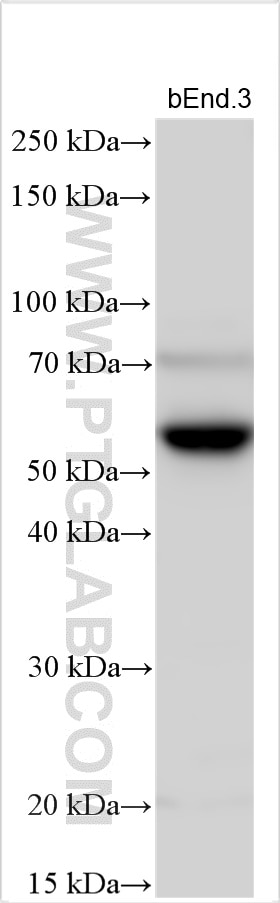
| Positive WB detected in | bEnd.3 cells, human liver tissue |
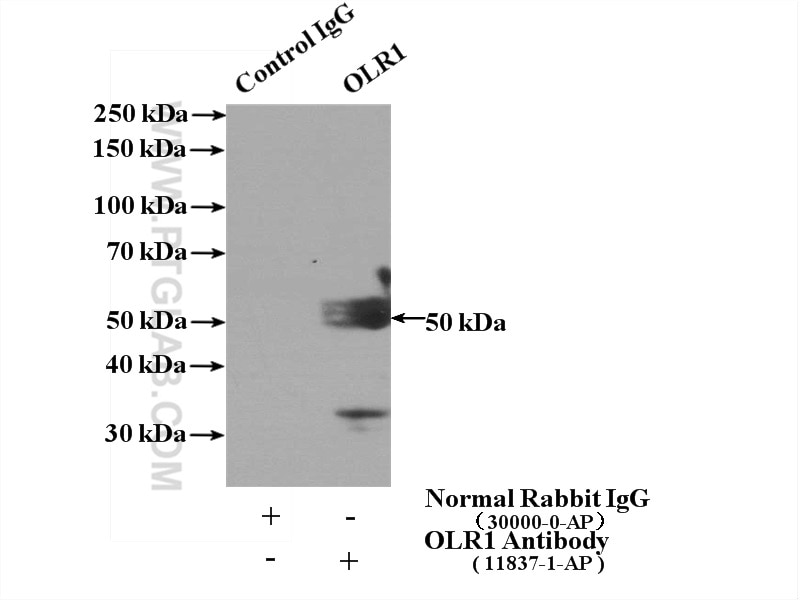
| Positive IP detected in | L02 cells |
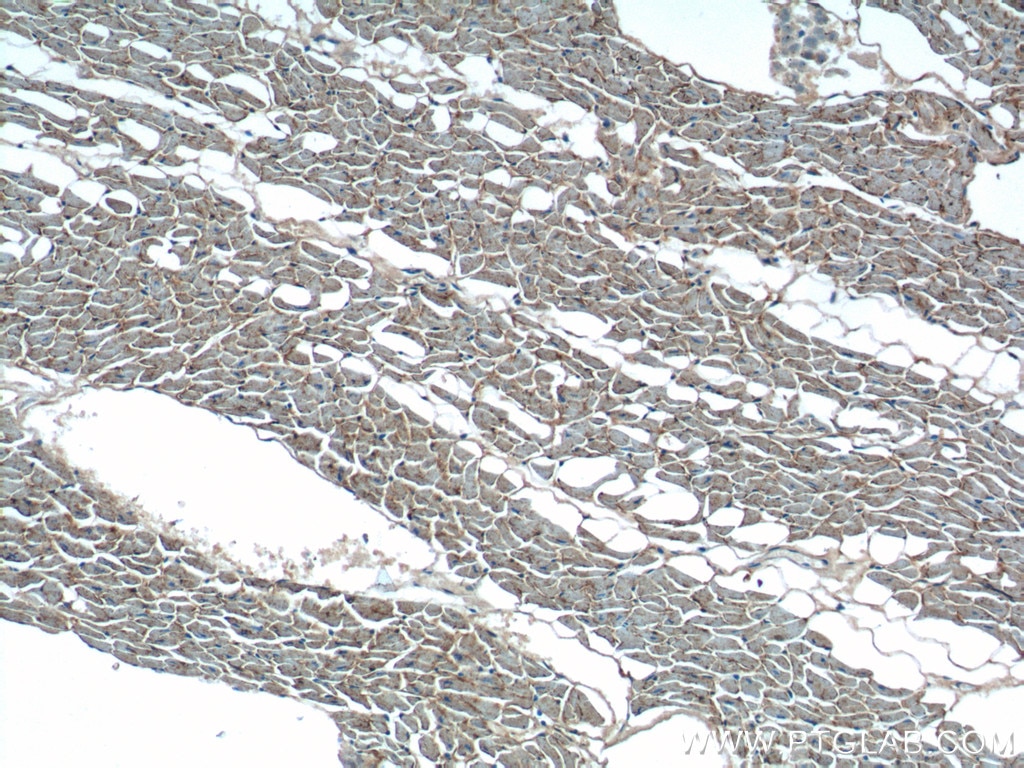
| Positive IHC detected in | human heart tissue, human placenta tissue Note: suggested antigen retrieval with TE buffer pH 9.0; (*) Alternatively, antigen retrieval may be performed with citrate buffer pH 6.0 |
Recommended dilution
| Application | Dilution |
|---|---|
| Western Blot (WB) | WB : 1:1000-1:6000 |
| Immunoprecipitation (IP) | IP : 0.5-4.0 ug for 1.0-3.0 mg of total protein lysate |
| Immunohistochemistry (IHC) | IHC : 1:50-1:500 |
| It is recommended that this reagent should be titrated in each testing system to obtain optimal results. | |
| Sample-dependent, Check data in validation data gallery. | |
Product Information
11837-1-AP targets OLR1/LOX1 in WB, IHC, IF, IP, CoIP, ELISA applications and shows reactivity with human, mouse samples.
| Tested Reactivity | human, mouse |
| Cited Reactivity | human, mouse |
| Host / Isotype | Rabbit / IgG |
| Class | Polyclonal |
| Type | Antibody |
| Immunogen |
CatNo: Ag2437 Product name: Recombinant human OLR1 protein Source: e coli.-derived, PGEX-4T Tag: GST Domain: 1-273 aa of BC022295 Sequence: MTFDDLKIQTVKDQPDEKSNGKKAKGLQFLYSPWWCLAAATLGVLCLGLVVTIMVLGMQLSQVSDLLTQEQANLTHQKKKLEGQISARQQAEEASQESENELKEMIETLARKLNEKSKEQMELHHQNLNLQETLKRVANCSAPCPQDWIWHGENCYLFSSGSFNWEKSQEKCLSLDAKLLKINSTADLDFIQQAISYSSFPFWMGLSRRNPSYPWLWEDGSPLMPHLFRVRGAVSQTYPSGTCAYIQRGAVYAENCILAAFSICQKKANLRAQ Predict reactive species |
| Full Name | oxidized low density lipoprotein (lectin-like) receptor 1 |
| Calculated Molecular Weight | 273 aa, 31 kDa |
| Observed Molecular Weight | 50-55 kDa |
| GenBank Accession Number | BC022295 |
| Gene Symbol | OLR1 |
| Gene ID (NCBI) | 4973 |
| RRID | AB_2299037 |
| Conjugate | Unconjugated |
| Form | Liquid |
| Purification Method | Antigen affinity purification |
| UNIPROT ID | P78380 |
| Storage Buffer | PBS with 0.02% sodium azide and 50% glycerol, pH 7.3. |
| Storage Conditions | Store at -20°C. Stable for one year after shipment. Aliquoting is unnecessary for -20oC storage. 20ul sizes contain 0.1% BSA. |
Background Information
OLR1/LOX-1 acts as a receptor, in the form of homodimer, that mediates the recognition, internalization, and degradation of oxidatively modified low density lipoprotein (oxLDL) (PMID: 9052782, 15695803). ORL1 is predominantly expressed in endothelial cells and vascular-rich organs such as the placenta, lung, liver, and brain (PMID: 9828121). OLR1 is a protein containing 273 amino acids with a calculated molecular mass of 31 kDa but an apparent molecular mass of 50 kDa, which may result from the glycosylation of four potential N-linked glycosylation sites located at the C-terminal domain (PMID: 9052782).
Protocols
| Product Specific Protocols | |
|---|---|
| IHC protocol for OLR1/LOX1 antibody 11837-1-AP | Download protocol |
| IP protocol for OLR1/LOX1 antibody 11837-1-AP | Download protocol |
| WB protocol for OLR1/LOX1 antibody 11837-1-AP | Download protocol |
| Standard Protocols | |
|---|---|
| Click here to view our Standard Protocols |
Publications
What published studies show
Anti-OLR1 antibody (Cat# 11837-1-AP) has 60 citations across approximately 50 journals, including Nature Communications, ACS Nano, Advanced Science, Cancer Letters, Molecular Medicine, International Immunopharmacology, Scientific Reports, and Journal of Biological Chemistry. Research fields span atherosclerosis and cardiovascular disease, lipid metabolism, foam cell biology, multiple cancer types (pancreatic, breast, gastric, colorectal, renal), inflammation and immunology, diabetes, keratitis, neurology, dental pathology, and reproductive biology.
| Species | Application | Title |
|---|---|---|
Exp Hematol Oncol Multi-model analysis of gallbladder cancer reveals the role of OxLDL-absorbing neutrophils in promoting liver invasion | ||
ACS Nano Autophagy-Inducing and cfDNA-Scavenging Nanoparticles for Synergistic Atherosclerosis Therapy. | ||
Metabolism Deacetylation of Caveolin-1 by Sirt6 induces autophagy and retards high glucose-stimulated LDL transcytosis and atherosclerosis formation. | ||
Cardiovasc Diabetol Klotho inhibits renal ox-LDL deposition via IGF-1R/RAC1/OLR1 signaling to ameliorate podocyte injury in diabetic kidney disease | ||
J Nanobiotechnology A dual-targeting bio-liposomes nanodrug repair endothelial cell dysfunction and restore macrophage cholesterol flow homeostasis to treat early atherosclerosis |







