

Tested Applications
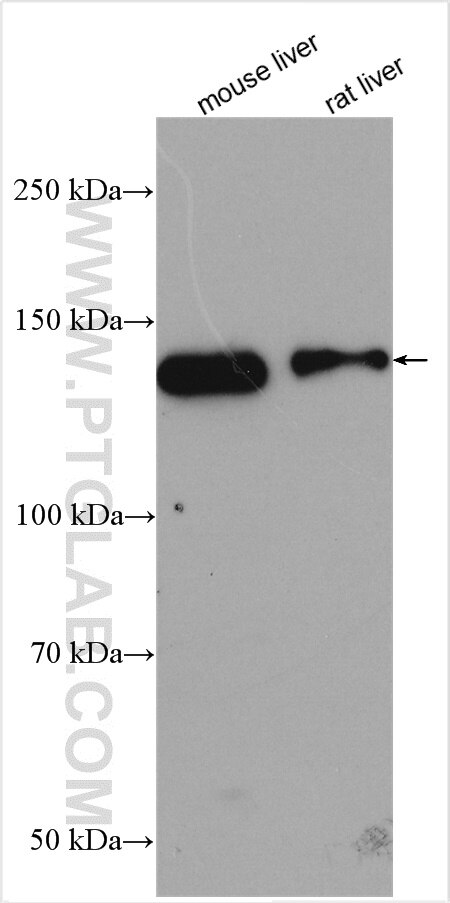
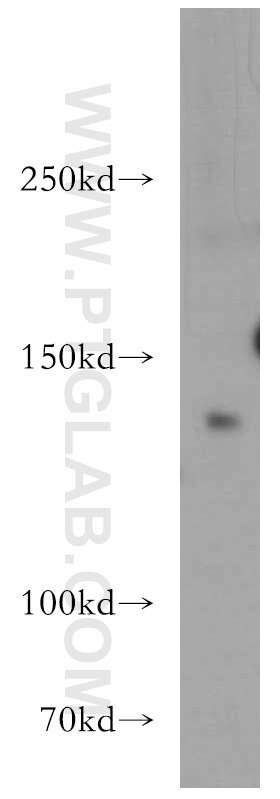
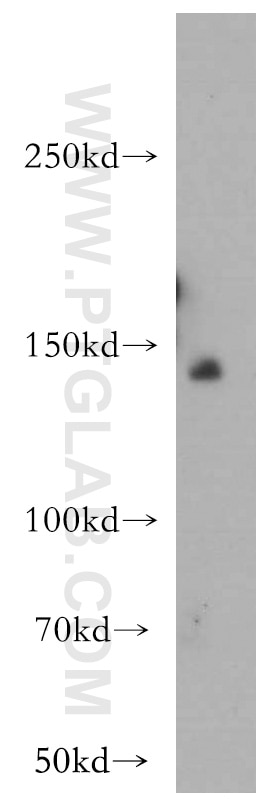
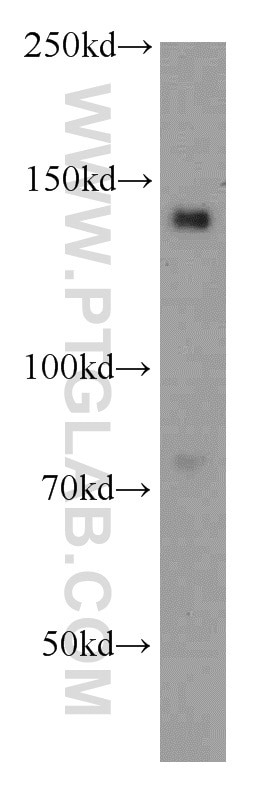
| Positive WB detected in | mouse liver tissue, mouse brain tissue, L02 cells, mouse bladder tissue, rat liver tissue |
Recommended dilution
| Application | Dilution |
|---|---|
| Western Blot (WB) | WB : 1:2000-1:10000 |
| It is recommended that this reagent should be titrated in each testing system to obtain optimal results. | |
| Sample-dependent, Check data in validation data gallery. | |
Product Information
21127-1-AP targets OPLAH in WB, ELISA applications and shows reactivity with human, mouse, rat samples.
| Tested Reactivity | human, mouse, rat |
| Cited Reactivity | mouse |
| Host / Isotype | Rabbit / IgG |
| Class | Polyclonal |
| Type | Antibody |
| Immunogen |
CatNo: Ag15523 Product name: Recombinant human OPLAH protein Source: e coli.-derived, PGEX-4T Tag: GST Domain: 939-1288 aa of BC142672 Sequence: ELIGQYGLDVVQAYMGHIQANAELAVRDMLRAFGTSRQARGLPLEVSSEDHMDDGSPIRLRVQISLSQGSAVFDFSGTGPEVFGNLNAPRAVTLSALIYCLRCLVGRDIPLNQGCLAPVRVVIPRGSILDPSPEAAVVGGNVLTSQRVVDVILGAFGACAASQGCMNNVTLGNAHMGYYETVAGGAGAGPSWHGRSGVHSHMTNTRITDPEILESRYPVILRRFELRRGSGGRGRFRGGDGVTRELLFREEALLSVLTERRAFRPYGLHGGEPGARGLNLLIRKNGRTVNLGGKTSVTVYPGDVFCLHTPGGGGYGDPEDPAPPPGSPPQALAFPEHGSVYEYRRAQEAV Predict reactive species |
| Full Name | 5-oxoprolinase (ATP-hydrolysing) |
| Calculated Molecular Weight | 1288 aa, 137 kDa |
| Observed Molecular Weight | 135-140 kDa |
| GenBank Accession Number | BC142672 |
| Gene Symbol | OPLAH |
| Gene ID (NCBI) | 26873 |
| RRID | AB_10733639 |
| Conjugate | Unconjugated |
| Form | Liquid |
| Purification Method | Antigen affinity purification |
| UNIPROT ID | O14841 |
| Storage Buffer | PBS with 0.02% sodium azide and 50% glycerol, pH 7.3. |
| Storage Conditions | Store at -20°C. Stable for one year after shipment. Aliquoting is unnecessary for -20oC storage. 20ul sizes contain 0.1% BSA. |
Protocols
| Product Specific Protocols | |
|---|---|
| WB protocol for OPLAH antibody 21127-1-AP | Download protocol |
| Standard Protocols | |
|---|---|
| Click here to view our Standard Protocols |
Publications
What published studies show
The OPLAH Polyclonal Antibody (Cat# 21127-1-AP) has 2 total citations. One appears in FASEB Journal (2017), studying taurine treatment and hepatic γ-glutamyl cycle/methylglyoxal metabolism in a mouse model of classical homocystinuria, using WB in mouse samples. The other is in Clinical and Experimental Medicine (2026), investigating PYCR1's role in glutamine metabolism and lung adenocarcinoma progression via OPLAH regulation. The research fields span metabolic disorders and oncology.
| Species | Application | Title |
|---|---|---|
FASEB J Taurine treatment prevents derangement of the hepatic γ-glutamyl cycle and methylglyoxal metabolism in a mouse model of classical homocystinuria: regulatory crosstalk between thiol and sulfinic acid metabolism. | ||
Clin Exp Med PYCR1 promotes glutamine metabolism and the progression of lung adenocarcinoma by regulating the expression of OPLAH. |





