

Tested Applications
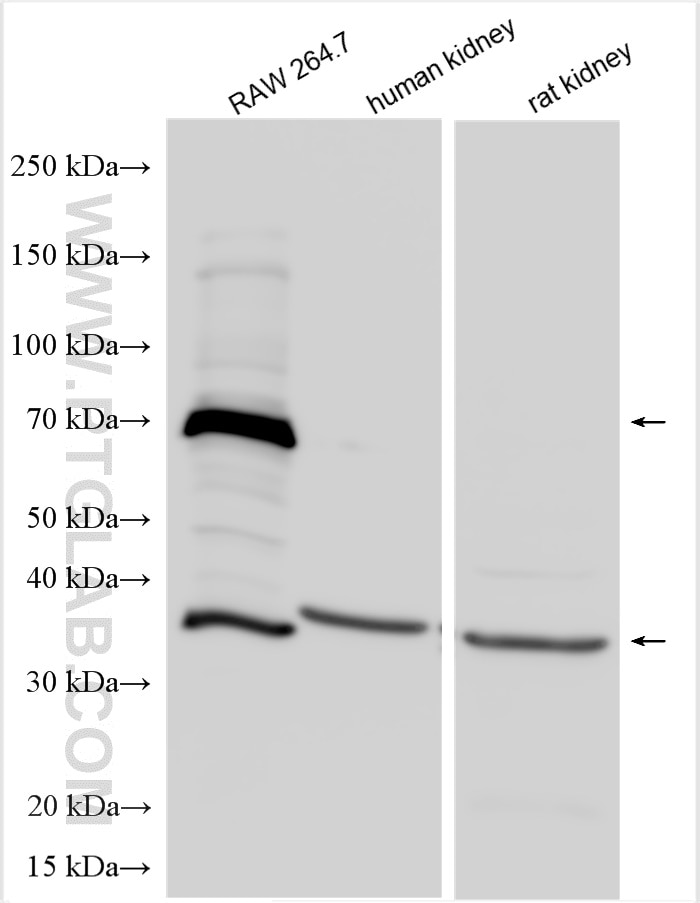
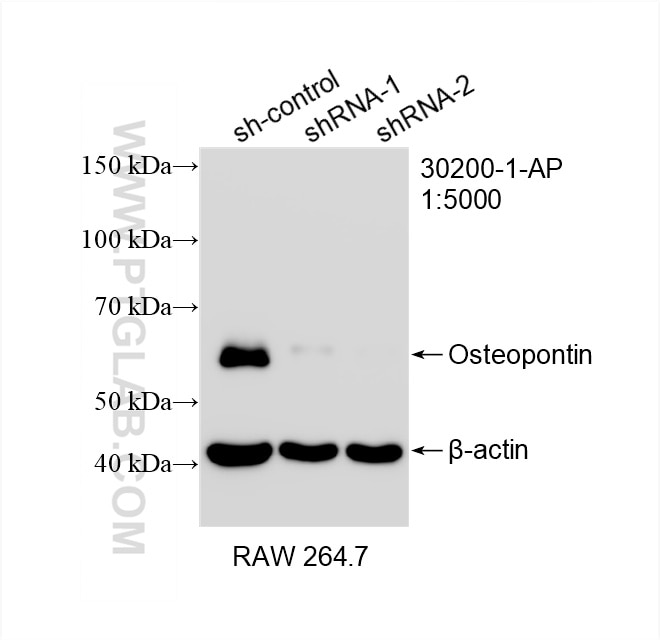
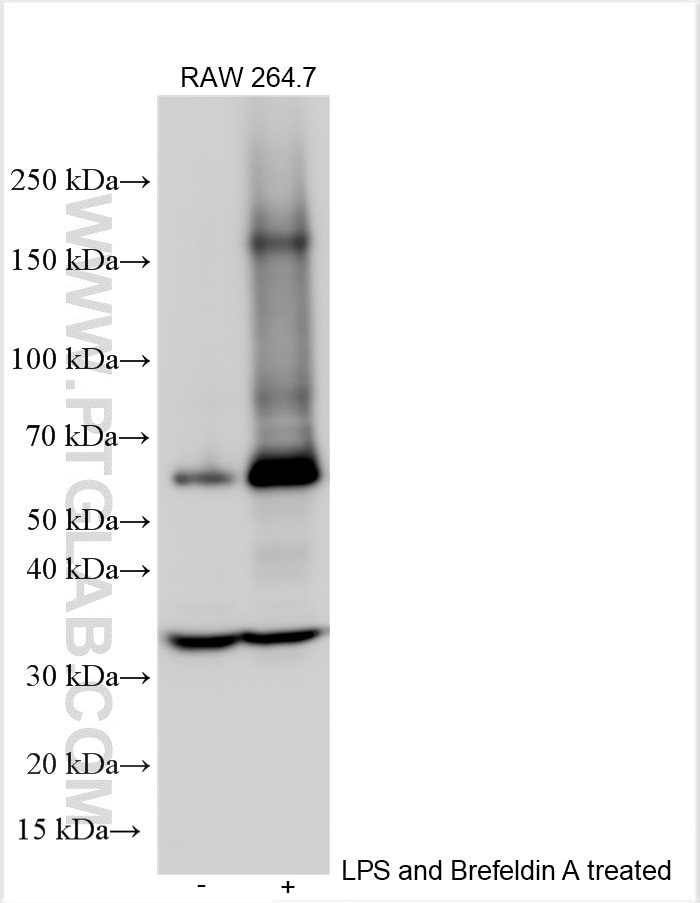
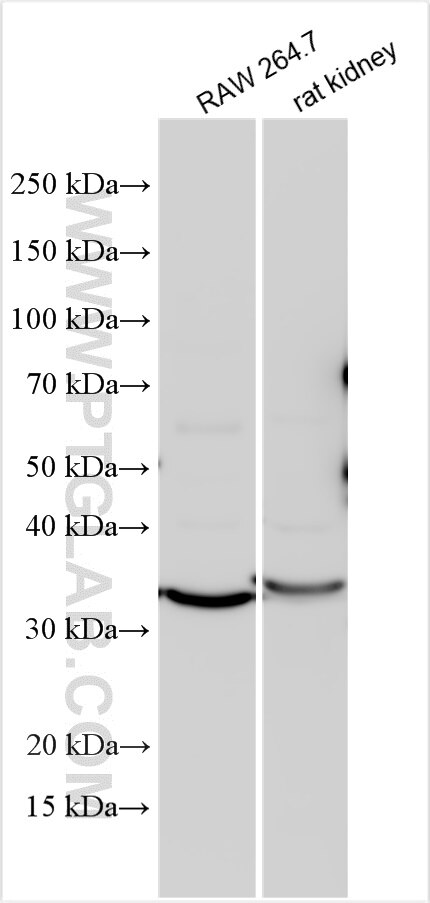
| Positive WB detected in | RAW 264.7 cells, rat kidney tissue, human kidney tissue, LPS and Brefeldin A treated RAW 264.7 |
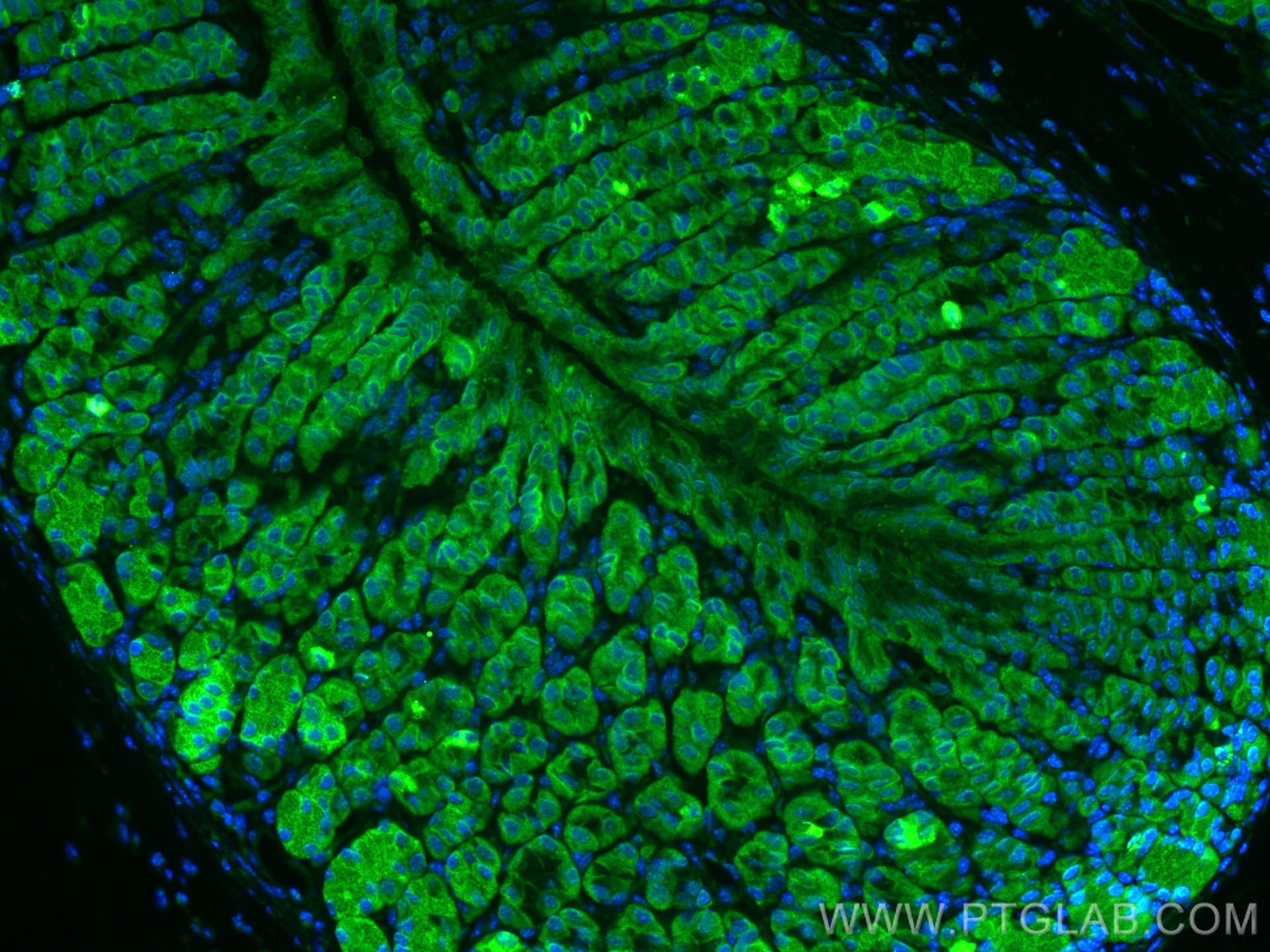
| Positive IF-P detected in | mouse stomach tissue |
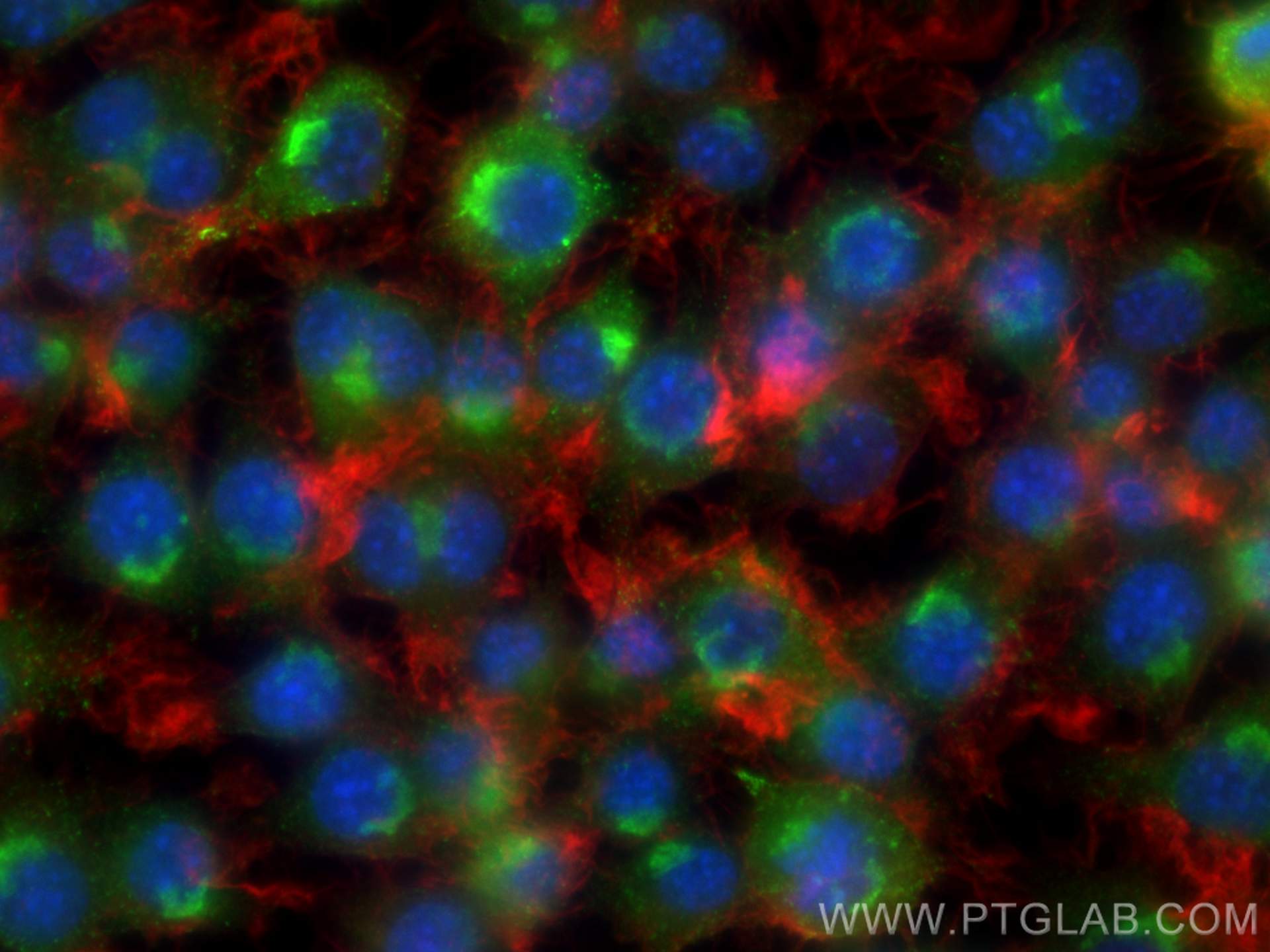
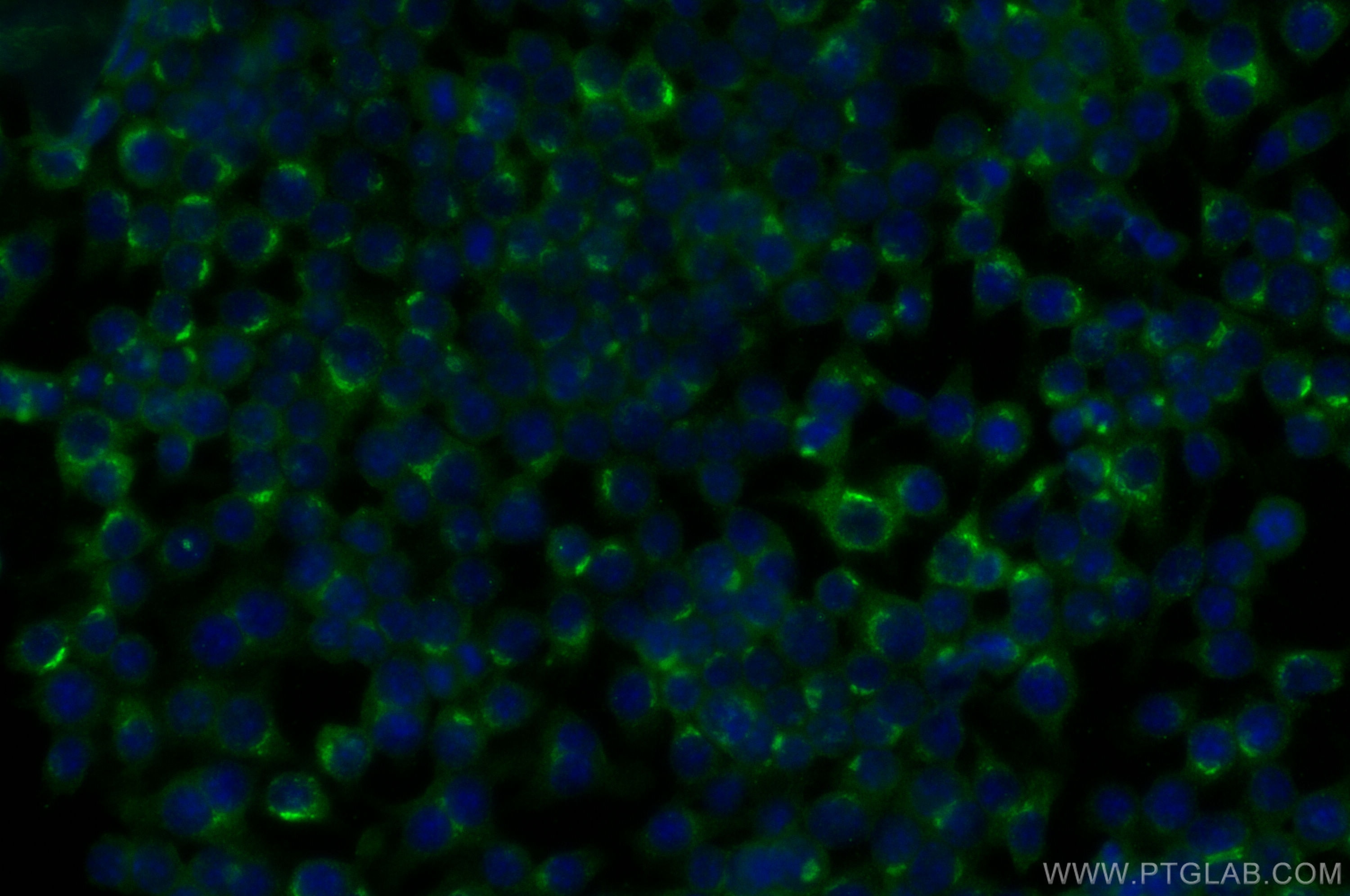
| Positive IF/ICC detected in | RAW 264.7 cells |
Recommended dilution
| Application | Dilution |
|---|---|
| Western Blot (WB) | WB : 1:1000-1:4000 |
| Immunofluorescence (IF)-P | IF-P : 1:50-1:500 |
| Immunofluorescence (IF)/ICC | IF/ICC : 1:50-1:500 |
| It is recommended that this reagent should be titrated in each testing system to obtain optimal results. | |
| Sample-dependent, Check data in validation data gallery. | |
Product Information
30200-1-AP targets Osteopontin in WB, IHC, IF/ICC, IF-P, ELISA applications and shows reactivity with human, mouse, rat samples.
| Tested Reactivity | human, mouse, rat |
| Cited Reactivity | human, mouse, rat |
| Host / Isotype | Rabbit / IgG |
| Class | Polyclonal |
| Type | Antibody |
| Immunogen |
CatNo: Eg0317 Product name: Recombinant Mouse Osteopontin protein (His Tag) Source: mammalian cells-derived, pHZ-KIsec-C-6*HIS Tag: C-6*HIS Domain: 17-294 aa of NM_001204233.1 Sequence: LPVKVTDSGSSEEKLYSLHPDPIATWLVPDPSQKQNLLAPQNAVSSEEKDDFKQETLPSNSNESHDHMDDDDDDDDDDGDHAESEDSVDSDESDESHHSDESDETVTASTQADTFTPIVPTVDVPNGRGDSLAYGLRSKSRSFQVSDEQYPDATDEDLTSHMKSGESKESLDVIPVAQLLSMPSDQDNNGKGSHESSQLDEPSLETHRLEHSKESQESADQSDVIDSQASSKASLEHQSHKFHSHKDKLVLDPKSKEDDRYLKFRISHELESSSSEVN Predict reactive species |
| Full Name | secreted phosphoprotein 1 |
| Calculated Molecular Weight | 32kd |
| Observed Molecular Weight | 32 kDa, 60-70 kDa |
| GenBank Accession Number | NM_001204233.1 |
| Gene Symbol | Osteopontin |
| Gene ID (NCBI) | 20750 |
| RRID | AB_3086261 |
| Conjugate | Unconjugated |
| Form | Liquid |
| Purification Method | Antigen affinity purification |
| UNIPROT ID | P10923 |
| Storage Buffer | PBS with 0.02% sodium azide and 50% glycerol, pH 7.3. |
| Storage Conditions | Store at -20°C. Stable for one year after shipment. Aliquoting is unnecessary for -20oC storage. 20ul sizes contain 0.1% BSA. |
Background Information
Osteopontin (OPN) is also named as 2AR, minopontin, bone sialoprotein 1, Spp1, Eta-1 and Op, and belongs to the osteopontin family. Osteopontin is major non-collagenous bone protein that binds tightly to hydroxyapatite. It is a highly phosphorylated glycophosphoprotein having acidic characteristics and rich in aspartic acid (PMID: 30003880). And it acts as a cytokine involved in enhancing production of interferon-gamma and interleukin-12 and reducing production of interleukin-10 and is essential in the pathway that leads to type I immunity (PMID:2351930, PMID:10657301). OPN, a multifunctional protein, has important functions on cardiovascular diseases, cancer, diabetes and kidney stone diseases and in the process of inflammation, biomineralization, cell viability and wound healing (PMID: 30003880). Osteopontin (OPN) is a pleiotropic glycoprotein expressed in various cell types in animals and in humans, including bone, immune, smooth muscle, epithelial and endothelial cells. Moreover, OPN is found in kidneys (in the thick ascending limbs of the loop of Henle and in distal nephrons) and urine (PMID:30456594). Osteopontin (OPN) is an acidic 60-70 kDa glycoprotein that is cleaved by proteases to yield 45-kDa and 24-kDa fragments (PMID: 10491621, PMID: 1995615)
Protocols
| Product Specific Protocols | |
|---|---|
| IF protocol for Osteopontin antibody 30200-1-AP | Download protocol |
| WB protocol for Osteopontin antibody 30200-1-AP | Download protocol |
| Standard Protocols | |
|---|---|
| Click here to view our Standard Protocols |
Publications
What published studies show
The Osteopontin Polyclonal antibody (Cat# 30200-1-AP) has accumulated 61 citations published in journals including Bioactive Materials, Advanced Healthcare Materials, Materials Today Bio, ACS Nano, Journal of Nanobiotechnology, Acta Biomaterialica, FASEB Journal, Journal of Translational Medicine, and Regenerative Biomaterials. Associated research fields include bone regeneration and osteogenesis, biomaterials and 3D-printed scaffolds, atherosclerosis and vascular remodeling, inflammation, ferroptosis, osteoporosis, intervertebral disc degeneration, dental and periodontal biology, infection, and cancer (esophageal carcinoma, glioblastoma).
| Species | Application | Title |
|---|---|---|
Bioact Mater Magnesium ion implantation enhances the osseointegration and vascularization of 3D-Printed CoCrMo alloy scaffolds for load-bearing orthopedic applications. | ||
Bioact Mater A composite hydrogel enables the spatiotemporal delivery of distinct cytokines to drive the native vascularized bone regeneration. | ||
ACS Nano A Straw-Reinforced-Clay-Inspired Composite Hydrogel Promotes Diabetic Bone Regeneration via Driving the Immune-Osteogenic Cascade to Remodel Mitochondrial Homeostasis. | ||
J Nanobiotechnology Functional-responsive hydrogel microspheres based on microenvironment sensing promote the sequential repair of infected bone defects by regulating ROS balance. | ||
J Nanobiotechnology Piezoelectric heterojunction/polyetherketoneketone composite with enhanced sonodynamic efficacy and nanozyme activities for anti-infection and encouraging neurovascular ossification. | ||
Adv Sci (Weinh) Virulence-Selective Trap-Capture-Kill Antibacterial Nanostructures With Immune-Metabolic Regulation for Treating Implant-Associated Infections. |
Reviews
What customers say
The single review for this product reports a 4-star rating from a Western Blot application using a 1:1000 dilution. The reviewer noted the antibody worked adequately but observed that the target was lowly expressed in their samples. Overall, the feedback suggests the reagent performs reliably for WB, though detection sensitivity may be limited when the antigen is expressed at low levels.
The reviews below have been submitted by verified Proteintech customers who received an incentive for providing their feedback.
Amy (Verified Customer) (02-06-2026) | Worked ok. Lowly expressed in my samples
|








