

Tested Applications
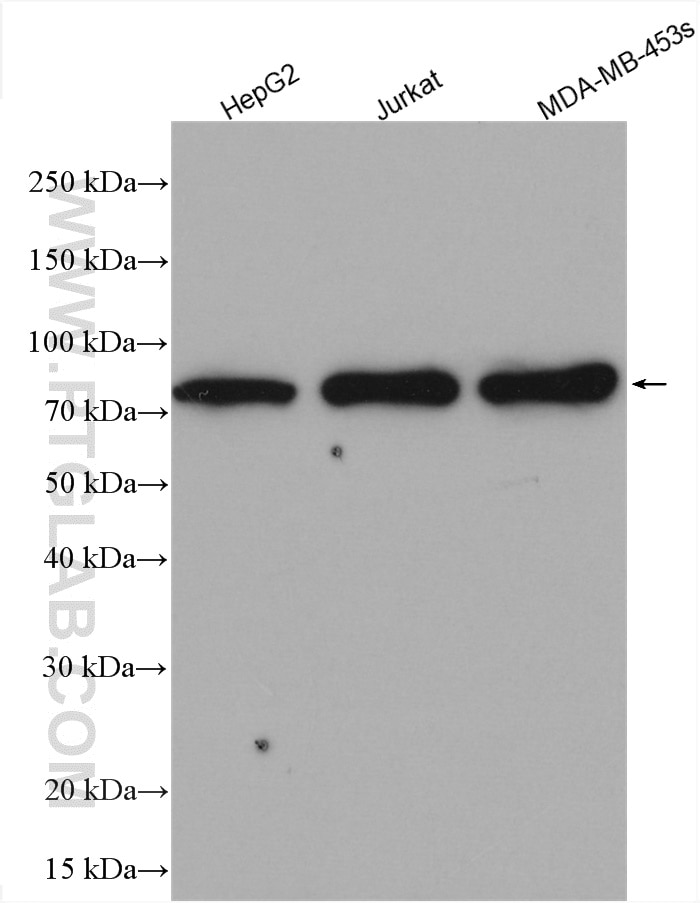
| Positive WB detected in | HepG2 cells, Jurkat cell, MDA-MB-453s cells |
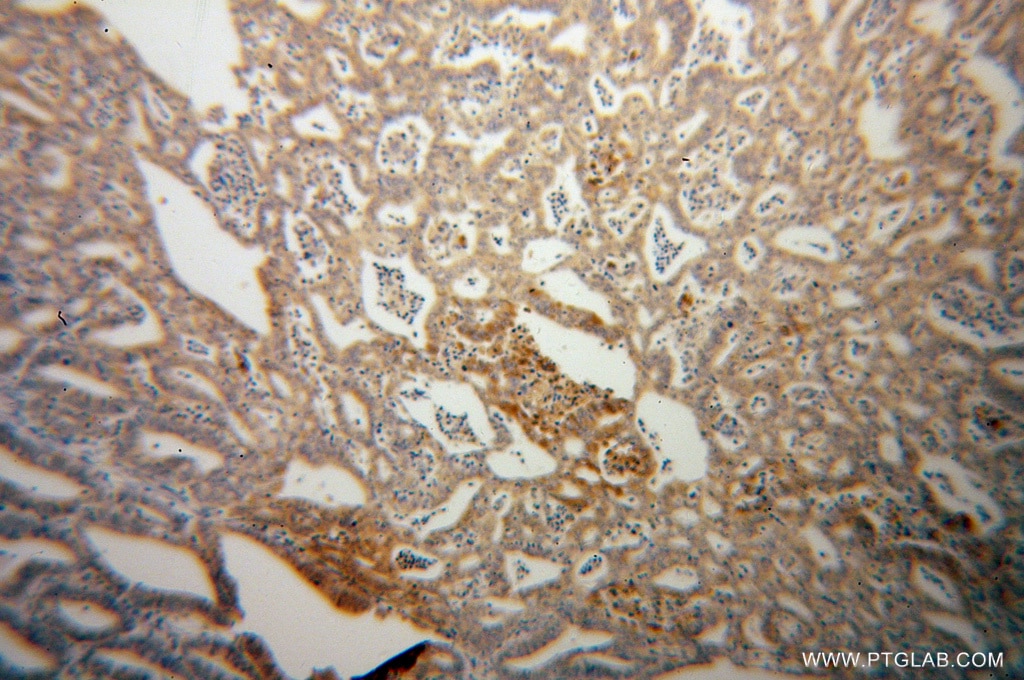
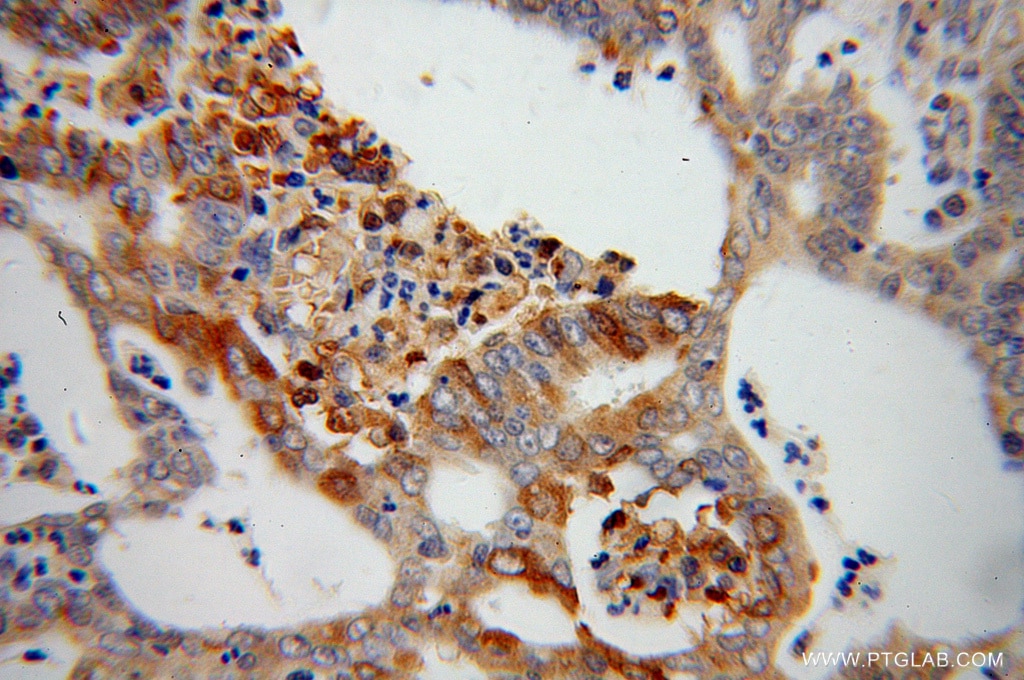
| Positive IHC detected in | human endometrial cancer tissue Note: suggested antigen retrieval with TE buffer pH 9.0; (*) Alternatively, antigen retrieval may be performed with citrate buffer pH 6.0 |
Recommended dilution
| Application | Dilution |
|---|---|
| Western Blot (WB) | WB : 1:500-1:2000 |
| Immunohistochemistry (IHC) | IHC : 1:20-1:200 |
| It is recommended that this reagent should be titrated in each testing system to obtain optimal results. | |
| Sample-dependent, Check data in validation data gallery. | |
Product Information
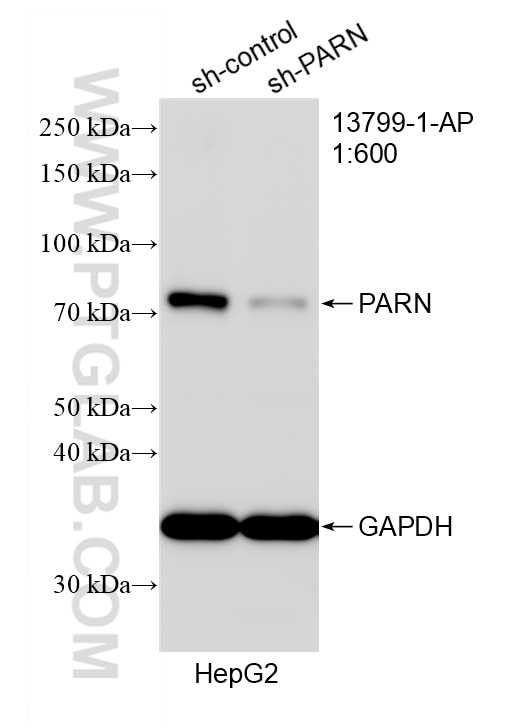
13799-1-AP targets PARN in WB, IHC, IF, ELISA applications and shows reactivity with human, mouse, rat samples.
| Tested Reactivity | human, mouse, rat |
| Cited Reactivity | human, mouse |
| Host / Isotype | Rabbit / IgG |
| Class | Polyclonal |
| Type | Antibody |
| Immunogen |
CatNo: Ag4774 Product name: Recombinant human PARN protein Source: e coli.-derived, PGEX-4T Tag: GST Domain: 1-347 aa of BC050029 Sequence: MEIIRSNFKSNLHKVYQAIEEADFFAIDGEFSGISDGPSVSALTNGFDTPEERYQKLKKHSMDFLLFQFGLCTFKYDYTDSKYITKSFNFYVFPKPFNRSSPDVKFVCQSSSIDFLASQGFDFNKVFRNGIPYLNQEEERQLREQYDEKRSQANGAGALSYVSPNTSKCPVTIPEDQKKFIDQVVEKIEDLLQSEENKNLDLEPCTGFQRKLIYQTLSWKYPKGIHVETLETEKKERYIVISKVDEEERKRREQQKHAKEQEELNDAVGFSRVIHAIANSGKLVIGHNMLLDVMHTVHQFYCPLPADLSEFKEMTTCVFPRLLDTKLMASTQPFKDIINNTSLAELE Predict reactive species |
| Full Name | poly(A)-specific ribonuclease (deadenylation nuclease) |
| Calculated Molecular Weight | 639 aa, 73 kDa |
| Observed Molecular Weight | 74 kDa |
| GenBank Accession Number | BC050029 |
| Gene Symbol | PARN |
| Gene ID (NCBI) | 5073 |
| RRID | AB_2160430 |
| Conjugate | Unconjugated |
| Form | Liquid |
| Purification Method | Antigen affinity purification |
| UNIPROT ID | O95453 |
| Storage Buffer | PBS with 0.02% sodium azide and 50% glycerol, pH 7.3. |
| Storage Conditions | Store at -20°C. Stable for one year after shipment. Aliquoting is unnecessary for -20oC storage. 20ul sizes contain 0.1% BSA. |
Background Information
Poly(A)-specific ribonuclease (PARN) is a deadenylase enzyme that is present in mammalian cells. As a deadenylase, PARN interacts with the cap and the poly(A) tail of mRNA to control the length of the poly(A) tail and regulate gene expression. Therefore, it plays a role in mRNA degradation in the nucleus and cytoplasm.
Protocols
| Product Specific Protocols | |
|---|---|
| IHC protocol for PARN antibody 13799-1-AP | Download protocol |
| WB protocol for PARN antibody 13799-1-AP | Download protocol |
| Standard Protocols | |
|---|---|
| Click here to view our Standard Protocols |
Publications
What published studies show
The PARN Polyclonal antibody (Cat# 13799-1-AP) has 5 citations published in Nucleic Acids Research, Cell Reports (×2), Neurobiology of Disease, and Human Molecular Genetics. Research fields include rRNA processing, mRNA deadenylation and decay, somatic reprogramming, tauopathy, and fragile X tremor ataxia syndrome. Applications cited include WB, IF, and IHC in human and mouse models.
| Species | Application | Title |
|---|---|---|
Nucleic Acids Res Molecular mechanism of human ISG20L2 for the ITS1 cleavage in the processing of 18S precursor ribosomal RNA | ||
Cell Rep YTHDF2/3 Are Required for Somatic Reprogramming through Different RNA Deadenylation Pathways. | ||
Cell Rep The long isoform of ZAP coordinates multiple enzymes to mediate complete decay of target transcripts. | ||
Neurobiol Dis Distinct Poly(A) nucleases have differential impact on sut-2 dependent tauopathy phenotypes. | ||
Hum Mol Genet CGG repeats in RNA modulate expression of TDP-43 in mouse and fly models of fragile X tremor ataxia syndrome. |





