

Product Information
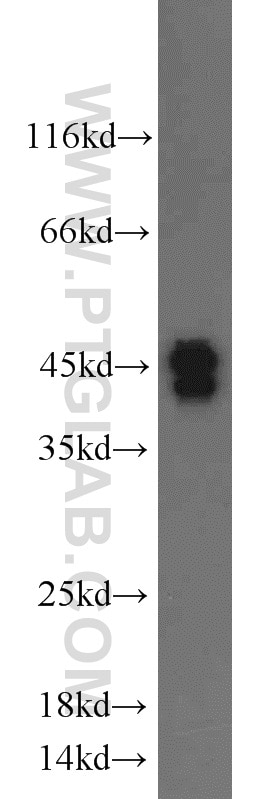
22011-1-AP targets PDGFA in WB, ELISA applications and shows reactivity with human samples.
| Tested Reactivity | human |
| Cited Reactivity | mouse |
| Host / Isotype | Rabbit / IgG |
| Class | Polyclonal |
| Type | Antibody |
| Immunogen |
CatNo: Ag16340 Product name: Recombinant human PDGFA protein Source: e coli.-derived, PGEX-4T Tag: GST Domain: 18-197 aa of BC146594 Sequence: VLAEEAEIPREVIERLARSQIHSIRDLQRLLEIDSVGSEDSLDTSLRAHGVHATKHVPEKRPLPIRRKRSIEEAVPAVCKTRTVIYEIPRSQVDPTSANFLIWPPCVEVKRCTGCCNTSSVKCQPSRVHHRSVKVAKVEYVRKKPKLKEVQVRLEEHLECACATTSLNPDYREEDTDVR Predict reactive species |
| Full Name | platelet-derived growth factor alpha polypeptide |
| Calculated Molecular Weight | 196 aa, 22 kDa |
| GenBank Accession Number | BC146594 |
| Gene Symbol | PDGFA |
| Gene ID (NCBI) | 5154 |
| Conjugate | Unconjugated |
| Form | Liquid |
| Purification Method | Antigen affinity purification |
| UNIPROT ID | P04085 |
| Storage Buffer | PBS with 0.02% sodium azide and 50% glycerol, pH 7.3. |
| Storage Conditions | Store at -20°C. Stable for one year after shipment. Aliquoting is unnecessary for -20oC storage. 20ul sizes contain 0.1% BSA. |
Publications
What published studies show
The PDGFA Polyclonal antibody (Cat# 22011-1-AP) has 1 citation. It appears in Carbohydrate Polymers (Impact Factor 13.2), published in 2024. The study investigated a pH-sensitive dual-release hydrogel combining astilbin liposomes and diclofenac sodium for diabetes wound healing, using the antibody in Western Blot with mouse samples. The research falls within the fields of biomaterials, drug delivery, and diabetic wound healing.
| Species | Application | Title |
|---|---|---|
Carbohydr Polym Carboxymethyl chitosan and sodium alginate oxide pH-sensitive dual-release hydrogel for diabetes wound healing: The combination of astilbin liposomes and diclofenac sodium |


