

Tested Applications
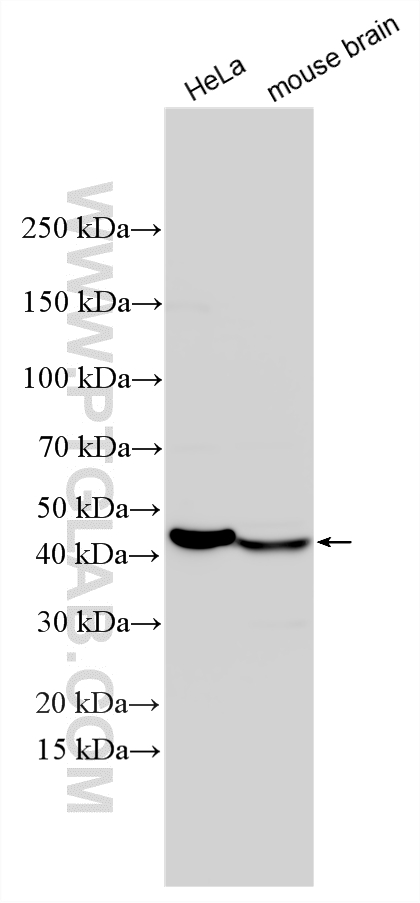
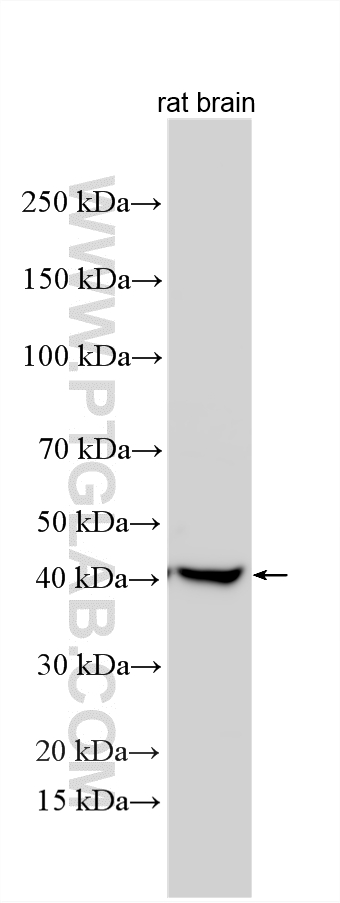
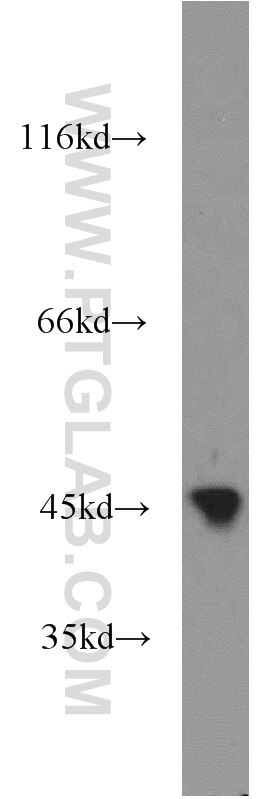
| Positive WB detected in | HeLa cells, mouse heart tissue, rat brain tissue, mouse brain tissue |
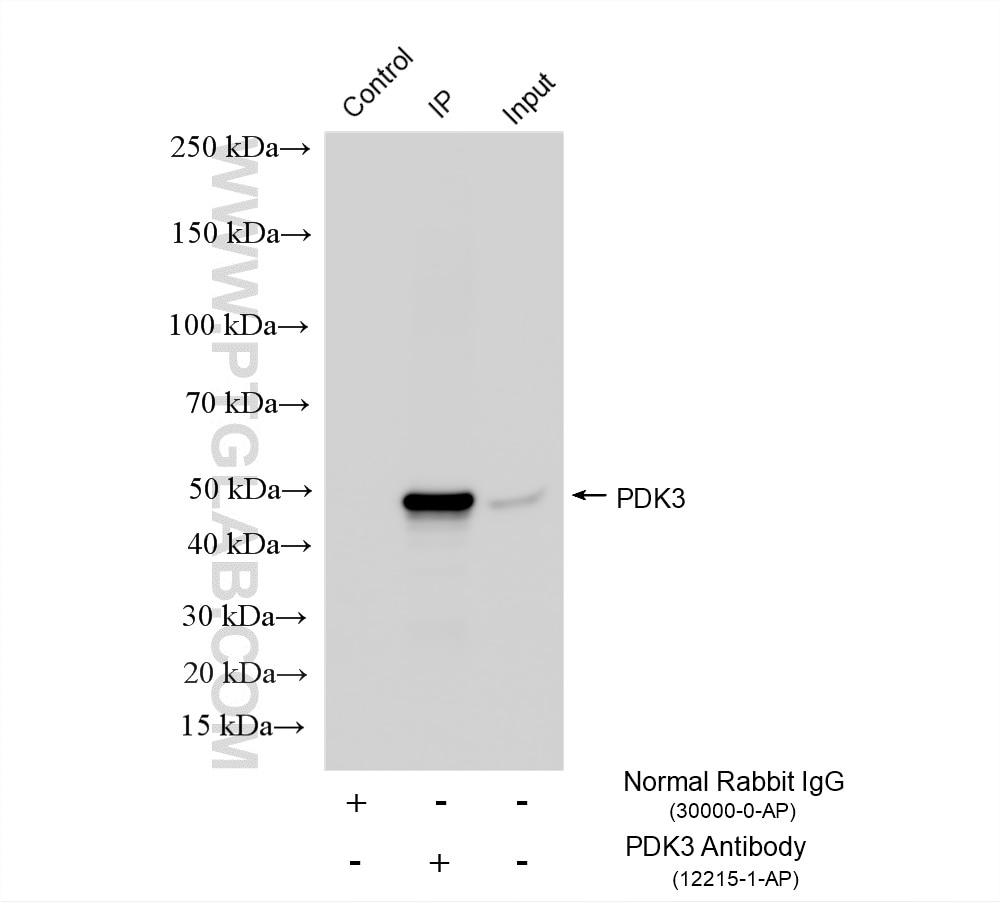
| Positive IP detected in | mouse brain tissue |
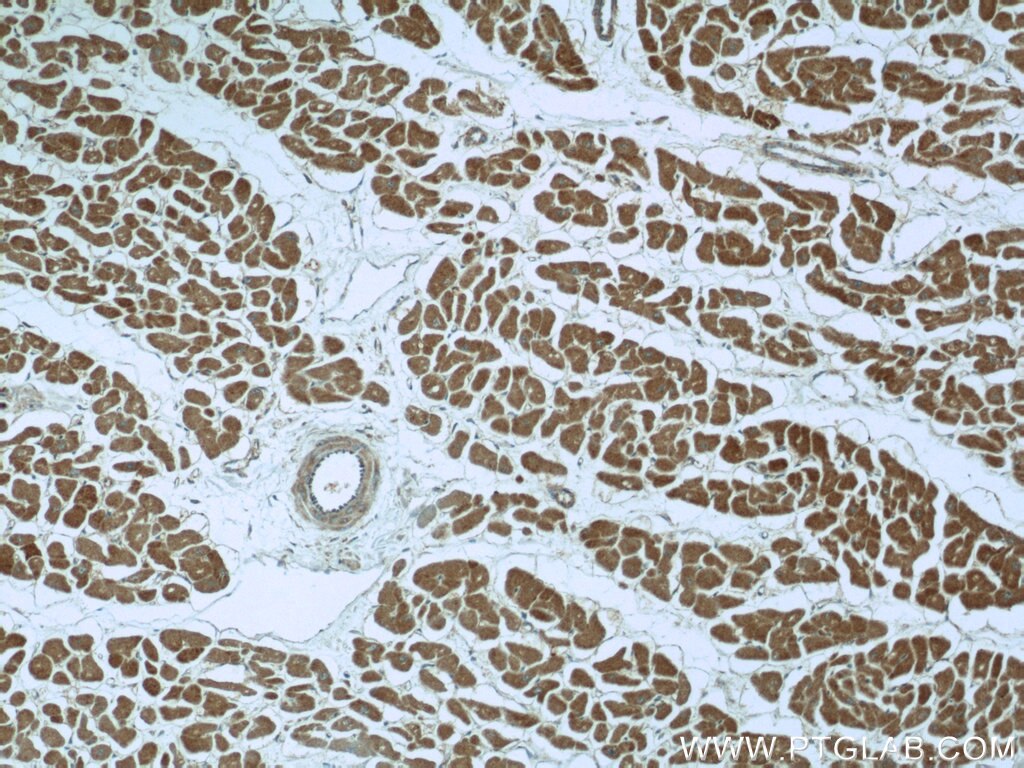
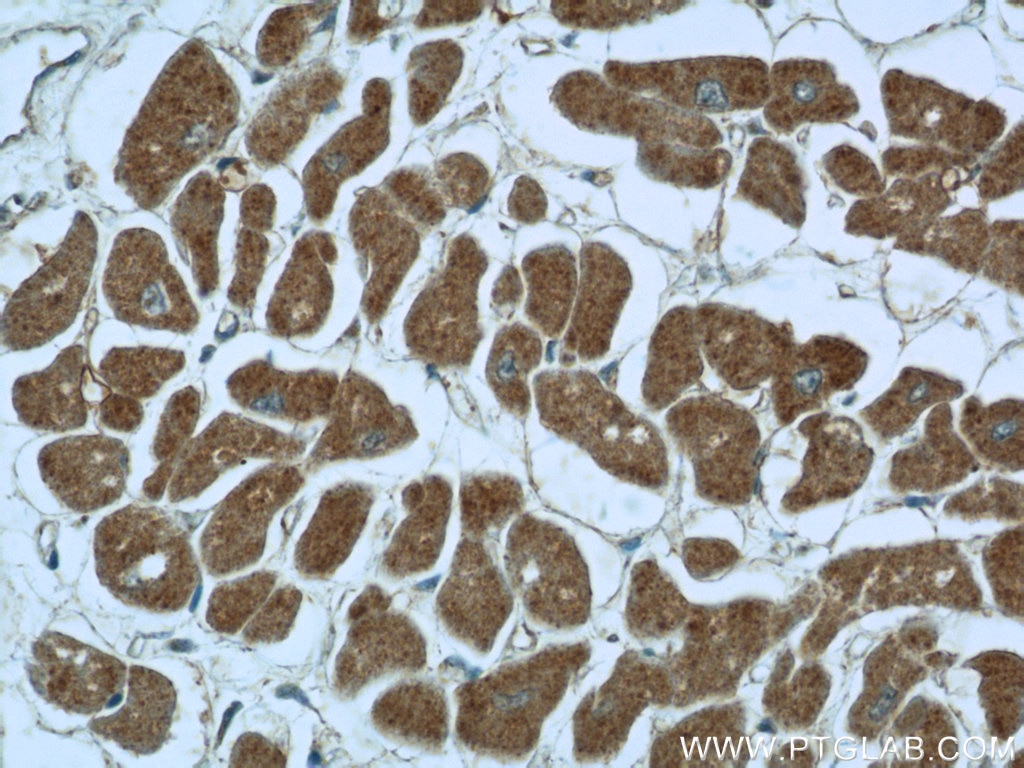
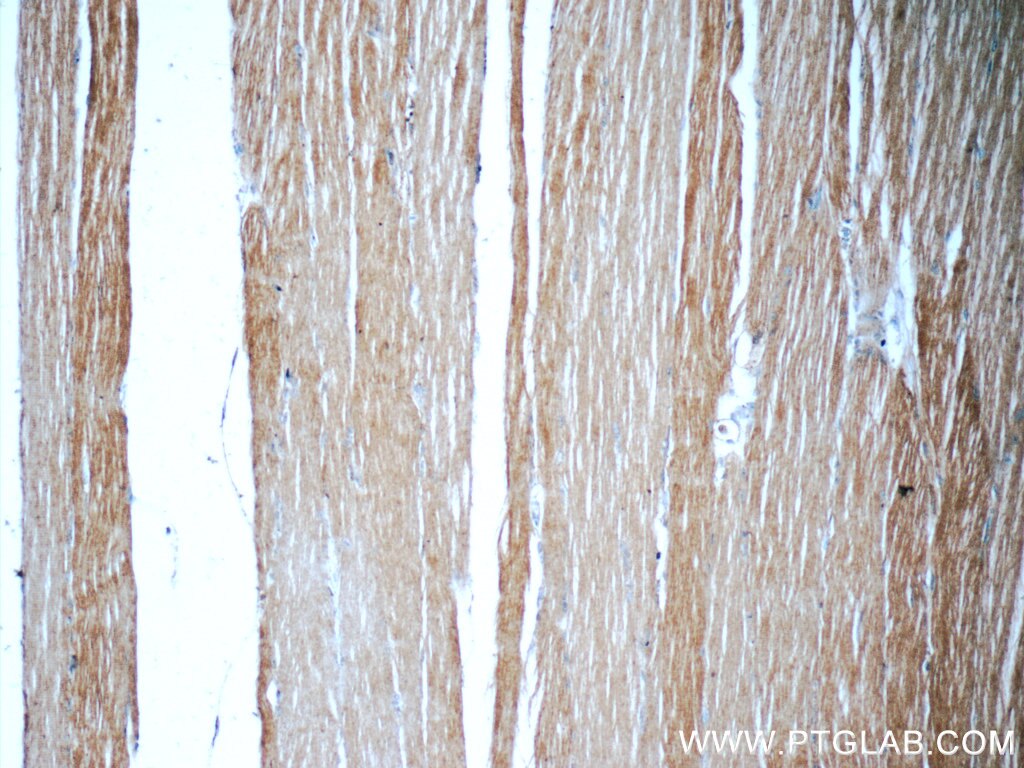
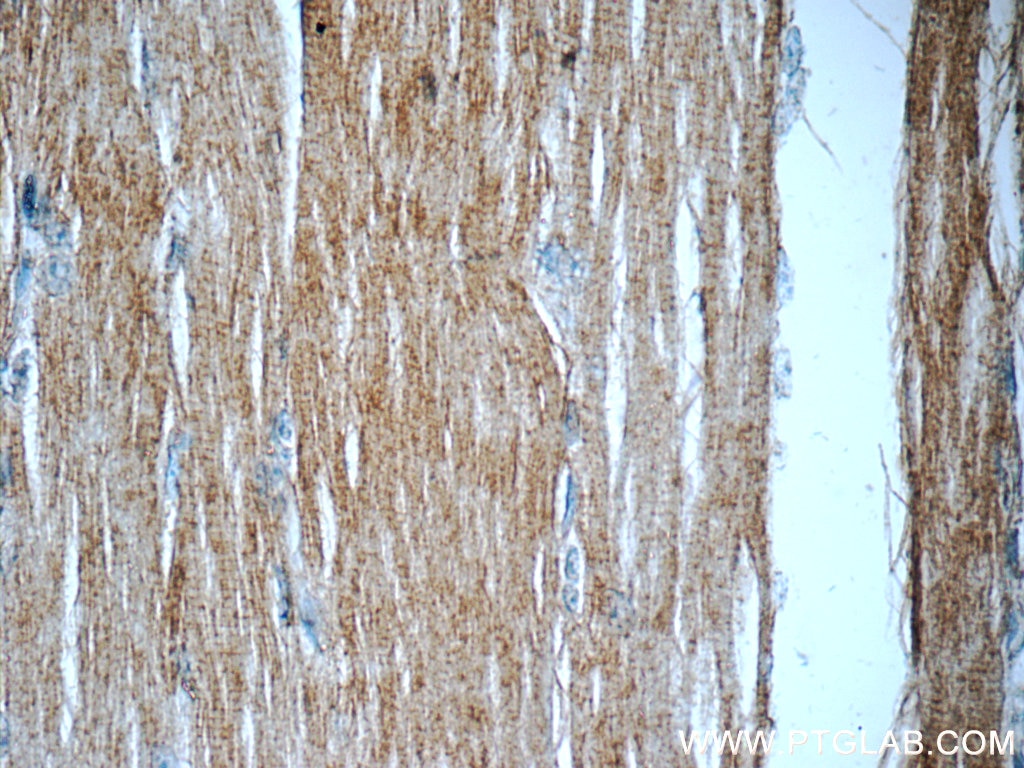
| Positive IHC detected in | human heart tissue, human skeletal muscle tissue Note: suggested antigen retrieval with TE buffer pH 9.0; (*) Alternatively, antigen retrieval may be performed with citrate buffer pH 6.0 |
Recommended dilution
| Application | Dilution |
|---|---|
| Western Blot (WB) | WB : 1:1000-1:8000 |
| Immunoprecipitation (IP) | IP : 0.5-4.0 ug for 1.0-3.0 mg of total protein lysate |
| Immunohistochemistry (IHC) | IHC : 1:20-1:200 |
| It is recommended that this reagent should be titrated in each testing system to obtain optimal results. | |
| Sample-dependent, Check data in validation data gallery. | |
Product Information
12215-1-AP targets PDK3 in WB, IHC, IP, ELISA applications and shows reactivity with human, mouse, rat samples.
| Tested Reactivity | human, mouse, rat |
| Cited Reactivity | human, mouse |
| Host / Isotype | Rabbit / IgG |
| Class | Polyclonal |
| Type | Antibody |
| Immunogen |
CatNo: Ag2879 Product name: Recombinant human PDK3 protein Source: e coli.-derived, PGEX-4T Tag: GST Domain: 129-369 aa of BC015948 Sequence: GVIEYKEKFGFDPFISTNIQYFLDRFYTNRISFRMLINQHTLLFGGDTNPVHPKHIGSIDPTCNVADVVKDAYETAKMLCEQYYLVAPELEVEEFNAKAPDKPIQVVYVPSHLFHMLFELFKNSMRATVELYEDRKEGYPAVKTLVTLGKEDLSIKISDLGGGVPLRKIDRLFNYMYSTAPRPSLEPTRAAPLAGFGYGLPISRLYARYFQGDLKLYSMEGVGTDAVIYLKALSSESFERL Predict reactive species |
| Full Name | pyruvate dehydrogenase kinase, isozyme 3 |
| Calculated Molecular Weight | 406 aa, 47 kDa |
| Observed Molecular Weight | 47 kDa |
| GenBank Accession Number | BC015948 |
| Gene Symbol | PDK3 |
| Gene ID (NCBI) | 5165 |
| RRID | AB_2877836 |
| Conjugate | Unconjugated |
| Form | Liquid |
| Purification Method | Antigen affinity purification |
| UNIPROT ID | Q15120 |
| Storage Buffer | PBS with 0.02% sodium azide and 50% glycerol, pH 7.3. |
| Storage Conditions | Store at -20°C. Stable for one year after shipment. Aliquoting is unnecessary for -20oC storage. 20ul sizes contain 0.1% BSA. |
Background Information
PDK3([Pyruvate dehydrogenase [lipoamide]] kinase isozyme 3, mitochondrial) is also named as PDHK3 and belongs to the PDK/BCKDK protein kinase family. It inhibits pyruvate dehydrogenase activity by phosphorylation of the E1 subunit PDHA1, and thereby regulates glucose metabolism and aerobic respiration. It has 2 isoforms produced by alternative splicing with the molecular weight of 47 and 48 kDa. This protein can exsit as a dimer with the molecular weight of 90 kDa(PMID:11978179).
Protocols
| Product Specific Protocols | |
|---|---|
| IHC protocol for PDK3 antibody 12215-1-AP | Download protocol |
| IP protocol for PDK3 antibody 12215-1-AP | Download protocol |
| WB protocol for PDK3 antibody 12215-1-AP | Download protocol |
| Standard Protocols | |
|---|---|
| Click here to view our Standard Protocols |
Publications
What published studies show
The PDK3 antibody (Cat# 12215-1-AP) has 9 citations across journals including Nature Communications, Cancer Research, Materials Today Bio, Environmental Pollution, Communications Biology, Molecular and Cellular Biochemistry, and Frontiers in Oncology. Research fields span cancer metabolism, mitochondrial dysfunction, cardiovascular disease, neurology, reproductive health, and oral pathology. Applications are primarily WB and IHC in human and mouse samples.
| Species | Application | Title |
|---|---|---|
Nat Commun PDK4 drives abdominal aortic aneurysm by promoting smooth muscle cell metabolic reprogramming and NLRP3-mediated pyroptosis. | ||
Nat Commun Mitophagy mitigates mitochondrial fatty acid β-oxidation deficient cardiomyopathy. | ||
Nat Commun NOTCH1 mitochondria localization during heart development promotes mitochondrial metabolism and the endothelial-to-mesenchymal transition in mice | ||
Mater Today Bio Dual activation of cuproptosis and excessive autophagy by copper-bismuth metal-organic frameworks-loaded detachable microneedles in oral leukoplakia. | ||
Environ Pollut Acrolein exposure affects ovarian function by interfering with glycolysis and mitochondrial energy metabolism in mouse |









