

Tested Applications
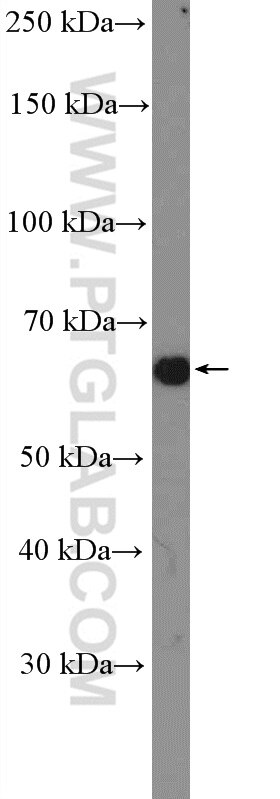
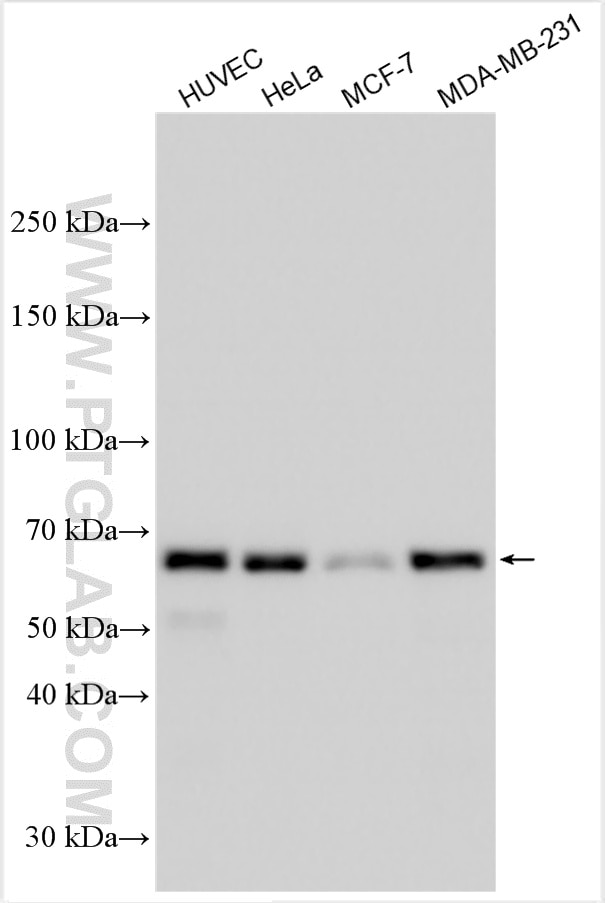
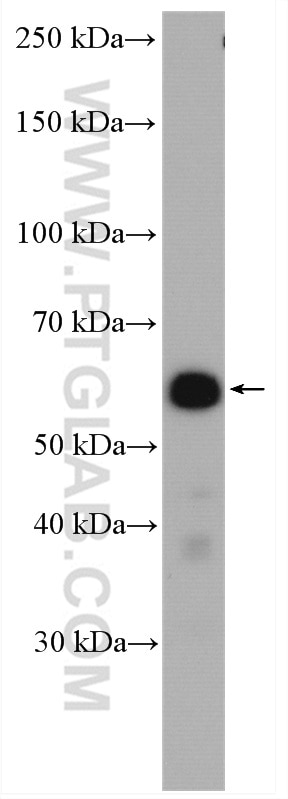
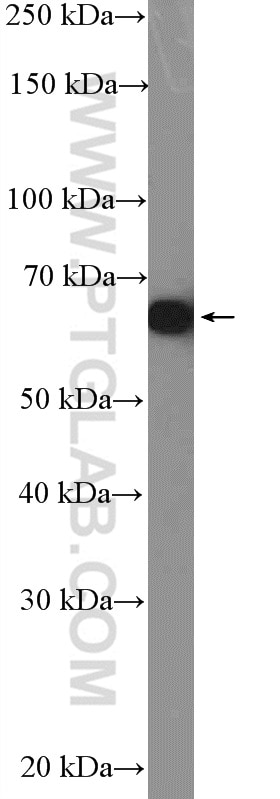
| Positive WB detected in | HUVEC cells, A549 cells, HeLa cells, NIH/3T3 cells, MCF-7 cells, MDA-MB-231 cells |
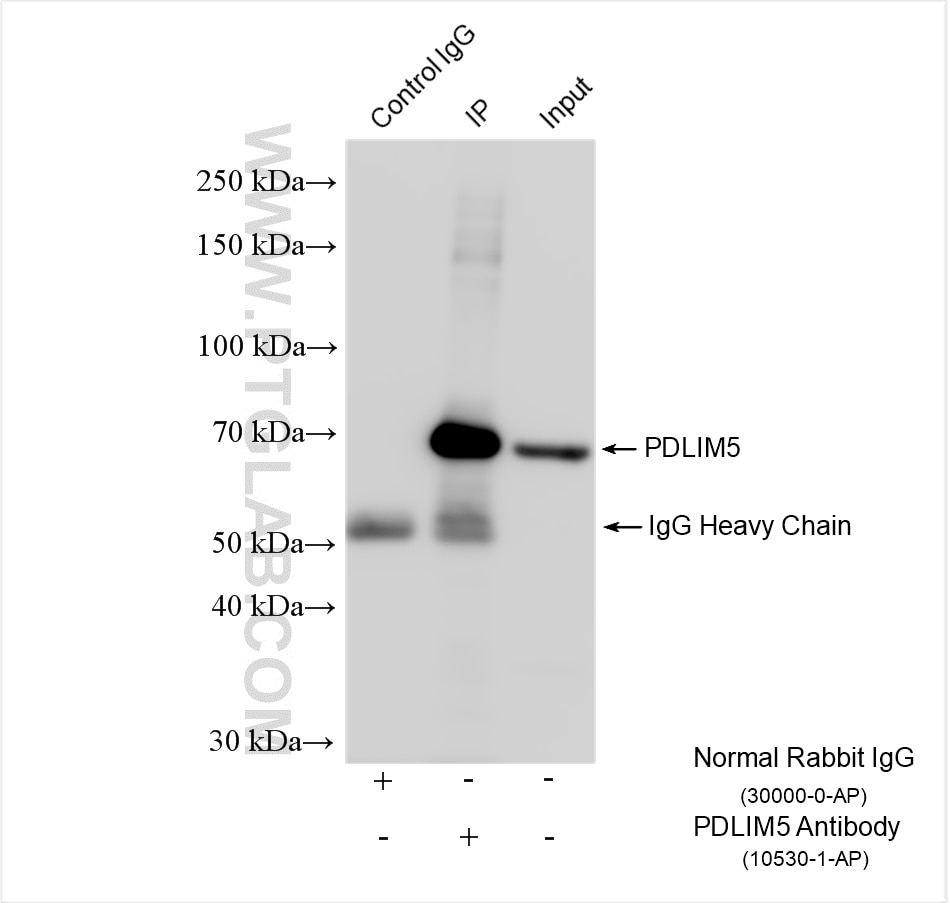
| Positive IP detected in | HeLa cells |
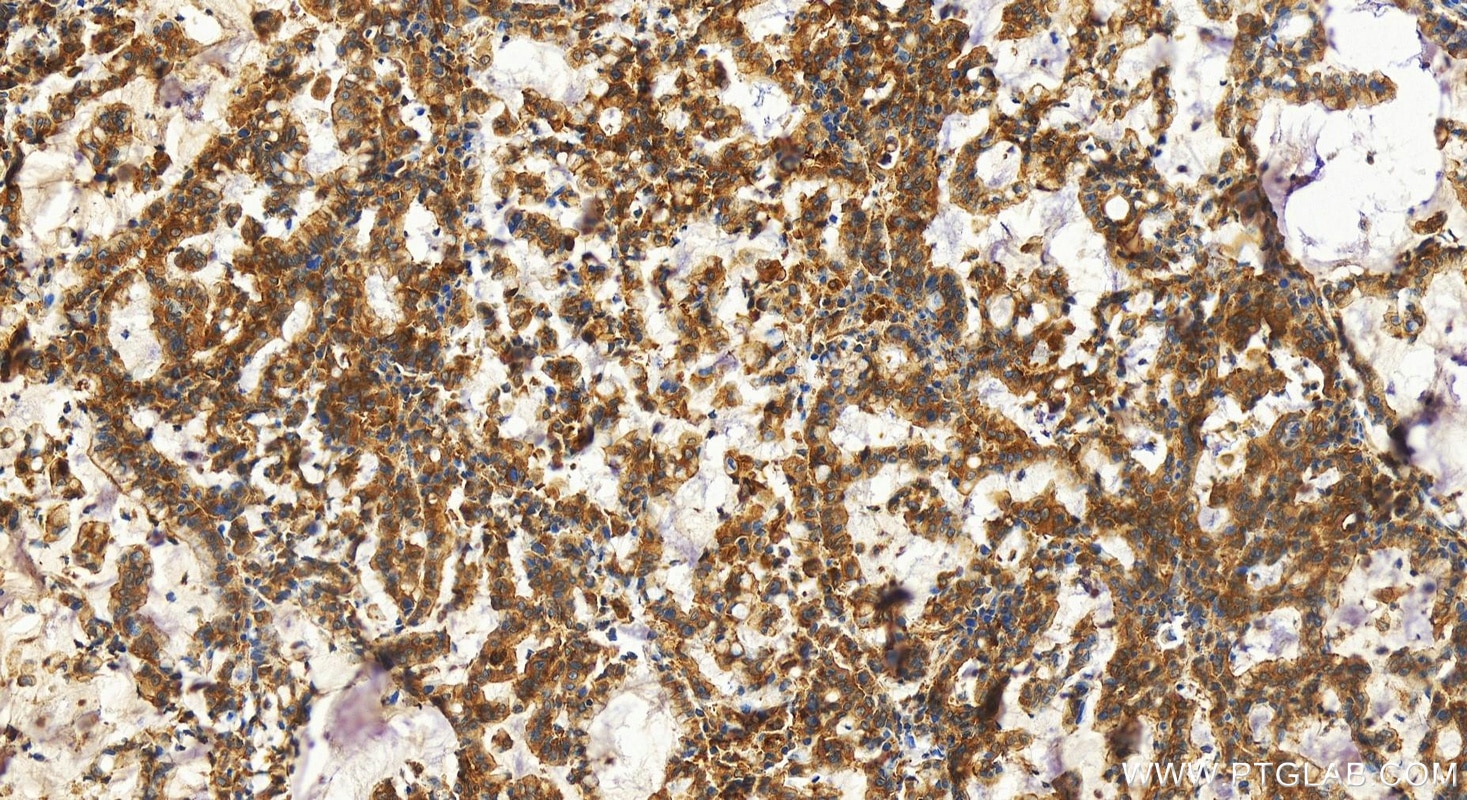
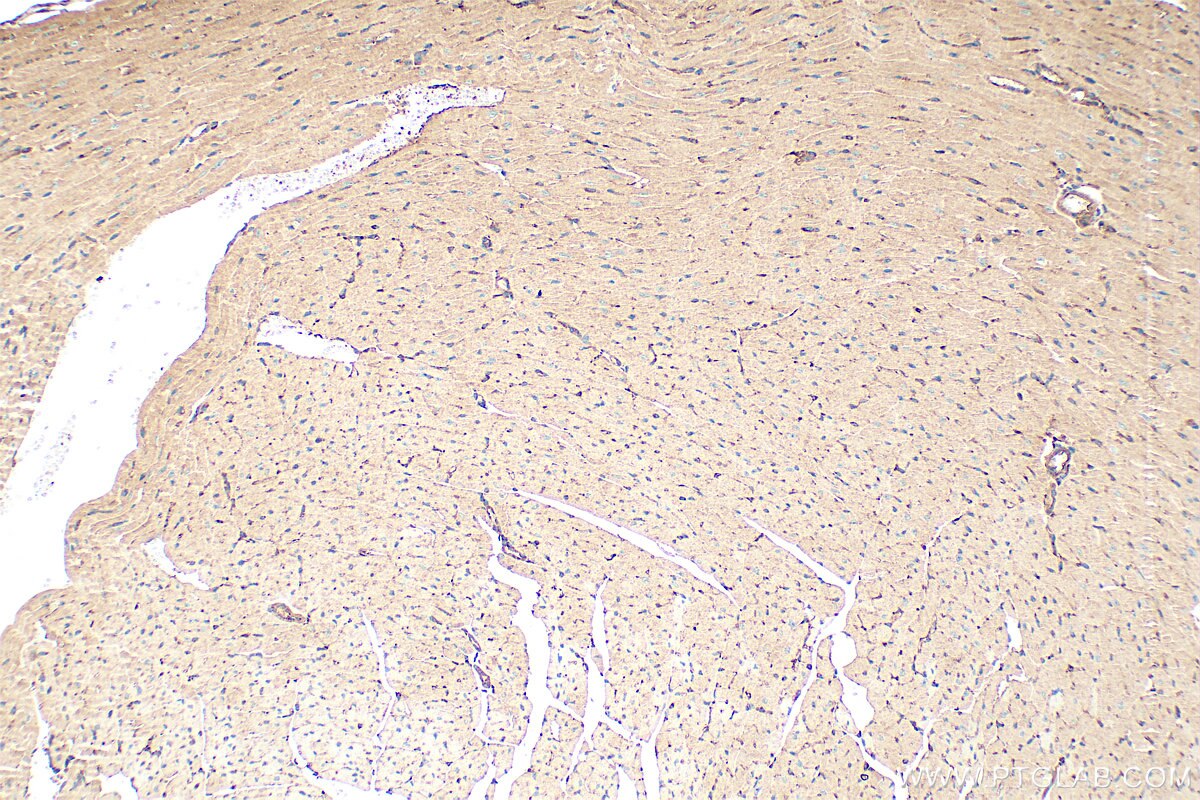
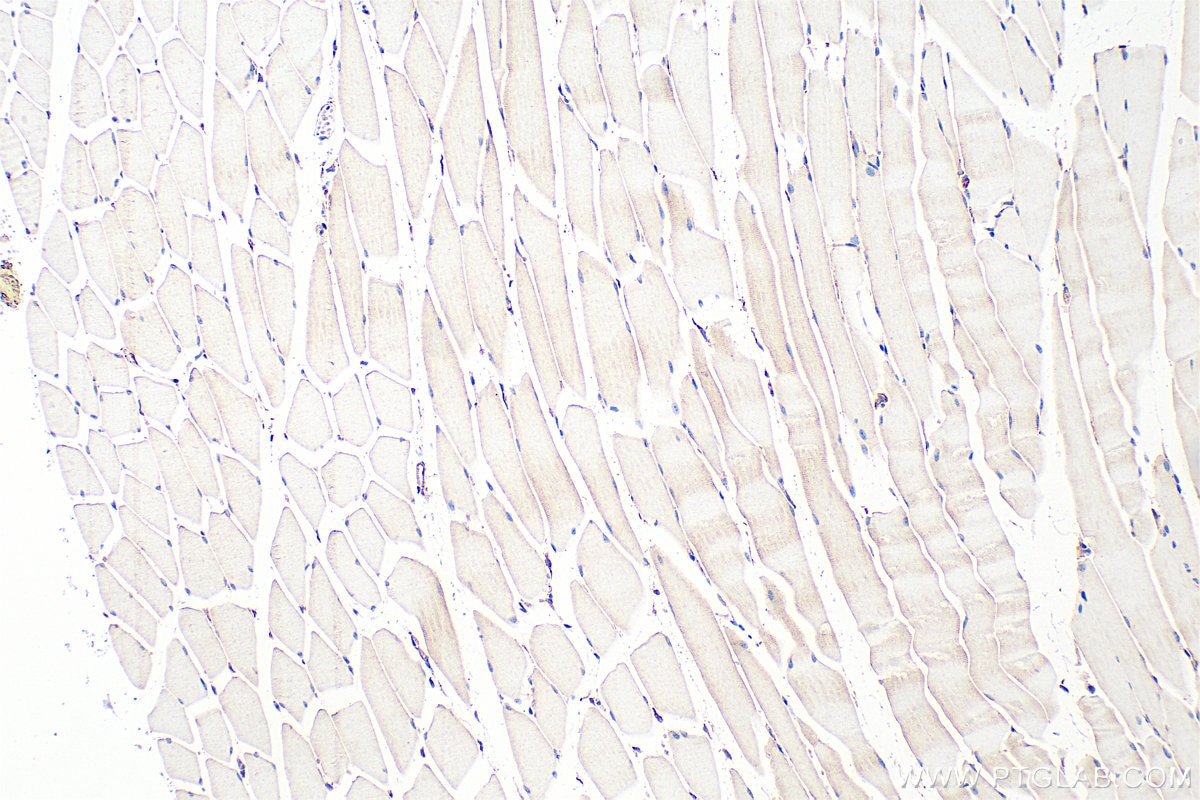
| Positive IHC detected in | human stomach cancer tissue, mouse heart tissue, mouse skeletal muscle tissue Note: suggested antigen retrieval with TE buffer pH 9.0; (*) Alternatively, antigen retrieval may be performed with citrate buffer pH 6.0 |
Recommended dilution
| Application | Dilution |
|---|---|
| Western Blot (WB) | WB : 1:2000-1:16000 |
| Immunoprecipitation (IP) | IP : 0.5-4.0 ug for 1.0-3.0 mg of total protein lysate |
| Immunohistochemistry (IHC) | IHC : 1:50-1:500 |
| It is recommended that this reagent should be titrated in each testing system to obtain optimal results. | |
| Sample-dependent, Check data in validation data gallery. | |
Product Information
10530-1-AP targets PDLIM5 in WB, IHC, IF, IP, ELISA applications and shows reactivity with human, mouse samples.
| Tested Reactivity | human, mouse |
| Cited Reactivity | human, mouse, rat |
| Host / Isotype | Rabbit / IgG |
| Class | Polyclonal |
| Type | Antibody |
| Immunogen |
CatNo: Ag0808 Product name: Recombinant human PDLIM5 protein Source: e coli.-derived, PGEX-4T Tag: GST Domain: 351-596 aa of BC008741 Sequence: PVGSTGVIKSPSWQRPNQGVPSTGRISNSAAYSGSVAPANSALGQTQPSDQDTLVQRAEHIPAGKRTPMCAHCNQVIRGPFLVALGKSWHPEEFNCAHCKNTMAYIGFVEEKGALYCELCYEKFFAPECGRCQRKILGEVINALKQTWHVSCFVCVACGKPIRNNVFHLEDGEPYCETDYYALFGTICHGCEFPIEAGDMFLEALGYTWHDTCFVCSVCCESLEGQTFFSKKDKPLCKKHAHSVNF Predict reactive species |
| Full Name | PDZ and LIM domain 5 |
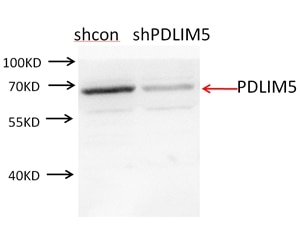
| Calculated Molecular Weight | 64 kDa |
| Observed Molecular Weight | 63-68 kDa |
| GenBank Accession Number | BC008741 |
| Gene Symbol | PDLIM5 |
| Gene ID (NCBI) | 10611 |
| RRID | AB_2161779 |
| Conjugate | Unconjugated |
| Form | Liquid |
| Purification Method | Antigen affinity purification |
| UNIPROT ID | Q96HC4 |
| Storage Buffer | PBS with 0.02% sodium azide and 50% glycerol, pH 7.3. |
| Storage Conditions | Store at -20°C. Stable for one year after shipment. Aliquoting is unnecessary for -20oC storage. 20ul sizes contain 0.1% BSA. |
Background Information
PDLIM5 (PDZ and LIM domain 5), formerly known as enigma homolog (ENH), is a cytoplasmic protein containing PDZ domain and LIM domain at N terminus and C terminus, respectively. PDLIM5 gene generates several splicing variants, EZH1 to EZH4. The long isoform, ENH1, is widely expressed in various tissues including heart, brain, spleen, liver and kidney. In comparison, shorter isoforms that lack the LIM motifs are expressed in cardiac (ENH3) and skeletal muscle (ENH2, ENH3, and ENH4). ENH1 is essential for differentiation of striated muscles through interaction with other proteins. In addition, PDLIM5 is also involved in mood disorders, such as schizophrenia, bipolar disorder, and major depression. This antibody is specific to PDLIM5, and its specificity has been confirmed by siRNA test.
Protocols
| Product Specific Protocols | |
|---|---|
| IHC protocol for PDLIM5 antibody 10530-1-AP | Download protocol |
| IP protocol for PDLIM5 antibody 10530-1-AP | Download protocol |
| WB protocol for PDLIM5 antibody 10530-1-AP | Download protocol |
| Standard Protocols | |
|---|---|
| Click here to view our Standard Protocols |
Publications
What published studies show
The PDLIM5 antibody (Cat# 10530-1-AP) has 14 citations published in journals including Nature Cell Biology, Cell Death & Differentiation, Acta Pharmacologica Sinica, Oncotarget, Biomaterials Advances, Molecular Neurobiology, European Journal of Pharmaceutical Sciences, Scientific Reports, Journal of Molecular and Cellular Cardiology, Journal of Geriatric Cardiology, Chemical Biology & Drug Design, Drug Delivery, Cell Proliferation, and bioRxiv. Research fields span cancer biology (NSCLC, prostate, gastric), mechanotransduction, skin regeneration, cardiac hypertrophy, blood-brain barrier integrity, and cytoskeletal regulation.
| Species | Application | Title |
|---|---|---|
Nat Cell Biol An mRNA processing pathway suppresses metastasis by governing translational control from the nucleus | ||
Cell Death Differ MicroRNA-17-92 regulates myoblast proliferation and differentiation by targeting the ENH1/Id1 signaling axis.
| ||
Acta Pharmacol Sin Glial growth factor 2 treatment alleviates ischemia and reperfusion-damaged integrity of the blood-brain barrier through decreasing Mfsd2a/caveolin-1-mediated transcellular and Pdlim5/YAP/TAZ-mediated paracellular permeability | ||
Drug Deliv Ultrasound-sensitive siRNA-loaded nanobubbles fabrication and antagonism in drug resistance for NSCLC. | ||
Cell Prolif Mechanotransduction Mediated by PDLIM5: The Critical Role of Serpin E2/Integrin β3-Cytoskeleton-Nucleoskeleton Axis in Mechanical Osteogenic Programming | ||
Biomater Adv High performance injectable PLLA/BG composite microspheres in aging skin regeneration. |










