

Tested Applications
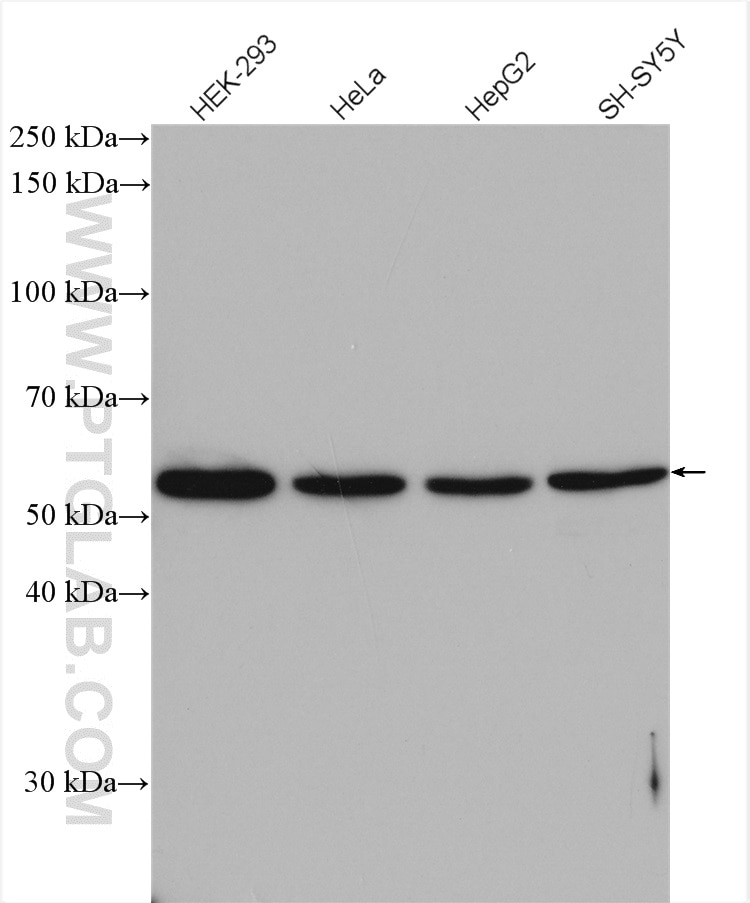
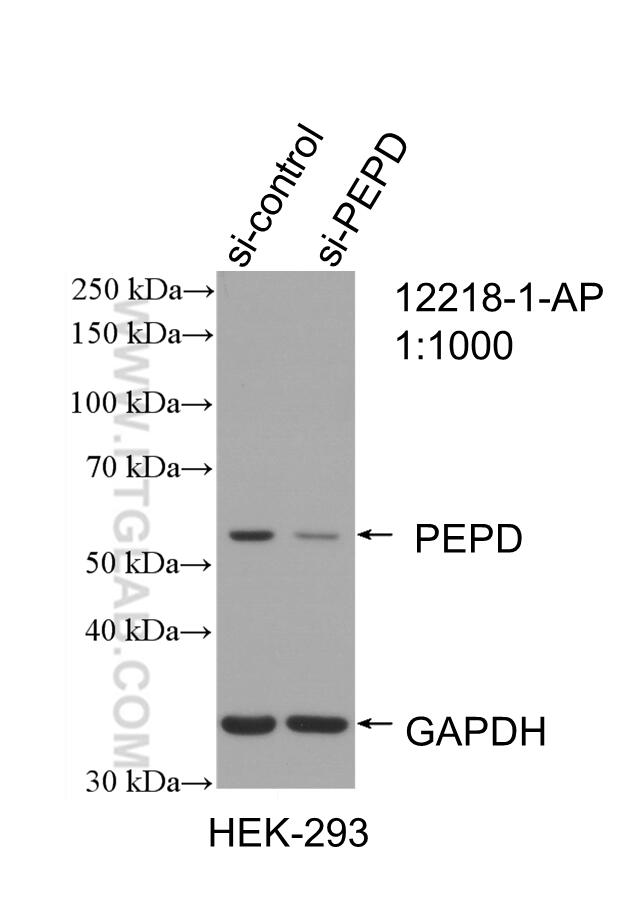
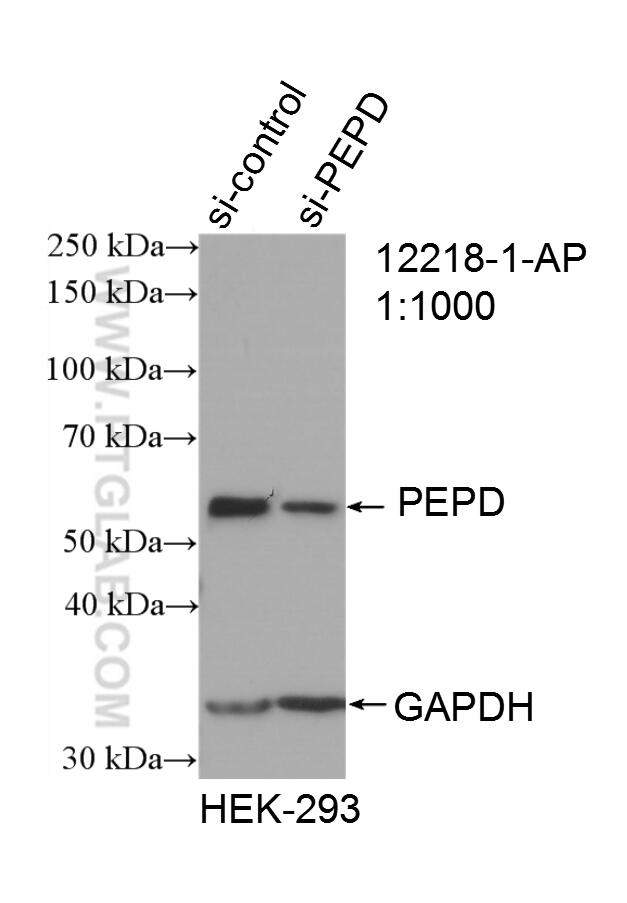
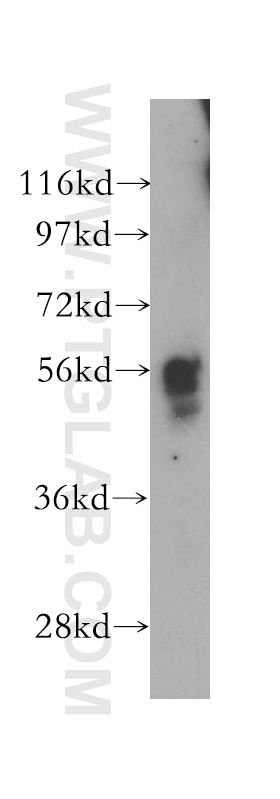
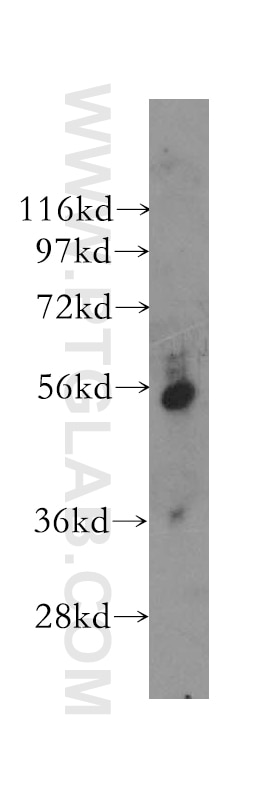
| Positive WB detected in | HEK-293 cells, MDA-MB-453s cells, mouse skin tissue, HeLa cells, HepG2 cells, SH-SY5Y cells |
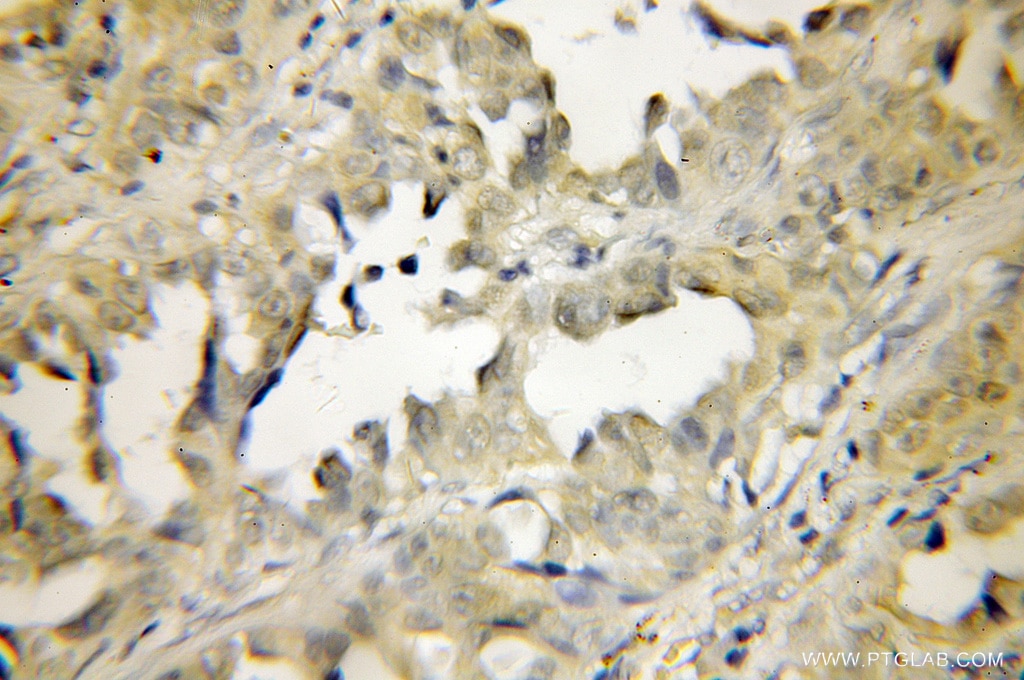
| Positive IHC detected in | human lung cancer tissue Note: suggested antigen retrieval with TE buffer pH 9.0; (*) Alternatively, antigen retrieval may be performed with citrate buffer pH 6.0 |
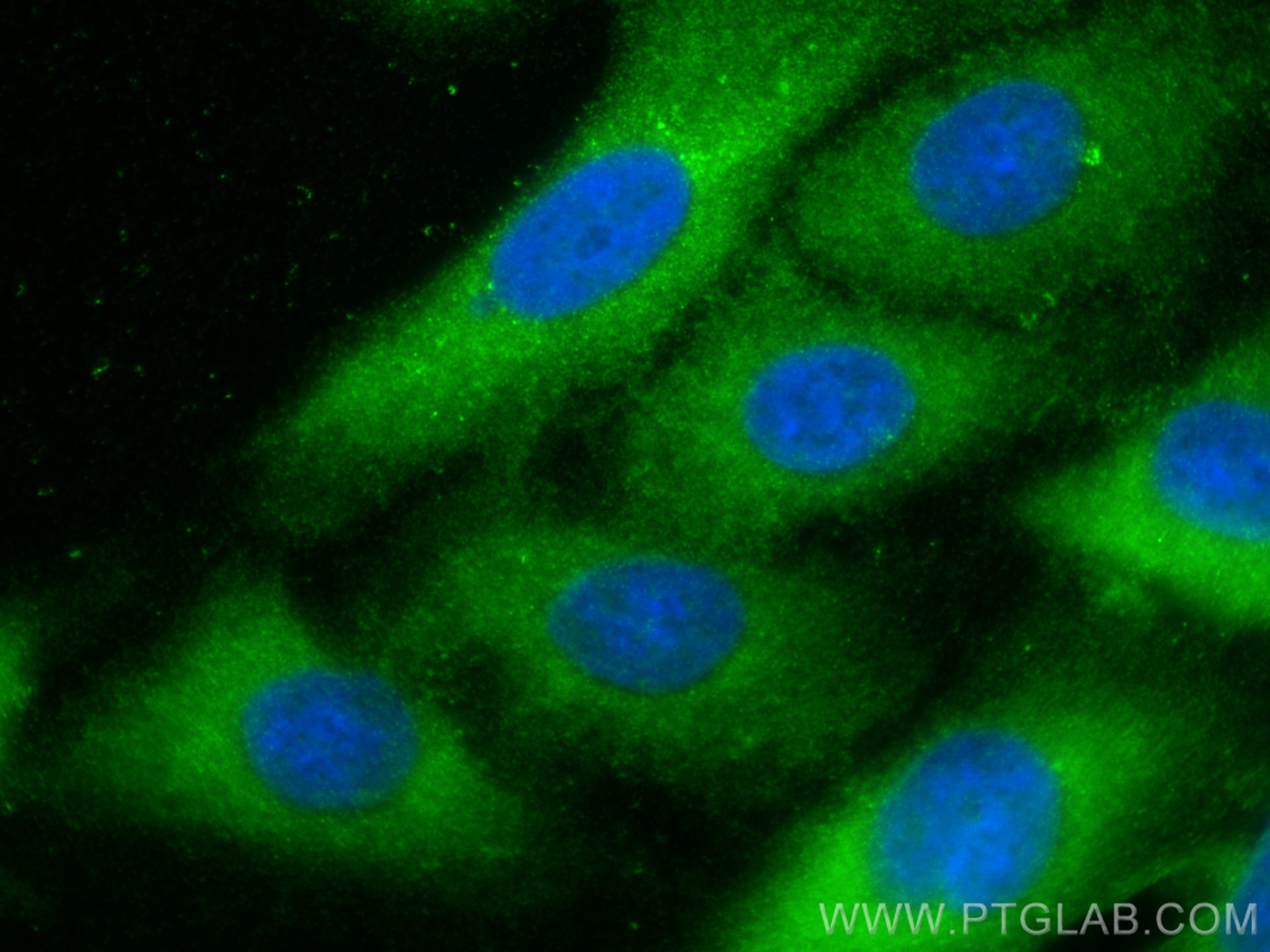
| Positive IF/ICC detected in | A549 cells |
Recommended dilution
| Application | Dilution |
|---|---|
| Western Blot (WB) | WB : 1:500-1:3000 |
| Immunohistochemistry (IHC) | IHC : 1:100-1:800 |
| Immunofluorescence (IF)/ICC | IF/ICC : 1:200-1:800 |
| It is recommended that this reagent should be titrated in each testing system to obtain optimal results. | |
| Sample-dependent, Check data in validation data gallery. | |
Product Information
12218-1-AP targets PEPD in WB, IHC, IF/ICC, ELISA applications and shows reactivity with human, mouse samples.
| Tested Reactivity | human, mouse |
| Cited Reactivity | human |
| Host / Isotype | Rabbit / IgG |
| Class | Polyclonal |
| Type | Antibody |
| Immunogen |
CatNo: Ag2842 Product name: Recombinant human PEPD protein Source: e coli.-derived, PGEX-4T Tag: GST Domain: 192-439 aa of BC015027 Sequence: LEVLRYTNKISSEAHREVMKAVKVGMKEYELESLFEHYCYSRGGMRHSSYTCICGSGENSAVLHYGHAGAPNDRTIQNGDMCLFDMGGEYYCFASDITCSFPANGKFTADQKAVYEAVLRSSRAVMGAMKPGVWWPDMHRLADRIHLEELAHMGILSGSVDAMVQAHLGAVFMPHGLGHFLGIDVHDVGGYPEGVERIDEPGLRSLRTARHLQPGMVLTVEPGIYFIDHLLDEALADPARASFLNREV Predict reactive species |
| Full Name | peptidase D |
| Calculated Molecular Weight | 493 aa, 55 kDa |
| Observed Molecular Weight | 55 kDa |
| GenBank Accession Number | BC015027 |
| Gene Symbol | PEPD |
| Gene ID (NCBI) | 5184 |
| RRID | AB_2161517 |
| Conjugate | Unconjugated |
| Form | Liquid |
| Purification Method | Antigen affinity purification |
| UNIPROT ID | P12955 |
| Storage Buffer | PBS with 0.02% sodium azide and 50% glycerol, pH 7.3. |
| Storage Conditions | Store at -20°C. Stable for one year after shipment. Aliquoting is unnecessary for -20oC storage. 20ul sizes contain 0.1% BSA. |
Background Information
PEPD, also named as PRD, Prolidase, X-Pro dipeptidase, Imidodipeptidase, Peptidase D and Proline dipeptidase, belongs to the peptidase M24B family and Eukaryotic-type prolidase subfamily. PEPD splits dipeptides with a prolyl or hydroxyprolyl residue in the C-terminal position. It plays an important role in collagen metabolism because the high level of iminoacids in collagen. Defects in PEPD are a cause of prolidase deficiency (PD). PEPD is considered as the most promising candidate genes for altering AAA risk, based on gene function, association evidence, gene expression, and protein expression.(PMID:21247474)
Protocols
| Product Specific Protocols | |
|---|---|
| IF protocol for PEPD antibody 12218-1-AP | Download protocol |
| IHC protocol for PEPD antibody 12218-1-AP | Download protocol |
| WB protocol for PEPD antibody 12218-1-AP | Download protocol |
| Standard Protocols | |
|---|---|
| Click here to view our Standard Protocols |
Publications
What published studies show
The PEPD Polyclonal antibody (Cat# 12218-1-AP) has 4 citations published in Nature Communications, Redox Biology, Archives of Medical Research, and BMC Medical Genetics. The research fields span developmental biology (miRNA regulation in locust egg hatching), redox biology and p53 signaling, cardiovascular disease (aortic stiffness in coronary artery disease), and genetic susceptibility to abdominal aortic aneurysms.
| Species | Application | Title |
|---|---|---|
Nat Commun Parental experiences orchestrate locust egg hatching synchrony by regulating nuclear export of precursor miRNA | ||
Redox Biol ReDisulphID: A discovery platform for thiol redox sensors identifies a druggable site regulating p53 activation. | ||
Arch Med Res Relationship Between Echocardiographically Evaluated Aortic Stiffness and Prolidase Activity in Aortic Tissue of Patients with Critical Coronary Artery Disease. | ||
BMC Med Genet Analysis of positional candidate genes in the AAA1 susceptibility locus for abdominal aortic aneurysms on chromosome 19. |








