

Tested Applications
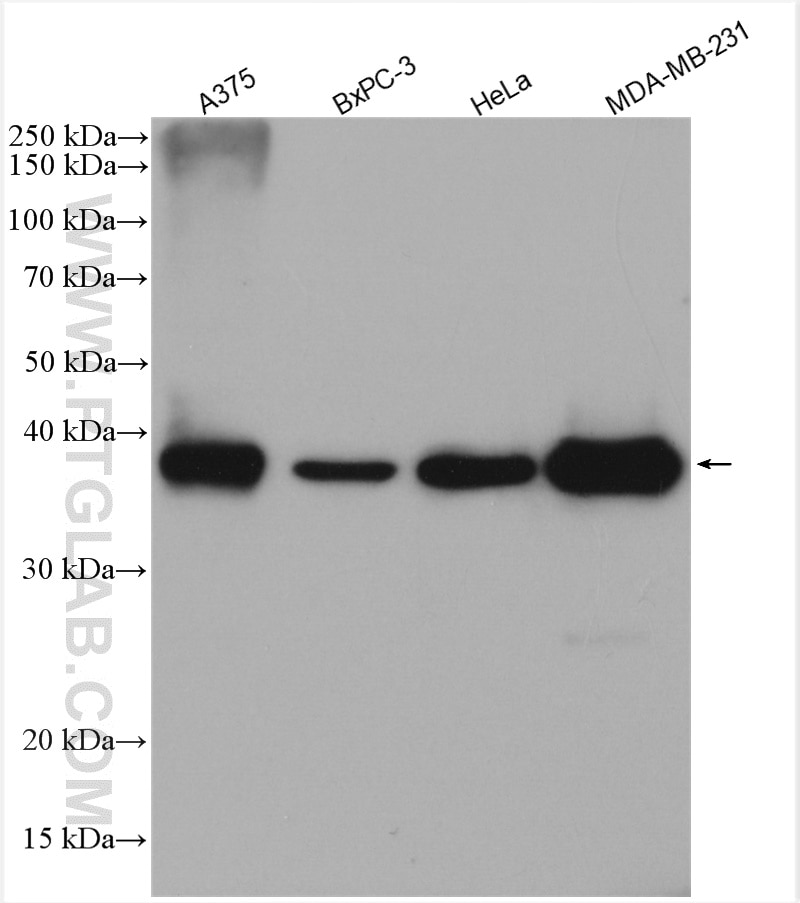
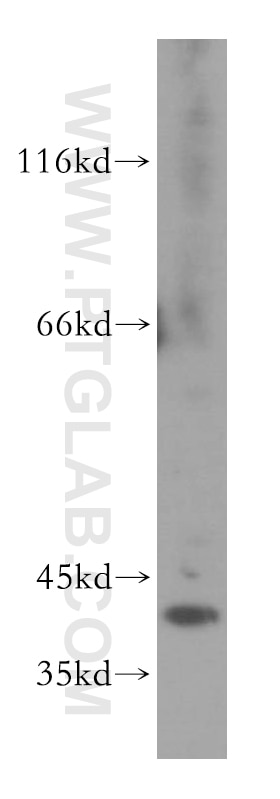
| Positive WB detected in | A375 cells, mouse brain tissue, BXPC-3 cells, HeLa cells, MDA-MB-231 cells |
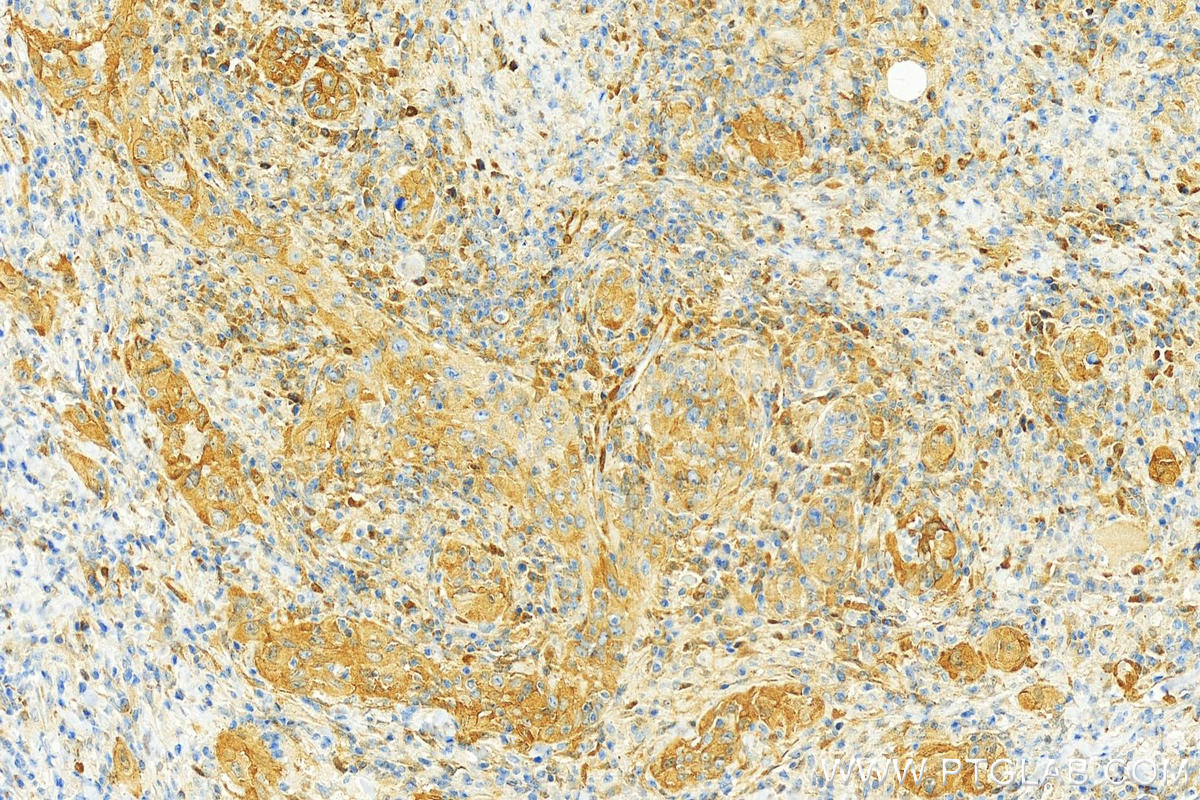
| Positive IHC detected in | human skin cancer tissue Note: suggested antigen retrieval with TE buffer pH 9.0; (*) Alternatively, antigen retrieval may be performed with citrate buffer pH 6.0 |
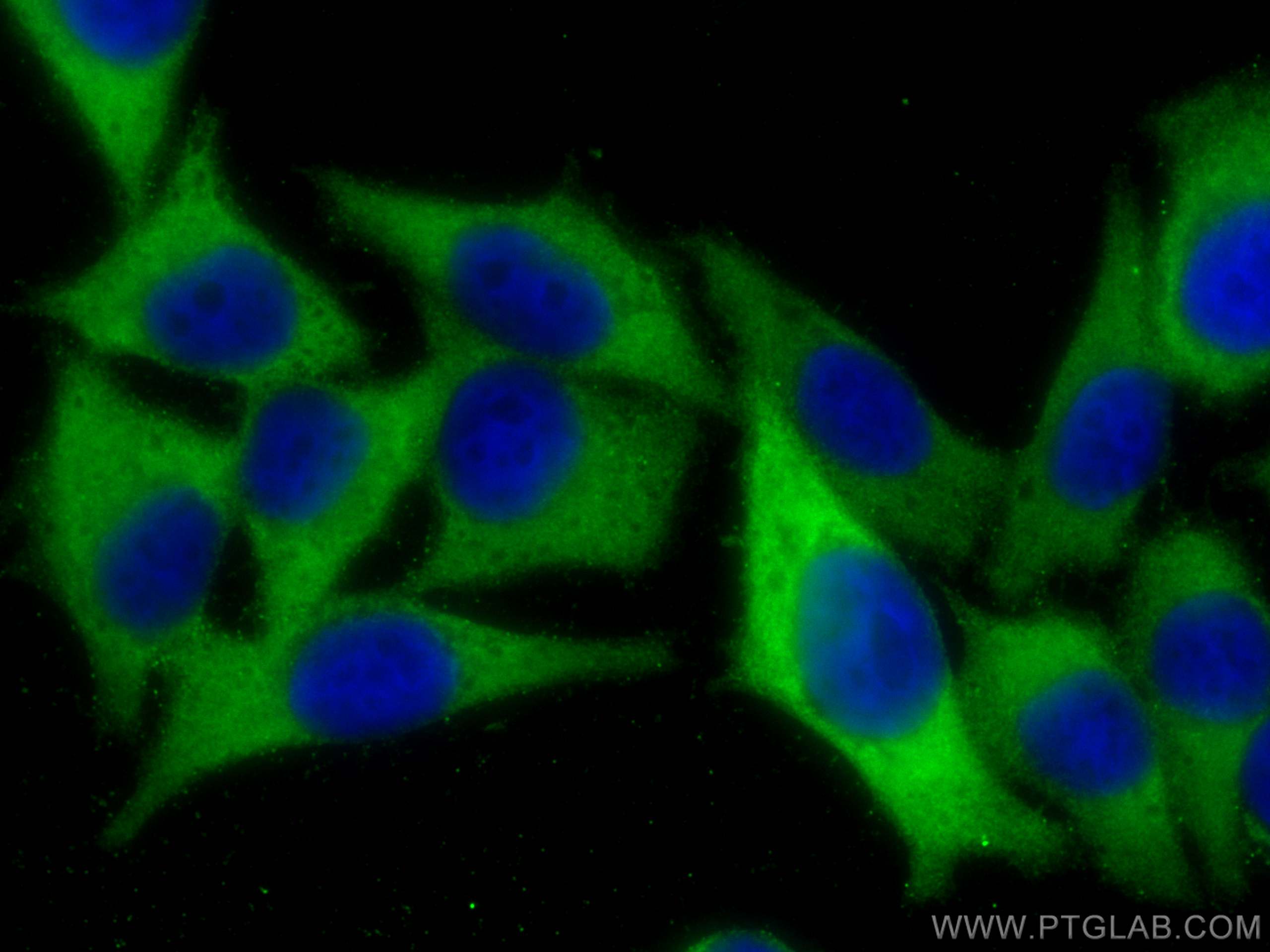
| Positive IF/ICC detected in | A375 cells |
Recommended dilution
| Application | Dilution |
|---|---|
| Western Blot (WB) | WB : 1:1000-1:6000 |
| Immunohistochemistry (IHC) | IHC : 1:400-1:1600 |
| Immunofluorescence (IF)/ICC | IF/ICC : 1:200-1:800 |
| It is recommended that this reagent should be titrated in each testing system to obtain optimal results. | |
| Sample-dependent, Check data in validation data gallery. | |
Product Information
18263-1-AP targets PHLDA1 in WB, IHC, IF/ICC, ELISA applications and shows reactivity with human, mouse samples.
| Tested Reactivity | human, mouse |
| Cited Reactivity | human, mouse |
| Host / Isotype | Rabbit / IgG |
| Class | Polyclonal |
| Type | Antibody |
| Immunogen |
CatNo: Ag13125 Product name: Recombinant human PHLDA1 protein Source: e coli.-derived, PGEX-4T Tag: GST Domain: 1-259 aa of BC018929 Sequence: MLESSGCKALKEGVLEKRSDGLLQLWKKKCCILTEEGLLLIPPKQLQHQQQQQQQQQQQQQQPGQGPAEPSQPSGPAVASLEPPVKLKELHFSNMKTVDCVERKGKYMYFTVVMAEGKEIDFRCPQDQGWNAEITLQMVQYKNRQAILAVKSTRQKQQHLVQQQPPSQPQPQPQLQPQPQPQPQPQPQPQSQPQPQPQPKPQPQQLHPYPHPHPHPHSHPHSHPHPHPHPHPHQIPHPHPQPHSQPHGHRLLRSTSNSA Predict reactive species |
| Full Name | pleckstrin homology-like domain, family A, member 1 |
| Calculated Molecular Weight | 45 kDa |
| Observed Molecular Weight | 40-45 kDa |
| GenBank Accession Number | BC018929 |
| Gene Symbol | PHLDA1 |
| Gene ID (NCBI) | 22822 |
| RRID | AB_2163284 |
| Conjugate | Unconjugated |
| Form | Liquid |
| Purification Method | Antigen affinity purification |
| UNIPROT ID | Q8WV24 |
| Storage Buffer | PBS with 0.02% sodium azide and 50% glycerol, pH 7.3. |
| Storage Conditions | Store at -20°C. Stable for one year after shipment. Aliquoting is unnecessary for -20oC storage. 20ul sizes contain 0.1% BSA. |
Background Information
PHLDA1, also known as PHRIP and TDAG51, is a multifunctional protein involved in various biological processes. It can induce apoptosis in various cell types, including T cells, hippocampal cells, endothelial cells, melanoma cells, and mouse embryonic fibroblasts(PMID: 30207029). PHLDA1 plays a role in inhibiting growth factor signaling and has been implicated in tumor suppression through its ability to repress Akt activity by binding to phosphatidylinositol (PIP) lipids(PMID: 36142223).
Protocols
| Product Specific Protocols | |
|---|---|
| IF protocol for PHLDA1 antibody 18263-1-AP | Download protocol |
| IHC protocol for PHLDA1 antibody 18263-1-AP | Download protocol |
| WB protocol for PHLDA1 antibody 18263-1-AP | Download protocol |
| Standard Protocols | |
|---|---|
| Click here to view our Standard Protocols |
Publications
What published studies show
The PHLDA1 antibody (Cat# 18263-1-AP) has 10 citations across journals including Cell Death & Disease, Acta Pharmacologica Sinica, Brain, Behavior, and Immunity, Frontiers in Immunology, Molecular Therapy Nucleic Acids, Life Sciences, Inflammation, Human & Experimental Toxicology, and Neuroreport. Research fields span glioma progression, hypoxic-ischemic brain injury, neuroinflammation, inflammatory fibrosis, trophoblast biology, myocardial injury, NAFLD, diabetic podocyte damage, neuronal injury, and intracerebral hemorrhage-related pyroptosis.
| Species | Application | Title |
|---|---|---|
Cell Death Dis The long non-coding RNA SNHG1 promotes glioma progression by competitively binding to miR-194 to regulate PHLDA1 expression.
| ||
Acta Pharmacol Sin PHLDA1 contributes to hypoxic ischemic brain injury in neonatal rats via inhibiting FUNDC1-mediated mitophagy | ||
Brain Behav Immun PHLDA1 promotes microglia-mediated neuroinflammation via regulating K63-linked ubiquitination of TRAF6.
| ||
Front Immunol PHLDA1 is a shared diagnostic and key mediator of inflammatory fibrosis in heart and kidney.
| ||
Mol Ther Nucleic Acids lncRNA HIF1A Antisense RNA 2 Modulates Trophoblast Cell Invasion and Proliferation through Upregulating PHLDA1 Expression. | ||
Life Sci PHLDA1 is a new therapeutic target of oxidative stress and ischemia reperfusion-induced myocardial injury.
|
Reviews
What customers say
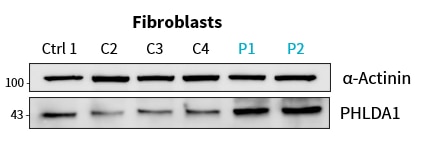
The single review for this product rates it 5 stars. The user reported excellent Western blot performance in patient primary fibroblasts and cell lines (human dermal fibroblasts, HeLa, hTERT-RPE1), using a 1:2000 dilution with 1% milk at 4°C overnight. Overall, the antibody is described as working very well for WB applications across multiple human cell types.
The reviews below have been submitted by verified Proteintech customers who received an incentive for providing their feedback.
Lukas (Verified Customer) (01-31-2025) | worked very well for Western blot in patient primary fibroblasts and cell lines (in 1% milk at +4°C overnight)
 |





