



Tested Applications
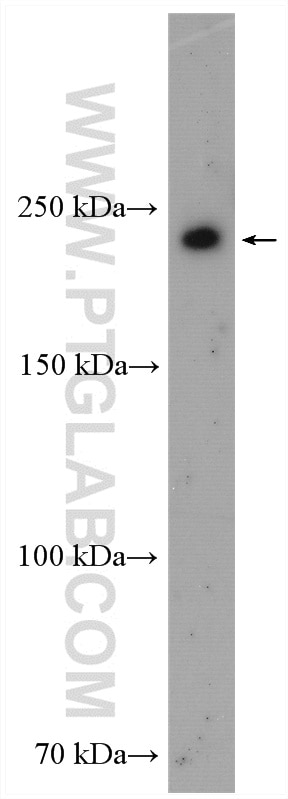
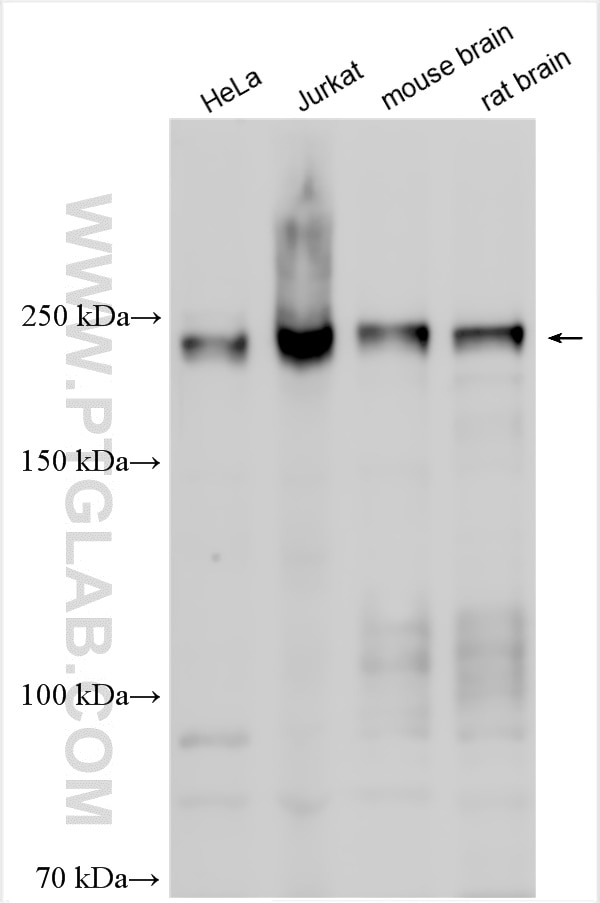
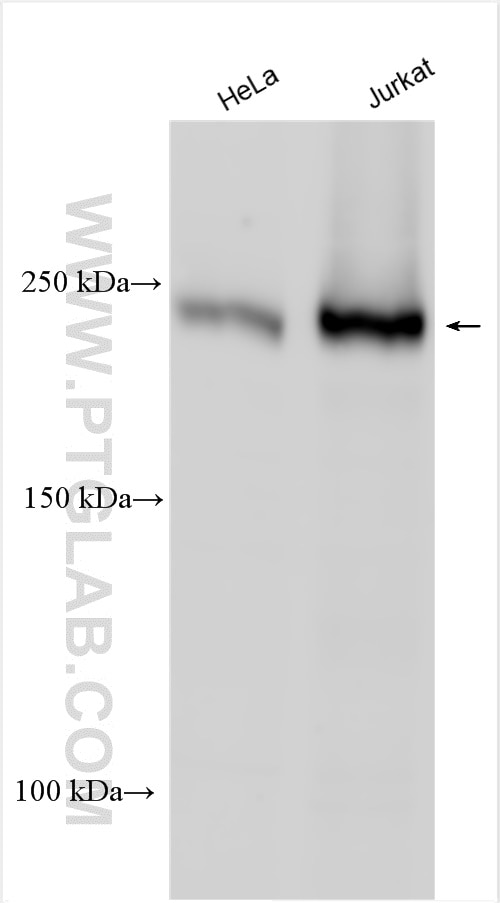
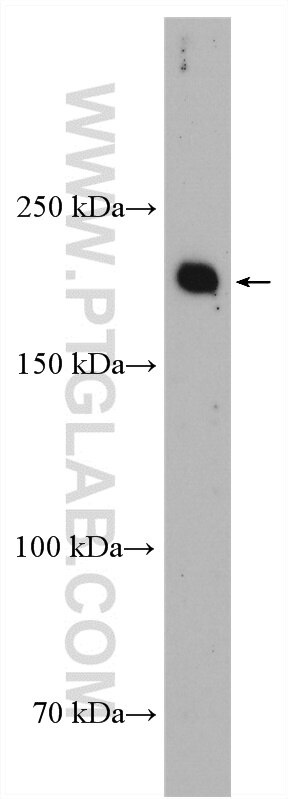
| Positive WB detected in | HeLa cells, mouse lung tissue, Jurkat cells, mouse brain tissue, rat brain tissue |
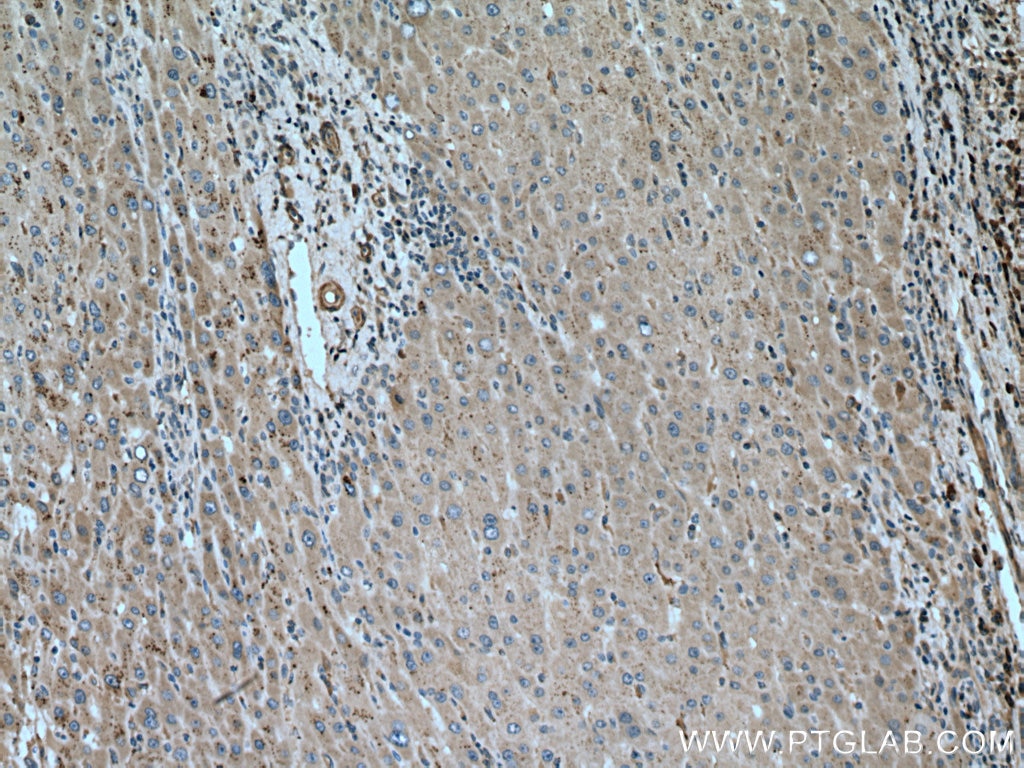
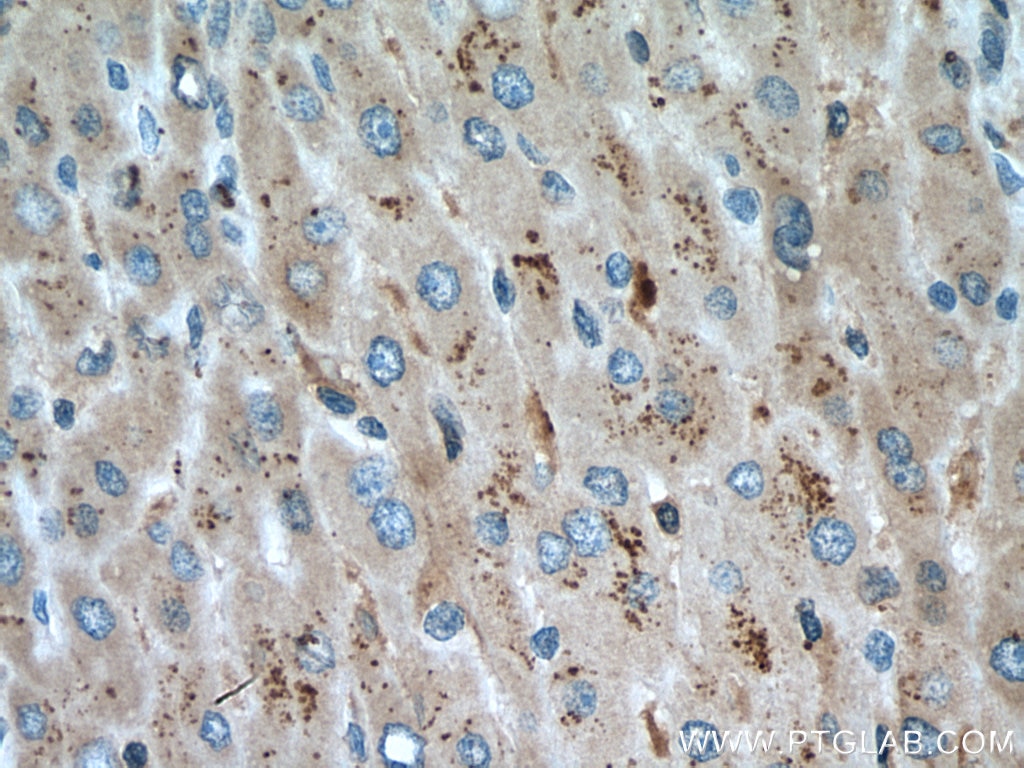
| Positive IHC detected in | human liver cancer tissue, mouse liver tissue, human ovary cancer tissue, rat liver tissue, mouse thymus tissue, rat ovary tissue, human placenta tissue, mouse ovary tissue Note: suggested antigen retrieval with TE buffer pH 9.0; (*) Alternatively, antigen retrieval may be performed with citrate buffer pH 6.0 |
Recommended dilution
| Application | Dilution |
|---|---|
| Western Blot (WB) | WB : 1:1000-1:4000 |
| Immunohistochemistry (IHC) | IHC : 1:50-1:500 |
| It is recommended that this reagent should be titrated in each testing system to obtain optimal results. | |
| Sample-dependent, Check data in validation data gallery. | |
Product Information
13361-1-AP targets PIP5K3 in WB, IHC, Dot Blot, ELISA applications and shows reactivity with human, mouse, rat samples.
| Tested Reactivity | human, mouse, rat |
| Cited Reactivity | human, mouse, pig, sheep |
| Host / Isotype | Rabbit / IgG |
| Class | Polyclonal |
| Type | Antibody |
| Immunogen |
CatNo: Ag4177 Product name: Recombinant human PIP5K3 protein Source: e coli.-derived, PGEX-4T Tag: GST Domain: 1-451 aa of BC032389 Sequence: MATDDKTSPTLDSANDLPRSPTSPSHLTHFKPLTPDQDEPPFKSAYSSFVNLFRFNKERAEGGQGEQQPLSGSWTSPQLPSRTQSVRSPTPYKKQLNEELQRRSSALGDLRACTYCRKIALSYAHSTDSNSIGEDLNALSDSACSVSVLDPSEPRTPVGSRKASRNIFLEDDLAWQSLIHPDSSNTPLSTRLVSVQEDAGKSPARNRSASITNLSLDRSGSPMVPSYETSVSPQANRTYVRTETTEDERKILLDSVQLKDLWKKICHHSSGMEFQDHRYWLRTHPNCIVGKELVNWLIRNGHIATRAQAIAIGQAMVDGRWLDCVSHHDQLFRDEYALYRPLQSTEFSETPSPDSDSVNSVEGHSEPSWFKDIKFDDSDTEQIAEEGDDNLANSASPSKRTSVSSFQSTVDSDSAASISLNVELDNVNFHIKKPSKYPHVPPHPADQKGRR Predict reactive species |
| Full Name | phosphatidylinositol-3-phosphate/phosphatidylinositol 5-kinase, type III |
| Calculated Molecular Weight | 451 aa, 50 kDa, 237 kDa |
| Observed Molecular Weight | 237 kDa |
| GenBank Accession Number | BC032389 |
| Gene Symbol | PIP5K3 |
| Gene ID (NCBI) | 200576 |
| RRID | AB_10638310 |
| Conjugate | Unconjugated |
| Form | Liquid |
| Purification Method | Antigen affinity purification |
| UNIPROT ID | Q9Y2I7 |
| Storage Buffer | PBS with 0.02% sodium azide and 50% glycerol, pH 7.3. |
| Storage Conditions | Store at -20°C. Stable for one year after shipment. Aliquoting is unnecessary for -20oC storage. 20ul sizes contain 0.1% BSA. |
Background Information
PIP5K3 (1-phosphatidylinositol 3-phosphate 5-kinase), also callled PIKFYVE, belongs to a large family of lipid kinases that alter the phosphorylation status of intracellular phosphatidylinositol (PMID: 15902656; 9858586). The content of phosphatidylinositol 3,5-bisphosphate (PtdIns(3,5)P2) in endosomal membranes changes dynamically with fission and fusion events that generate or absorb intracellular transport vesicles. PIKFYVE is the PtdIns(3,5)P2-producing component of a trimolecular complex that tightly regulates the level of PtdIns(3,5)P2. Other components of this complex are the PIKFYVE activator VAC14 and the PtdIns(3,5)P2 phosphatase FIG4 (PMID: 17556371). In addition to its phosphoinositide 5-kinase activity, PIKFYVE also has protein kinase activity (PubMed: 11714711; 17556371).PIP5K3 has four isoforms with molecular weights of 237 kDa, 50 kDa, 51 kDa and 62 kDa. This antibody primarily recognizes the 237 kDa isoform.
Protocols
| Product Specific Protocols | |
|---|---|
| IHC protocol for PIP5K3 antibody 13361-1-AP | Download protocol |
| WB protocol for PIP5K3 antibody 13361-1-AP | Download protocol |
| Standard Protocols | |
|---|---|
| Click here to view our Standard Protocols |
Publications
What published studies show
The PIP5K3 (PIKFYVE) Polyclonal antibody (Cat# 13361-1-AP) has 14 citations spanning journals including Cell, Cancer Cell, Mol Cell, Autophagy, Brain, Acta Neuropathol, PLoS Pathog, eLife, Front Oncol, BMC Immunol, Eur J Pharmacol, Cell Rep Med, Animals, and bioRxiv. Research fields cover neuroendocrine cancer, ALS, lysosomal/mitochondrial biology, mTORC1 signaling, neurodegeneration, viral infection, osteosarcoma, reproductive biology, vascular calcification, endosomal recycling, and leukodystrophy.
| Species | Application | Title |
|---|---|---|
Cancer Cell A stress-adaptive lipid kinase axis defines metabolic vulnerabilities in neuroendocrine prostate cancer. | ||
Mol Cell TSC1 binding to lysosomal PIPs is required for TSC complex translocation and mTORC1 regulation.
| ||
Cell Rep Med Targeting the ferritinophagy-lysosome axis as a therapeutic vulnerability in gastroenteropancreatic neuroendocrine tumors | ||
Acta Neuropathol Transient receptor potential vanilloid channel 2 contributes to multi-modal endoplasmic reticulum and perinuclear space dilations that can also be observed in prion-infected mice |
Reviews
What customers say
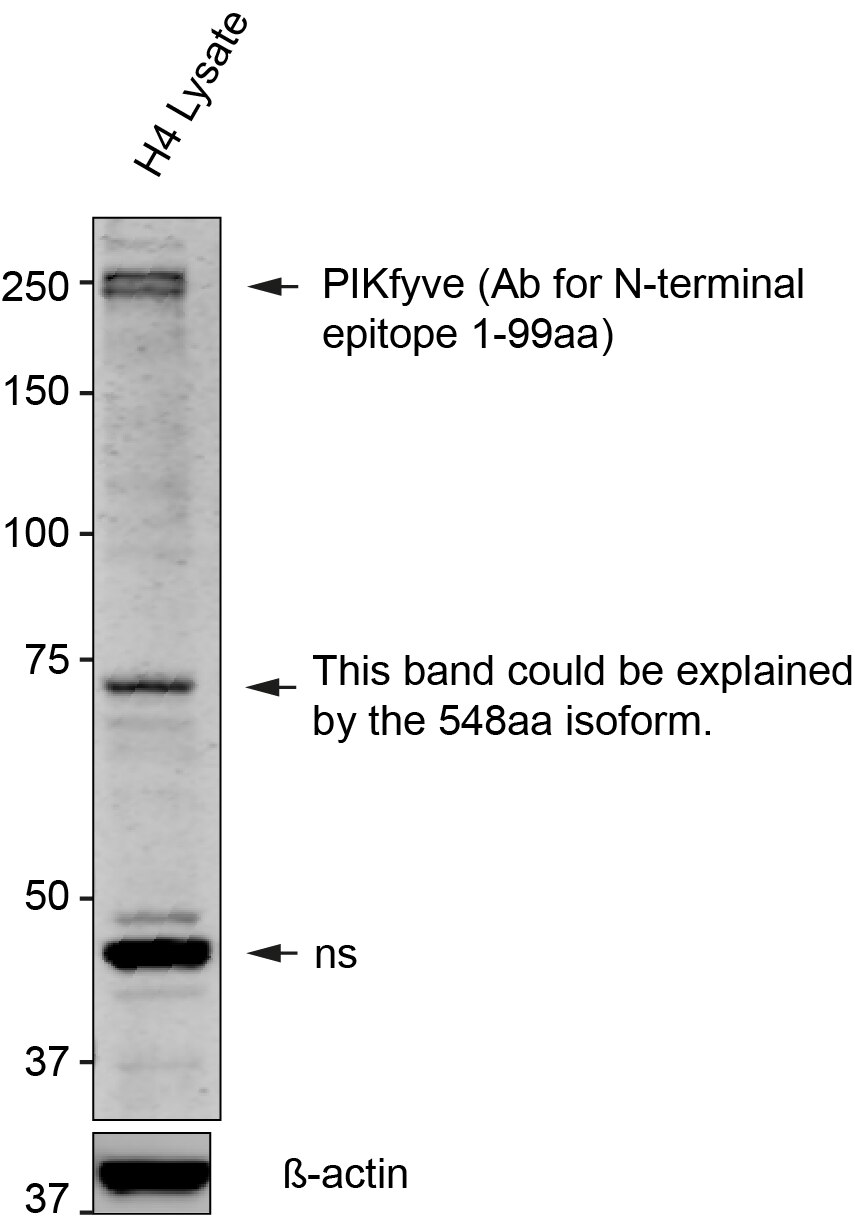
The single review for this product is a 5-star rating. The reviewer reports that the antibody performs very well for Western Blot, using a 1:200 dilution with overnight incubation at 4°C in 3% BSA/TBST. The antibody was validated using H4 cell lysate, confirming reliable detection under these conditions.
The reviews below have been submitted by verified Proteintech customers who received an incentive for providing their feedback.
Kincaid (Verified Customer) (05-21-2024) | This antibody works very well. I use it 1:200 - overnight incubation at 4°C (3% BSA in TBST). I have validated with H4 cell lysate.
 |








