

Tested Applications
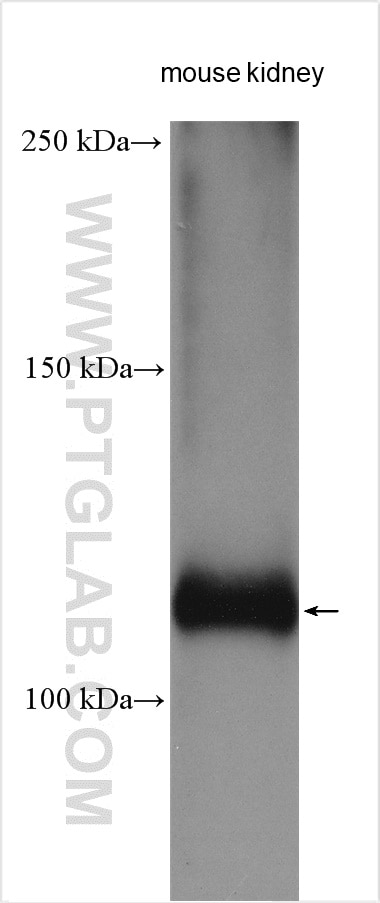
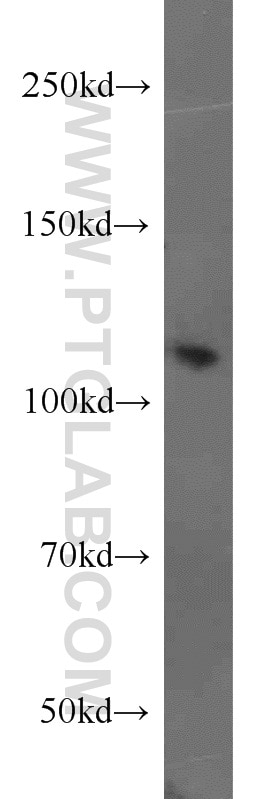
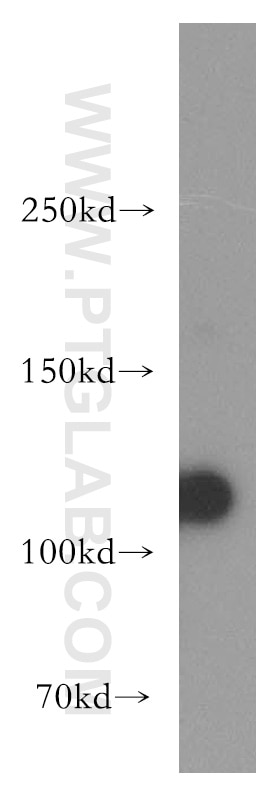
| Positive WB detected in | mouse kidney tissue, HEK-293 cells, human kidney tissue |
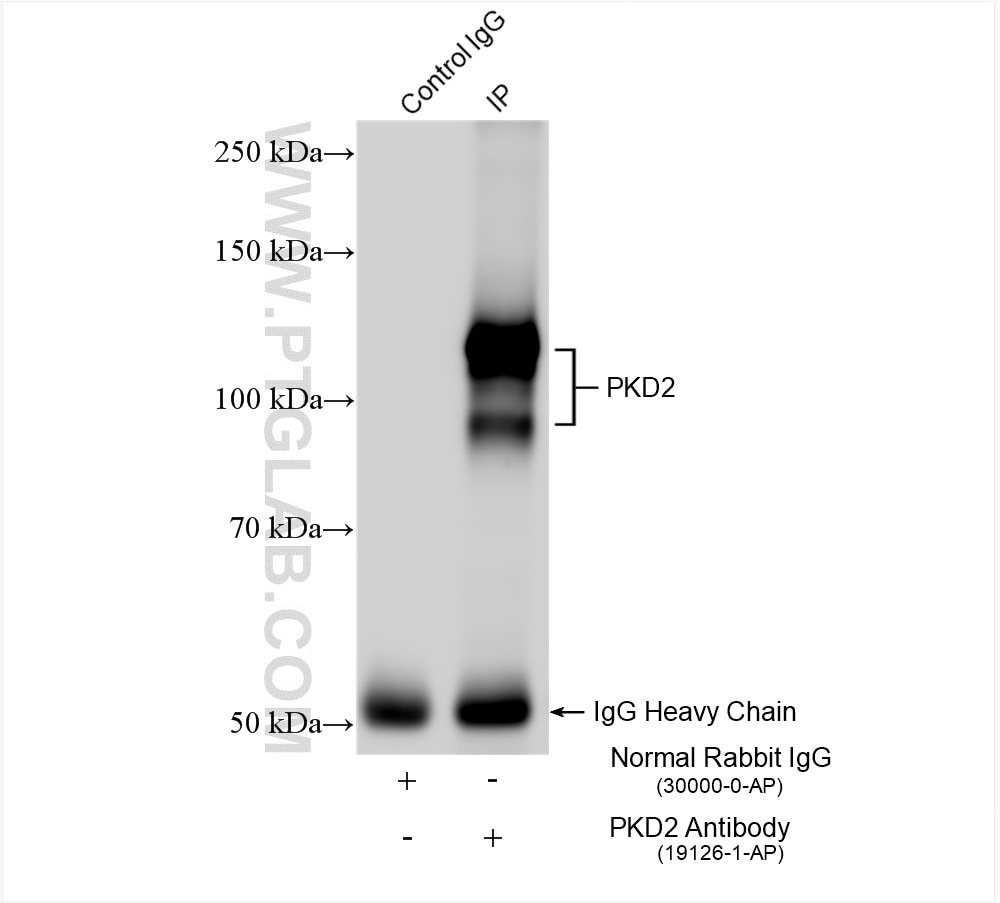
| Positive IP detected in | mouse testis tissue |
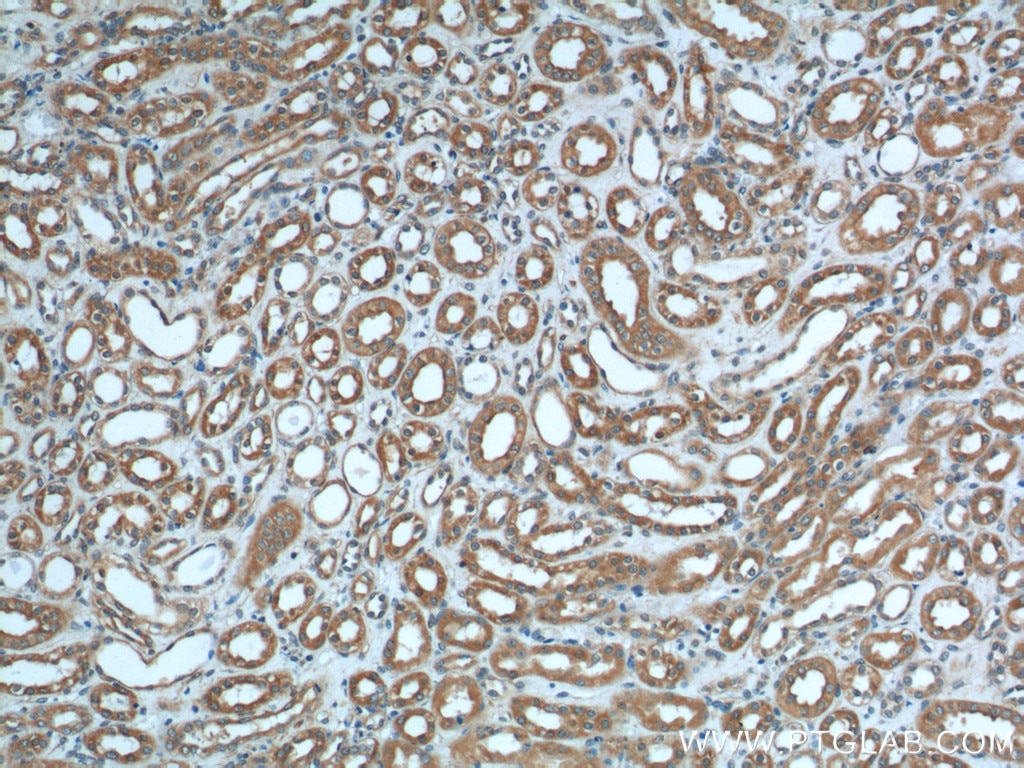
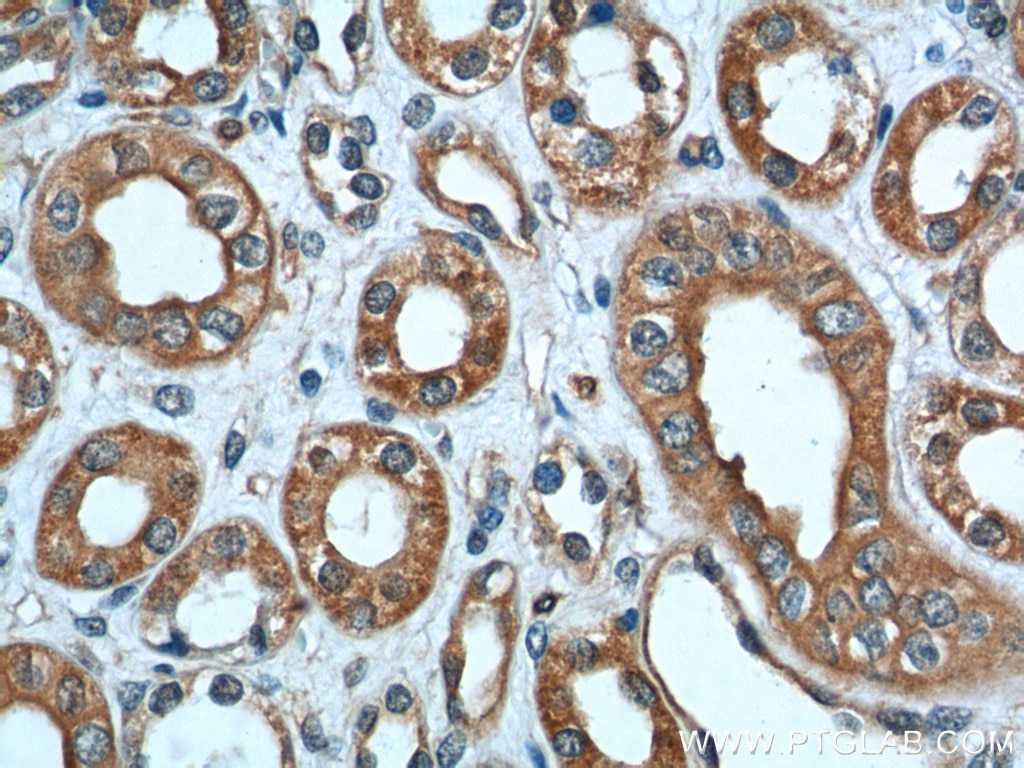
| Positive IHC detected in | human kidney tissue Note: suggested antigen retrieval with TE buffer pH 9.0; (*) Alternatively, antigen retrieval may be performed with citrate buffer pH 6.0 |
Recommended dilution
| Application | Dilution |
|---|---|
| Western Blot (WB) | WB : 1:2000-1:16000 |
| Immunoprecipitation (IP) | IP : 0.5-4.0 ug for 1.0-3.0 mg of total protein lysate |
| Immunohistochemistry (IHC) | IHC : 1:20-1:200 |
| It is recommended that this reagent should be titrated in each testing system to obtain optimal results. | |
| Sample-dependent, Check data in validation data gallery. | |
Product Information
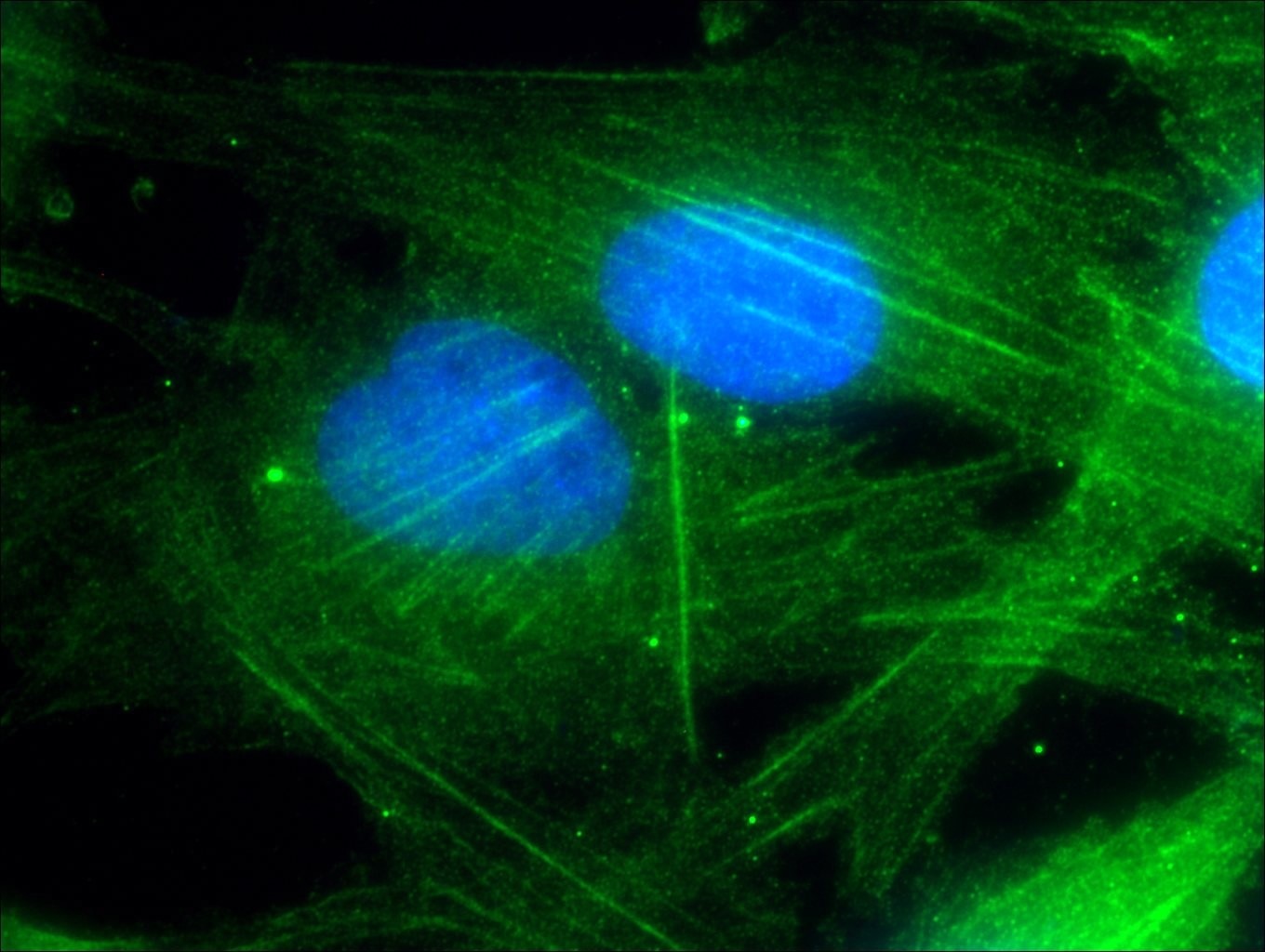
19126-1-AP targets Polycystin 2 in WB, IHC, IF, IP, ELISA applications and shows reactivity with human, mouse, rat, canine samples.
| Tested Reactivity | human, mouse, rat, canine |
| Cited Reactivity | human, mouse, rat |
| Host / Isotype | Rabbit / IgG |
| Class | Polyclonal |
| Type | Antibody |
| Immunogen |
Peptide Predict reactive species |
| Full Name | polycystic kidney disease 2 (autosomal dominant) |
| Calculated Molecular Weight | 110 kDa |
| Observed Molecular Weight | 109 kDa |
| GenBank Accession Number | NM_000297 |
| Gene Symbol | PKD2 |
| Gene ID (NCBI) | 5311 |
| RRID | AB_10641050 |
| Conjugate | Unconjugated |
| Form | Liquid |
| Purification Method | Antigen affinity purification |
| UNIPROT ID | Q13563 |
| Storage Buffer | PBS with 0.02% sodium azide and 50% glycerol, pH 7.3. |
| Storage Conditions | Store at -20°C. Stable for one year after shipment. Aliquoting is unnecessary for -20oC storage. 20ul sizes contain 0.1% BSA. |
Background Information
Polycystin 2 (PKD2), the product of the gene mutated in type 2 autosomal dominant polycystic kidney disease, belongs to the polycystin family. PKD2 is a ~110-kDa six-transmembrane channel protein with cytoplasmic N- and C-termini. This protein functions as a Ca2+-activated intracellular Ca2+ release channel in the endoplasmic reticulum. It is also present in the plasma membrane, where it functions as a nonselective cation channel. In addition, PKD2 expression has been documented in the primary cilium of kidney epithelial cells, where it is believed to have an essential role in mediating Ca2+ entry in response to flow rate changes, suggesting that it may be part of a mechanosensing machinery residing in the primary cilium. (PMID: 16135816; 10497221)
Protocols
| Product Specific Protocols | |
|---|---|
| IF protocol for Polycystin 2 antibody 19126-1-AP | Download protocol |
| IHC protocol for Polycystin 2 antibody 19126-1-AP | Download protocol |
| IP protocol for Polycystin 2 antibody 19126-1-AP | Download protocol |
| WB protocol for Polycystin 2 antibody 19126-1-AP | Download protocol |
| Standard Protocols | |
|---|---|
| Click here to view our Standard Protocols |
Publications
What published studies show
The Polycystin 2 (PKD2) Polyclonal Antibody (Cat# 19126-1-AP) has 11 total citations published in journals including Cell Death & Disease, JASN, Frontiers in Molecular Biosciences, BBA Molecular Cell Research, Journal of Cell Science, Life Science Alliance, Human Pathology, Graefes Archive, Cell Physiology and Biochemistry, bioRxiv, and Autophagy Reports. Research fields span autosomal dominant polycystic kidney disease, cardiomyopathy, renal ischemia/reperfusion injury, primary cilia biology, autophagy, and lymphatic malformations.
| Species | Application | Title |
|---|---|---|
Cell Death Dis Investigating PKD2 deficiency-associated cardiomyopathies using hESC-cardiomyocytes and bioengineered 3D ventricular cardiac tissue strips.
| ||
J Am Soc Nephrol Pkd2 Deficiency in Embryonic Aqp2 + Progenitor Cells Is Sufficient to Cause Severe Polycystic Kidney Disease | ||
Front Mol Biosci The Role of TRPC6 in Renal Ischemia/Reperfusion and Cellular Hypoxia/Reoxygenation Injuries. | ||
Biochim Biophys Acta Mol Cell Res Blockage of polycystin-2 alleviates myocardial ischemia/reperfusion injury by inhibiting autophagy through the Ca2+/Akt/Beclin 1 pathway | ||
J Cell Sci Excess microtubule and F-actin formation mediates shortening and loss of primary cilia in response to a hyperosmotic milieu | ||
Life Sci Alliance Cholesterol ensures ciliary polycystin-2 localization to prevent polycystic kidney disease
|








