
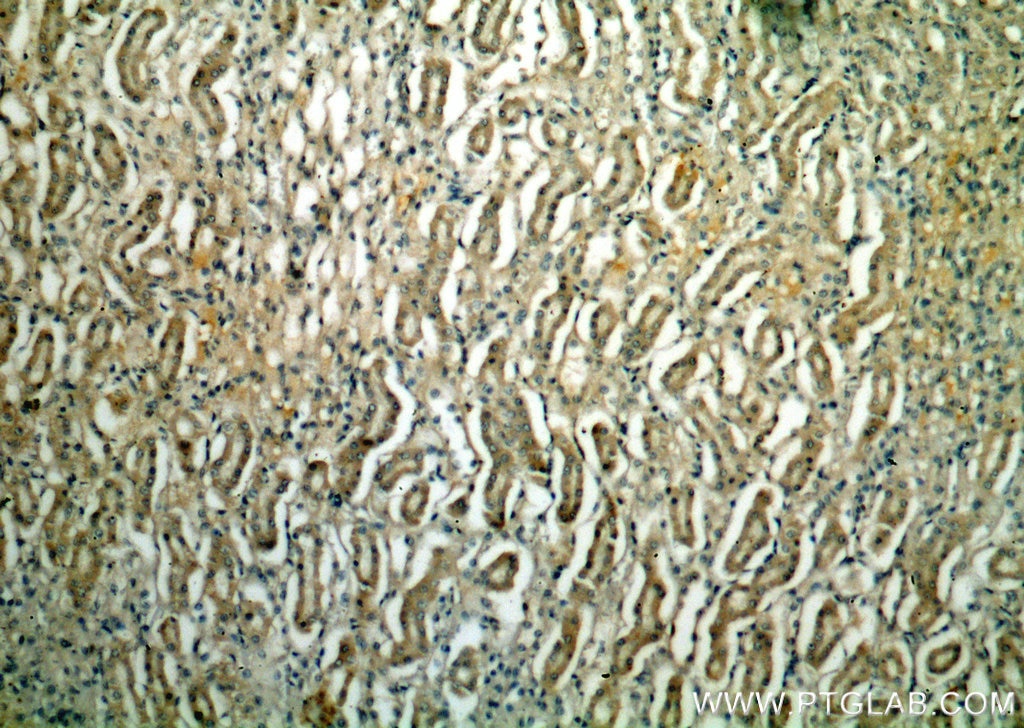
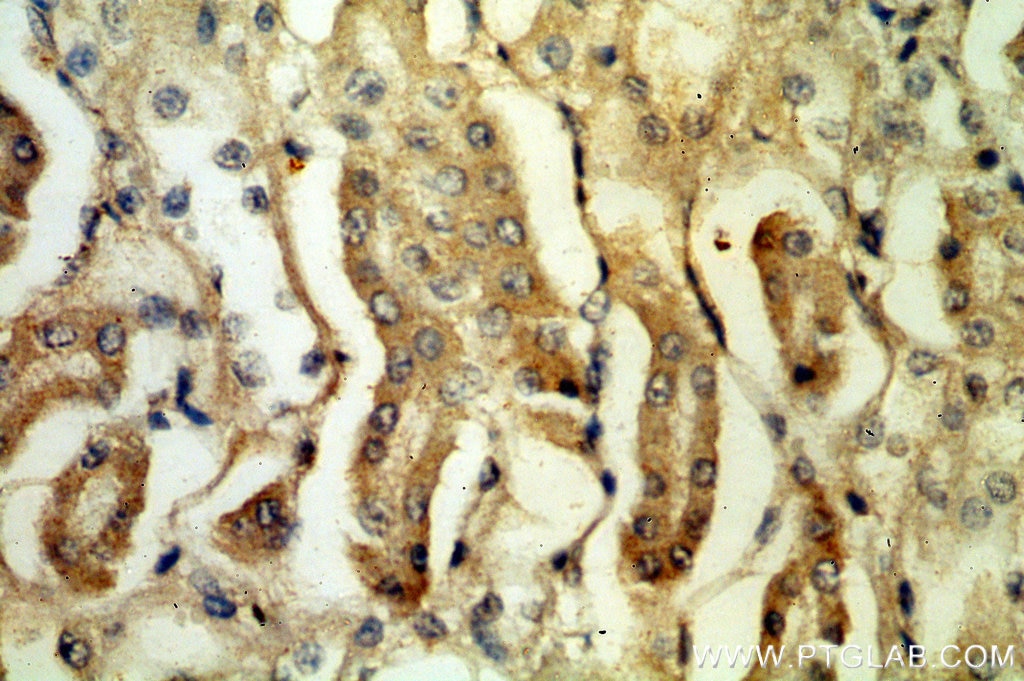
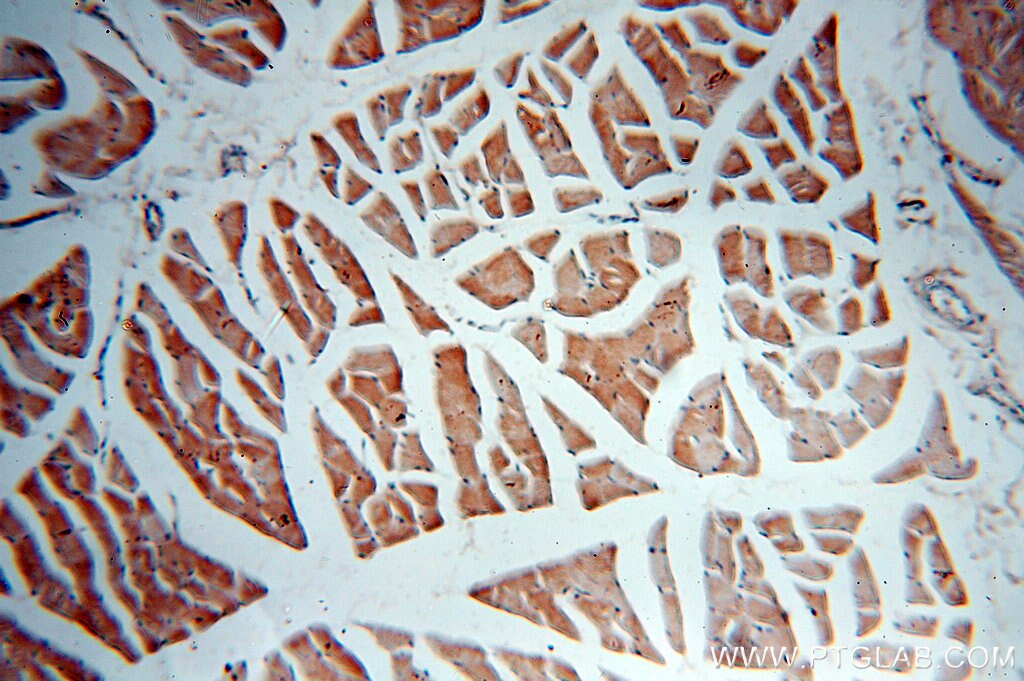
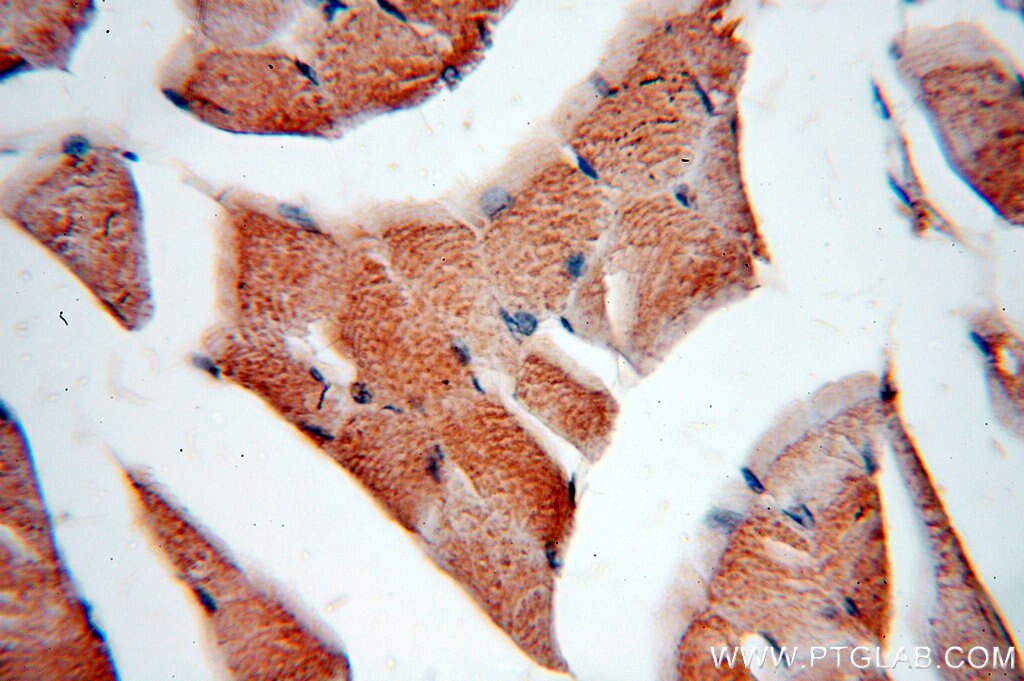

Tested Applications
| Positive IHC detected in | human kidney tissue, human skeletal muscle tissue Note: suggested antigen retrieval with TE buffer pH 9.0; (*) Alternatively, antigen retrieval may be performed with citrate buffer pH 6.0 |
Recommended dilution
| Application | Dilution |
|---|---|
| Immunohistochemistry (IHC) | IHC : 1:20-1:200 |
| It is recommended that this reagent should be titrated in each testing system to obtain optimal results. | |
| Sample-dependent, Check data in validation data gallery. | |
Product Information
51061-2-Ig targets PLSCR3 in WB, IHC, ELISA applications and shows reactivity with human samples.
| Tested Reactivity | human |
| Cited Reactivity | human, mouse |
| Host / Isotype | Rabbit / IgG |
| Class | Polyclonal |
| Type | Antibody |
| Immunogen |
Recombinant protein Predict reactive species |
| Full Name | phospholipid scramblase 3 |
| Calculated Molecular Weight | 32 kDa |
| GenBank Accession Number | BC093026 |
| Gene Symbol | PLSCR3 |
| Gene ID (NCBI) | 57048 |
| RRID | AB_2165937 |
| Conjugate | Unconjugated |
| Form | Liquid |
| Purification Method | Protein A purification |
| UNIPROT ID | Q9NRY6 |
| Storage Buffer | PBS with 0.02% sodium azide and 50% glycerol, pH 7.3. |
| Storage Conditions | Store at -20°C. Stable for one year after shipment. Aliquoting is unnecessary for -20oC storage. 20ul sizes contain 0.1% BSA. |
Background Information
PLSCR3, also named as PLS3, belongs to the phospholipid scramblase family. It may mediate accelerated ATP-independent bidirectional transbilayer migration of phospholipids upon binding calcium ions that results in a loss of phospholipid asymmetry in the plasma membrane. PLSCR3 may play a central role in the initiation of fibrin clot formation, in the activation of mast cells and in the recognition of apoptotic and injured cells by the reticuloendothelial system. It is a target of protein kinase C-δ (PKC-δ), resides in mitochondria and plays pivotal roles in regulating apoptotic response. Phosphorylation of PLSCR3 by PKC-δ is involved in the hyperthermia-induced apoptotic signal transduction pathway in Tca8113 cells, and that Hsp27 blocks this pathway to suppress hyperthermia-induced apoptosis. (PMID:20569108)
Protocols
| Product Specific Protocols | |
|---|---|
| IHC protocol for PLSCR3 antibody 51061-2-Ig | Download protocol |
| Standard Protocols | |
|---|---|
| Click here to view our Standard Protocols |
Publications
What published studies show
The PLSCR3 Polyclonal antibody (Cat# 51061-2-Ig) has 2 citations. They appear in Hepatology (2022) and Int J Hyperthermia (2010). The cited research fields include mitochondrial membrane remodeling and liver injury, as well as hyperthermia-induced apoptosis involving heat shock protein 27. Both citations used Western blot as the application, with species covering mouse and human.
| Species | Application | Title |
|---|---|---|
Hepatology Loss of Sam50 in hepatocytes induces cardiolipin-dependent mitochondrial membrane remodeling to trigger mtDNA release and liver injury
| ||
Int J Hyperthermia Hyperthermia-induced apoptosis in Tca8113 cells is inhibited by heat shock protein 27 through blocking phospholipid scramblase 3 phosphorylation. |





