
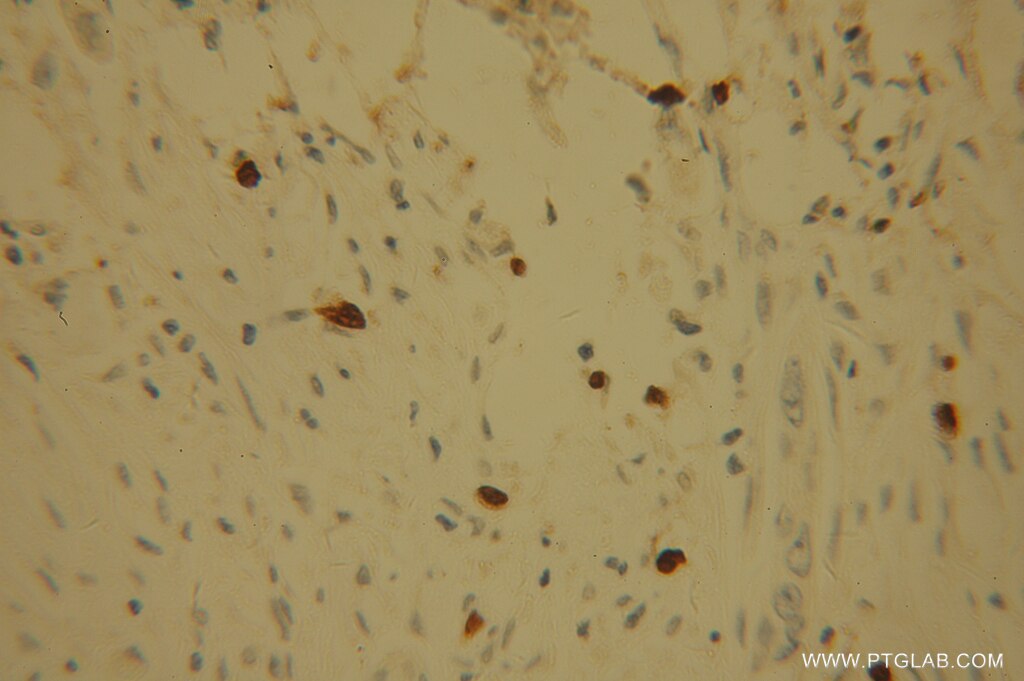

Tested Applications
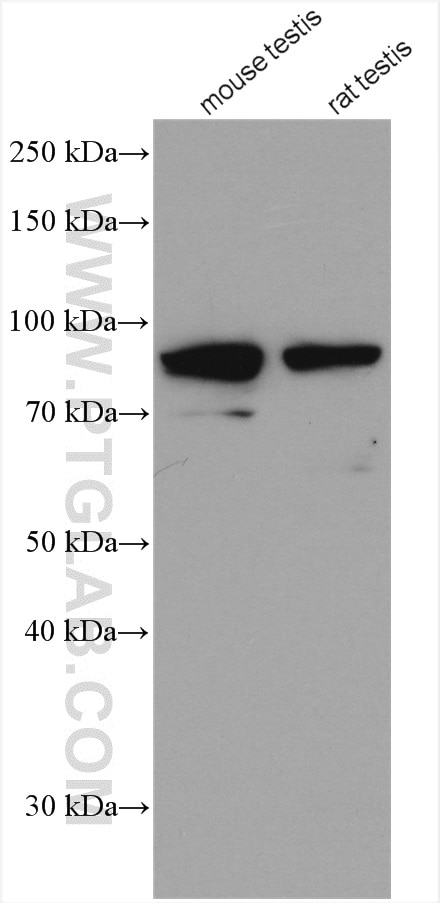
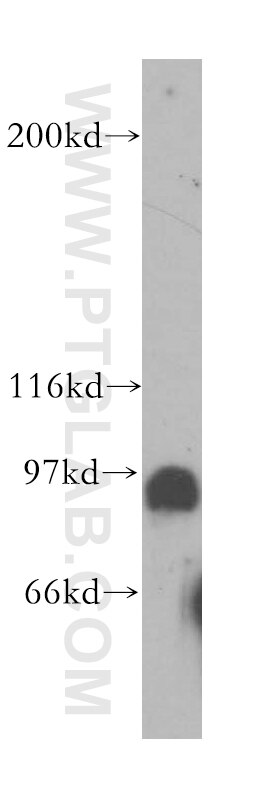
| Positive WB detected in | mouse testis tissue, human heart tissue, rat testis tissue |
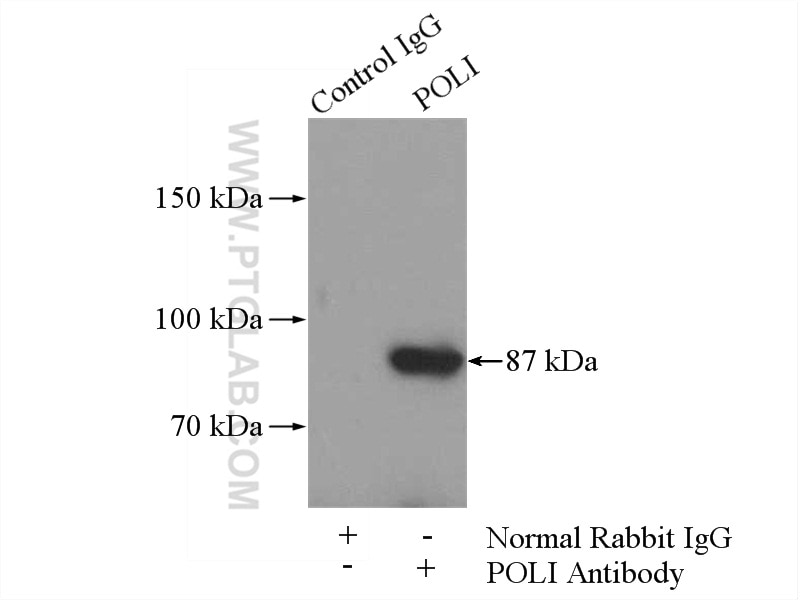
| Positive IP detected in | mouse testis tissue |
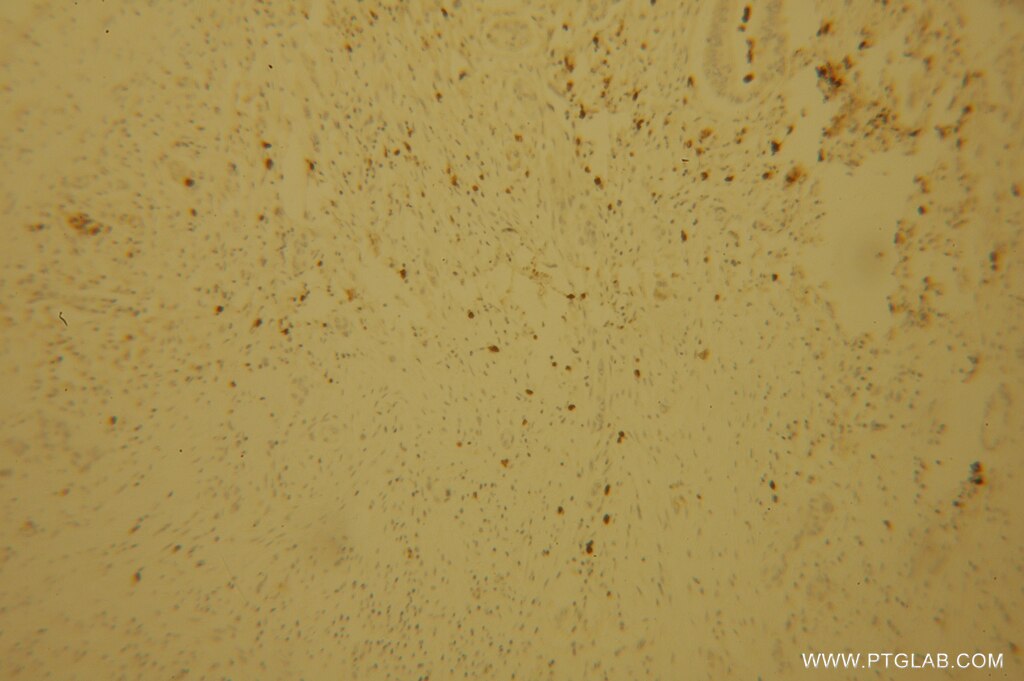
| Positive IHC detected in | human pancreas cancer tissue Note: suggested antigen retrieval with TE buffer pH 9.0; (*) Alternatively, antigen retrieval may be performed with citrate buffer pH 6.0 |
Recommended dilution
| Application | Dilution |
|---|---|
| Western Blot (WB) | WB : 1:500-1:2000 |
| Immunoprecipitation (IP) | IP : 0.5-4.0 ug for 1.0-3.0 mg of total protein lysate |
| Immunohistochemistry (IHC) | IHC : 1:20-1:200 |
| It is recommended that this reagent should be titrated in each testing system to obtain optimal results. | |
| Sample-dependent, Check data in validation data gallery. | |
Product Information
13635-1-AP targets POLI in WB, IHC, IF, IP, ELISA applications and shows reactivity with human, mouse, rat samples.
| Tested Reactivity | human, mouse, rat |
| Cited Reactivity | human, mouse, mosquito |
| Host / Isotype | Rabbit / IgG |
| Class | Polyclonal |
| Type | Antibody |
| Immunogen |
CatNo: Ag4563 Product name: Recombinant human POLI protein Source: e coli.-derived, PGEX-4T Tag: GST Domain: 1-340 aa of BC032662 Sequence: MELADVGAAASSQGVHDQVLPTPNASSRVIVHVDLDCFYAQVEMISNPELKDKPLGVQQKYLVVTCNYEARKLGVKKLMNVRDAKEKCPQLVLVNGEDLTRYREMSYKVTELLEEFSPVVERLGFDENFVDLTEMVEKRLQQLQSDELSAVTVSGHVYNNQSINLLDVLHIRLLVGSQIAAEMREAMYNQLGLTGCAGVASNKLLAKLVSGVFKPNQQTVLLPESCQHLIHSLNHIKEIPGIGYKTAKCLEALGINSVRDLQTFSPKILEKELGISVAQRIQKLSFGEDNSPVILSGPPQSFSEEDSFKKCSSEVEAKNKIEELLASLLNRVCQDGRKPH Predict reactive species |
| Full Name | polymerase (DNA directed) iota |
| Calculated Molecular Weight | 715 aa, 80 kDa |
| Observed Molecular Weight | 87 kDa |
| GenBank Accession Number | BC032662 |
| Gene Symbol | POLI |
| Gene ID (NCBI) | 11201 |
| RRID | AB_2167009 |
| Conjugate | Unconjugated |
| Form | Liquid |
| Purification Method | Antigen affinity purification |
| UNIPROT ID | Q9UNA4 |
| Storage Buffer | PBS with 0.02% sodium azide and 50% glycerol, pH 7.3. |
| Storage Conditions | Store at -20°C. Stable for one year after shipment. Aliquoting is unnecessary for -20oC storage. 20ul sizes contain 0.1% BSA. |
Background Information
Mammalian Pol ι owns an unusual combination of properties: it is stimulated by Mn2+ ions, can bypass some DNA lesions and misincorporates "G" opposite template "T" more frequently than incorporates the correct "A." [PMID:21304950] It also was shown to possess dRP lyase activity. In addition, Pol ι is much more efficient in the presence of Mn2+ in comparison to Mg2+. [PMID:17609217]. It has been proposed that POLI involves in immunoglobulin somatic hypermutation (SHM), bypass of deaminated cytosines, several adducts of the purine bases. DNA strand crosslinks and is involved in DNA repair under oxidative stress[PMID:15199127].
Protocols
| Product Specific Protocols | |
|---|---|
| IHC protocol for POLI antibody 13635-1-AP | Download protocol |
| IP protocol for POLI antibody 13635-1-AP | Download protocol |
| WB protocol for POLI antibody 13635-1-AP | Download protocol |
| Standard Protocols | |
|---|---|
| Click here to view our Standard Protocols |
Publications
What published studies show
The DNA Polymerase Iota (POLI) antibody (Cat# 13635-1-AP) has 11 total citations. These appear in journals including Cell Death & Disease, Oncogene, Cell Reports Methods, Scientific Reports, Cancer Science, Frontiers in Oncology, Insect Molecular Biology, Biotechnology Letters, STAR Protocols, International Journal of Clinical and Experimental Pathology, and Oncotarget. Research fields span esophageal squamous cell carcinoma (EMT, metastasis, invasion), lung tumorigenesis, translesion DNA synthesis, glioblastoma, and insect development.
| Species | Application | Title |
|---|---|---|
Cell Death Dis DNA polymerase iota promotes EMT and metastasis of esophageal squamous cell carcinoma by interacting with USP7 to stabilize HIF-1α | ||
Oncogene The error-prone DNA polymerase ι provides quantitative resistance to lung tumorigenesis and mutagenesis in mice. | ||
Cell Rep Methods Detection of endogenous translesion DNA synthesis in single mammalian cells | ||
Cancer Sci Phosphorylation of ETS-1 is a critical event in DNA polymerase iota-induced invasion and metastasis of esophageal squamous cell carcinoma. | ||
Front Oncol DNA Polymerase Iota Promotes Esophageal Squamous Cell Carcinoma Proliferation Through Erk-OGT-Induced G6PD Overactivation.
|






