


Tested Applications
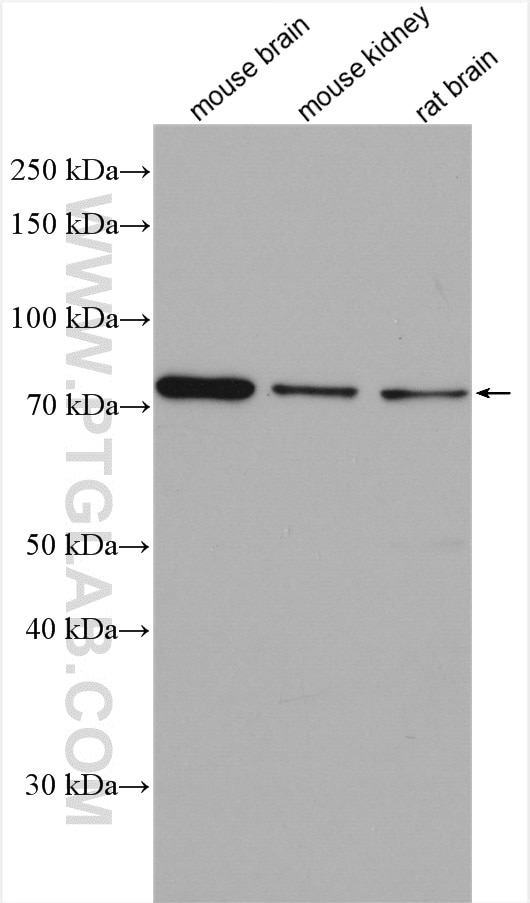
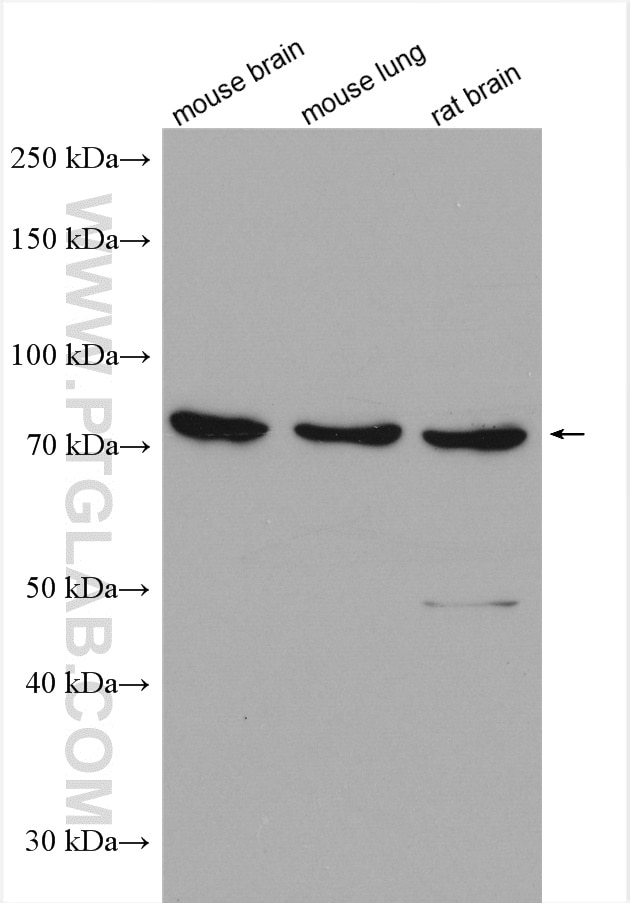
| Positive WB detected in | mouse brain tissue, mouse kidney tissue, rat brain tissue, mouse lung tissue, rat lung tissue |
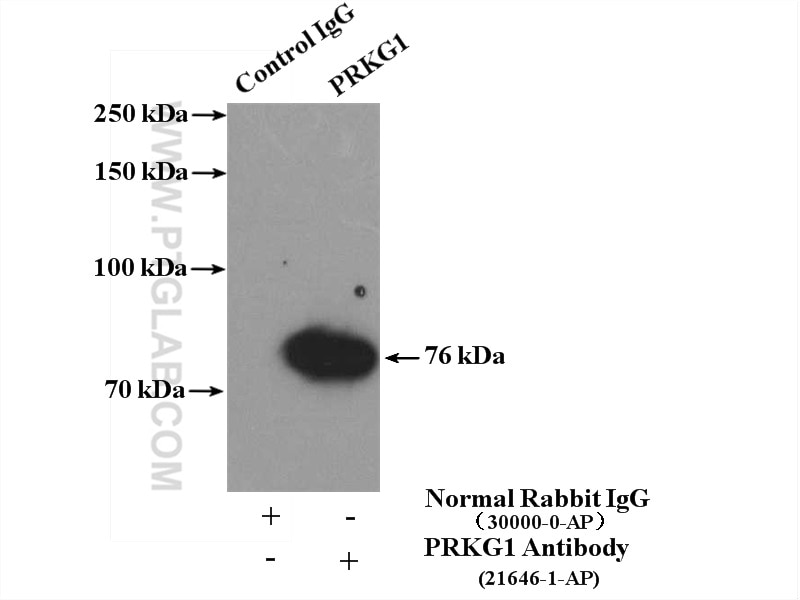
| Positive IP detected in | mouse brain tissue |
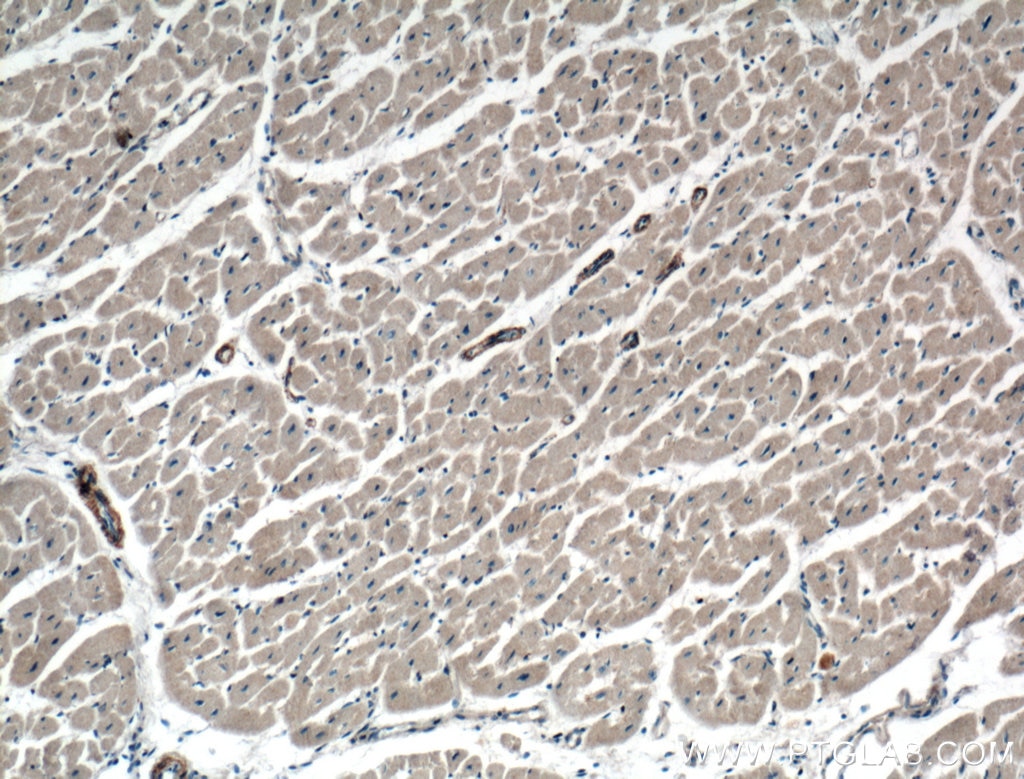
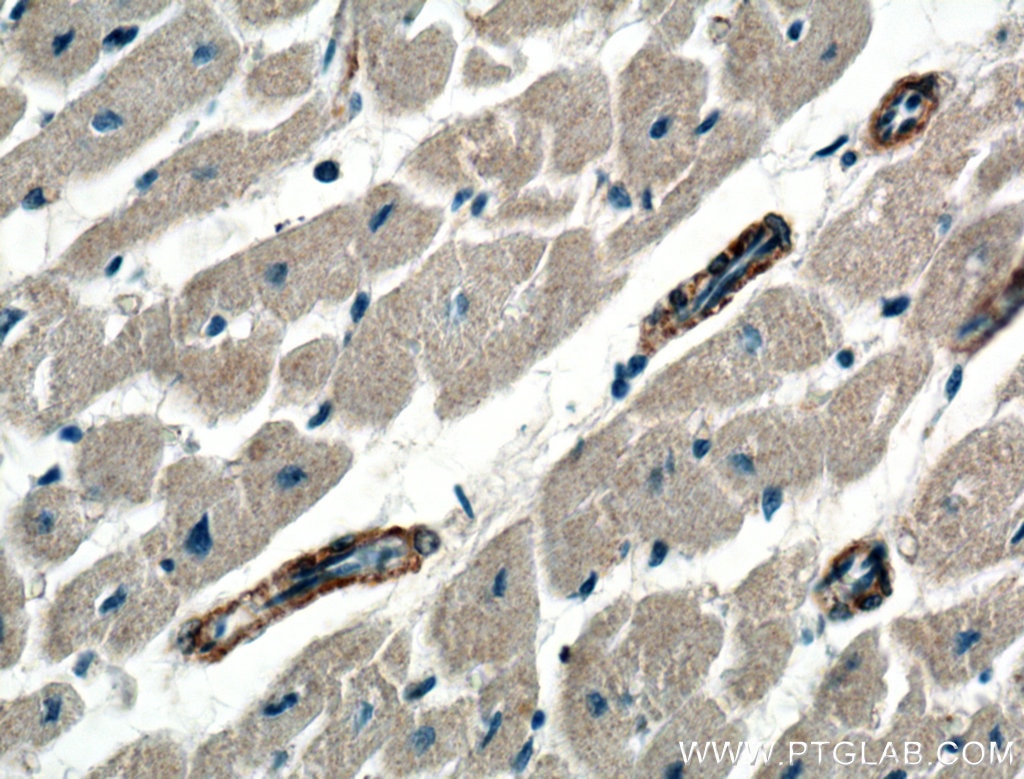
| Positive IHC detected in | human heart tissue Note: suggested antigen retrieval with TE buffer pH 9.0; (*) Alternatively, antigen retrieval may be performed with citrate buffer pH 6.0 |
Recommended dilution
| Application | Dilution |
|---|---|
| Western Blot (WB) | WB : 1:1000-1:3000 |
| Immunoprecipitation (IP) | IP : 0.5-4.0 ug for 1.0-3.0 mg of total protein lysate |
| Immunohistochemistry (IHC) | IHC : 1:50-1:500 |
| It is recommended that this reagent should be titrated in each testing system to obtain optimal results. | |
| Sample-dependent, Check data in validation data gallery. | |
Product Information
21646-1-AP targets PRKG1 in WB, IHC, IF, IP, ELISA applications and shows reactivity with human, mouse, rat samples.
| Tested Reactivity | human, mouse, rat |
| Cited Reactivity | human, mouse, rat, bovine |
| Host / Isotype | Rabbit / IgG |
| Class | Polyclonal |
| Type | Antibody |
| Immunogen |
CatNo: Ag16333 Product name: Recombinant human PRKG1 protein Source: e coli.-derived, PGEX-4T Tag: GST Domain: 1-178 aa of BC127090 Sequence: MGTLRDLQYALQEKIEELRQRDALIDELELELDQKDELIQKLQNELDKYRSVIRPATQQAQKQSASTLQGEPRTKRQAISAEPTAFDIQDLSHVTLPFYPKSPQSKDLIKEAILDNDFMKNLELSQIQEIVDCMYPVEYGKDSCIIKEGDVGSLVYVMEDGKVEVTKEGVKLCTMGPG Predict reactive species |
| Full Name | protein kinase, cGMP-dependent, type I |
| Calculated Molecular Weight | 686 aa, 78 kDa |
| Observed Molecular Weight | 65-78 kDa |
| GenBank Accession Number | BC127090 |
| Gene Symbol | PRKG1 |
| Gene ID (NCBI) | 5592 |
| RRID | AB_2878897 |
| Conjugate | Unconjugated |
| Form | Liquid |
| Purification Method | Antigen affinity purification |
| UNIPROT ID | Q13976 |
| Storage Buffer | PBS with 0.02% sodium azide and 50% glycerol, pH 7.3. |
| Storage Conditions | Store at -20°C. Stable for one year after shipment. Aliquoting is unnecessary for -20oC storage. 20ul sizes contain 0.1% BSA. |
Background Information
PRKG1(cGMP-dependent protein kinase 1) is also named as cGK1, PRKG1B, PRKGR1A, PRKGR1B and belongs to the cGMP subfamily. It serves as an integral component of second messenger signaling in a number of biological contexts including cell differentiation, memory, and vasodilation(PMID:21893290). Its activity prevents pathological-level nitric oxide-induced apoptosis and promotes DNA synthesis/cell proliferation in vascular smooth muscle cells(PMID:20060325). PRKG1 has 2 isoforms produced by alternative splicing with the molecular weight of 76 kDa and 78 kDa. The autophosphorylation can increase the kinase activity and it can form a monomer with the molecular weight of 65 kDa that is produced by proteolytic cleavage. SDS-PAGE revealed that proteolysis generated two different monomers with molecular masses of 70 and 68 kDa of CGK1-beta(PMID:8702828).
Protocols
| Product Specific Protocols | |
|---|---|
| IHC protocol for PRKG1 antibody 21646-1-AP | Download protocol |
| IP protocol for PRKG1 antibody 21646-1-AP | Download protocol |
| WB protocol for PRKG1 antibody 21646-1-AP | Download protocol |
| Standard Protocols | |
|---|---|
| Click here to view our Standard Protocols |
Publications
What published studies show
21646-1-AP is a Rabbit Monoclonal Antibody targeting PRKG1 (cGMP-dependent Protein Kinase I). It has accumulated 45 total citations across journals including Cell, Nature Communications, EMBO Journal, Advanced Science, Cancer Letters, Biochemical Pharmacology, European Journal of Pharmacology, and iScience. Associated research fields include cardiovascular disease (heart failure, pulmonary hypertension, aortic aneurysm), oncology (gastric, colorectal, prostate, ovarian, pancreatic cancers), neurology (stroke, migraine), pharmacology, endocrinology, and toxicology.
| Species | Application | Title |
|---|---|---|
Cell Pluripotent stem-cell-based screening uncovers sildenafil as a mitochondrial disease therapy. | ||
Adv Sci (Weinh) The Antipsychotic Drug Aripiprazole Suppresses Colorectal Cancer by Targeting LAMP2a to Induce RNH1/miR-99a/mTOR-Mediated Autophagy and Apoptosis | ||
Cancer Lett Metformin inhibits the progression of castration resistant prostate cancer by regulating PDE6D induced purine metabolic alternation and cGMP / PKG pathway activation | ||
EMBO J E3 ubiquitin ligase CHIP facilitates cAMP and cGMP signalling cross-talk by polyubiquitinating PDE9A | ||
Phytother Res Celastrol Ameliorates Hypoxia-Induced Pulmonary Hypertension by Regulation of the PDE5-cGMP-PKG Signaling Pathway |







