

Tested Applications
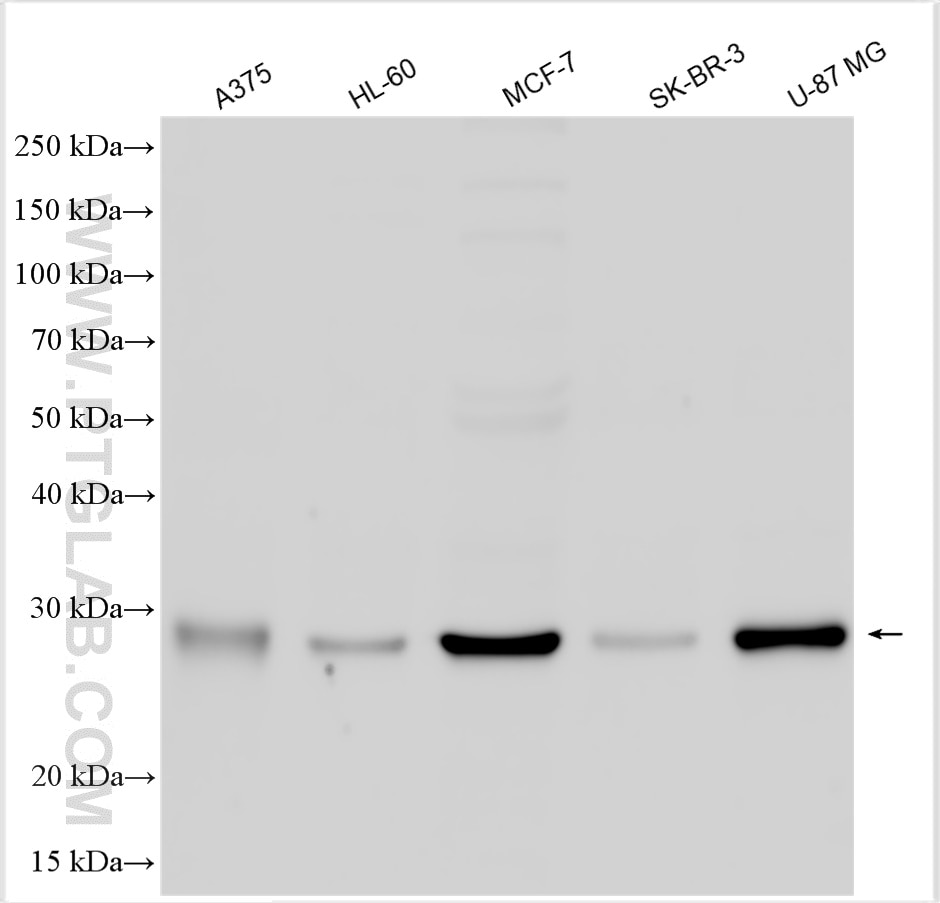
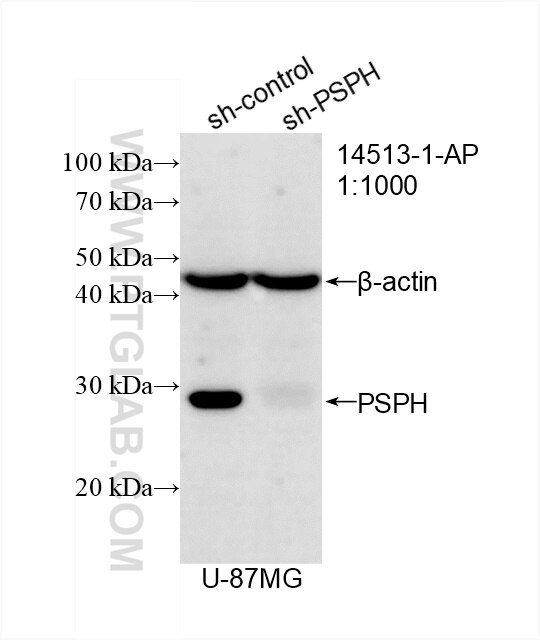
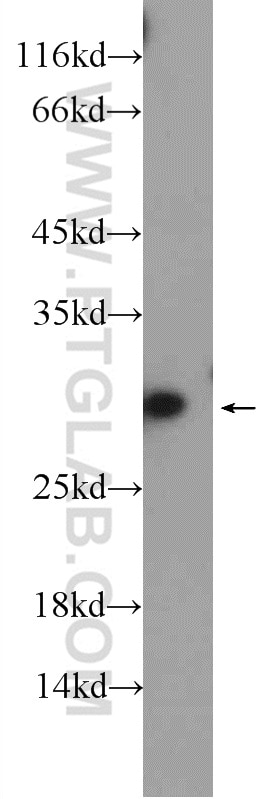
| Positive WB detected in | A375 cells, rat liver tissue, U-87 MG cells, HL-60 cells, MCF-7 cells, SK-BR-3 cells |
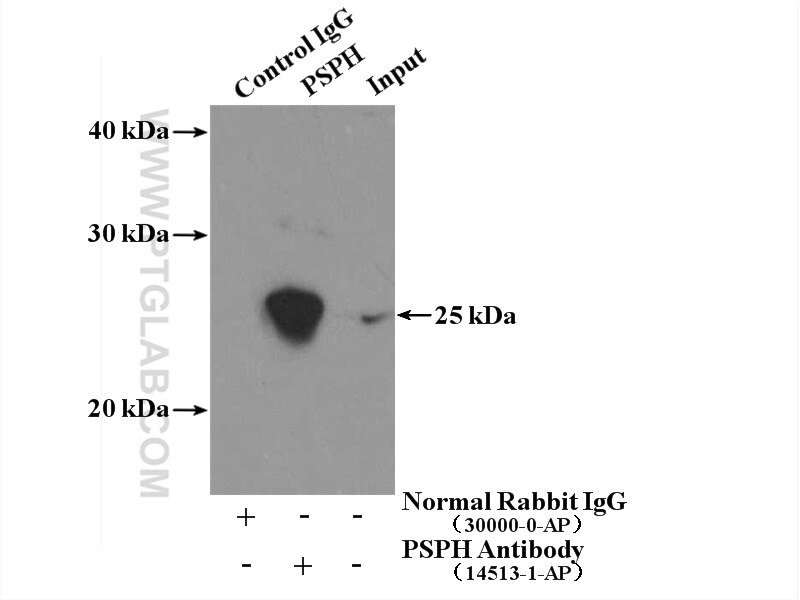
| Positive IP detected in | HL-60 cells |
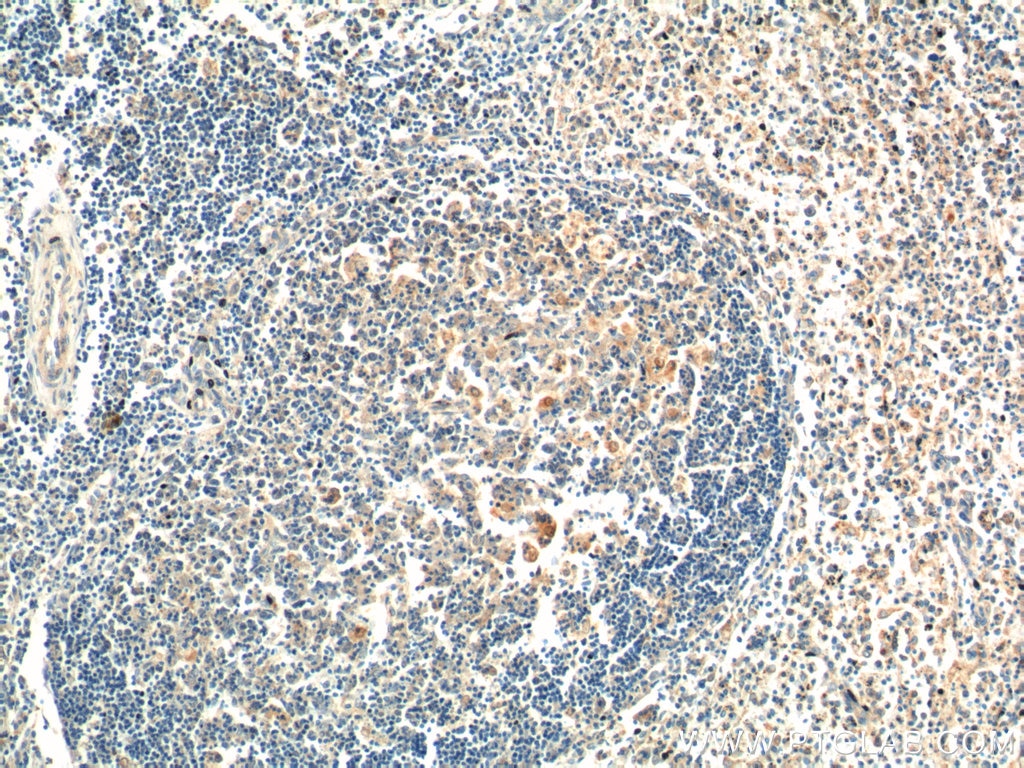
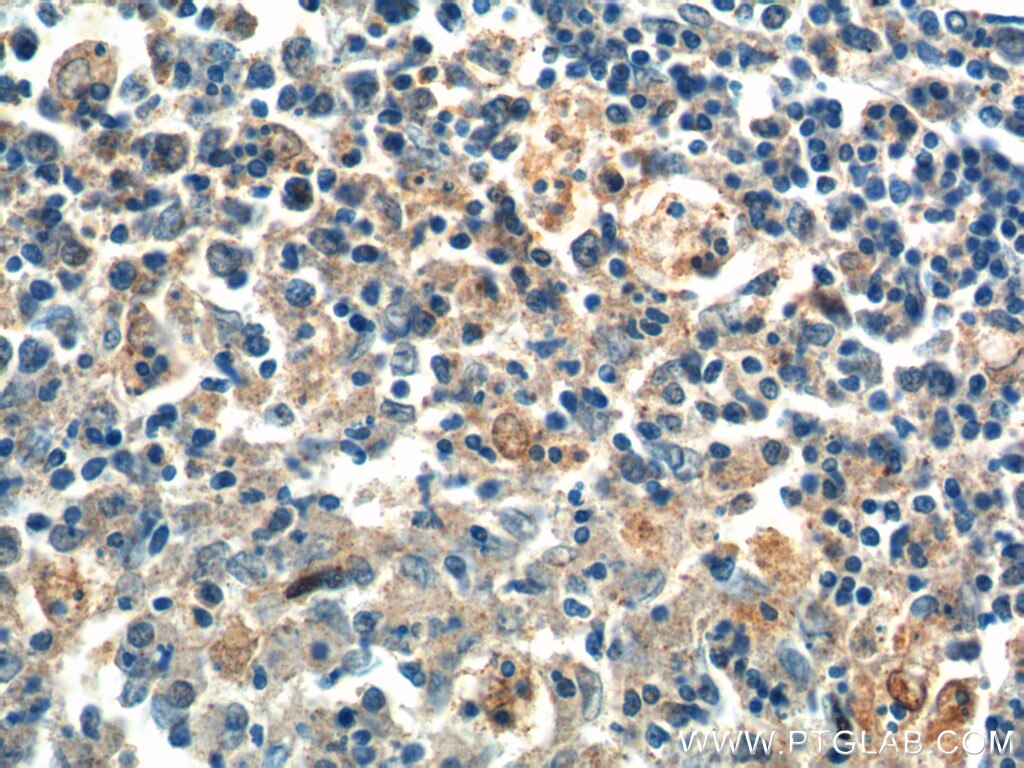
| Positive IHC detected in | human spleen tissue Note: suggested antigen retrieval with TE buffer pH 9.0; (*) Alternatively, antigen retrieval may be performed with citrate buffer pH 6.0 |
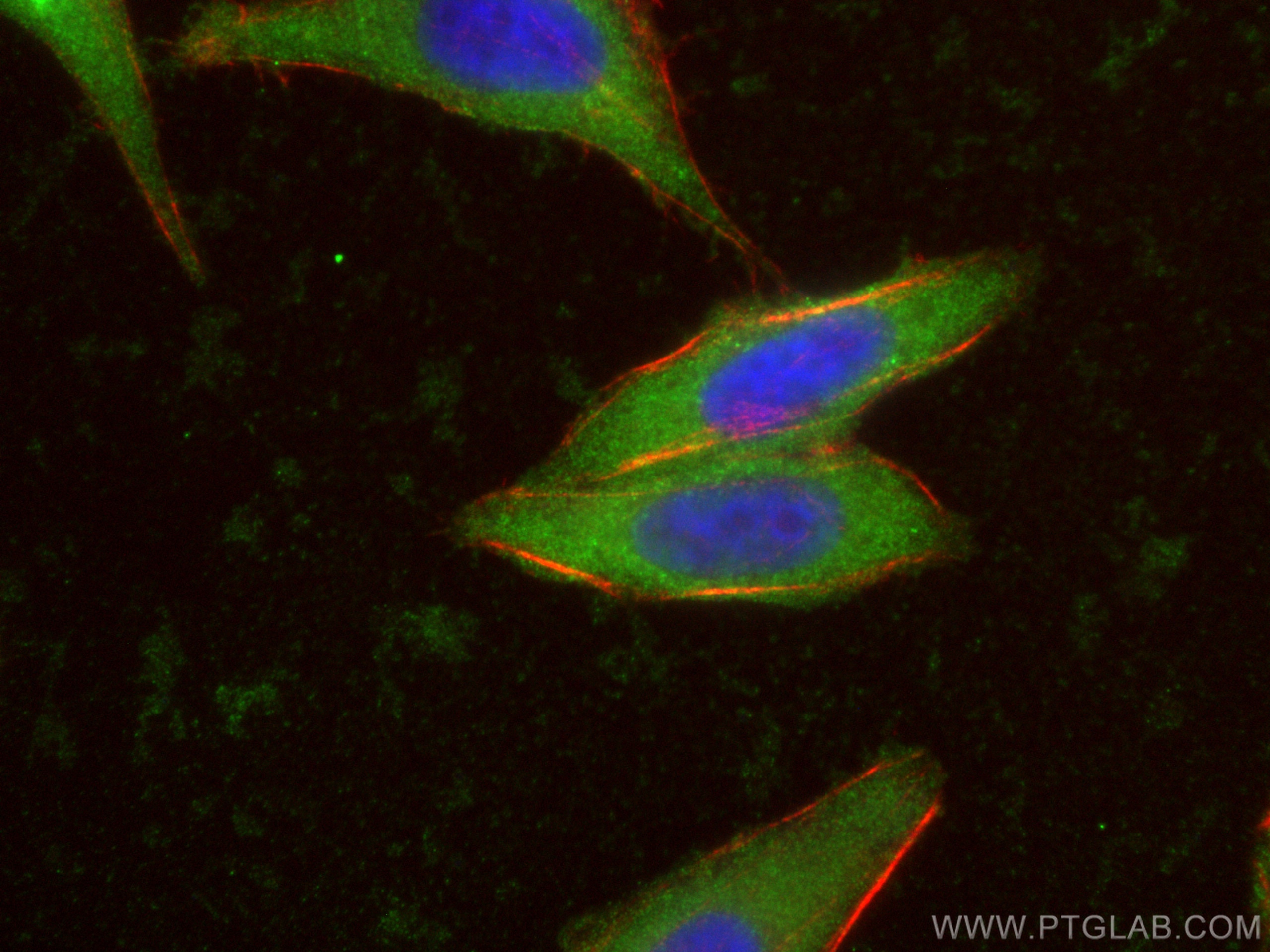
| Positive IF/ICC detected in | HepG2 cells |
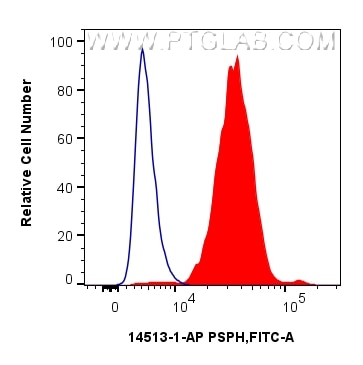
| Positive FC (Intra) detected in | HepG2 cells |
Recommended dilution
| Application | Dilution |
|---|---|
| Western Blot (WB) | WB : 1:500-1:3000 |
| Immunoprecipitation (IP) | IP : 0.5-4.0 ug for 1.0-3.0 mg of total protein lysate |
| Immunohistochemistry (IHC) | IHC : 1:50-1:500 |
| Immunofluorescence (IF)/ICC | IF/ICC : 1:50-1:500 |
| Flow Cytometry (FC) (INTRA) | FC (INTRA) : 0.25 ug per 10^6 cells in a 100 µl suspension |
| It is recommended that this reagent should be titrated in each testing system to obtain optimal results. | |
| Sample-dependent, Check data in validation data gallery. | |
Product Information
14513-1-AP targets PSPH in WB, IHC, IF/ICC, FC (Intra), IP, ELISA applications and shows reactivity with human, mouse, rat samples.
| Tested Reactivity | human, mouse, rat |
| Cited Reactivity | human, mouse |
| Host / Isotype | Rabbit / IgG |
| Class | Polyclonal |
| Type | Antibody |
| Immunogen |
CatNo: Ag5972 Product name: Recombinant human PSPH protein Source: e coli.-derived, PGEX-4T Tag: GST Domain: 1-225 aa of BC063614 Sequence: MVSHSELRKLFYSADAVCFDVDSTVIREEGIDELAKICGVEDAVSEMTRRAMGGAVPFKAALTERLALIQPSREQVQRLIAEQPPHLTPGIRELVSRLQERNVQVFLISGGFRSIVEHVASKLNIPATNVFANRLKFYFNGEYAGFDETQPTAESGGKGKVIKLLKEKFHFKKIIMIGDGATDMEACPPADAFIGFGGNVIRQQVKDNAKWYITDFVELLGELEE Predict reactive species |
| Full Name | phosphoserine phosphatase |
| Calculated Molecular Weight | 25 kDa |
| Observed Molecular Weight | 25-28 kDa |
| GenBank Accession Number | BC063614 |
| Gene Symbol | PSPH |
| Gene ID (NCBI) | 5723 |
| RRID | AB_2171464 |
| Conjugate | Unconjugated |
| Form | Liquid |
| Purification Method | Antigen affinity purification |
| UNIPROT ID | P78330 |
| Storage Buffer | PBS with 0.02% sodium azide and 50% glycerol, pH 7.3. |
| Storage Conditions | Store at -20°C. Stable for one year after shipment. Aliquoting is unnecessary for -20oC storage. 20ul sizes contain 0.1% BSA. |
Background Information
PSPH (phosphoserine phosphatase) is an enzyme, which is involved in the process of L-serine biosynthesis. PSPH mainly plays role in multiple aspects of cell behaviours such as proliferation and differentiation by producing precursors for the biosynthesis of diverse compounds including neurotransmitters, glycolipids and thymidine (PMID: 11237721, PMID: 19963421). Additionally, augmented PSPH level is correlated with the prognosis in multiple cancers including cutaneous squamous cell carcinoma (PMID: 21726982), breast cancer (PMID: 28931725), non-small cell lung cancer (PMID: 30662358), colorectal cancer (PMID: 24146633) and hepatocellular carcinoma (PMID: 25793315).
Protocols
| Product Specific Protocols | |
|---|---|
| FC protocol for PSPH antibody 14513-1-AP | Download protocol |
| IF protocol for PSPH antibody 14513-1-AP | Download protocol |
| IHC protocol for PSPH antibody 14513-1-AP | Download protocol |
| IP protocol for PSPH antibody 14513-1-AP | Download protocol |
| WB protocol for PSPH antibody 14513-1-AP | Download protocol |
| Standard Protocols | |
|---|---|
| Click here to view our Standard Protocols |
Publications
What published studies show
The PSPH Polyclonal antibody (Cat# 14513-1-AP) has 40 citations spanning journals including Science, Nature Communications, Cell Metabolism, Cancer Research, Molecular Cell, Cell Death & Disease, PNAS, EMBO Reports, Redox Biology, and Advanced Science. Research fields center on serine/one-carbon metabolism, cancer metabolic reprogramming (HCC, NSCLC, colorectal, bladder, prostate, melanoma), drug resistance, mitochondrial biology, and metabolic vulnerabilities in tumor and stem cell biology.
| Species | Application | Title |
|---|---|---|
Science mTORC1 induces purine synthesis through control of the mitochondrial tetrahydrofolate cycle. | ||
Mol Cancer CircMYH9 drives colorectal cancer growth by regulating serine metabolism and redox homeostasis in a p53-dependent manner | ||
Cell Metab Serine metabolism antagonizes antiviral innate immunity by preventing ATP6V0d2-mediated YAP lysosomal degradation. | ||
Cell Metab Epstein-Barr-Virus-Induced One-Carbon Metabolism Drives B Cell Transformation. | ||
Cell Res cMyc-mediated activation of serine biosynthesis pathway is critical for cancer progression under nutrient deprivation conditions. | ||
Cancer Res Targeting p300/CBP attenuates hepatocellular carcinoma progression through epigenetic regulation of metabolism.
|
Reviews
What customers say
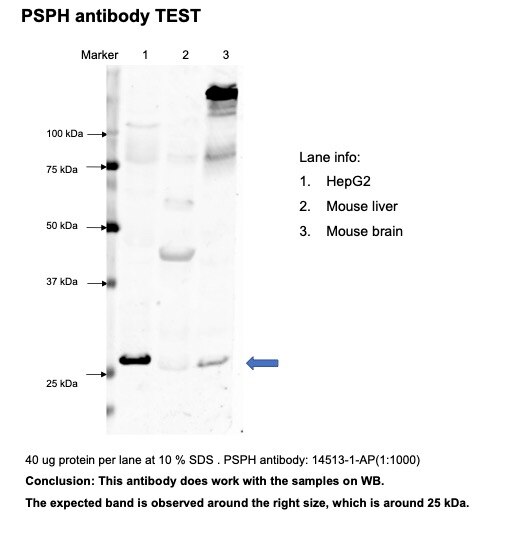
The single available review rates this antibody 5 out of 5 stars. The reviewer used it for Western Blot at a 1:1000 dilution on HepG2 cells, mouse liver, and mouse brain tissue, describing it as a "good antibody for WB." Overall, the feedback is positive, confirming reliable performance in Western Blot applications across multiple cell and tissue types.
The reviews below have been submitted by verified Proteintech customers who received an incentive for providing their feedback.
Hua (Verified Customer) (11-30-2022) | Good antibody for WB.
 |









