


Tested Applications
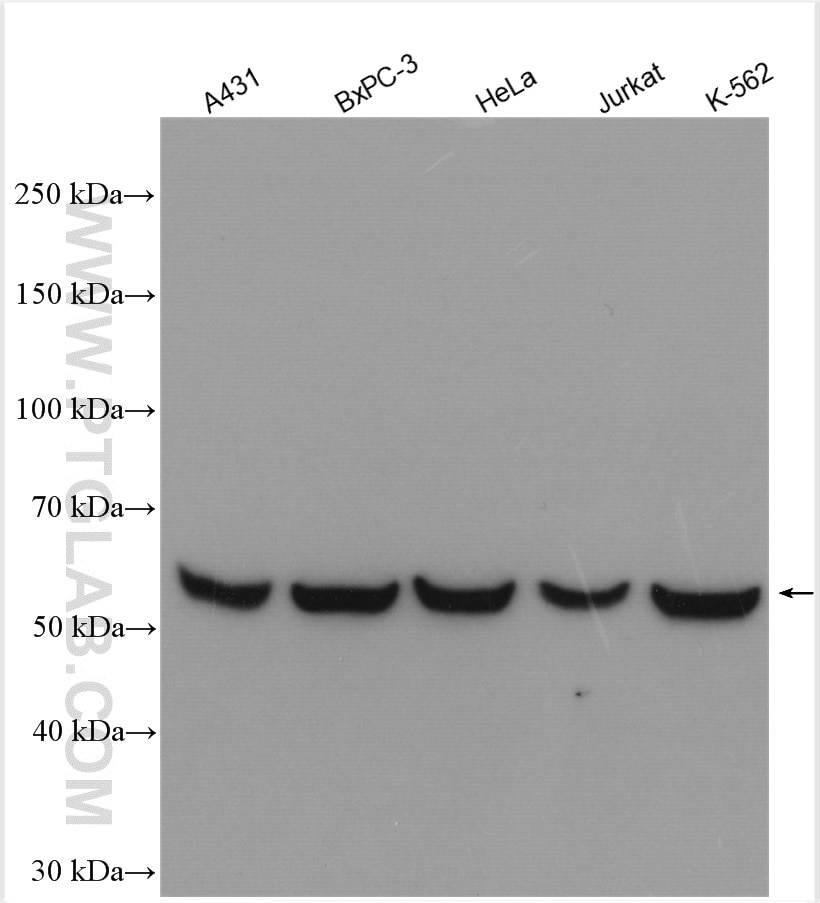
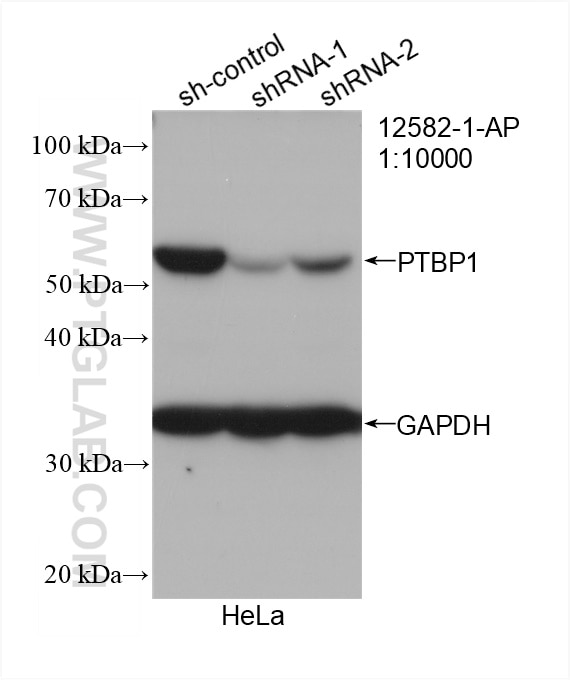
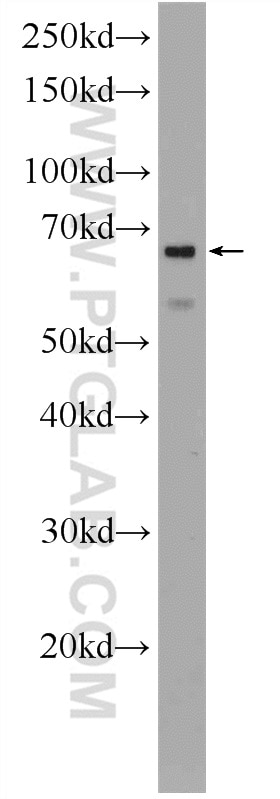
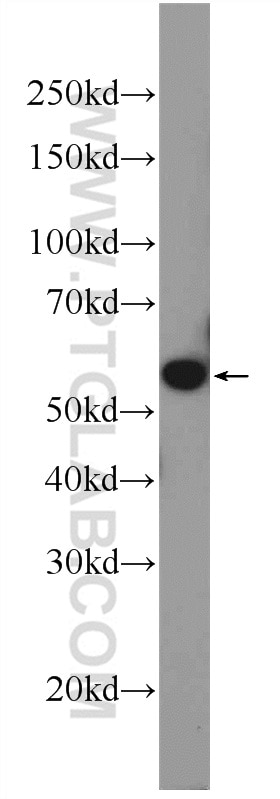
| Positive WB detected in | A431 cells, HeLa cells, rat heart tissue, mouse lung tissue, BxPC-3 cells, Jurkat cells, K-562 cells |
| Positive IP detected in | Jurkat cells |
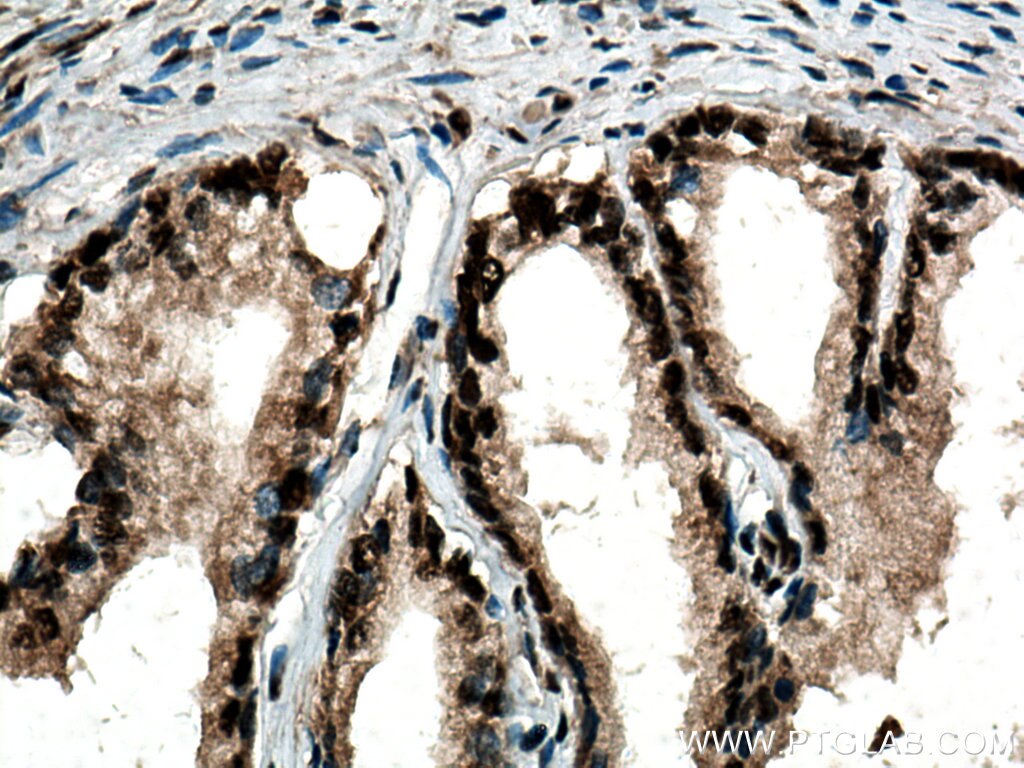
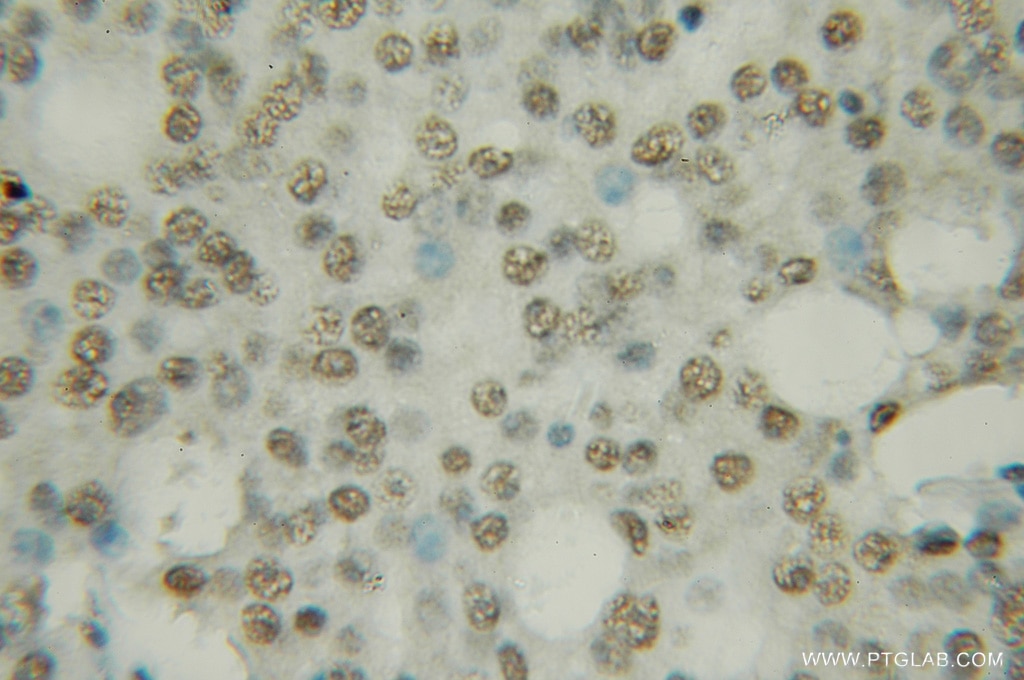
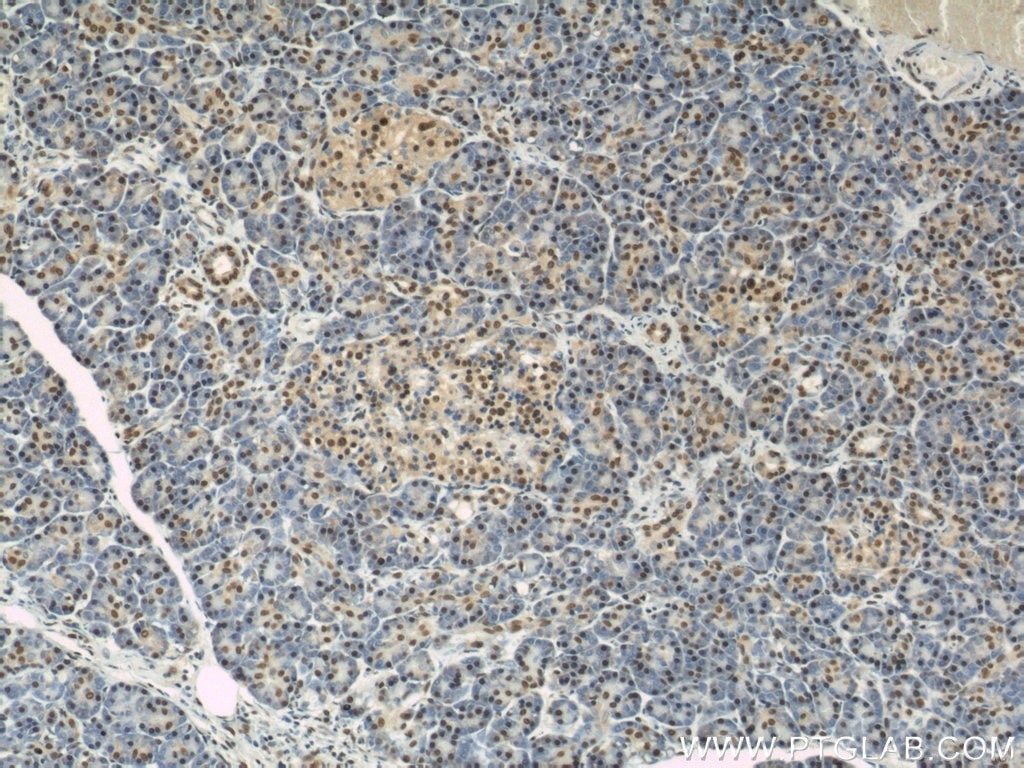
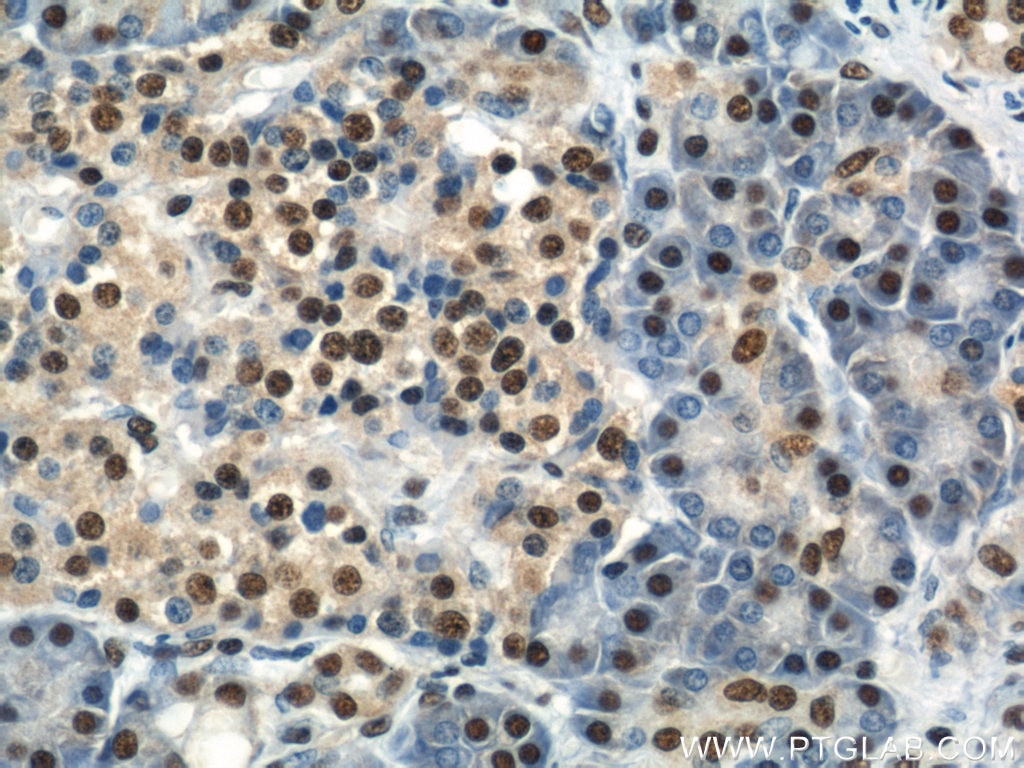
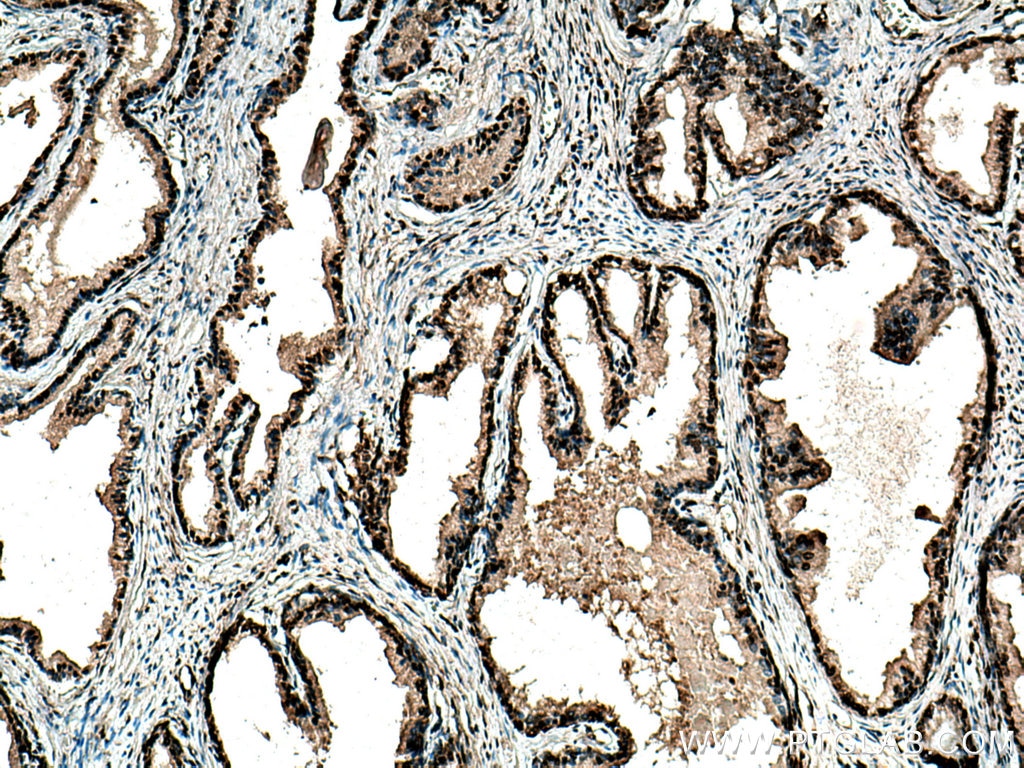
| Positive IHC detected in | human prostate cancer tissue, human pancreas tissue Note: suggested antigen retrieval with TE buffer pH 9.0; (*) Alternatively, antigen retrieval may be performed with citrate buffer pH 6.0 |
Recommended dilution
| Application | Dilution |
|---|---|
| Western Blot (WB) | WB : 1:2000-1:16000 |
| Immunoprecipitation (IP) | IP : 0.5-4.0 ug for 1.0-3.0 mg of total protein lysate |
| Immunohistochemistry (IHC) | IHC : 1:50-1:500 |
| It is recommended that this reagent should be titrated in each testing system to obtain optimal results. | |
| Sample-dependent, Check data in validation data gallery. | |
Product Information
12582-1-AP targets PTBP1 in WB, IHC, IF, IP, CoIP, RIP, ELISA applications and shows reactivity with human, mouse, rat samples.
| Tested Reactivity | human, mouse, rat |
| Cited Reactivity | human, mouse, rat, pig |
| Host / Isotype | Rabbit / IgG |
| Class | Polyclonal |
| Type | Antibody |
| Immunogen |
CatNo: Ag3277 Product name: Recombinant human PTBP1 protein Source: e coli.-derived, PGEX-4T Tag: GST Domain: 1-370 aa of BC013694 Sequence: MDGIVPDIAVGTKRGSDELFSTCVTNGPFIMSSNSASAANGNDSKKFKGDSRSAGVPSRVIHIRKLPIDVTEGEVISLGLPFGKVTNLLMLKGKNQAFIEMNTEEAANTMVNYYTSVTPVLRGQPIYIQFSNHKELKTDSSPNQARAQAALQAVNSVQSGNLALAASAAAVDAGMAMAGQSPVLRIIVENLFYPVTLDVLHQIFSKFGTVLKIITFTKNNQFQALLQYADPVSAQHAKLSLDGQNIYNACCTLRIDFSKLTSLNVKYNNDKSRDYTRPDLPSGDSQPSLDQTMAAAFGAPGIISASPYAGAGFPPTFAIPQAAGLSVPNVHGALAPLAIPSAAAAAAAAGRIAIPGLAGAGNSVLLVSNL Predict reactive species |
| Full Name | polypyrimidine tract binding protein 1 |
| Calculated Molecular Weight | 60 kDa |
| Observed Molecular Weight | 60 kDa |
| GenBank Accession Number | BC013694 |
| Gene Symbol | PTBP1 |
| Gene ID (NCBI) | 5725 |
| RRID | AB_2176402 |
| Conjugate | Unconjugated |
| Form | Liquid |
| Purification Method | Antigen affinity purification |
| UNIPROT ID | P26599 |
| Storage Buffer | PBS with 0.02% sodium azide and 50% glycerol, pH 7.3. |
| Storage Conditions | Store at -20°C. Stable for one year after shipment. Aliquoting is unnecessary for -20oC storage. 20ul sizes contain 0.1% BSA. |
Background Information
Polypyrimidine tract-binding protein (PTBP1), also known as heterogeneous nuclear ribonucleoprotein type I (hnRNP I), is a nuclear protein that binds pre-mRNAs in specific regions of the hnRNA-protein complexes sensitive to micrococcal nuclease. It involves in pre-mRNA splicing and the regulation of alternative splicing events. PTBP1 promotes RNA looping when bound to two separate polypyrimidine tracts in the same pre-mRNA, and promotes the binding of U2 snRNP to pre-mRNA. Besides, it can cooperate with RAVER1 to modulate switching between mutually exclusive exons during maturation of the TPM1 pre-mRNA, and represses the splicing of MAPT/Tau exon 10
Protocols
| Product Specific Protocols | |
|---|---|
| IHC protocol for PTBP1 antibody 12582-1-AP | Download protocol |
| IP protocol for PTBP1 antibody 12582-1-AP | Download protocol |
| WB protocol for PTBP1 antibody 12582-1-AP | Download protocol |
| Standard Protocols | |
|---|---|
| Click here to view our Standard Protocols |
Publications
What published studies show
PTBP1 Polyclonal antibody (Cat# 12582-1-AP) has accumulated 75 citations published in high-impact journals including Nature Cancer, Nature Cell Biology, Blood, Nature Communications, Molecular Cell, Nucleic Acids Research, Theranostics, Cell Death & Disease, Oncogene, Developmental Cell, PLoS Biology, and Cancer Research. Associated research fields encompass oncology (liver, gastric, colorectal, breast, cervical, glioma, AML), RNA splicing, RNA-binding protein biology, neurology (stroke, epilepsy, ALS), metabolism, immunology, virology, cardiovascular disease, and stem cell biology.
| Species | Application | Title |
|---|---|---|
Nat Cancer SULT1A1-dependent sulfonation of alkylators is a lineage-dependent vulnerability of liver cancers | ||
Blood circMYBL2, a circRNA from MYBL2, regulates FLT3 translation by recruiting PTBP1 to promote FLT3-ITD AML progression. | ||
Nat Cell Biol Arg-tRNA synthetase links inflammatory metabolism to RNA splicing and nuclear trafficking via SRRM2 | ||
Cancer Res PICH activates Cyclin A1 transcription to drive S-phase progression and chemoresistance in gastric cancer | ||
Nat Commun Characterization of dsRNA binding proteins through solubility analysis identifies ZNF385A as a dsRNA homeostasis regulator | ||
Reviews
What customers say
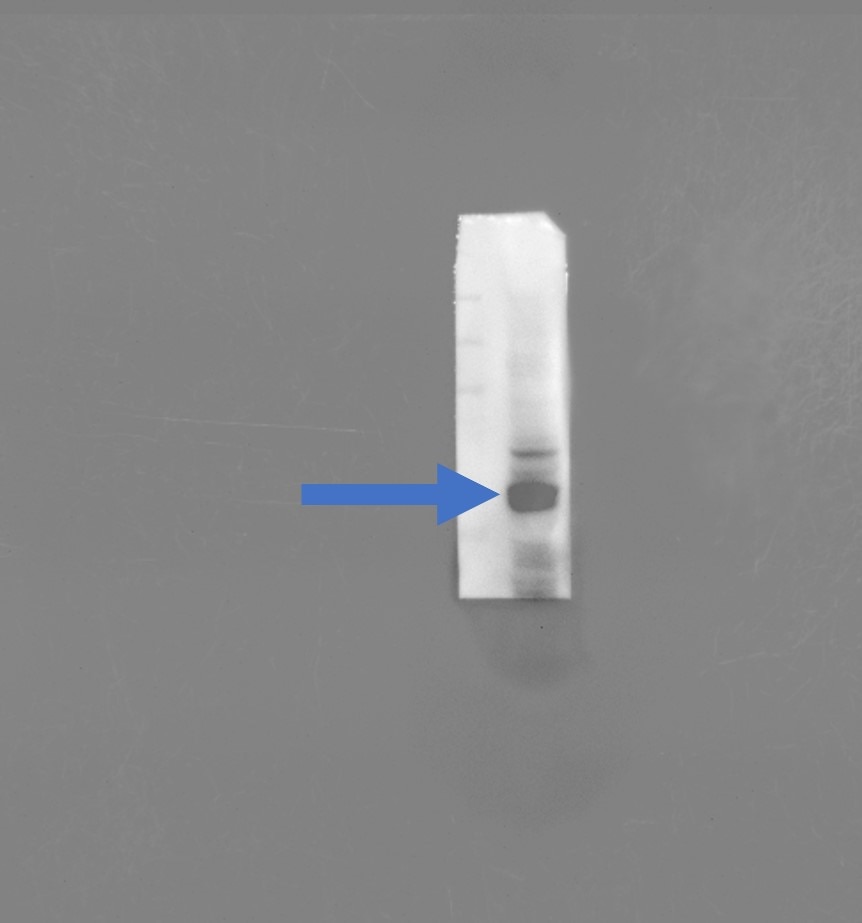
The single review for this antibody is a 5-star rating. The user tested it on mouse brain lysate by Western Blot at a 1:2000 dilution and reported it works well for detecting endogenous PTBP1 at a molecular weight of around 60 kDa. Overall, the feedback is positive, with the antibody performing as expected for its intended target.
The reviews below have been submitted by verified Proteintech customers who received an incentive for providing their feedback.
X (Verified Customer) (11-07-2024) | A good antibody to detect endogenous PTBP1 with a MW of around 60 kd.
 |











