

Tested Applications
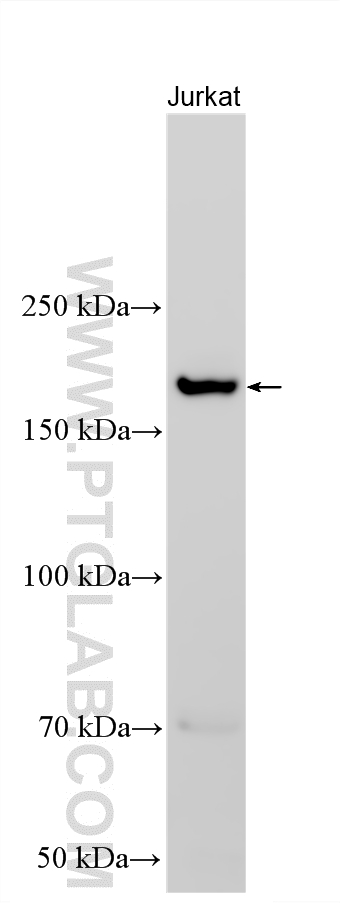
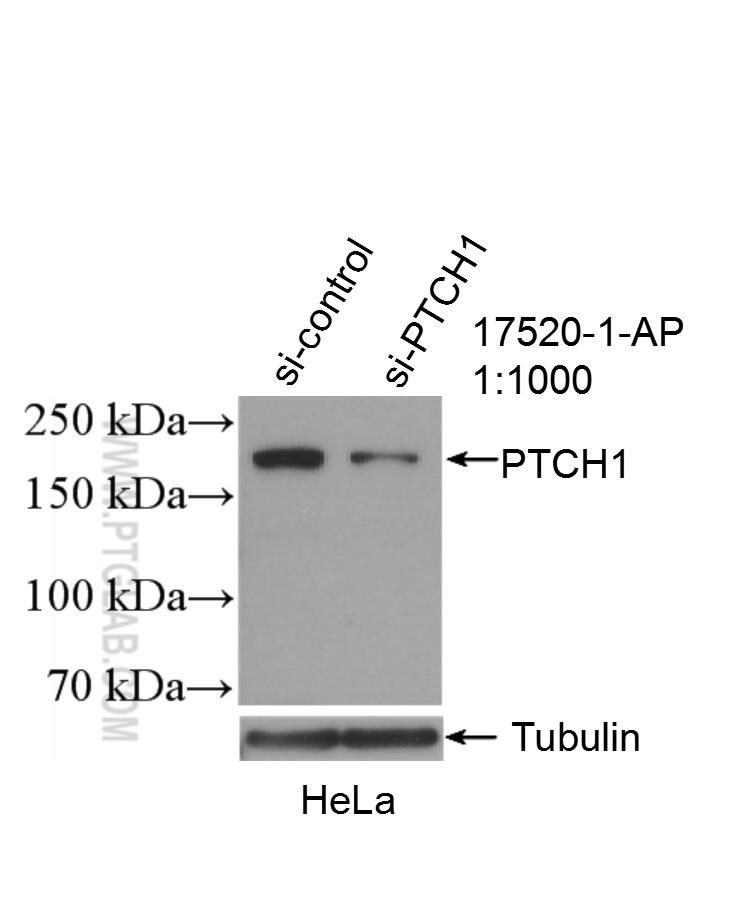
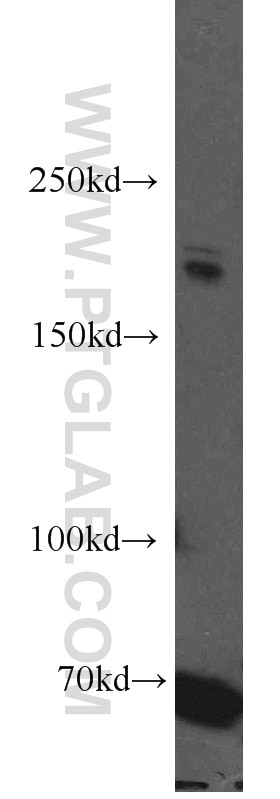
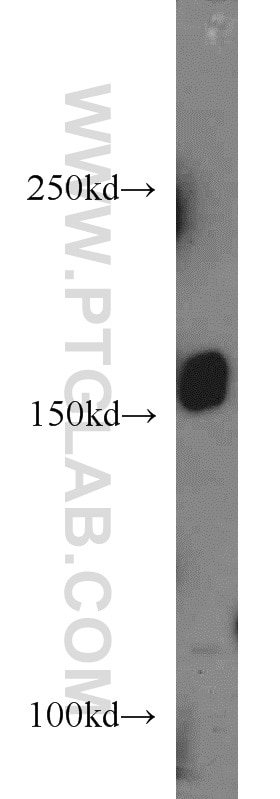
| Positive WB detected in | Jurkat cells, A431 cells, HeLa cells |
Recommended dilution
| Application | Dilution |
|---|---|
| Western Blot (WB) | WB : 1:500-1:1000 |
| It is recommended that this reagent should be titrated in each testing system to obtain optimal results. | |
| Sample-dependent, Check data in validation data gallery. | |
Product Information
17520-1-AP targets PTCH1 in WB, IHC, IF, ELISA applications and shows reactivity with human samples.
| Tested Reactivity | human |
| Cited Reactivity | human, mouse, rat |
| Host / Isotype | Rabbit / IgG |
| Class | Polyclonal |
| Type | Antibody |
| Immunogen |
Peptide Predict reactive species |
| Full Name | patched homolog 1 (Drosophila) |
| Calculated Molecular Weight | 161 kDa |
| Observed Molecular Weight | 161 kDa |
| GenBank Accession Number | NM_000264 |
| Gene Symbol | PTCH1 |
| Gene ID (NCBI) | 5727 |
| RRID | AB_2176561 |
| Conjugate | Unconjugated |
| Form | Liquid |
| Purification Method | Antigen affinity purification |
| UNIPROT ID | Q13635 |
| Storage Buffer | PBS with 0.02% sodium azide and 50% glycerol, pH 7.3. |
| Storage Conditions | Store at -20°C. Stable for one year after shipment. Aliquoting is unnecessary for -20oC storage. 20ul sizes contain 0.1% BSA. |
Background Information
PTCH1 (patched homolog 1) is a twelve-pass transmembrane protein that acts as a receptor of Hedgehog signaling pathway (PMID: 8906794). Hedgehog pathway plays a critical role in embryonic development and tissue homeostasis, and its dysregulation has been implicated in many human diseases including congenital disorder and cancer (PMID: 23719536; 23532857). In the absence of Hedgehog proteins (SHH, IHH and DHH in humans), PTCH1 represses the activity of Smoothened (SMO). Binding of Hedgehog proteins to PTCH1 inhibits the repression of SMO, resulting in the activation of downstream targets through the Gli transcriptional effectors (PMID: 23719536; 17139287). The gene of PTCH1 is considered to be a tumor suppressor gene. Mutations of this gene have been associated with basal cell nevus syndrome, esophageal squamous cell carcinoma, trichoepitheliomas, transitional cell carcinomas of the bladder, as well as holoprosencephaly.
Protocols
| Product Specific Protocols | |
|---|---|
| WB protocol for PTCH1 antibody 17520-1-AP | Download protocol |
| Standard Protocols | |
|---|---|
| Click here to view our Standard Protocols |
Publications
What published studies show
Anti-PTCH1 Polyclonal Antibody (Cat# 17520-1-AP) has 32 citations published in journals including Cell Research, Nature Communications, Science Advances, Cell Death & Disease, Oncogene, Cell Reports, eLife, and American Journal of Human Genetics. Research fields span Hedgehog signaling, cancer biology (breast, pancreatic, lung, ovarian, medulloblastoma, melanoma), bone and cartilage biology, neural development, stem cell biology, and wound healing. Cited applications include WB, IHC, and IF across human, mouse, and rat species.
| Species | Application | Title |
|---|---|---|
Cell Res SCUBE2 mediates bone metastasis of luminal breast cancer by modulating immune-suppressive osteoblastic niches | ||
Nat Commun TSPAN8 promotes cancer cell stemness via activation of sonic Hedgehog signaling. | ||
Nat Commun mTORC1 regulates PTHrP to coordinate chondrocyte growth, proliferation and differentiation. | ||
Sci Adv Noncanonical UPR factor CREB3L2 drives immune evasion of triple-negative breast cancer through Hedgehog pathway modulation in T cells
| ||
Cell Death Dis Smurf1 and Smurf2 mediated polyubiquitination and degradation of RNF220 suppresses Shh-group medulloblastoma | ||
Oncogene Cancer stem cells-derived exosomal TSPAN8 enhances non-stem cancer cells stemness and promotes malignant progression in PDAC |
Reviews
What customers say
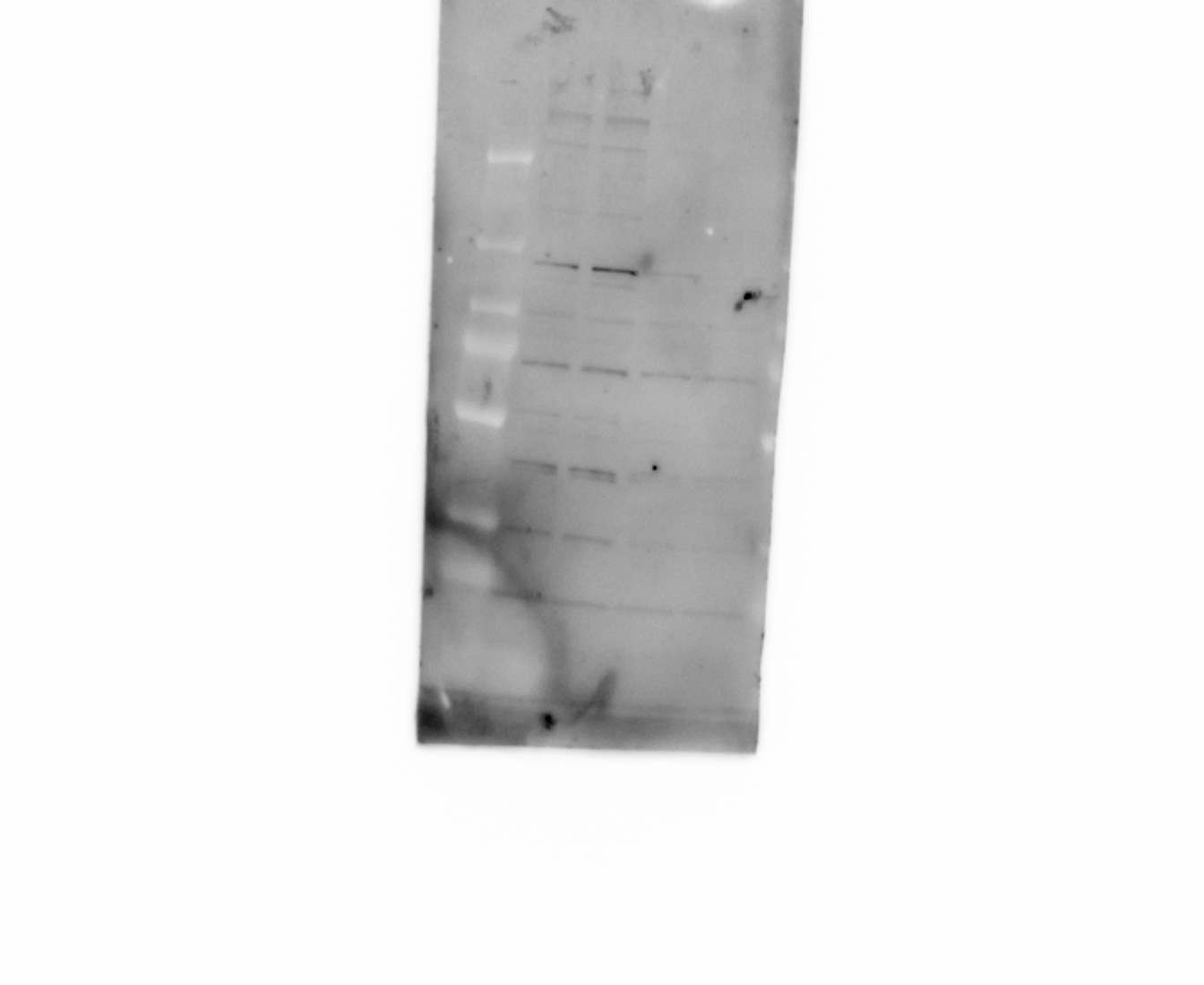
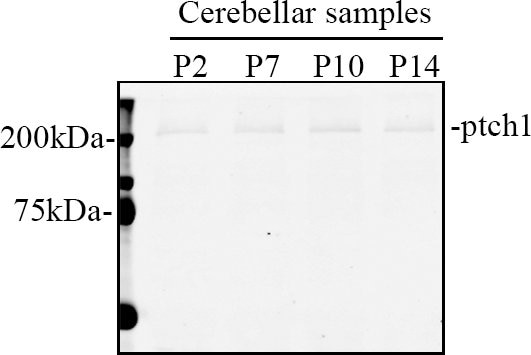
Reviews for this antibody are mixed. Two users reported unsatisfactory Western blot results: one found the antibody produced a "dirty" signal with no expected band in NIH-3T3 cells, and another noted that the ~200 kDa band did not respond to Shh ligand stimulation or disappear in Ptc1 knockout cells, suggesting it was not the true target. A third user observed a relatively clean ~200 kDa band in cerebellar tissue but could not detect the 149 kDa band listed on the product page. Overall, concerns about specificity and the absence of the expected molecular weight band were the main issues raised.
The reviews below have been submitted by verified Proteintech customers who received an incentive for providing their feedback.
Charlotte (Verified Customer) (07-27-2022) | 1/2 : WT starved and then ShhN stimulated. 3/4 : Ptch1 KO cells starved and then ShhN stimulated. It should be between the uppermost band and the following one from the ladder but we can conclude that there is nothing and the antibody is really dirty
 |
Boyan (Verified Customer) (04-04-2019) | The band at around 200 KD is not the true band of Ptc1, because this band cannot be increased by treating the cells with Shh ligand, and did not disappear in Ptc1 KO cells. As positive controls, Gli1 was induced by treating the cells with the Shh ligand.
|
Juan Pablo (Verified Customer) (11-29-2018) | I see a band around 200kDa kind of clean. Never detected the 149kDa shown in proteintech website.
 |





