
Tested Applications
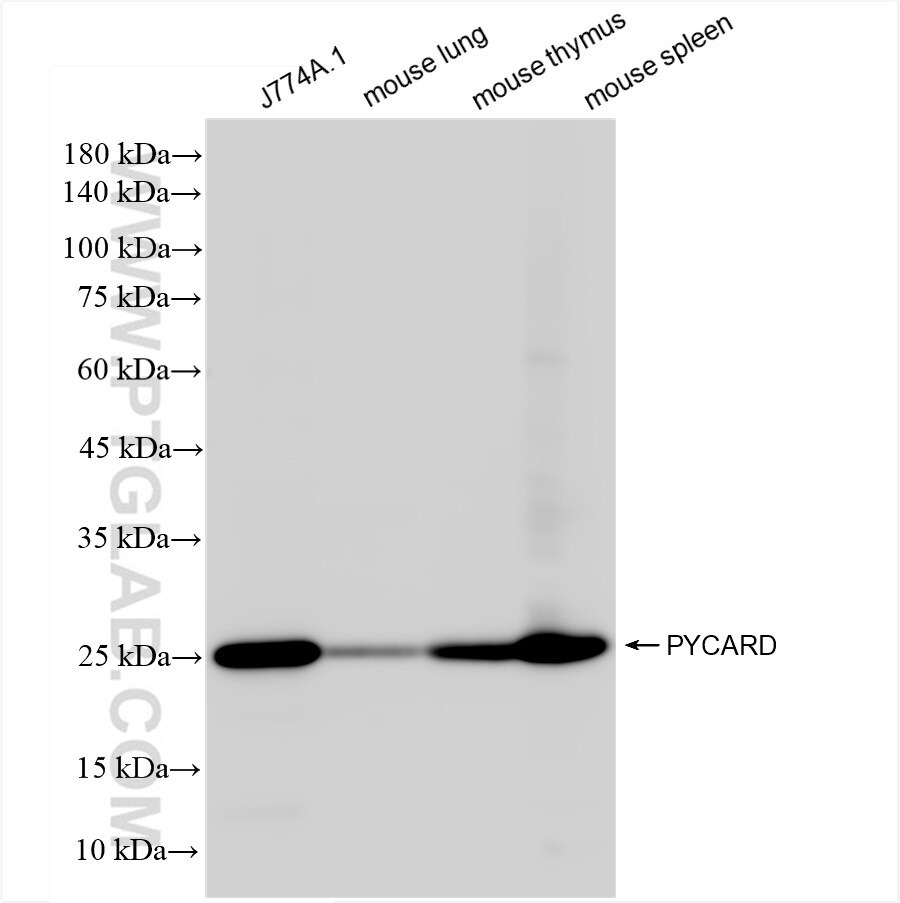
| Positive WB detected in | J774A.1 cells, mouse lung tissue, mouse thymus tissue, mouse spleen tissue |
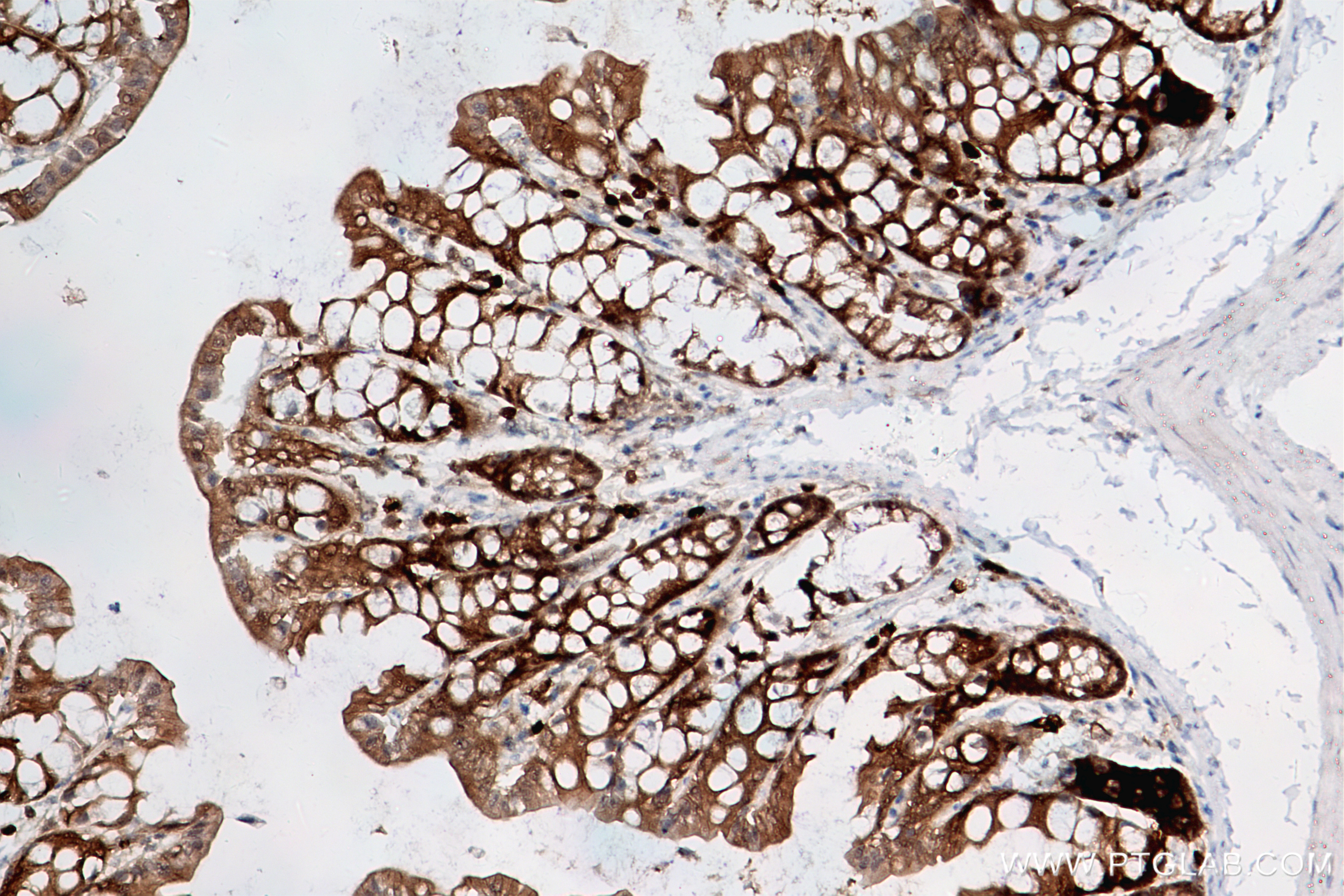
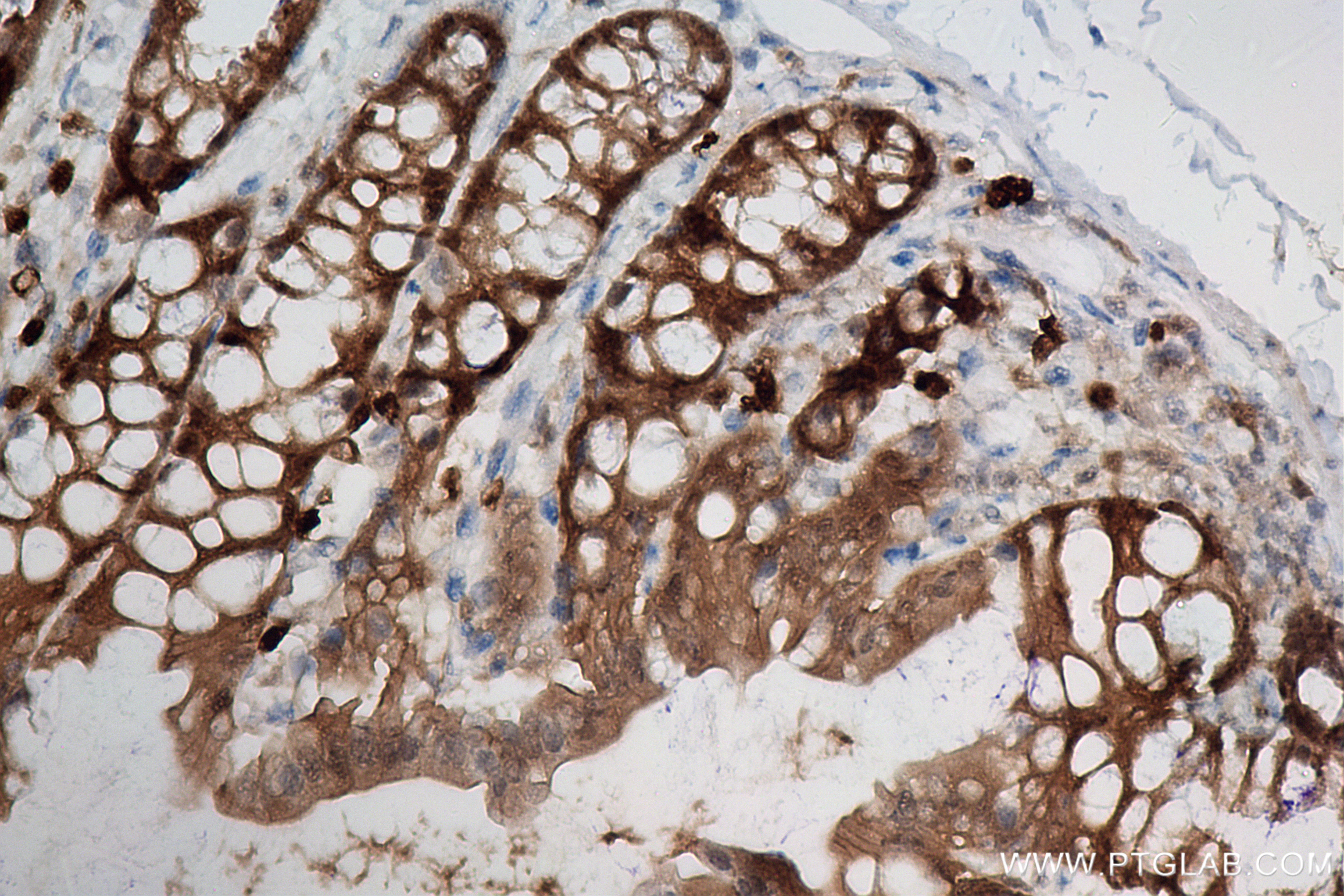
| Positive IHC detected in | mouse colon tissue Note: suggested antigen retrieval with TE buffer pH 9.0; (*) Alternatively, antigen retrieval may be performed with citrate buffer pH 6.0 |
Recommended dilution
| Application | Dilution |
|---|---|
| Western Blot (WB) | WB : 1:1000-1:4000 |
| Immunohistochemistry (IHC) | IHC : 1:250-1:1000 |
| It is recommended that this reagent should be titrated in each testing system to obtain optimal results. | |
| Sample-dependent, Check data in validation data gallery. | |
Product Information
83858-3-RR targets ASC/TMS1 in WB, IHC, IF, ELISA applications and shows reactivity with mouse samples.
| Tested Reactivity | mouse |
| Cited Reactivity | mouse |
| Host / Isotype | Rabbit / IgG |
| Class | Recombinant |
| Type | Antibody |
| Immunogen |
CatNo: Ag32519 Product name: Recombinant mouse PYCARD protein Source: e coli.-derived, PGEX-4T Tag: GST Domain: 1-193 aa of NM_023258 Sequence: MGRARDAILDALENLSGDELKKFKMKLLTVQLREGYGRIPRGALLQMDAIDLTDKLVSYYLESYGLELTMTVLRDMGLQELAEQLQTTKEESGAVAAAASVPAQSTARTGHFVDQHRQALIARVTEVDGVLDALHGSVLTEGQYQAVRAETTSQDKMRKLFSFVPSWNLTCKDSLLQALKEIHPYLVMDLEQS Predict reactive species |
| Full Name | PYD and CARD domain containing |
| Calculated Molecular Weight | 21KD |
| Observed Molecular Weight | 21-25 kDa |
| GenBank Accession Number | NM_023258 |
| Gene Symbol | Pycard |
| Gene ID (NCBI) | 66824 |
| RRID | AB_3671442 |
| Conjugate | Unconjugated |
| Form | Liquid |
| Purification Method | Protein A purification |
| UNIPROT ID | Q9EPB4 |
| Storage Buffer | PBS with 0.02% sodium azide and 50% glycerol, pH 7.3. |
| Storage Conditions | Store at -20°C. Stable for one year after shipment. Aliquoting is unnecessary for -20oC storage. 20ul sizes contain 0.1% BSA. |
Background Information
PYCARD (PYD and CARD domain containing), also known as ASC and CARD5. The calculated molecular weight of PYCARD is 21 kDa. It is located in cytosol, extracellular region and nucleus. PYCARD is also expressed in several structures, including alimentary system; brain; heart; hemolymphoid system gland; and urinary system. The gene enables identical protein binding activity and protein dimerization activity. Involved in several processes, including activation of cysteine-type endopeptidase activity; positive regulation of cytokine production; and regulation of defense response. It acts upstream of or within several processes, including defense response to Gram-positive bacterium; positive regulation of macromolecule metabolic process; and regulation of autophagy. It is also a part of inflammasome complex. Finally, it orthologous to human PYCARD (PYD and CARD domain containing).
Protocols
| Product Specific Protocols | |
|---|---|
| IHC protocol for ASC/TMS1 antibody 83858-3-RR | Download protocol |
| WB protocol for ASC/TMS1 antibody 83858-3-RR | Download protocol |
| Standard Protocols | |
|---|---|
| Click here to view our Standard Protocols |
Publications
What published studies show
| Species | Application | Title |
|---|---|---|
Diabetol Metab Syndr Irisin regulates integrin αvβ5/FAK/ERK to inhibit neutrophil extracellular traps formation and reduce pancreatic beta-cells pyroptosis in type 2 diabetes mellitus | ||
J Ethnopharmacol Notoginsenoside R1 interferes with PGAM5-NEK7 interaction to inhibit NLRP3 inflammasome activation in macrophages and ameliorate DSS-induced colitis. | ||
J Ethnopharmacol Shenling Jiangzhi formula alleviates atherosclerosis in ApoE(-/-) mice by inhibiting vascular inflammation via the NF-κB/NLRP3 pathway. | ||
J Ethnopharmacol Sub-chronic realgar exposure causes liver inflammatory injury in mice by inducing bile acid-mediated NLRP3 inflammasome activation through down-regulation of ileal FXR | ||
Cell Mol Life Sci The E3 ubiquitin ligase MARCH9 alleviates pyroptosis by regulating NLPR3 ubiquitination following myocardial ischemia reperfusion. | ||
Respir Res Targeting PLA2G7 ameliorates high-fat diet-induced pulmonary injury in obese mice, uncovering a key mechanistic link to obesity-associated COPD. |





