





Tested Applications
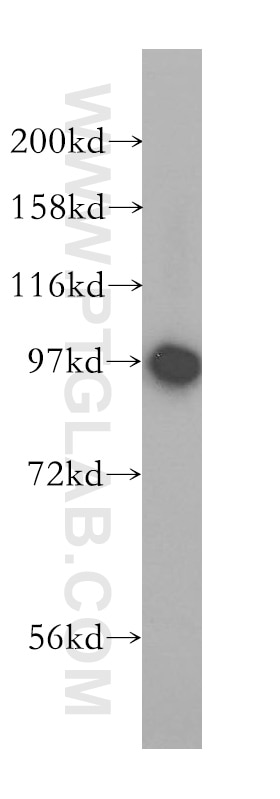
| Positive WB detected in | MCF-7 cells, human brain tissue, rat brain tissue, C2C12 cells, fetal human brain tissue, mouse brain tissue |
| Positive IP detected in | mouse brain tissue |
| Positive IHC detected in | human stomach cancer tissue, human ovary tumor tissue, mouse heart tissue, rat brain tissue Note: suggested antigen retrieval with TE buffer pH 9.0; (*) Alternatively, antigen retrieval may be performed with citrate buffer pH 6.0 |
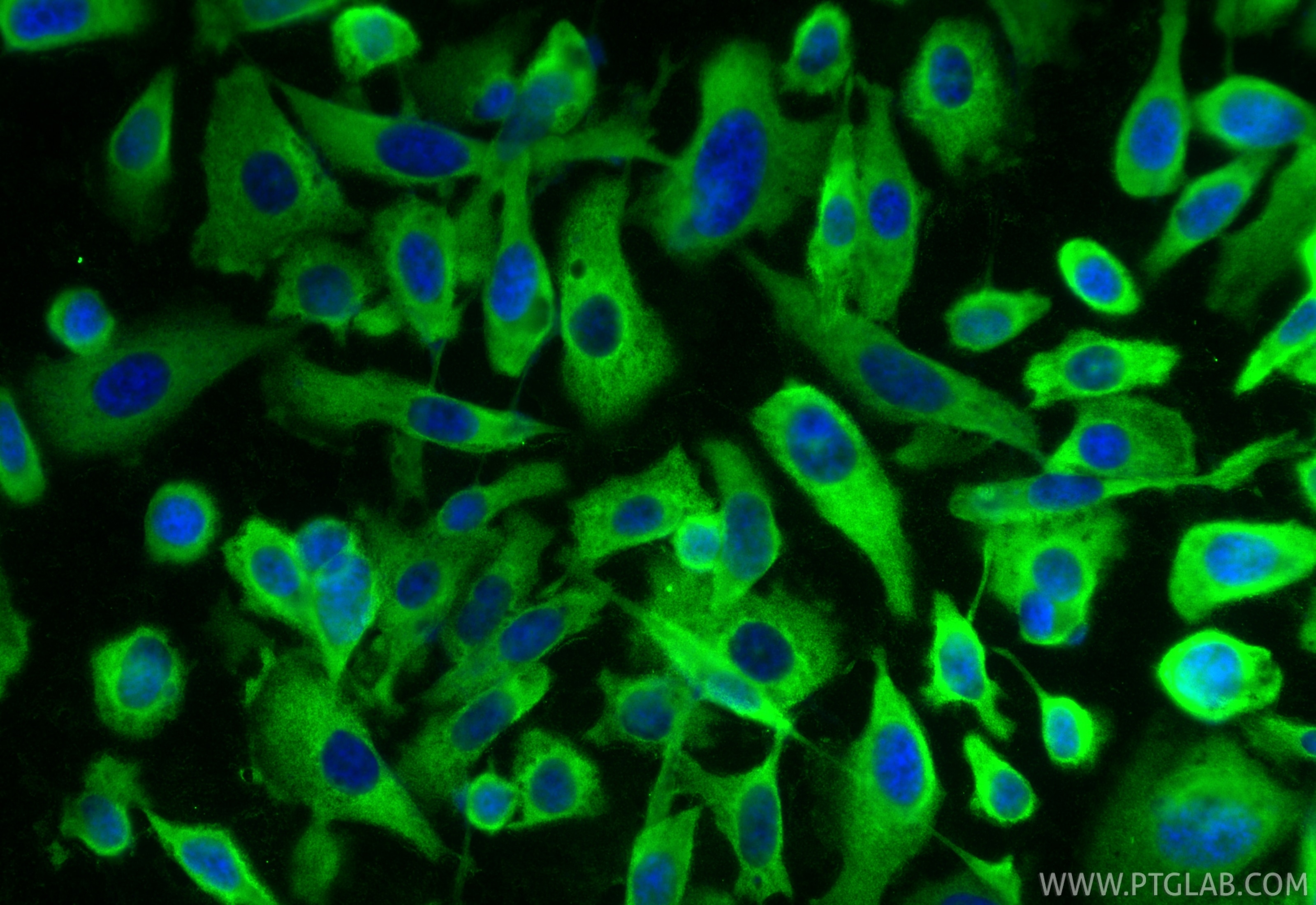
| Positive IF/ICC detected in | PC-3 cells |
Recommended dilution
| Application | Dilution |
|---|---|
| Western Blot (WB) | WB : 1:2000-1:10000 |
| Immunoprecipitation (IP) | IP : 0.5-4.0 ug for 1.0-3.0 mg of total protein lysate |
| Immunohistochemistry (IHC) | IHC : 1:400-1:1600 |
| Immunofluorescence (IF)/ICC | IF/ICC : 1:50-1:500 |
| It is recommended that this reagent should be titrated in each testing system to obtain optimal results. | |
| Sample-dependent, Check data in validation data gallery. | |
Product Information
12075-1-AP targets PYGB in WB, IHC, IF/ICC, IP, ELISA applications and shows reactivity with human, mouse, rat samples.
| Tested Reactivity | human, mouse, rat |
| Cited Reactivity | human, mouse, rat |
| Host / Isotype | Rabbit / IgG |
| Class | Polyclonal |
| Type | Antibody |
| Immunogen |
CatNo: Ag2732 Product name: Recombinant human PYGB protein Source: e coli.-derived, PGEX-4T Tag: GST Domain: 544-843 aa of BC017045 Sequence: LKFSAFLEKEYKVKINPSSMFDVHVKRIHEYKRQLLNCLHVVTLYNRIKRDPAKAFVPRTVMIGGKAAPGYHMAKLIIKLVTSIGDVVNHDPVVGDRLKVIFLENYRVSLAEKVIPAADLSQQISTAGTEASGTGNMKFMLNGALTIGTMDGANVEMAEEAGAENLFIFGLRVEDVEALDRKGYNAREYYDHLPELKQAVDQISSGFFSPKEPDCFKDIVNMLMHHDRFKVFADYEAYMQCQAQVDQLYRNPKEWTKKVIRNIACSGKFSSDRTITEYAREIWGVEPSDLQIPPPNIPRD Predict reactive species |
| Full Name | phosphorylase, glycogen; brain |
| Calculated Molecular Weight | 843 aa, 97 kDa |
| Observed Molecular Weight | 97 kDa |
| GenBank Accession Number | BC017045 |
| Gene Symbol | PYGB |
| Gene ID (NCBI) | 5834 |
| RRID | AB_2174885 |
| Conjugate | Unconjugated |
| Form | Liquid |
| Purification Method | Antigen affinity purification |
| UNIPROT ID | P11216 |
| Storage Buffer | PBS with 0.02% sodium azide and 50% glycerol, pH 7.3. |
| Storage Conditions | Store at -20°C. Stable for one year after shipment. Aliquoting is unnecessary for -20oC storage. 20ul sizes contain 0.1% BSA. |
Background Information
The three main subtypes of GP found in human tissues-brain-type glycogen phosphorylase (PYGB), liver-type glycogen phosphorylase (PYGL), and muscle-type glycogen phosphorylase (PYGM)-differ in function, structure, and tissue distribution. PYGB (Brain‑type glycogen phosphorylase) is a glycogen phosphorylase and is primarily localized in adult brain tissues and embryo liver tissues, whose function is to provide energy to organisms (PMID: 30106110). PYGB has been observed to be overexpressed in many types of cancer and tumor cell lines and is expected to be a novel target for the diagnosis and treatment of various cancers (PMID: 38334681).
Protocols
| Product Specific Protocols | |
|---|---|
| IF protocol for PYGB antibody 12075-1-AP | Download protocol |
| IHC protocol for PYGB antibody 12075-1-AP | Download protocol |
| IP protocol for PYGB antibody 12075-1-AP | Download protocol |
| WB protocol for PYGB antibody 12075-1-AP | Download protocol |
| Standard Protocols | |
|---|---|
| Click here to view our Standard Protocols |
Publications
What published studies show
The PYGB Polyclonal antibody (Cat# 12075-1-AP) has 24 citations spanning journals including Nature Metabolism, Cancer Research, Molecular Cell, Brain, Oncogene, Cell Reports, and others. Research fields cover glycogen metabolism in cancer (lung, renal, pancreatic, prostate, ovarian, esophageal, hepatocellular, cholangiocarcinoma), neurodegenerative diseases (ALS, Lafora disease, Alzheimer's), neuropathic pain, metabolic reprogramming, immune cell biology, and reproductive biology. Applications include WB, IHC, and IP.
| Species | Application | Title |
|---|---|---|
Nat Metab Glycogen metabolism is dispensable for tumour progression in clear cell renal cell carcinoma.
| ||
Cancer Res Hypoxia Stimulates PYGB Enzymatic Activity to Promote Glycogen Metabolism and Cholangiocarcinoma Progression
| ||
Mol Cell Glucose-1-phosphate promotes compartmentalization of glycogen with the pentose phosphate pathway in CD8+ memory T cells | ||
Brain C9orf72 expansion within astrocytes reduces metabolic flexibility in amyotrophic lateral sclerosis. | ||
Int J Biol Sci PYGL-mediated glucose metabolism reprogramming promotes EMT phenotype and metastasis of pancreatic cancer |
Reviews
What customers say
The product received one review with a 4/5 rating. The reviewer used it for Western Blot on ovarian cancer samples at a 1:1000 dilution and reported that it "works fine." Overall, the feedback is positive, indicating reliable performance in its tested application.
The reviews below have been submitted by verified Proteintech customers who received an incentive for providing their feedback.
Patricia (Verified Customer) (02-25-2020) | works fine
|







