

Tested Applications
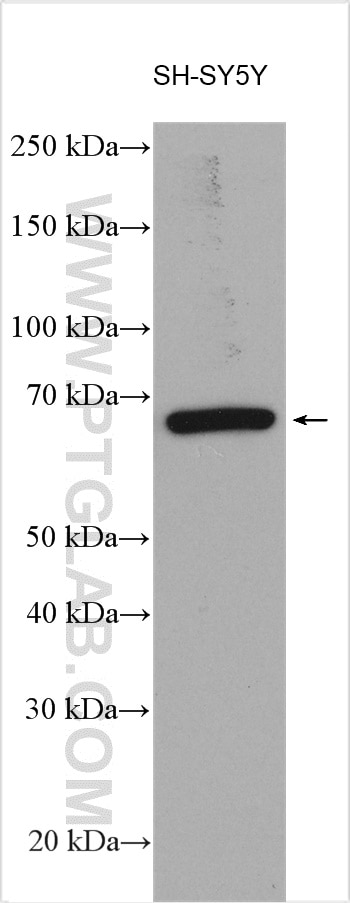
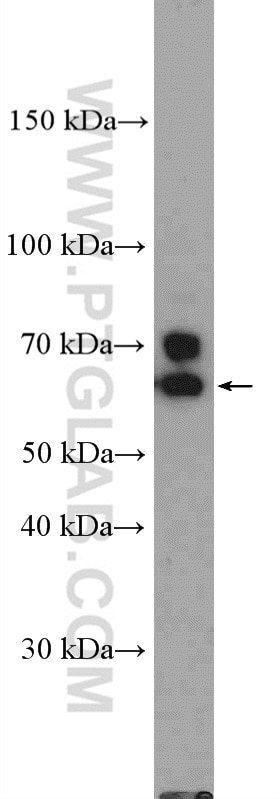
| Positive WB detected in | SH-SY5Y cells, HEK-293 cells |
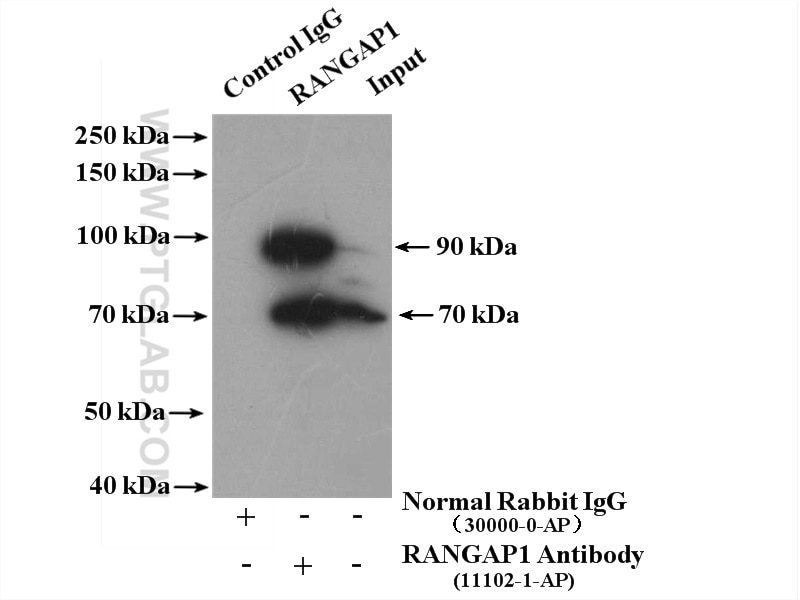
| Positive IP detected in | HEK-293 cells |
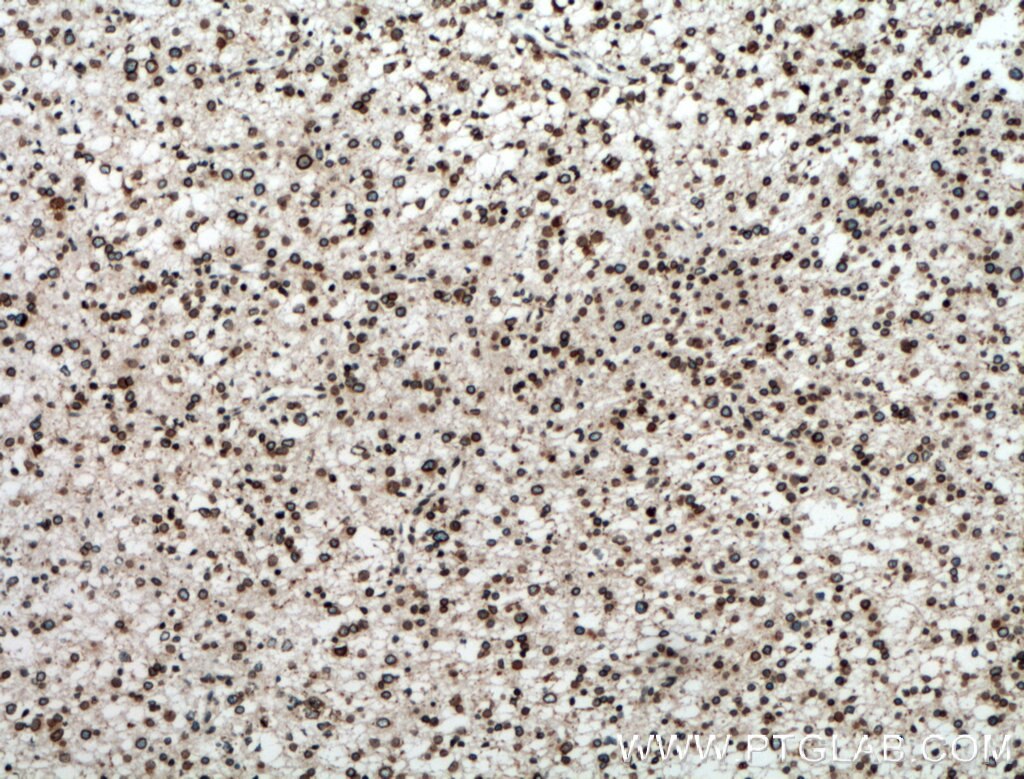
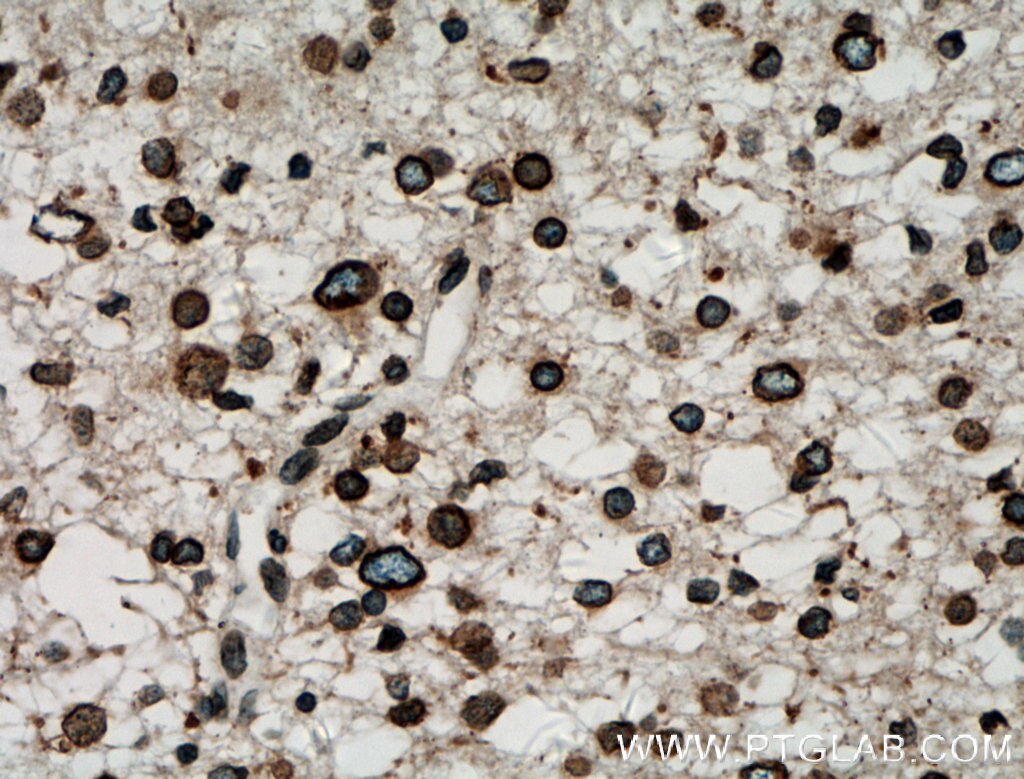
| Positive IHC detected in | human gliomas tissue Note: suggested antigen retrieval with TE buffer pH 9.0; (*) Alternatively, antigen retrieval may be performed with citrate buffer pH 6.0 |
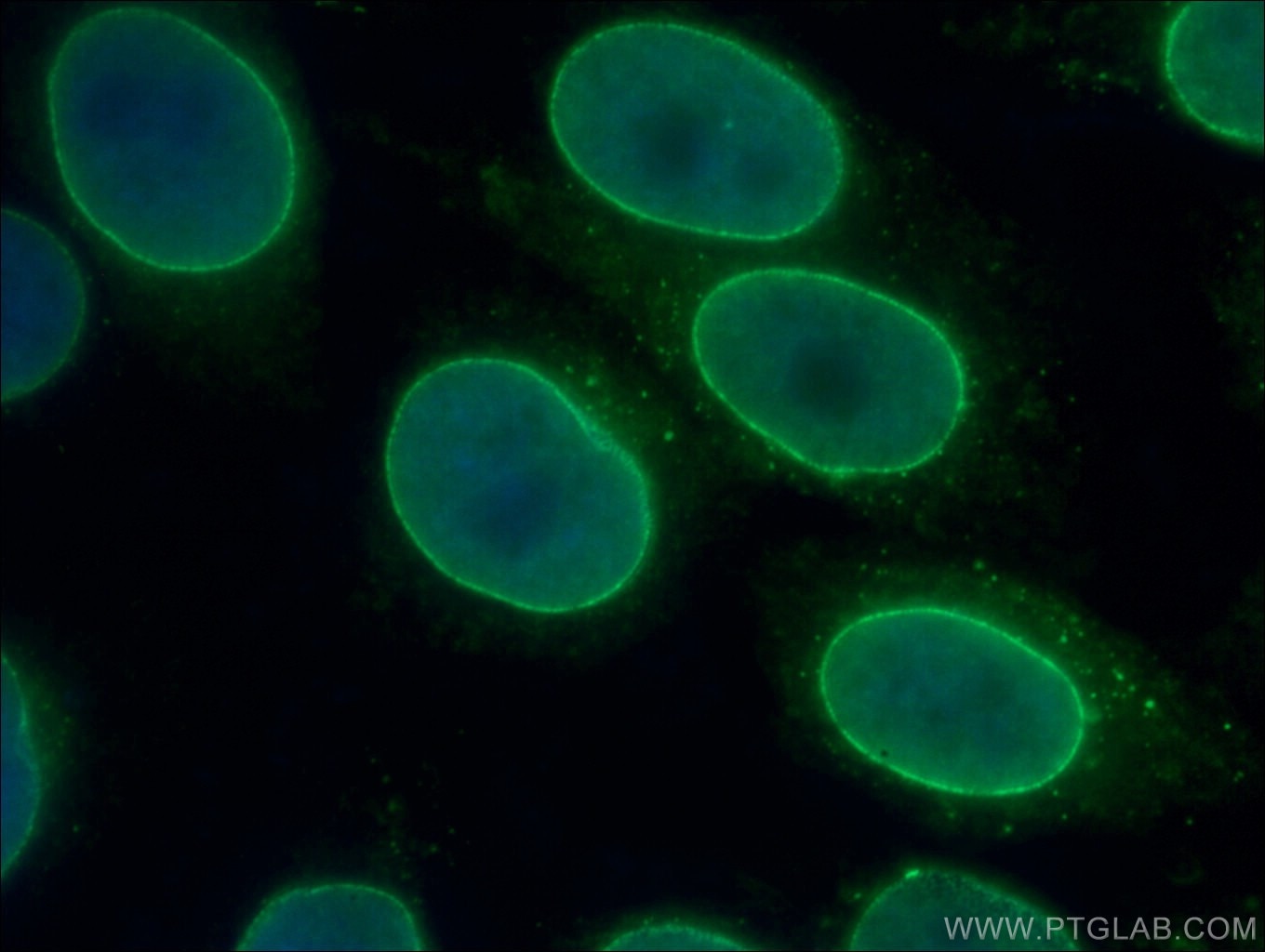
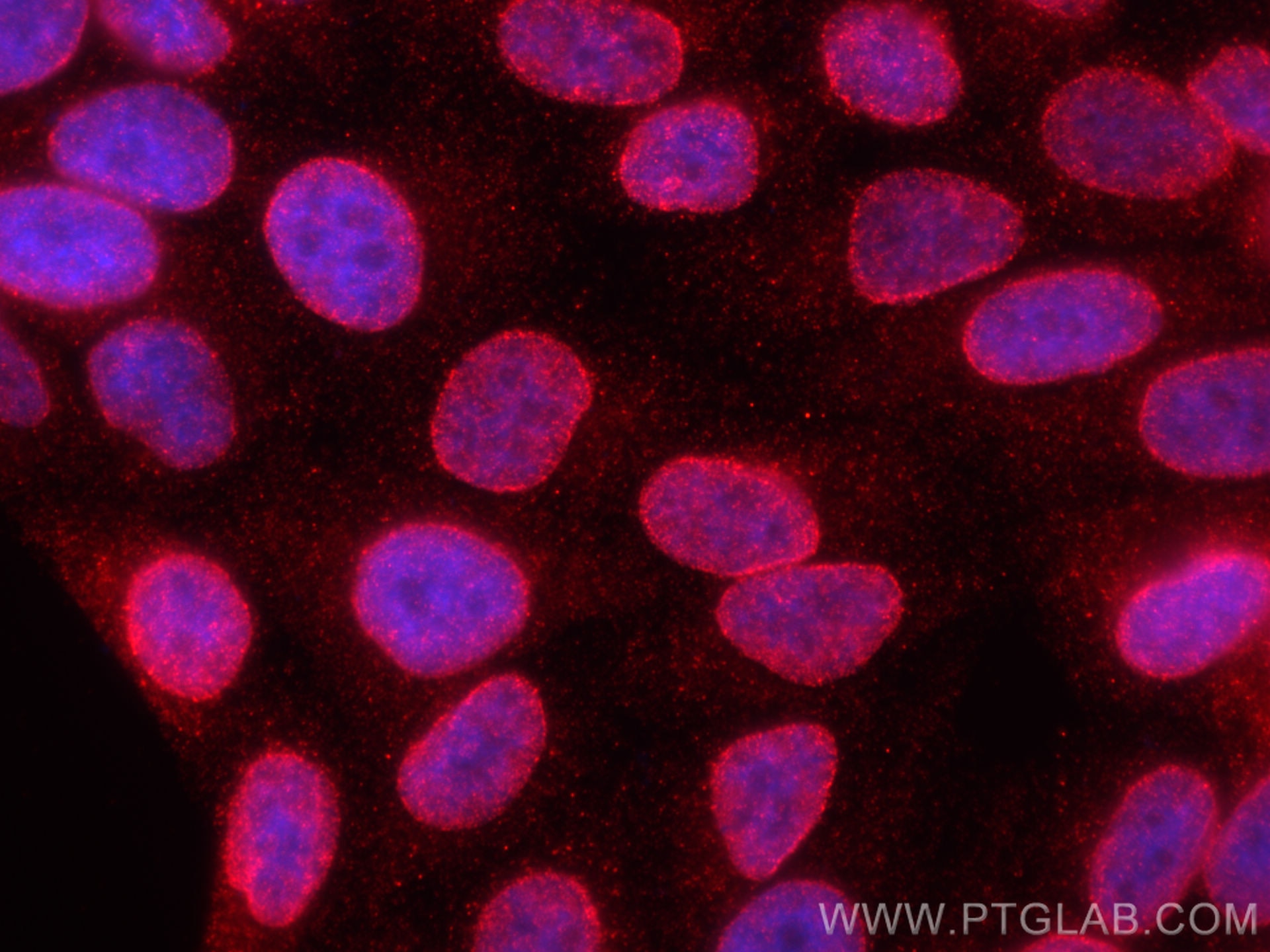
| Positive IF/ICC detected in | HepG2 cells |
Recommended dilution
| Application | Dilution |
|---|---|
| Western Blot (WB) | WB : 1:500-1:2000 |
| Immunoprecipitation (IP) | IP : 0.5-4.0 ug for 1.0-3.0 mg of total protein lysate |
| Immunohistochemistry (IHC) | IHC : 1:50-1:500 |
| Immunofluorescence (IF)/ICC | IF/ICC : 1:50-1:500 |
| It is recommended that this reagent should be titrated in each testing system to obtain optimal results. | |
| Sample-dependent, Check data in validation data gallery. | |
Product Information
11102-1-AP targets RanGAP1 in WB, IHC, IF/ICC, IP, CoIP, ELISA applications and shows reactivity with human samples.
| Tested Reactivity | human |
| Cited Reactivity | human, mouse |
| Host / Isotype | Rabbit / IgG |
| Class | Polyclonal |
| Type | Antibody |
| Immunogen |
CatNo: Ag1563 Product name: Recombinant human RANGAP1 protein Source: e coli.-derived, PGEX-4T Tag: GST Domain: 228-587 aa of BC014044 Sequence: LAQAFAVNPLLRVINLNDNTFTEKGAVAMAETLKTLRQVEVINFGDCLVRSKGAVAIADAIRGGLPKLKELNLSFCEIKRDAALAVAEAMADKAELEKLDLNGNTLGEEGCEQLQEVLEGFNMAKVLASLSDDEDEEEEEEGEEEEEEAEEEEEEDEEEEEEEEEEEEEEPQQRGQGEKSATPSRKILDPNTGEPAPVLSSPPPADVSTFLAFPSPEKLLRLGPKSSVLIAQQTDTSDPEKVVSAFLKVSSVFKDEATVRMAVQDAVDALMQKAFNSSSFNSNTFLTRLLVHMGLLKSEDKVKAIANLYGPLMALNHMVQQDYFPKALAPLLLAFVTKPNSALESCSFARHSLLQTLYKV Predict reactive species |
| Full Name | Ran GTPase activating protein 1 |
| Calculated Molecular Weight | 64 kDa |
| Observed Molecular Weight | 64 kDa |
| GenBank Accession Number | BC014044 |
| Gene Symbol | RANGAP1 |
| Gene ID (NCBI) | 5905 |
| RRID | AB_2176968 |
| Conjugate | Unconjugated |
| Form | Liquid |
| Purification Method | Antigen affinity purification |
| UNIPROT ID | P46060 |
| Storage Buffer | PBS with 0.02% sodium azide and 50% glycerol, pH 7.3. |
| Storage Conditions | Store at -20°C. Stable for one year after shipment. Aliquoting is unnecessary for -20oC storage. 20ul sizes contain 0.1% BSA. |
Protocols
| Product Specific Protocols | |
|---|---|
| IF protocol for RanGAP1 antibody 11102-1-AP | Download protocol |
| IHC protocol for RanGAP1 antibody 11102-1-AP | Download protocol |
| IP protocol for RanGAP1 antibody 11102-1-AP | Download protocol |
| WB protocol for RanGAP1 antibody 11102-1-AP | Download protocol |
| Standard Protocols | |
|---|---|
| Click here to view our Standard Protocols |
Publications
What published studies show
The RanGAP1 antibody (Cat# 11102-1-AP) has 4 total citations. These appear in Developmental Cell, Cancer Gene Therapy, Cell Oncology, and Journal of Proteomics. The associated research fields include osteosarcoma tumorigenesis and chromosome instability, colorectal cancer progression via the MAPK pathway, hepatitis B virus–driven hepatocarcinogenesis, and mTORC1-regulated glycolytic gene expression. Applications cited span WB, IHC, IP, IF, and CoIP in human and mouse samples.
| Species | Application | Title |
|---|---|---|
Dev Cell Loss of RanGAP1 drives chromosome instability and rapid tumorigenesis of osteosarcoma | ||
Cancer Gene Ther METTL3-mediated RanGAP1 promotes colorectal cancer progression through the MAPK pathway by recruiting YTHDF1
| ||
Cell Oncol (Dordr) Hepatitis B virus core protein stabilizes RANGAP1 to upregulate KDM2A and facilitate hepatocarcinogenesis | ||
J Proteomics mTORC1 alters the expression of glycolytic genes by regulating KPNA2 abundances. |








