

Tested Applications
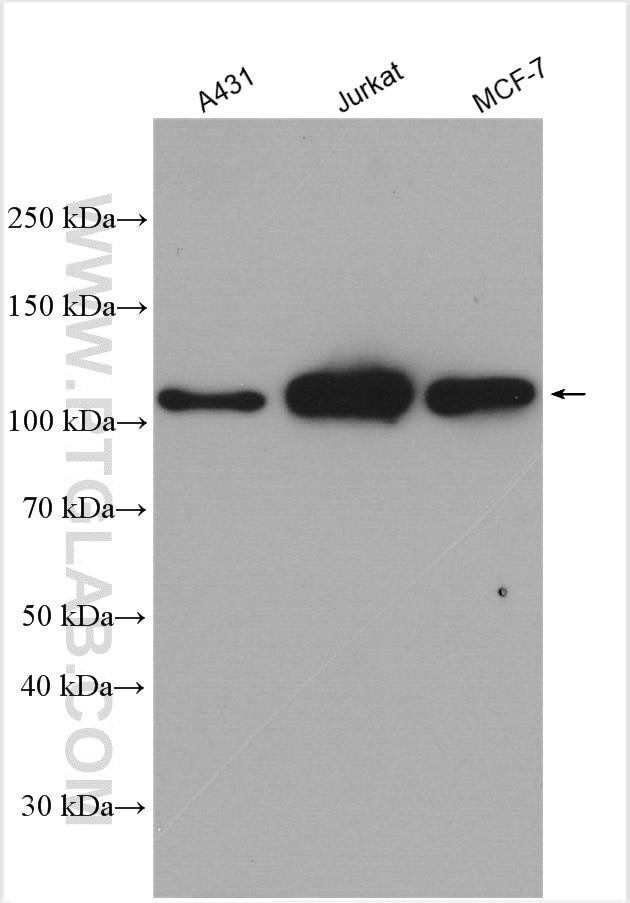
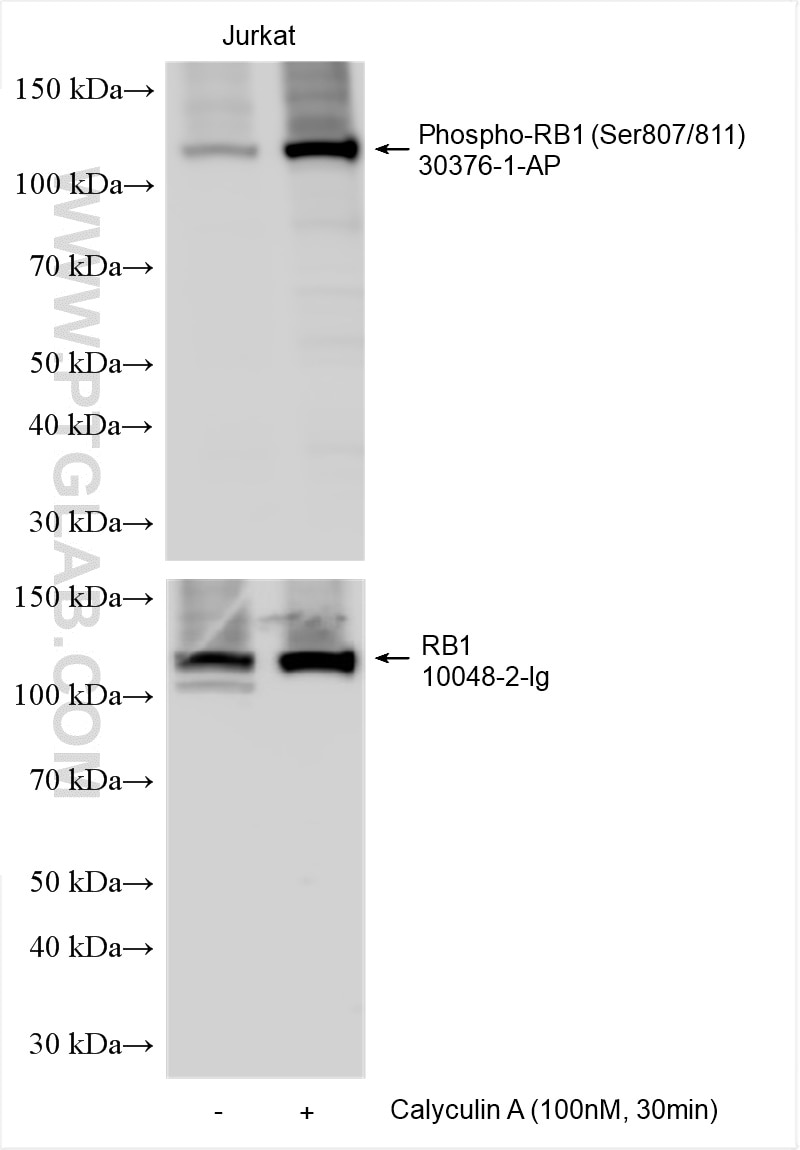
| Positive WB detected in | A431 cells, Calyculin A treated Jurkat cells, MCF-7 cells |
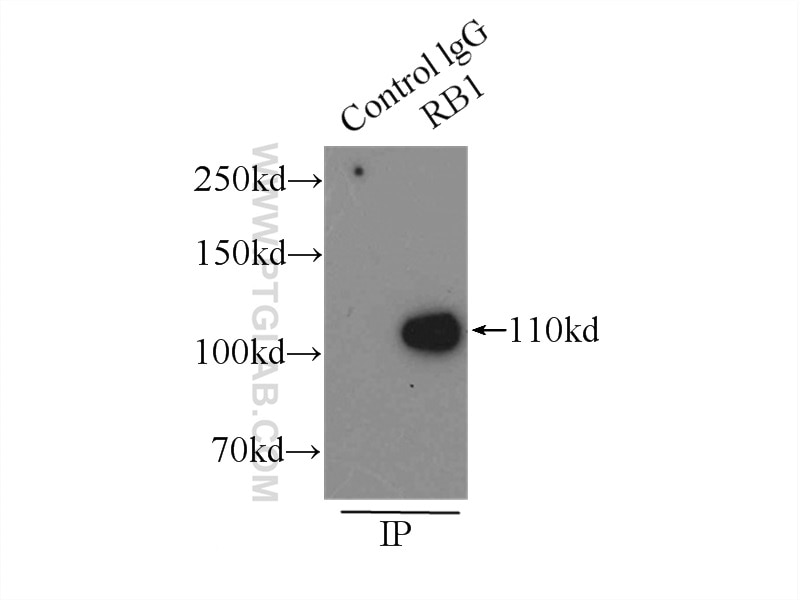
| Positive IP detected in | A431 cells |
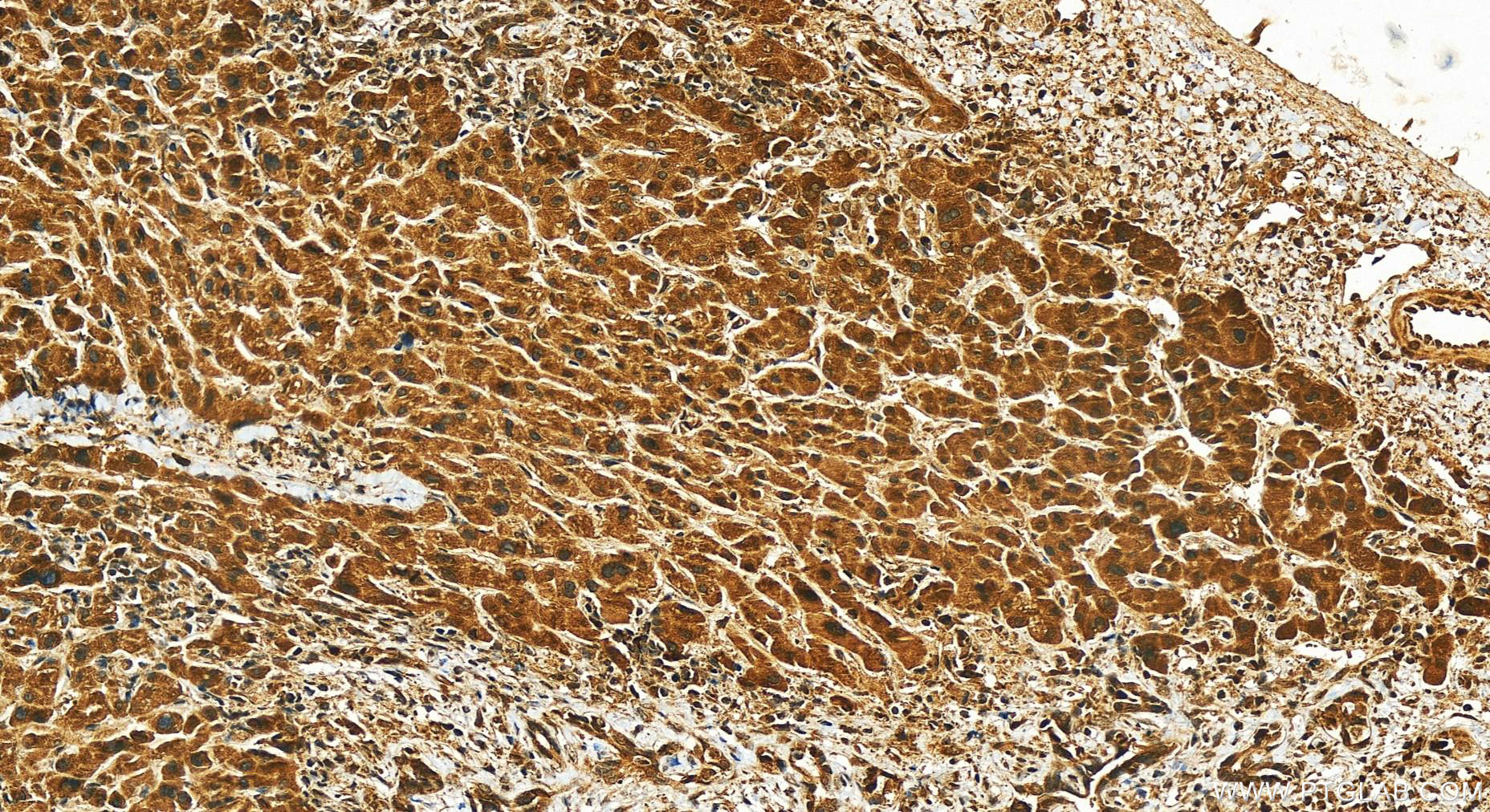
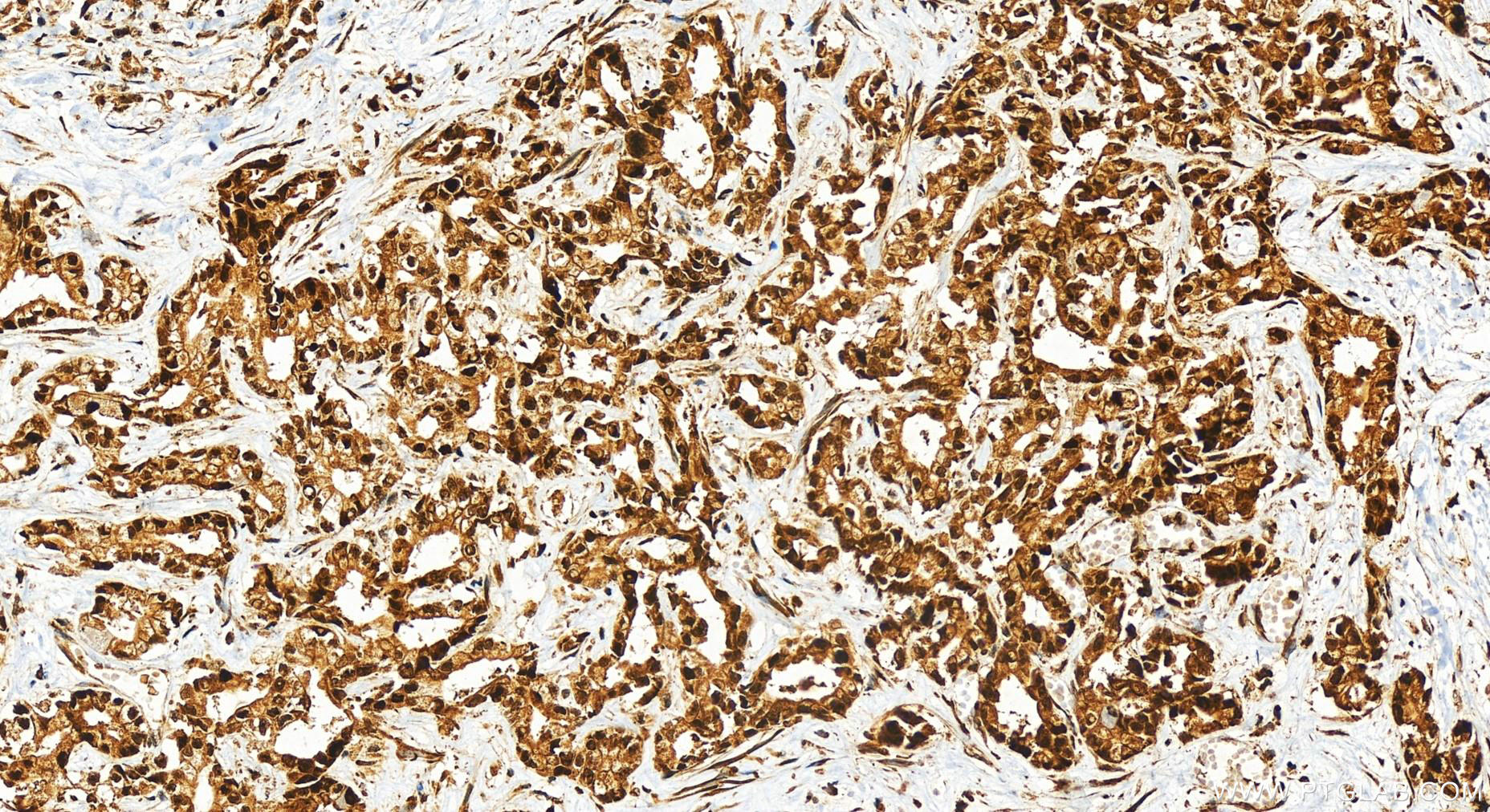
| Positive IHC detected in | human intrahepatic cholangiocarcinoma tissue Note: suggested antigen retrieval with TE buffer pH 9.0; (*) Alternatively, antigen retrieval may be performed with citrate buffer pH 6.0 |
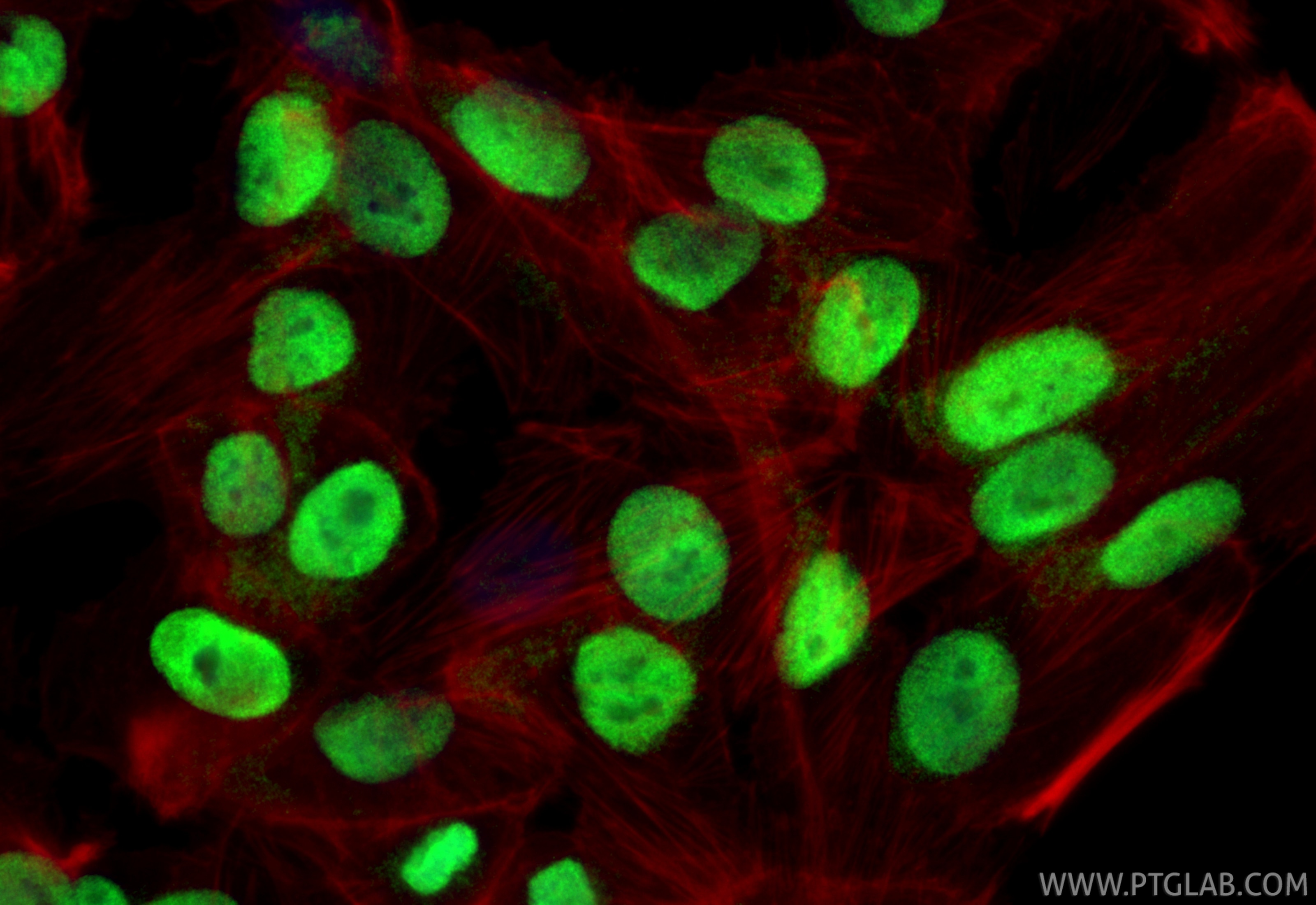
| Positive IF/ICC detected in | hTERT-RPE1 cells |
Recommended dilution
| Application | Dilution |
|---|---|
| Western Blot (WB) | WB : 1:5000-1:50000 |
| Immunoprecipitation (IP) | IP : 0.5-4.0 ug for 1.0-3.0 mg of total protein lysate |
| Immunohistochemistry (IHC) | IHC : 1:200-1:800 |
| Immunofluorescence (IF)/ICC | IF/ICC : 1:400-1:1600 |
| It is recommended that this reagent should be titrated in each testing system to obtain optimal results. | |
| Sample-dependent, Check data in validation data gallery. | |
Product Information
10048-2-Ig targets RB1 in WB, IHC, IF/ICC, IP, CoIP, ELISA applications and shows reactivity with human samples.
| Tested Reactivity | human |
| Cited Reactivity | human, zebrafish |
| Host / Isotype | Rabbit / IgG |
| Class | Polyclonal |
| Type | Antibody |
| Immunogen |
CatNo: Ag0006 Product name: Recombinant human RB1 protein Source: e coli.-derived, Unknow Tag: N/A Domain: Gst-Rb1-928 of BC040540 Sequence: Predict reactive species |
| Full Name | retinoblastoma 1 |
| Calculated Molecular Weight | 110 kDa |
| Observed Molecular Weight | 110 kDa |
| GenBank Accession Number | BC040540 |
| Gene Symbol | RB1 |
| Gene ID (NCBI) | 5925 |
| RRID | AB_2177320 |
| Conjugate | Unconjugated |
| Form | Liquid |
| Purification Method | Protein A purification |
| UNIPROT ID | P06400 |
| Storage Buffer | PBS with 0.02% sodium azide and 50% glycerol, pH 7.3. |
| Storage Conditions | Store at -20°C. Stable for one year after shipment. Aliquoting is unnecessary for -20oC storage. 20ul sizes contain 0.1% BSA. |
Background Information
RB1, also named as pp110, pRb and p105 Rb, belongs to the retinoblastoma protein (RB) family. It is a key regulator of entry into cell division that acts as a tumor suppressor. RB1 acts as a transcription repressor of E2F1 target genes. The underphosphorylated, active form of RB1 interacts with E2F1 and represses its transcription activity, leading to cell cycle arrest. It is directly involved in heterochromatin formation by maintaining overall chromatin structure and, in particular, that of constitutive heterochromatin by stabilizing histone methylation. It recruits and targets histone methyltransferases SUV39H1, SUV420H1 and SUV420H2, leading to epigenetic transcriptional repression. RB1 controls histone H4 'Lys-20' trimethylation and inhibits the intrinsic kinase activity of TAF1. It mediates transcriptional repression by SMARCA4/BRG1 by recruiting a histone deacetylase (HDAC) complex to the c-FOS promoter. In resting neurons, transcription of the c-FOS promoter is inhibited by BRG1-dependent recruitment of a phospho-RB1-HDAC1 repressor complex. Upon calcium influx, RB1 is dephosphorylated by calcineurin, which leads to release of the repressor complex. In case of viral infections, interactions with SV40 large T antigen, HPV E7 protein or adenovirus E1A protein induce the disassembly of RB1-E2F1 complex thereby disrupting RB1's activity. This antibody is a rabbit polyclonal antibody raised against human RB1 fusion protein.
Protocols
| Product Specific Protocols | |
|---|---|
| IF protocol for RB1 antibody 10048-2-Ig | Download protocol |
| IHC protocol for RB1 antibody 10048-2-Ig | Download protocol |
| IP protocol for RB1 antibody 10048-2-Ig | Download protocol |
| WB protocol for RB1 antibody 10048-2-Ig | Download protocol |
| Standard Protocols | |
|---|---|
| Click here to view our Standard Protocols |
Publications
What published studies show
RB1 Polyclonal antibody (Cat# 10048-2-Ig) has accumulated 89 citations across journals including Signal Transduction and Targeted Therapy, Molecular Cancer, Nature Genetics, Cancer Research, Nature Communications, Gastroenterology, Cell Reports, Oncogene, and Journal of Biological Chemistry. Key research fields include oncology (breast, prostate, cervical, lung, liver, and pancreatic cancers), cell cycle regulation, HPV-related malignancies, cellular senescence, cardiology, neurology, and CRISPR-based gene therapy.
| Species | Application | Title |
|---|---|---|
Signal Transduct Target Ther Discovery of IHMT-337 as a potent irreversible EZH2 inhibitor targeting CDK4 transcription for malignancies | ||
Signal Transduct Target Ther Spi-1 proto-oncogene regulates mRNA hypertranscription and malignant progression in head and neck cancer. | ||
Mol Cancer miR-375 activates p21 and suppresses telomerase activity by coordinately regulating HPV E6/E7, E6AP, CIP2A, and 14-3-3ζ.
| ||
Mol Cancer ZNF526 drives tumor growth by enhancing SHMT1-dependent serine metabolism and antioxidant capability in TNBC | ||
Mol Cancer Down-regulation of miR-675-5p contributes to tumor progression and development by targeting pro-tumorigenic GPR55 in non-small cell lung cancer. | ||
Gastroenterology Intestinal PPARα Protects Against Colon Carcinogenesis via Regulation of Methyltransferases DNMT1 and PRMT6. |
Reviews
What customers say
Based on 2 user reviews, this antibody is used for Western Blot. One reviewer (rated 3/5) tested it at 1:5000 on Human HepG2 cells and noted some background staining but a clear band of interest. Another reviewer (rated 4/5) used it at 1:1000 on small cell lung cancer tissue. Overall, users report acceptable performance with minor background issues, and the target band remains distinguishable.
The reviews below have been submitted by verified Proteintech customers who received an incentive for providing their feedback.
Georgina (Verified Customer) (07-04-2022) | This antibody gave some background staining, however the band of interest was clear.
|
Kyle (Verified Customer) (12-04-2018) |
|







