

Tested Applications
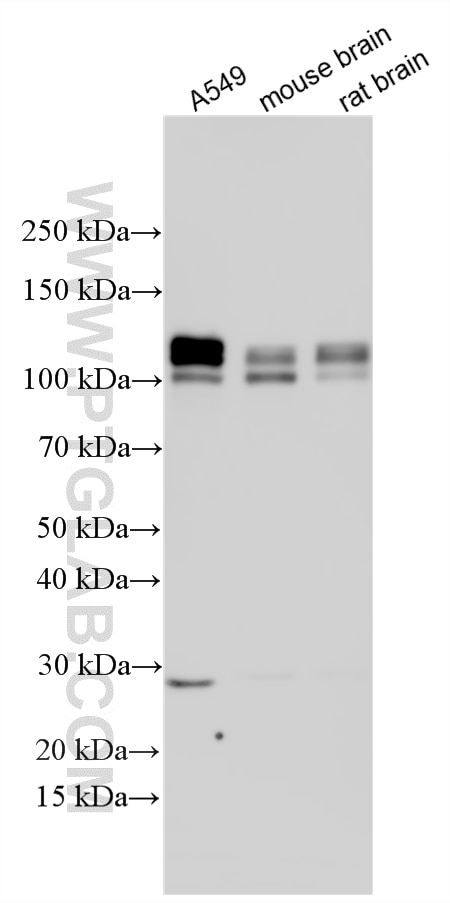
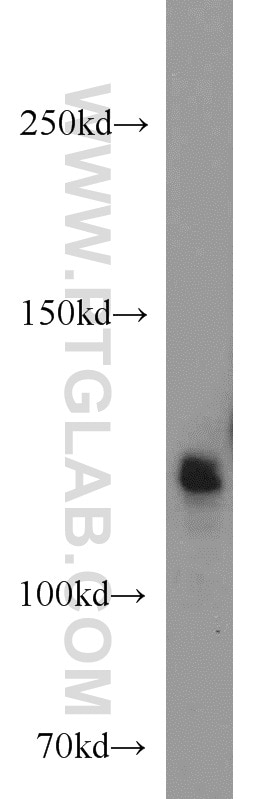
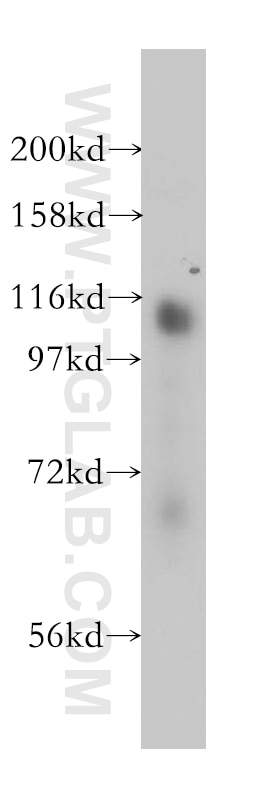
| Positive WB detected in | A549 cells, human brain tissue, mouse brain tissue, rat brain tissue |
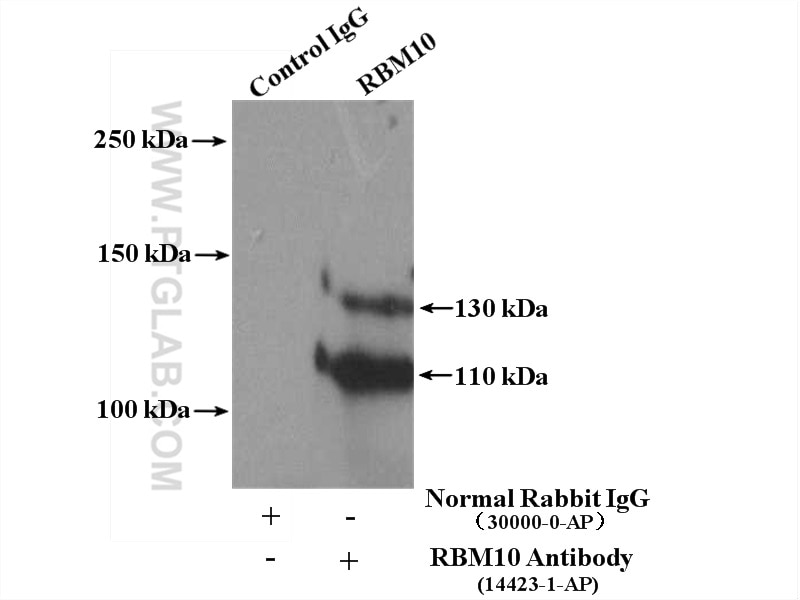
| Positive IP detected in | mouse brain tissue |
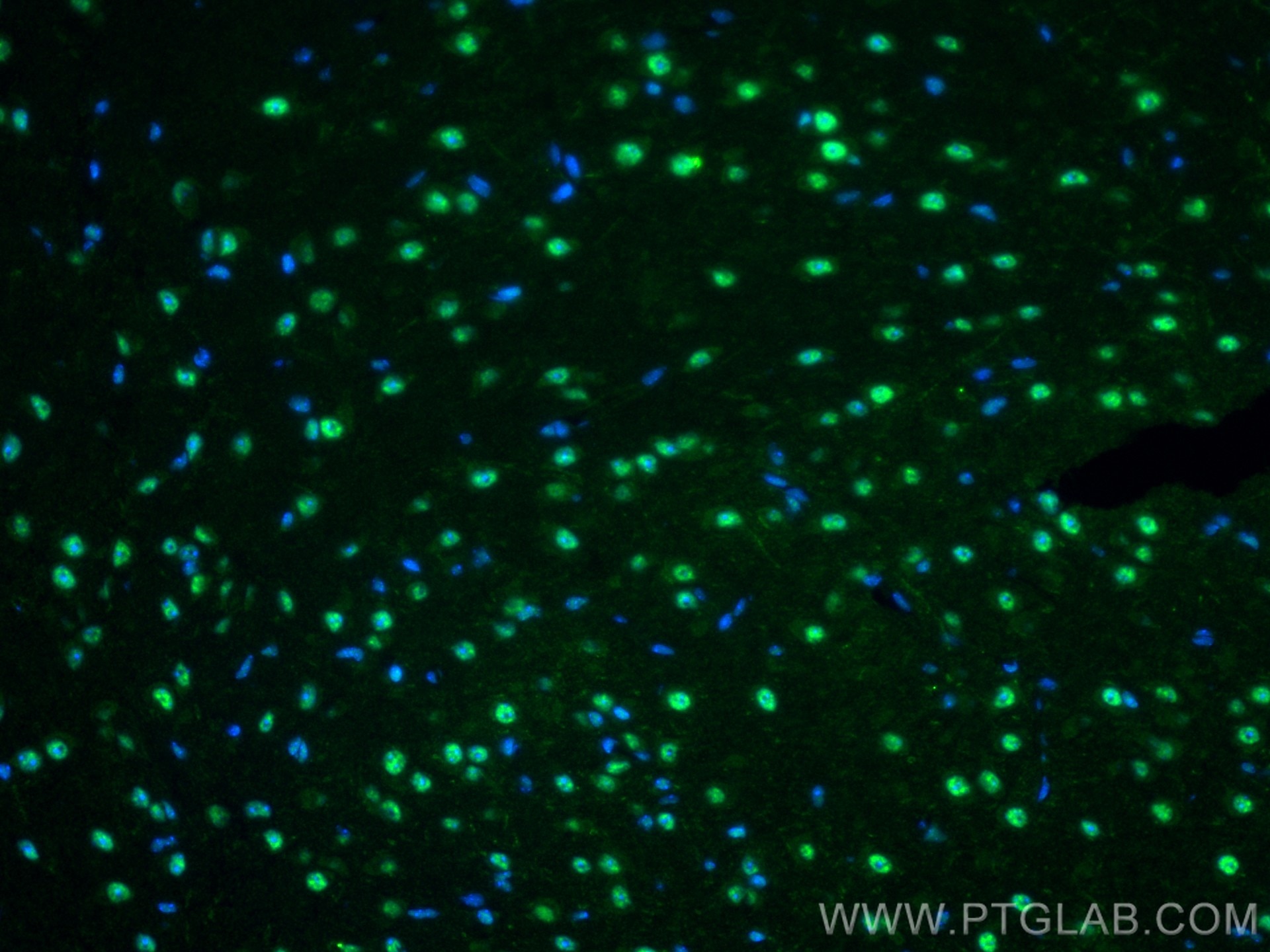
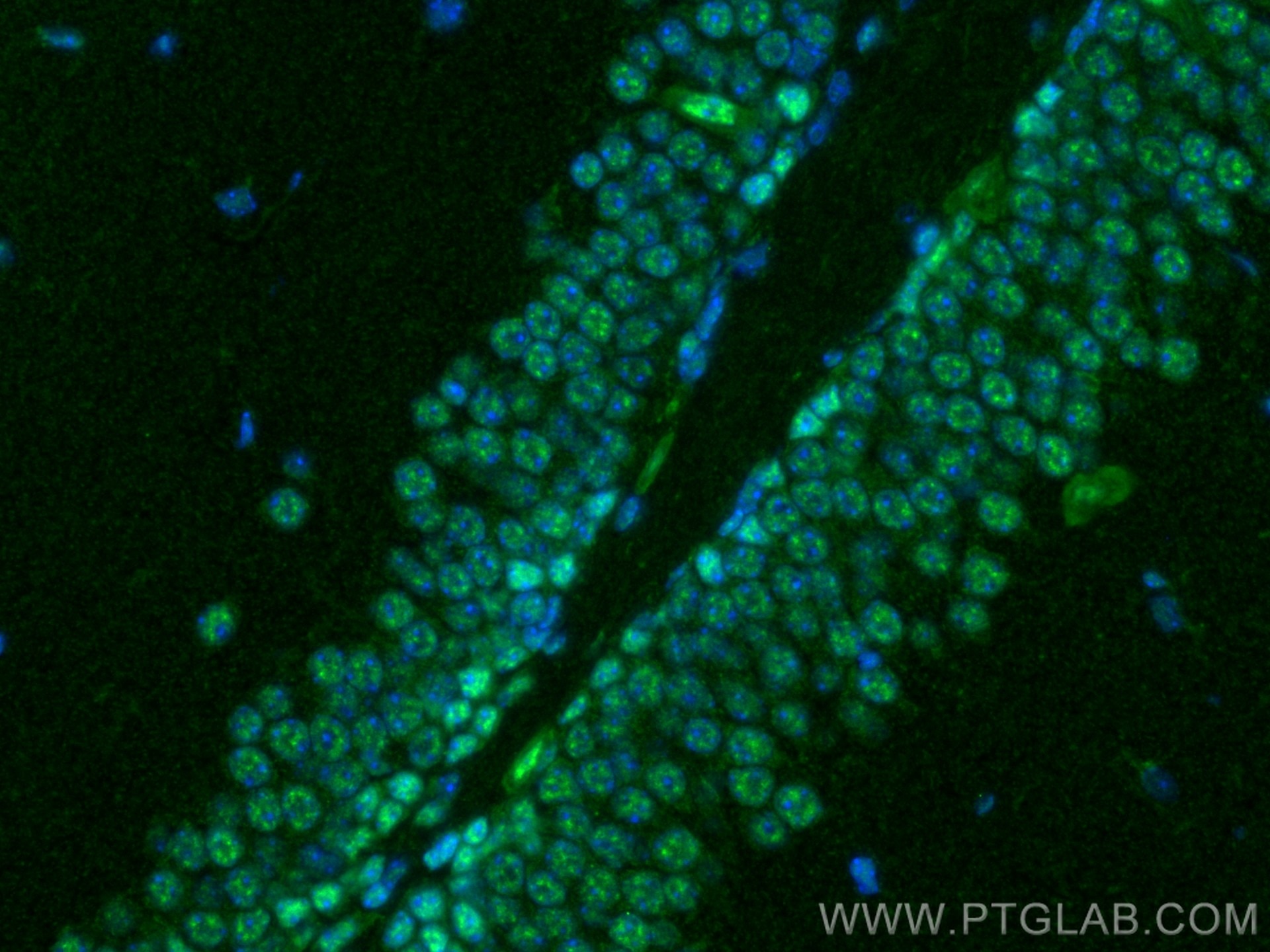
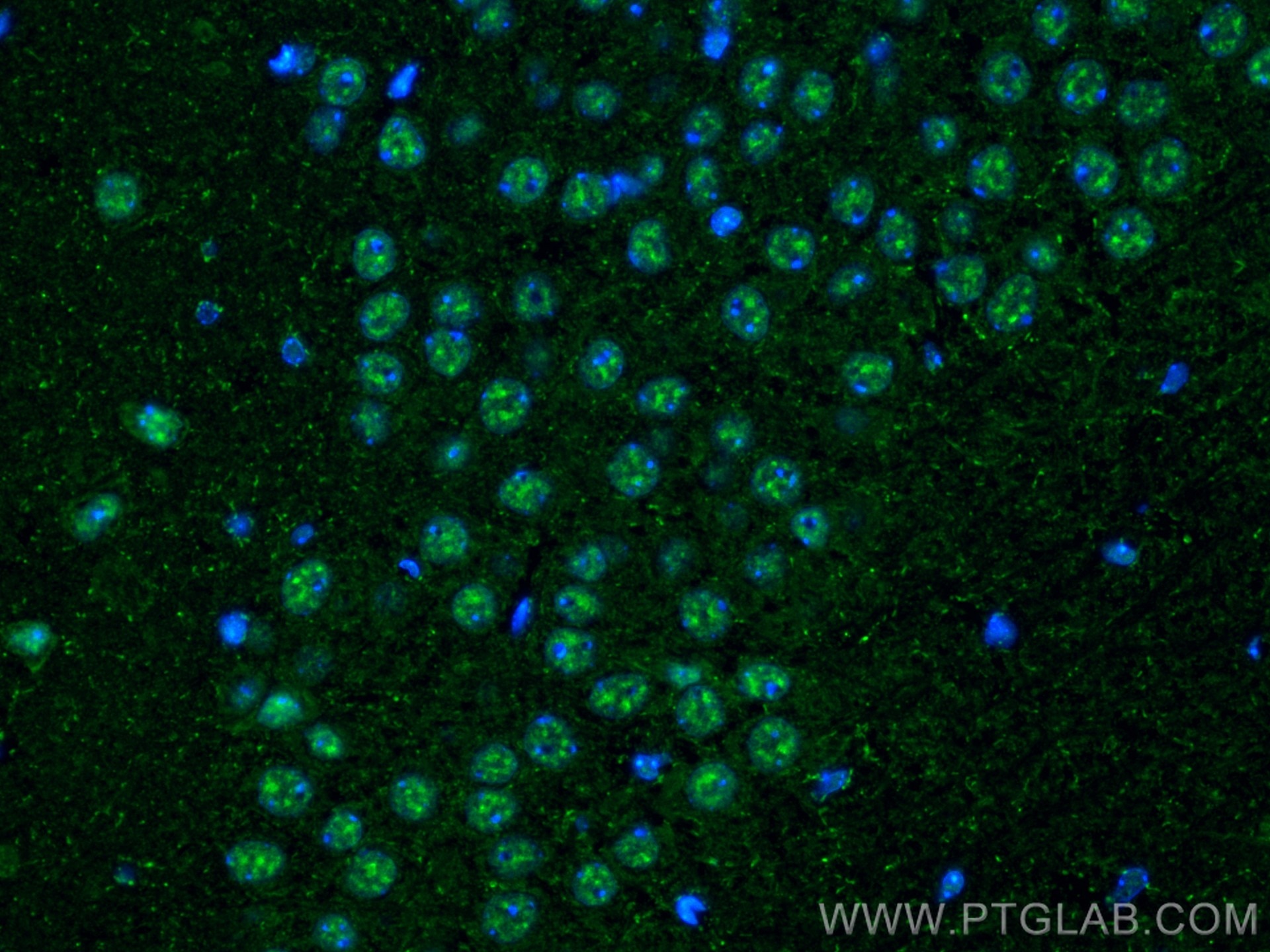
| Positive IF-P detected in | mouse brain tissue |
Recommended dilution
| Application | Dilution |
|---|---|
| Western Blot (WB) | WB : 1:2000-1:12000 |
| Immunoprecipitation (IP) | IP : 0.5-4.0 ug for 1.0-3.0 mg of total protein lysate |
| Immunofluorescence (IF)-P | IF-P : 1:50-1:500 |
| It is recommended that this reagent should be titrated in each testing system to obtain optimal results. | |
| Sample-dependent, Check data in validation data gallery. | |
Product Information
14423-1-AP targets RBM10 in WB, IHC, IF-P, IP, CoIP, RIP, ELISA applications and shows reactivity with human, mouse, rat samples.
| Tested Reactivity | human, mouse, rat |
| Cited Reactivity | human, pig |
| Host / Isotype | Rabbit / IgG |
| Class | Polyclonal |
| Type | Antibody |
| Immunogen |
CatNo: Ag5788 Product name: Recombinant human RBM10 protein Source: e coli.-derived, PGEX-4T Tag: GST Domain: 601-930 aa of BC024153 Sequence: QSQQYLYWDGERRTYVPALEQSADGHKETGAPSKEGKEKKEKHKTKTAQQIAKDMERWARSLNKQKENFKNSFQPISSLRDDERRESATADAGYAILEKKGALAERQHTSMDLPKLASDDRPSPPRGLVAAYSGESDSEEEQERGGPEREEKLTDWQKLACLLCRRQFPSKEALIRHQQLSGLHKQNLEIHRRAHLSENELEALEKNDMEQMKYRDRAAERREKYGIPEPPEPKRRKYGGISTASVDFEQPTRDGLGSDNIGSRMLQAMGWKEGSGLGRKKQGIVTPIEAQTRVRGSGLGARGSSYGVTSTESYKETLHKTMVTRFNEAQ Predict reactive species |
| Full Name | RNA binding motif protein 10 |
| Calculated Molecular Weight | 104 kDa |
| Observed Molecular Weight | 115 kDa |
| GenBank Accession Number | BC024153 |
| Gene Symbol | RBM10 |
| Gene ID (NCBI) | 8241 |
| RRID | AB_2175593 |
| Conjugate | Unconjugated |
| Form | Liquid |
| Purification Method | Antigen affinity purification |
| UNIPROT ID | P98175 |
| Storage Buffer | PBS with 0.02% sodium azide and 50% glycerol, pH 7.3. |
| Storage Conditions | Store at -20°C. Stable for one year after shipment. Aliquoting is unnecessary for -20oC storage. 20ul sizes contain 0.1% BSA. |
Background Information
RBM10, also named as RNA-binding protein 10, is a 930 amino acid protein, which is in the extranucleolar nucleoplasm constitutes hundreds of nuclear domains, which dynamically change their structures in a reversible manner. RBM10 may be involved in post-transcriptional processing, most probably in mRNA splicing. RBM10 has some isoforms with MV 100-130 kDa (PMID: 25889998 and PMID: 18315527) .
Protocols
| Product Specific Protocols | |
|---|---|
| IF protocol for RBM10 antibody 14423-1-AP | Download protocol |
| IP protocol for RBM10 antibody 14423-1-AP | Download protocol |
| WB protocol for RBM10 antibody 14423-1-AP | Download protocol |
| Standard Protocols | |
|---|---|
| Click here to view our Standard Protocols |
Publications
What published studies show
The Rabbit anti-RBM10 (Affinity Purified) antibody (Cat# 14423-1-AP) has 14 total citations. Citations appear in journals including PNAS, Oncogene, EMBO Journal, Scientific Reports, Life Sciences, Cancer Cell International, mSystems, PLoS Pathogens, Journal of Cellular and Molecular Medicine, Experimental Cell Research, Veterinary Microbiology, BMC Molecular Biology, Oxidative Medicine and Cellular Longevity, and American Journal of Translational Research. Research fields span RNA splicing regulation, cancer biology (NSCLC, colorectal, endometrial, pan-cancer), virology (HIV-1, cardiovirus, PEDV), and epigenetic modifications.
| Species | Application | Title |
|---|---|---|
Proc Natl Acad Sci U S A RNA-binding motif protein 10 inactivates c-Myc by partnering with ribosomal proteins uL18 and uL5
| ||
Oncogene RNA-binding motif protein 10 induces apoptosis and suppresses proliferation by activating p53.
| ||
EMBO J A transcription-independent mechanism determines rapid periodic fluctuations of BRCA1 expression | ||
Oxid Med Cell Longev RBM10 Is a Biomarker Associated with Pan-Cancer Prognosis and Immune Infiltration: System Analysis Combined with In Vitro and Vivo Experiments
| ||
Cancer Cell Int RBM10 regulates alternative splicing of lncRNA Neat1 to inhibit the invasion and metastasis of NSCLC
| ||
Life Sci RBM10 recruits METTL3 to induce N6-methyladenosine-MALAT1-dependent modification, inhibiting the invasion and migration of NSCLC
|








