
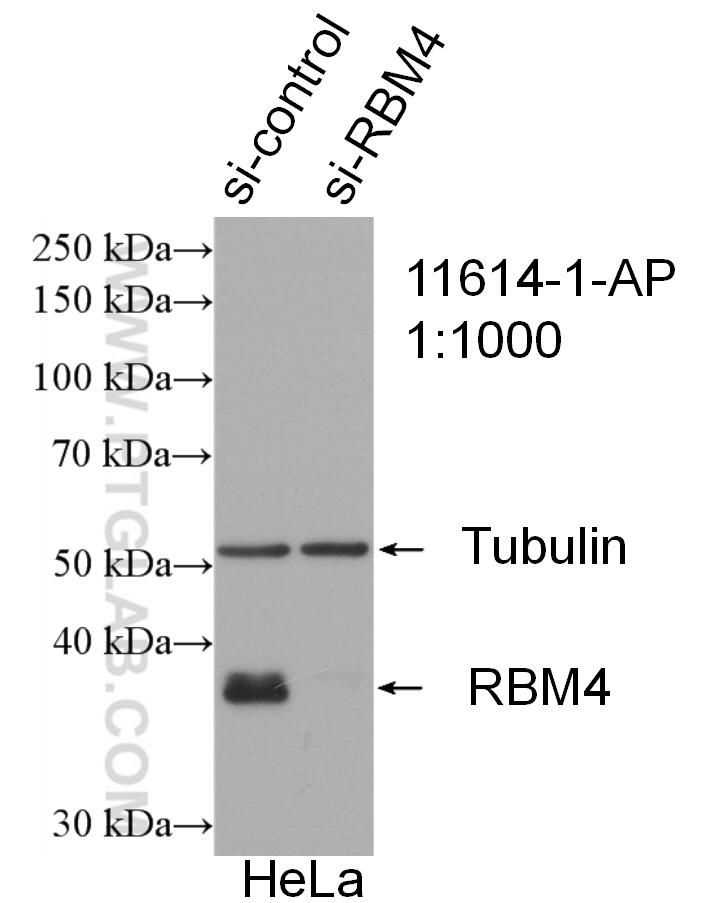
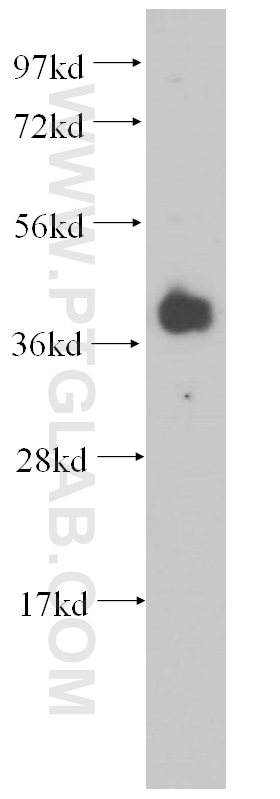
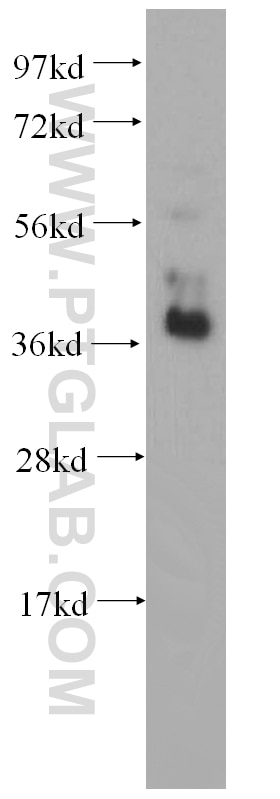
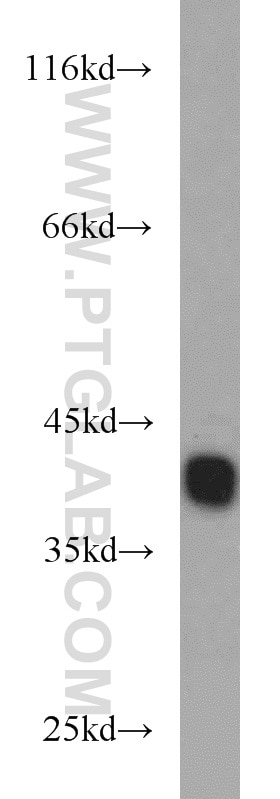
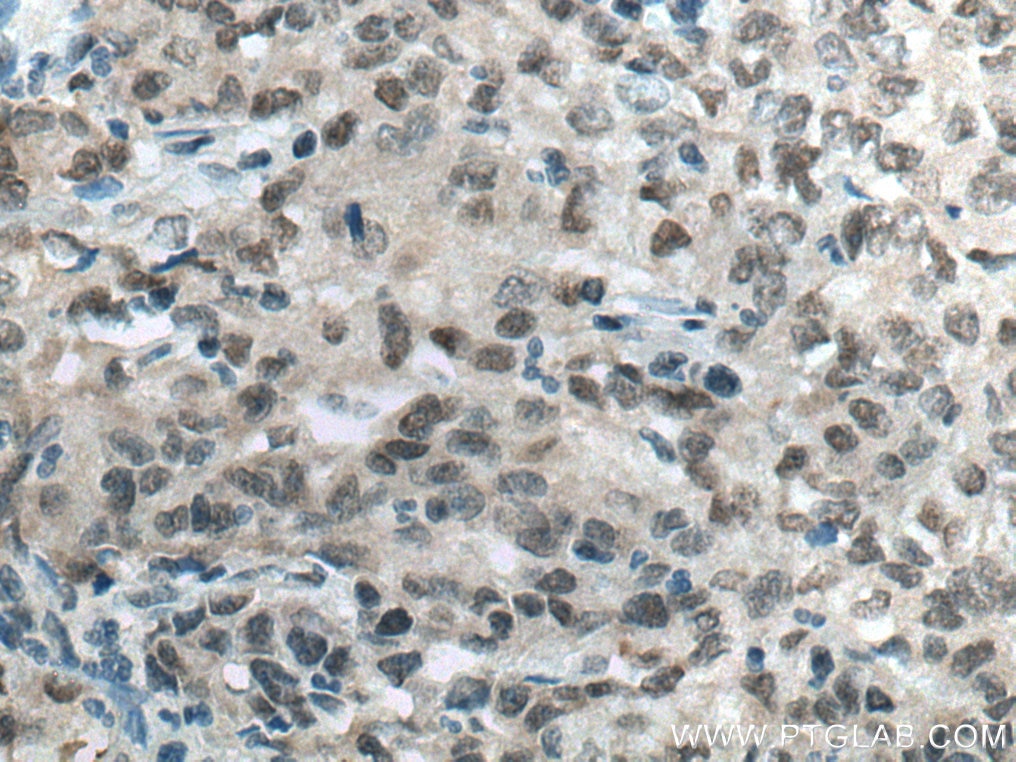
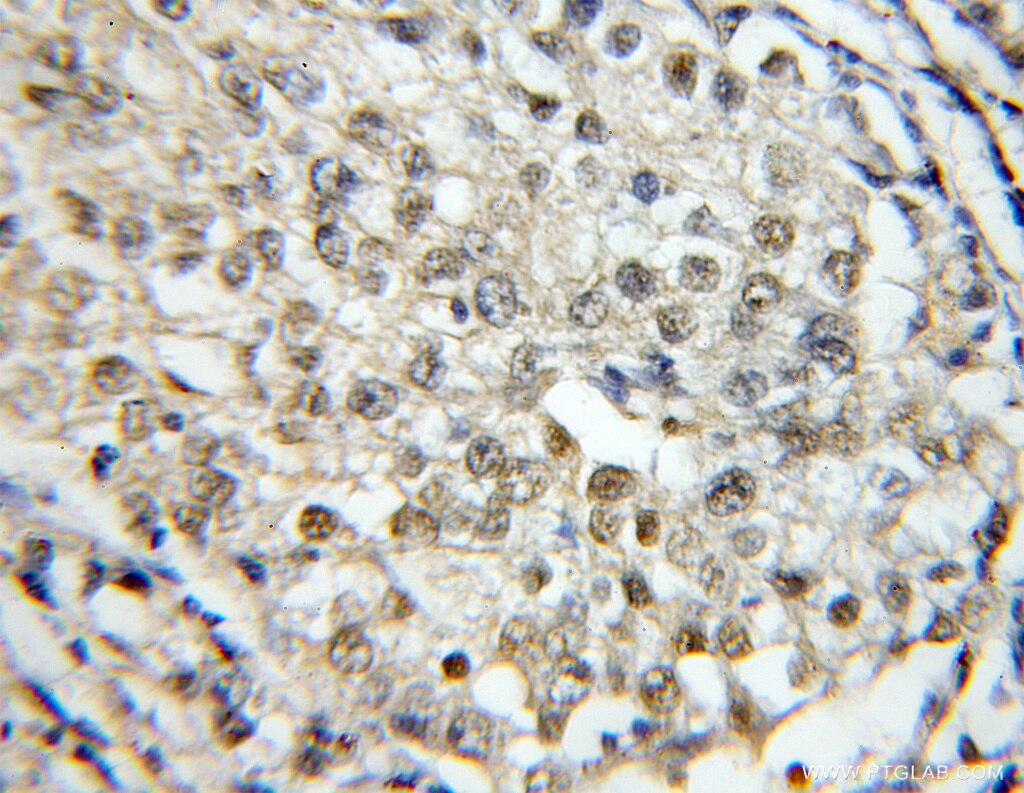
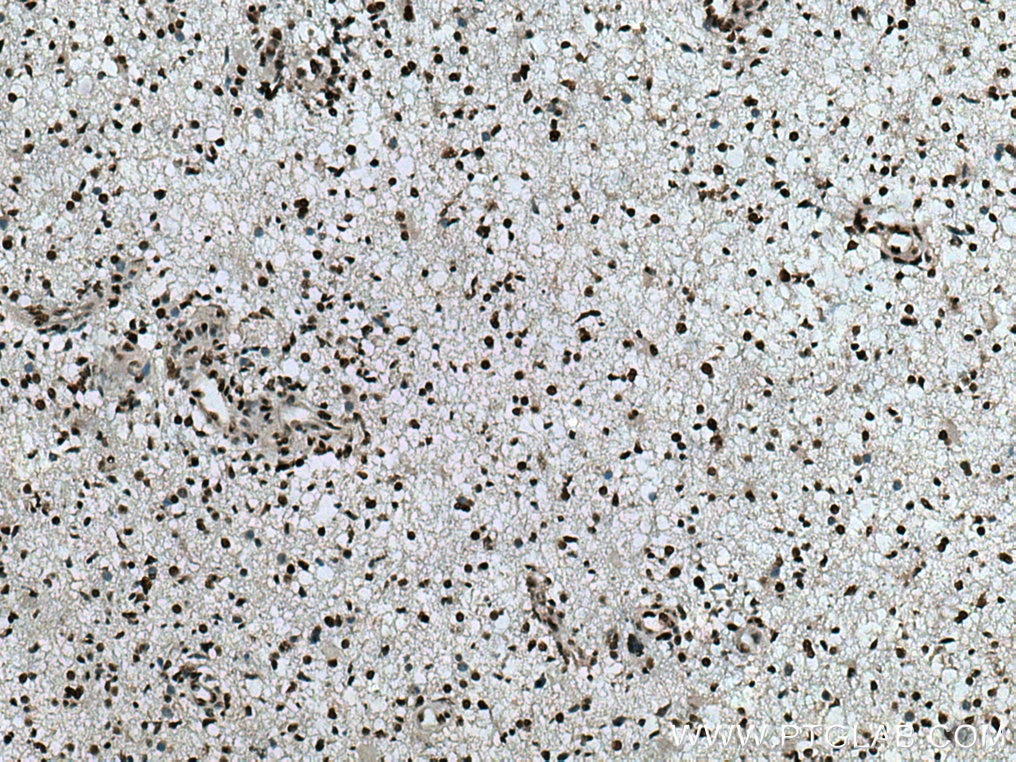

Tested Applications
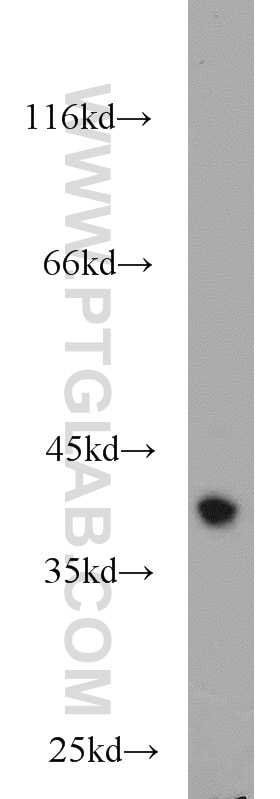
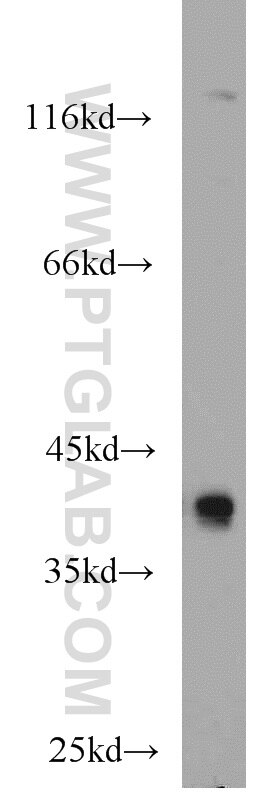
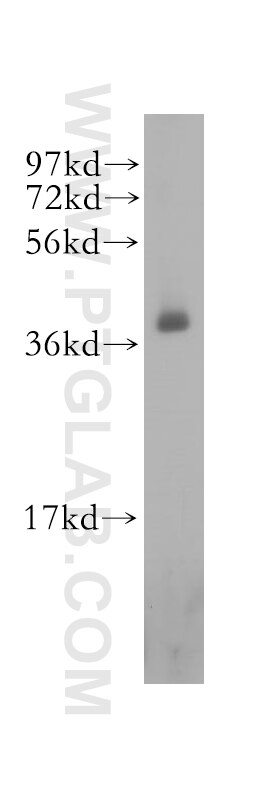
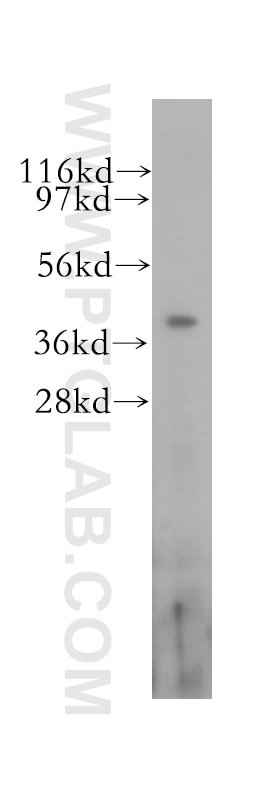
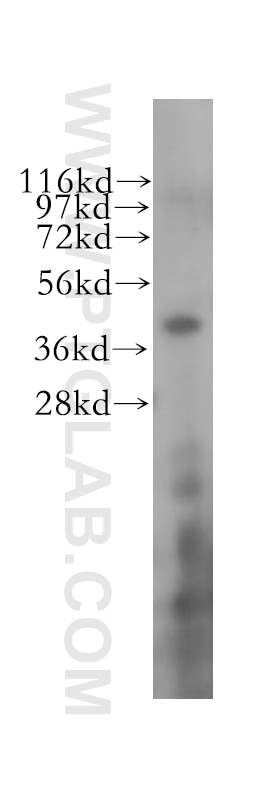
| Positive WB detected in | mouse brain tissue, human brain tissue, human heart tissue, human kidney tissue, HeLa cells |
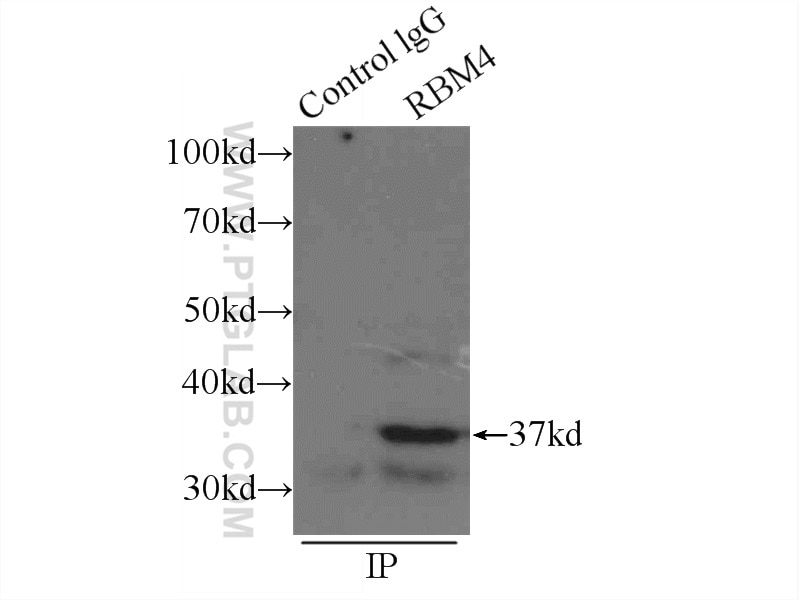
| Positive IP detected in | mouse heart tissue |
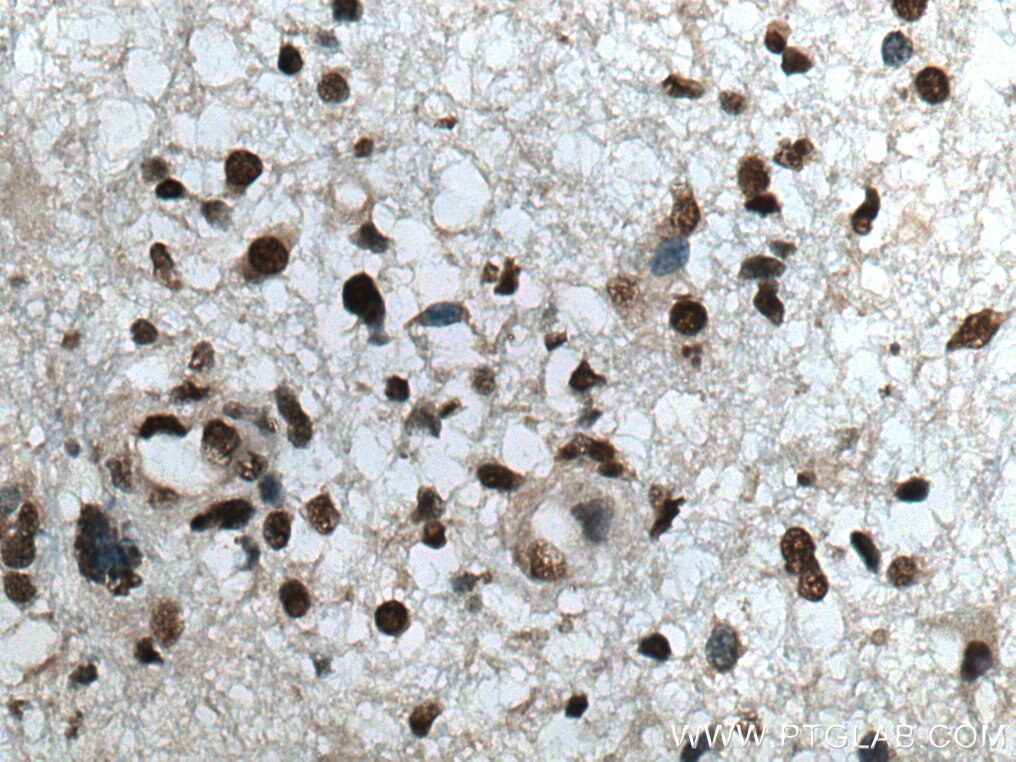
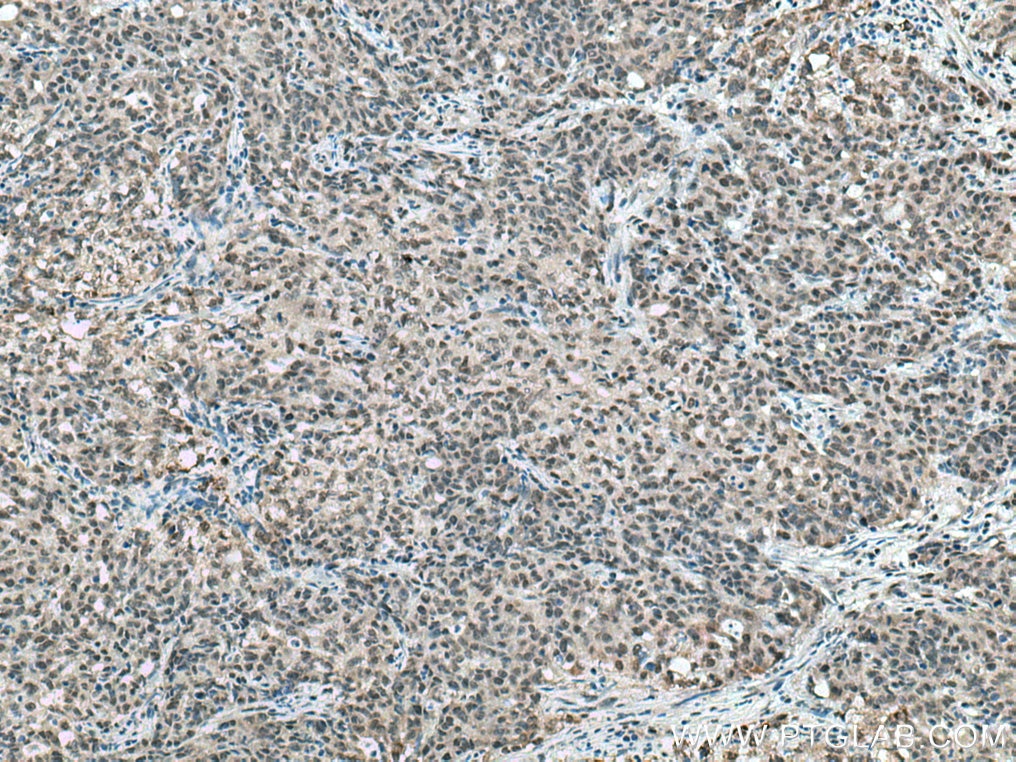
| Positive IHC detected in | human gliomas tissue, human lung cancer tissue, human stomach cancer tissue Note: suggested antigen retrieval with TE buffer pH 9.0; (*) Alternatively, antigen retrieval may be performed with citrate buffer pH 6.0 |
Recommended dilution
| Application | Dilution |
|---|---|
| Western Blot (WB) | WB : 1:500-1:2000 |
| Immunoprecipitation (IP) | IP : 0.5-4.0 ug for 1.0-3.0 mg of total protein lysate |
| Immunohistochemistry (IHC) | IHC : 1:50-1:500 |
| It is recommended that this reagent should be titrated in each testing system to obtain optimal results. | |
| Sample-dependent, Check data in validation data gallery. | |
Product Information
11614-1-AP targets RBM4 in WB, IHC, IF, IP, RIP, ELISA, PLA applications and shows reactivity with human, mouse, rat samples.
| Tested Reactivity | human, mouse, rat |
| Cited Reactivity | human, mouse, rat |
| Host / Isotype | Rabbit / IgG |
| Class | Polyclonal |
| Type | Antibody |
| Immunogen |
CatNo: Ag2190 Product name: Recombinant human RBM4 protein Source: e coli.-derived, PGEX-4T Tag: GST Domain: 1-177 aa of BC021120 Sequence: MVKLFIGNLPREATEQEIRSLFEQYGKVLECDIIKNYGFVHIEDKTAAEDAIRNLHHYKLHGVNINVEASKNKSKTSTKLHVGNISPTCTNKELRAKFEEYGPVIECDIVKDYAFVHMERAEDAVEAIRGLDNTEFQGEPPSLGRGLNTRLCAENGWISKRRGLVKITAVGWLVMKK Predict reactive species |
| Full Name | RNA binding motif protein 4 |
| Calculated Molecular Weight | 40 kDa |
| Observed Molecular Weight | 40 kDa |
| GenBank Accession Number | BC021120 |
| Gene Symbol | RBM4 |
| Gene ID (NCBI) | 5936 |
| RRID | AB_2176095 |
| Conjugate | Unconjugated |
| Form | Liquid |
| Purification Method | Antigen affinity purification |
| UNIPROT ID | Q9BWF3 |
| Storage Buffer | PBS with 0.02% sodium azide and 50% glycerol, pH 7.3. |
| Storage Conditions | Store at -20°C. Stable for one year after shipment. Aliquoting is unnecessary for -20oC storage. 20ul sizes contain 0.1% BSA. |
Background Information
RBM4, RNA-binding motif protein4, contains 2 RRM-type RNA-binding motif and a retroviral-type(RT) zinc finger. RNA-binding factor participates in number of aspects of cellular processes such as alternative splicing of pre-mRNA and translation regulation. RBM4 recruits eIF4A1 to stimulate IRES-dependent translation in responds to cellular stress. Once assembled at the rHRE, the HIF2A-RBM4-eIF4E2 complex captures the 5-prime cap and targets mRNAs to polysomes for active translation, thereby evading hypoxia-induced repression of protein synthesis. This is a rabbit polyclonal antibody raised against the full-length of human RBM4
Protocols
| Product Specific Protocols | |
|---|---|
| IHC protocol for RBM4 antibody 11614-1-AP | Download protocol |
| IP protocol for RBM4 antibody 11614-1-AP | Download protocol |
| WB protocol for RBM4 antibody 11614-1-AP | Download protocol |
| Standard Protocols | |
|---|---|
| Click here to view our Standard Protocols |
Publications
What published studies show
The RBM4 antibody (Cat# 11614-1-AP) has 26 citations across journals including Signal Transduction and Targeted Therapy, Nature, Cancer Cell, Nature Communications, Autophagy, Nucleic Acids Research, Advanced Science, Cell Death & Disease, Oncogene, Journal of Biological Chemistry, and PLoS ONE. Research fields span cancer biology (gastric, esophageal, lung, colorectal, ovarian, bladder, and nasopharyngeal cancers), alternative RNA splicing, autophagy, angiogenesis, cardiomyocyte hypertrophy, cerebellar development, and viral infections.
| Species | Application | Title |
|---|---|---|
Signal Transduct Target Ther SRSF1 inhibits autophagy through regulating Bcl-x splicing and interacting with PIK3C3 in lung cancer. | ||
Signal Transduct Target Ther The cryptic lncRNA-encoded microprotein TPM3P9 drives oncogenic RNA splicing and tumorigenesis | ||
Signal Transduct Target Ther RBM4 dictates ESCC cell fate switch from cellular senescence to glutamine-addiction survival through inhibiting LKB1-AMPK-axis
| ||
Cancer Cell The splicing factor RBM4 controls apoptosis, proliferation, and migration to suppress tumor progression.
| ||
Autophagy CircRNA GRAMD4 induces NBR1 expression to promote autophagy and immune escape in renal cell carcinoma |
















