
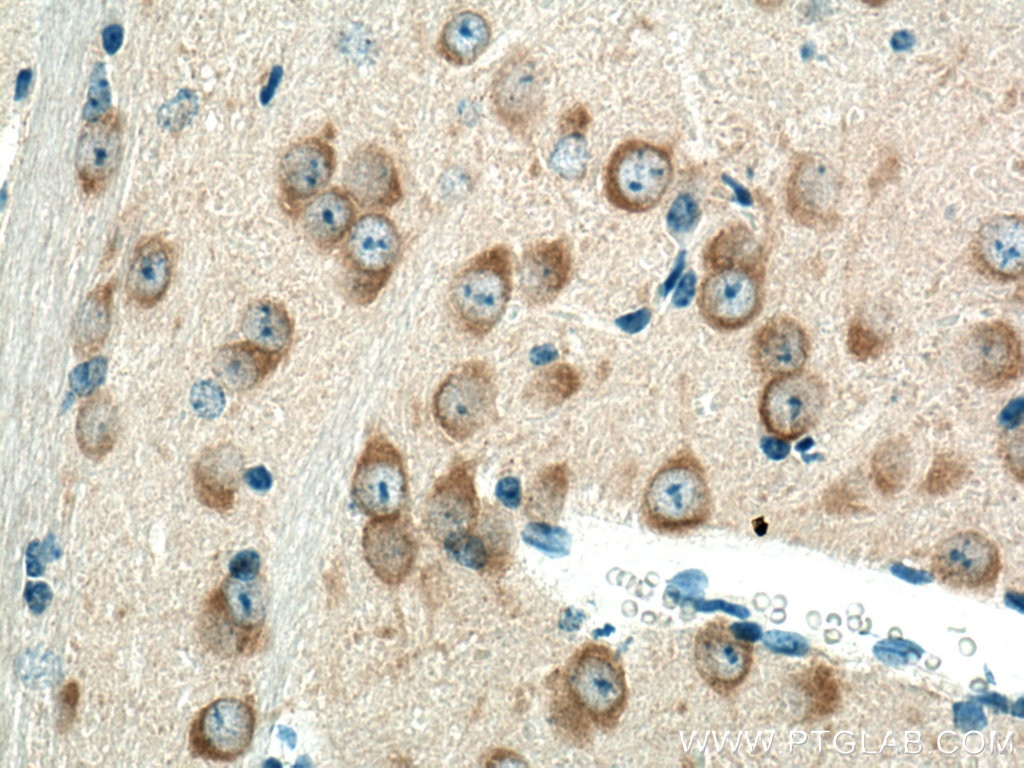

Tested Applications
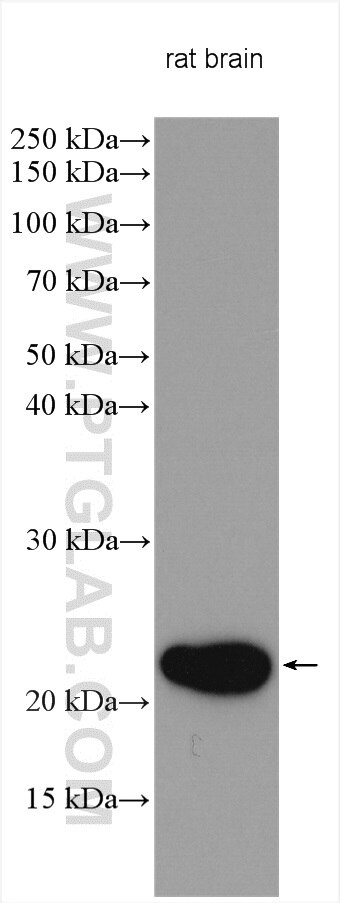
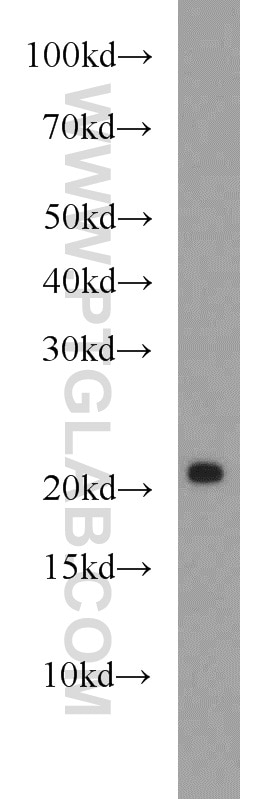
| Positive WB detected in | rat brain tissue, mouse brain tissue |
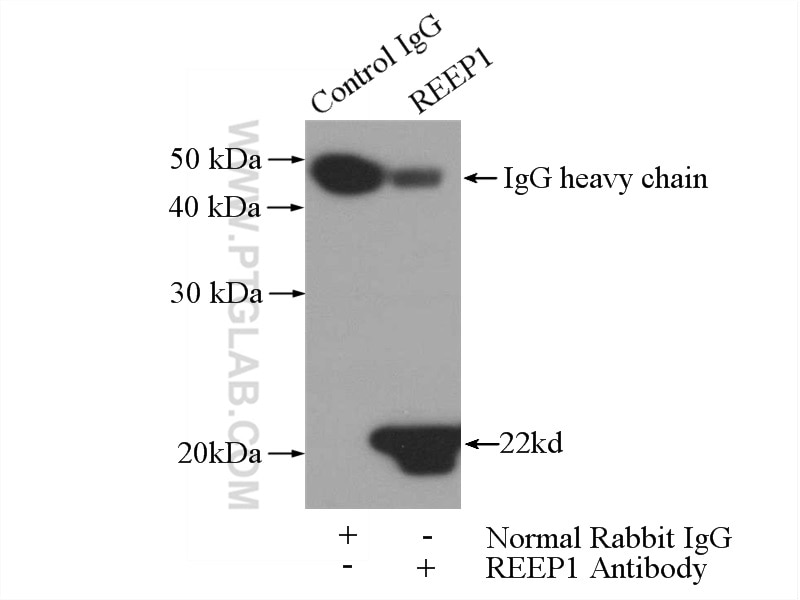
| Positive IP detected in | mouse brain tissue |
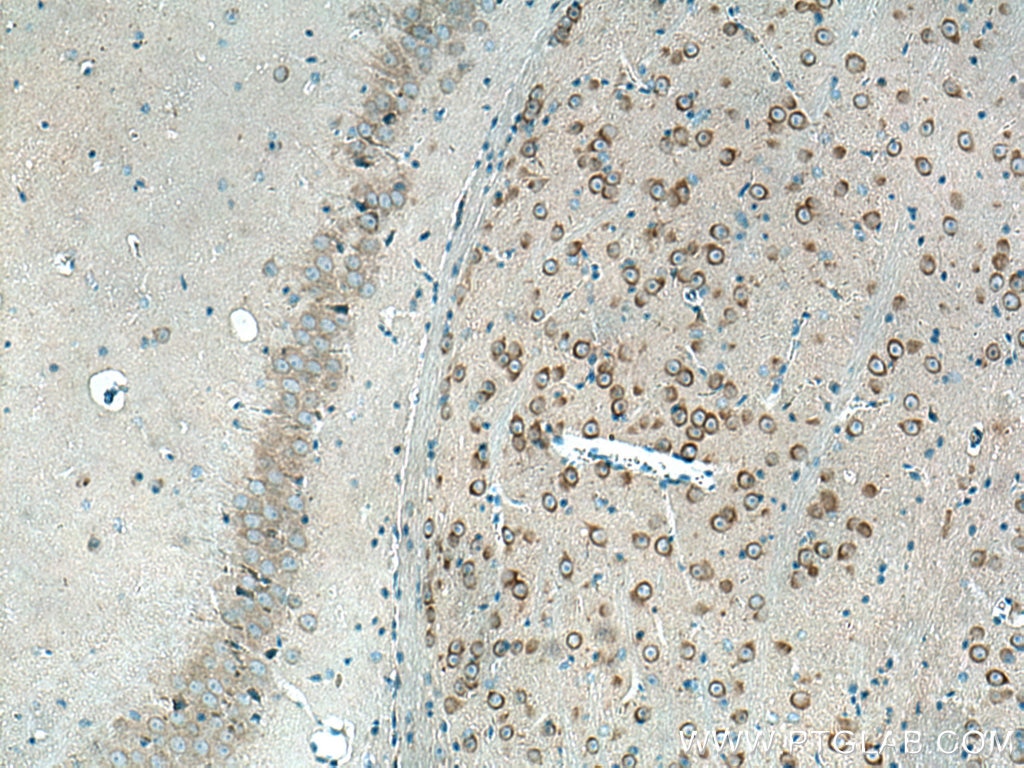
| Positive IHC detected in | mouse brain tissue Note: suggested antigen retrieval with TE buffer pH 9.0; (*) Alternatively, antigen retrieval may be performed with citrate buffer pH 6.0 |
Recommended dilution
| Application | Dilution |
|---|---|
| Western Blot (WB) | WB : 1:500-1:2000 |
| Immunoprecipitation (IP) | IP : 0.5-4.0 ug for 1.0-3.0 mg of total protein lysate |
| Immunohistochemistry (IHC) | IHC : 1:50-1:500 |
| It is recommended that this reagent should be titrated in each testing system to obtain optimal results. | |
| Sample-dependent, Check data in validation data gallery. | |
Product Information
17988-1-AP targets REEP1 in WB, IHC, IF, IP, ELISA applications and shows reactivity with human, mouse, rat samples.
| Tested Reactivity | human, mouse, rat |
| Cited Reactivity | human, mouse |
| Host / Isotype | Rabbit / IgG |
| Class | Polyclonal |
| Type | Antibody |
| Immunogen |
CatNo: Ag12418 Product name: Recombinant human REEP1 protein Source: e coli.-derived, PGEX-4T Tag: GST Domain: 70-201 aa of BC064846 Sequence: IAFVAWLLSPYTKGSSLLYRKFVHPTLSSKEKEIDDCLVQAKDRSYDALVHFGKRGLNVAATAAVMAASKGQGALSERLRSFSMQDLTTIRGDGAPAPSGPPPPGSGRASGKHGQPKMSRSASESASSSGTA Predict reactive species |
| Full Name | receptor accessory protein 1 |
| Calculated Molecular Weight | 201 aa, 22 kDa |
| Observed Molecular Weight | 22 kDa |
| GenBank Accession Number | BC064846 |
| Gene Symbol | REEP1 |
| Gene ID (NCBI) | 65055 |
| RRID | AB_2178441 |
| Conjugate | Unconjugated |
| Form | Liquid |
| Purification Method | Antigen affinity purification |
| UNIPROT ID | Q9H902 |
| Storage Buffer | PBS with 0.02% sodium azide and 50% glycerol, pH 7.3. |
| Storage Conditions | Store at -20°C. Stable for one year after shipment. Aliquoting is unnecessary for -20oC storage. 20ul sizes contain 0.1% BSA. |
Protocols
| Product Specific Protocols | |
|---|---|
| IHC protocol for REEP1 antibody 17988-1-AP | Download protocol |
| IP protocol for REEP1 antibody 17988-1-AP | Download protocol |
| WB protocol for REEP1 antibody 17988-1-AP | Download protocol |
| Standard Protocols | |
|---|---|
| Click here to view our Standard Protocols |
Publications
What published studies show
The Anti-REEP1 polyclonal antibody (Cat# 17988-1-AP) has 13 citations across 11 journals, including Nature, Cell Research, Autophagy, Advanced Science, Molecular Psychiatry, Nature Structural & Molecular Biology, EMBO Reports, Phytomedicine, Neurobiology of Disease, Human Molecular Genetics, and APL Bioengineering. Research fields span endoplasmic reticulum biology, autophagy, neurodegeneration (Alzheimer's disease, Parkinson's disease, hereditary spastic paraplegia), ER-mitochondria signaling, and ferroptosis in atherosclerosis.
| Species | Application | Title |
|---|---|---|
Cell Res DNA damage triggers tubular endoplasmic reticulum extension to promote apoptosis by facilitating ER-mitochondria signaling. | ||
Autophagy DIPK2A promotes STX17- and VAMP7-mediated autophagosome-lysosome fusion by binding to VAMP7B. | ||
Adv Sci (Weinh) REEP1 Accumulation Disrupts ER Integrity and Drives Spinal Motoneuron Degeneration in Distal Hereditary Motor Neuropathy. | ||
Phytomedicine Phillyrin promotes autophagosome formation in A53T-αSyn-induced Parkinson's disease model via modulation of REEP1 | ||
Mol Psychiatry Dysfunctional tubular endoplasmic reticulum constitutes a pathological feature of Alzheimer's disease. |






