

Tested Applications
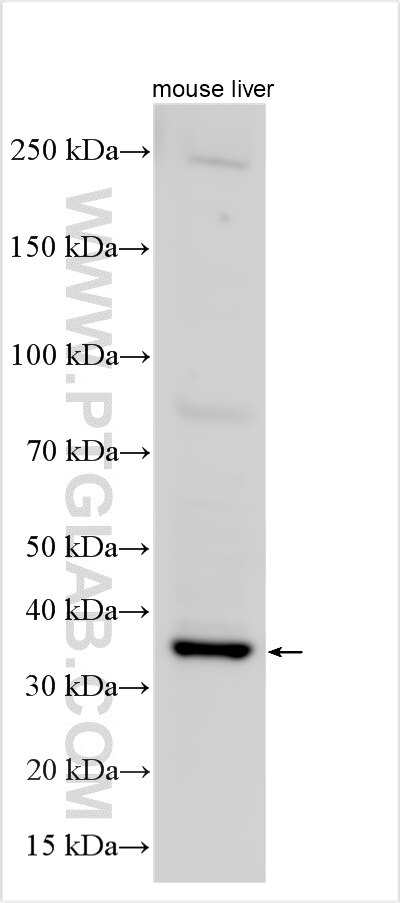
| Positive WB detected in | mouse liver tissue |
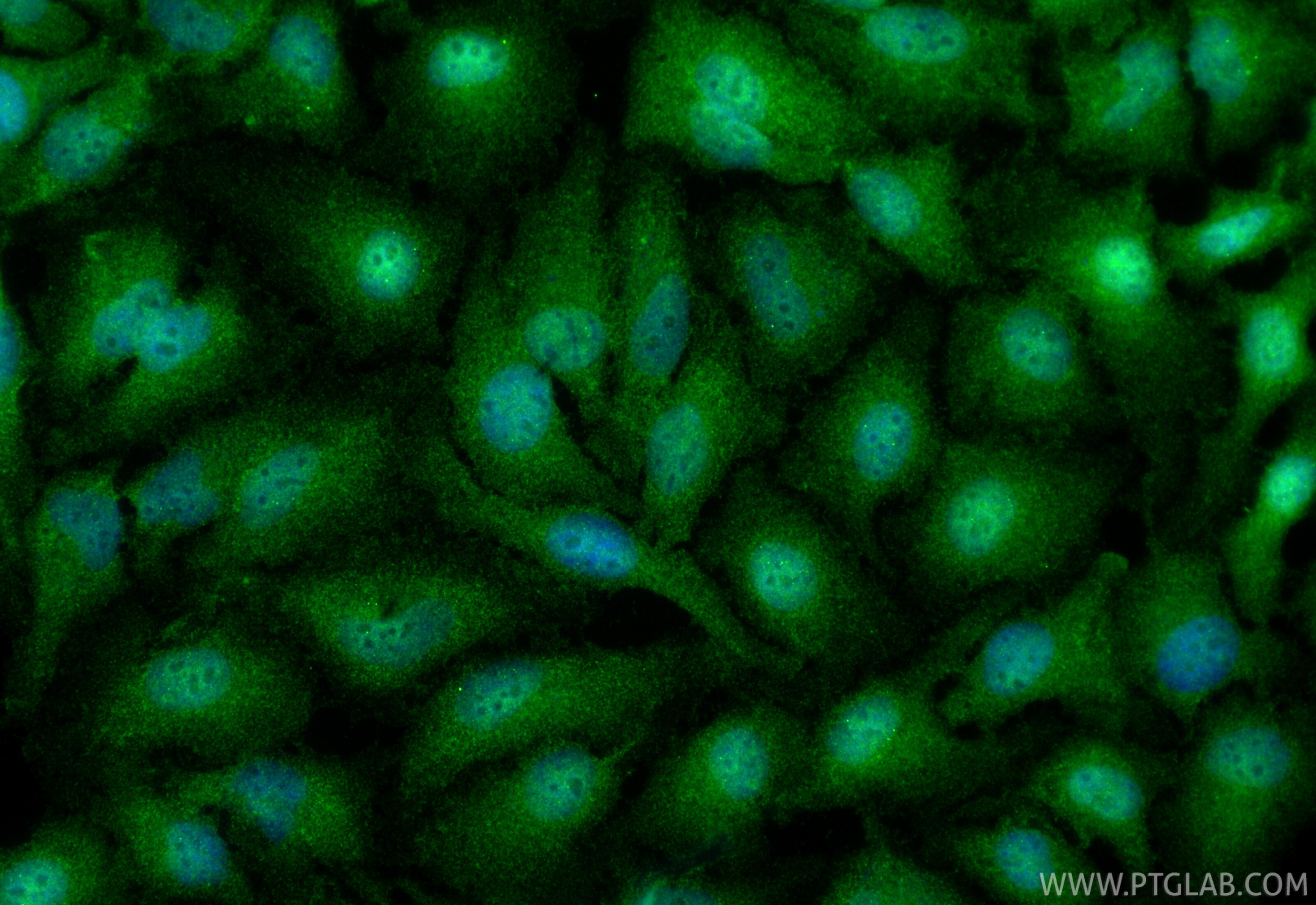
| Positive IF/ICC detected in | HeLa cells |
Recommended dilution
| Application | Dilution |
|---|---|
| Western Blot (WB) | WB : 1:500-1:2000 |
| Immunofluorescence (IF)/ICC | IF/ICC : 1:50-1:500 |
| It is recommended that this reagent should be titrated in each testing system to obtain optimal results. | |
| Sample-dependent, Check data in validation data gallery. | |
Product Information
17039-1-AP targets RNF138 in WB, IF/ICC, ELISA applications and shows reactivity with human, mouse samples.
| Tested Reactivity | human, mouse |
| Host / Isotype | Rabbit / IgG |
| Class | Polyclonal |
| Type | Antibody |
| Immunogen |
CatNo: Ag10558 Product name: Recombinant human RNF138 protein Source: e coli.-derived, PGEX-4T Tag: GST Domain: 1-245 aa of BC018107 Sequence: MAEDLSAATSYTEDDFYCPVCQEVLKTPVRTTACQHVFCRKCFLTAMRESGAHCPLCRGNVTRRERACPERALDLENIMRKFSGSCRCCAKQIKFYRMRHHYKSCKKYQDEYGVSSIIPNFQISQDSVGNSNRSETSTSDNTETYQENTSSSGHPTFKCPLCQESNFTRQRLLDHCNSNHLFQIVPVTCPICVSLPWGDPSQITRNFVSHLNQRHQFDYGEFVNLQLDEETQYQTAVEESFQVNI Predict reactive species |
| Full Name | ring finger protein 138 |
| Calculated Molecular Weight | 245 aa, 28 kDa |
| Observed Molecular Weight | 35 kDa |
| GenBank Accession Number | BC018107 |
| Gene Symbol | RNF138 |
| Gene ID (NCBI) | 51444 |
| Conjugate | Unconjugated |
| Form | Liquid |
| Purification Method | Antigen affinity purification |
| UNIPROT ID | Q8WVD3 |
| Storage Buffer | PBS with 0.02% sodium azide and 50% glycerol, pH 7.3. |
| Storage Conditions | Store at -20°C. Stable for one year after shipment. Aliquoting is unnecessary for -20oC storage. 20ul sizes contain 0.1% BSA. |
Background Information
RNF138 (ring finger protein 138) is an E3 ubiquitin ligase containing a RING finger domain, which mediates the ubiquitination and degradation of target proteins involved in diverse cellular processes. RNF138 is primarily localized in the nucleus and plays important roles in DNA damage repair, particularly in the homologous recombination (HR) pathway following double-strand DNA breaks. It regulates the recruitment and turnover of DNA repair factors through ubiquitin-dependent mechanisms, thereby contributing to genomic stability and cell survival under genotoxic stress. In addition to DNA repair, RNF138 has been implicated in the regulation of cell proliferation, cell cycle progression, and signal transduction. Dysregulation of RNF138 expression has been associated with multiple cancers, where it may function either as a tumor promoter or suppressor depending on cellular context.
Protocols
| Product Specific Protocols | |
|---|---|
| IF protocol for RNF138 antibody 17039-1-AP | Download protocol |
| WB protocol for RNF138 antibody 17039-1-AP | Download protocol |
| Standard Protocols | |
|---|---|
| Click here to view our Standard Protocols |
Publications
What published studies show
The RNF138 Polyclonal antibody (Cat# 17039-1-AP) has 1 citation. It appears in Advanced Science (Impact Factor 14.1), published in 2026. The cited study investigates the role of BOULE in heat shock granule disassembly in male germ cells, placing this citation within the fields of cell biology, RNA granule dynamics, and reproductive/germ cell biology.
| Species | Application | Title |
|---|---|---|
Adv Sci (Weinh) BOULE is Essential for the Dynamic Disassembly of Heat Shock Granules in Male Germ Cells. |



