

Tested Applications
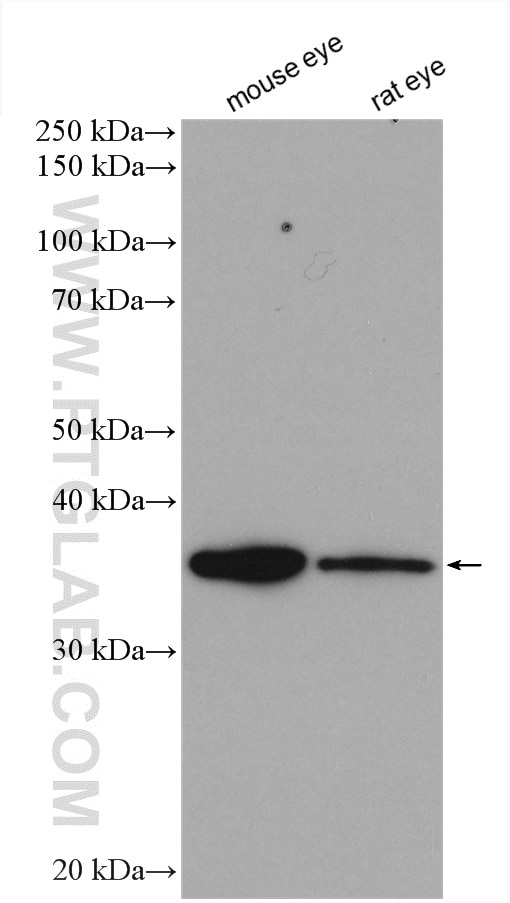
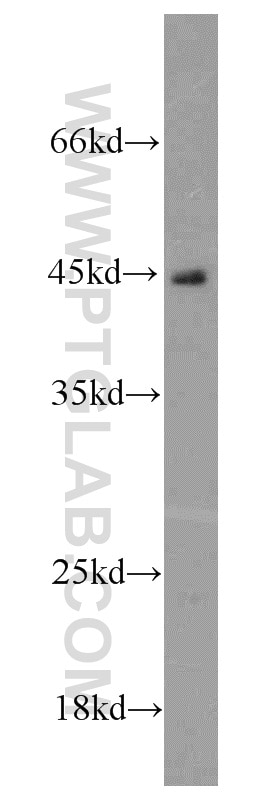
| Positive WB detected in | mouse eye tissue, HeLa cells, rat eye tissue |
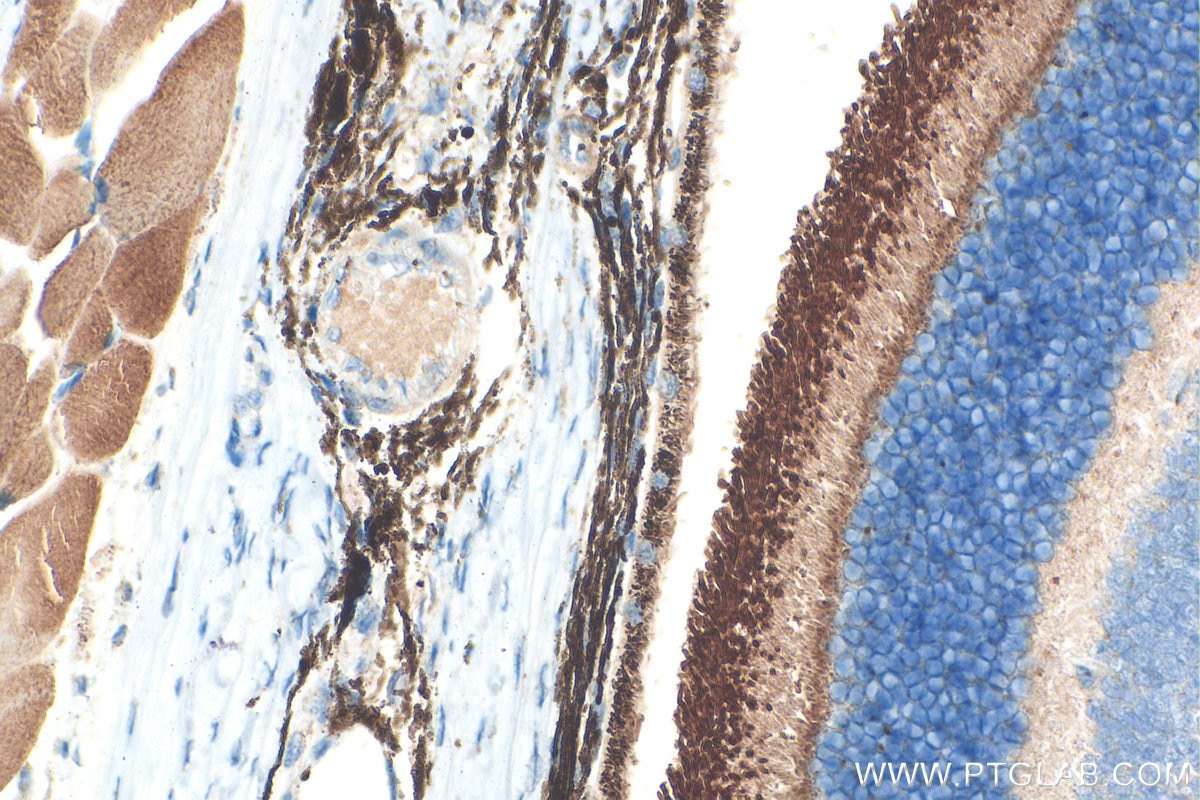
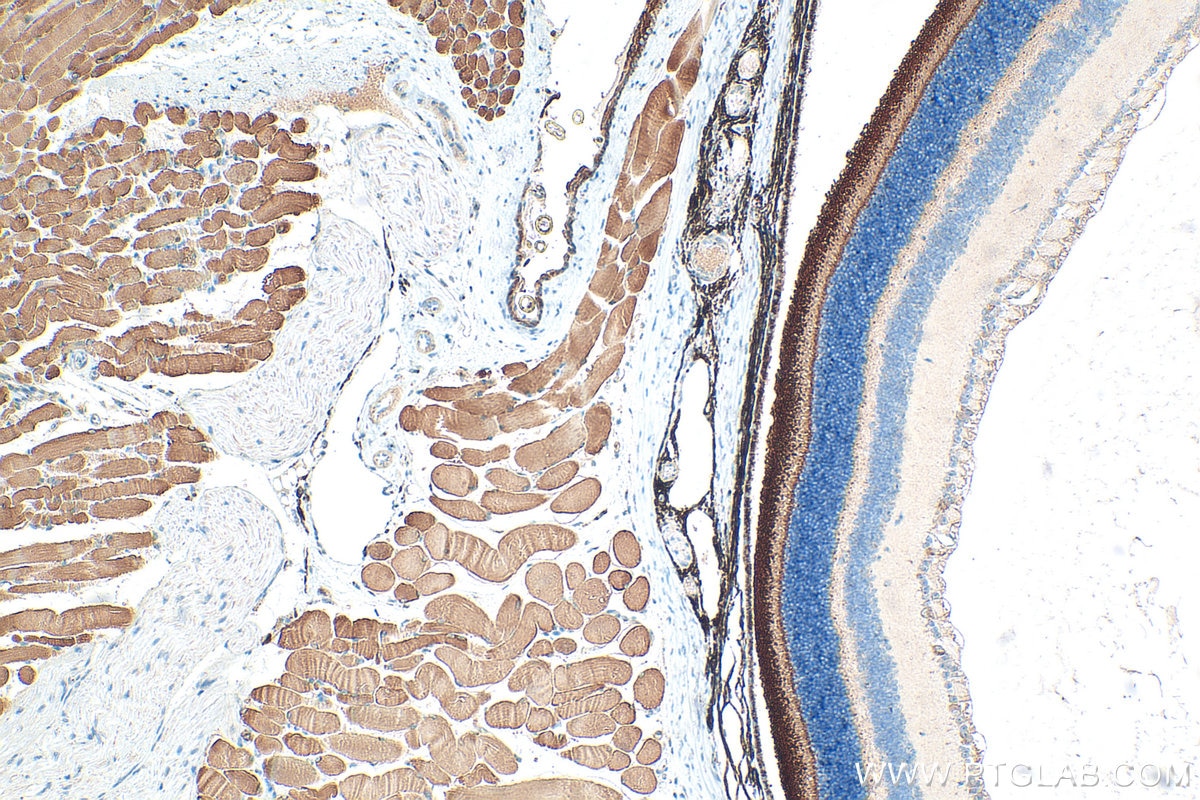
| Positive IHC detected in | mouse eye tissue Note: suggested antigen retrieval with TE buffer pH 9.0; (*) Alternatively, antigen retrieval may be performed with citrate buffer pH 6.0 |
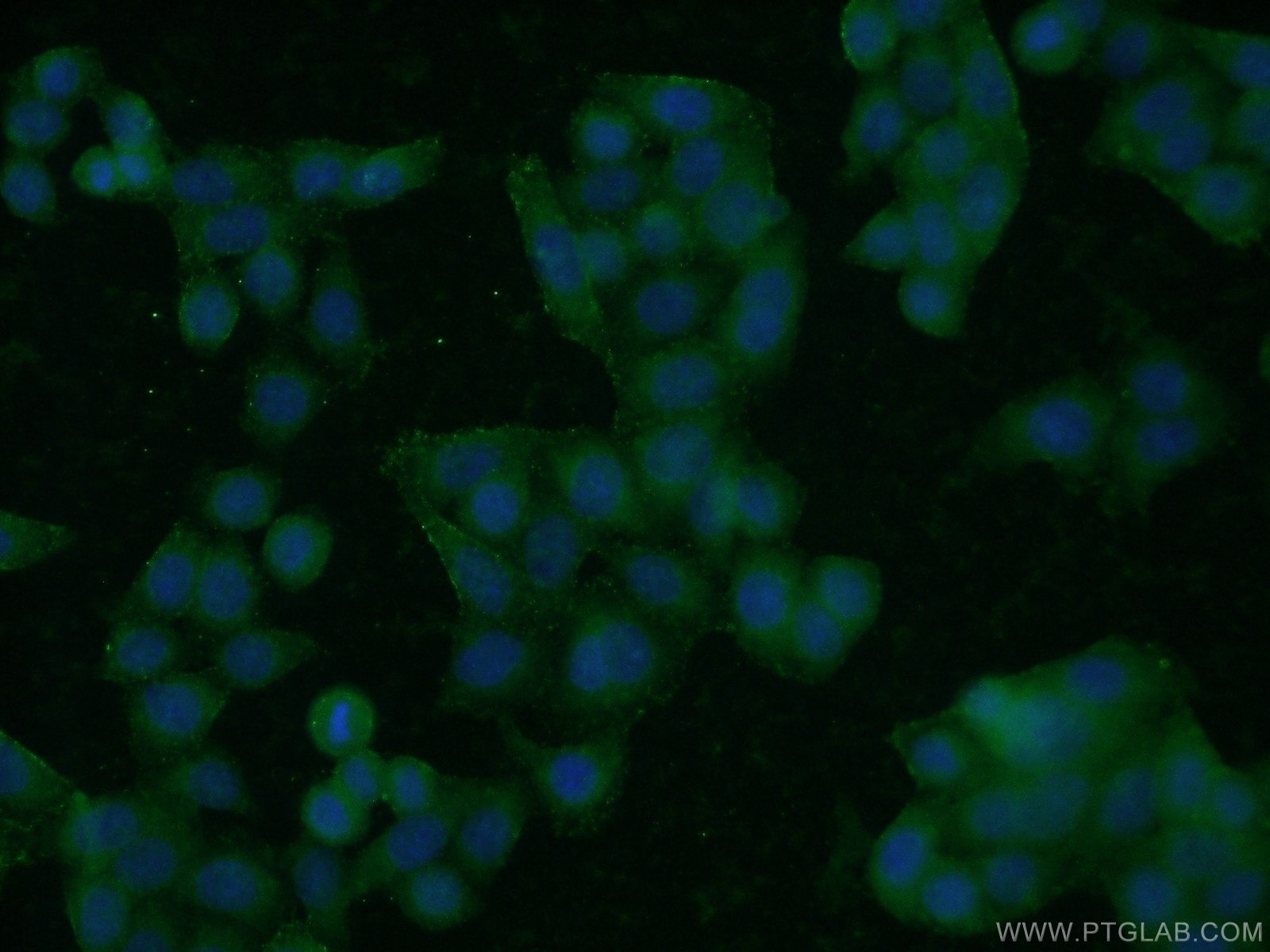
| Positive IF/ICC detected in | HeLa cells |
Recommended dilution
| Application | Dilution |
|---|---|
| Western Blot (WB) | WB : 1:500-1:3000 |
| Immunohistochemistry (IHC) | IHC : 1:200-1:800 |
| Immunofluorescence (IF)/ICC | IF/ICC : 1:20-1:200 |
| It is recommended that this reagent should be titrated in each testing system to obtain optimal results. | |
| Sample-dependent, Check data in validation data gallery. | |
Product Information
21984-1-AP targets ROM1 in WB, IHC, IF/ICC, ELISA applications and shows reactivity with human, mouse, rat samples.
| Tested Reactivity | human, mouse, rat |
| Cited Reactivity | human, mouse |
| Host / Isotype | Rabbit / IgG |
| Class | Polyclonal |
| Type | Antibody |
| Immunogen |
CatNo: Ag17049 Product name: Recombinant human ROM1 protein Source: e coli.-derived, PGEX-4T Tag: GST Domain: 121-270 aa of BC008100 Sequence: LALALPGSLDEALEEGLVTALAHYKDTEVPGHCQAKRLVDELQLRYHCCGRHGYKDWFGVQWVSSRYLDPGDRDVADRIQSNVEGLYLTDGVPFSCCNPHSPRPCLQNRLSDSYAHPLFDPRQPNQNLWAQGCHEVLLEHLQDLAGTLGS Predict reactive species |
| Full Name | retinal outer segment membrane protein 1 |
| Calculated Molecular Weight | 351 aa, 37 kDa |
| Observed Molecular Weight | 37-45 kDa |
| GenBank Accession Number | BC008100 |
| Gene Symbol | ROM1 |
| Gene ID (NCBI) | 6094 |
| RRID | AB_2878961 |
| Conjugate | Unconjugated |
| Form | Liquid |
| Purification Method | Antigen affinity purification |
| UNIPROT ID | Q03395 |
| Storage Buffer | PBS with 0.02% sodium azide and 50% glycerol, pH 7.3. |
| Storage Conditions | Store at -20°C. Stable for one year after shipment. Aliquoting is unnecessary for -20oC storage. 20ul sizes contain 0.1% BSA. |
Background Information
ROM1 (also known as TSPAN23) is a transmembrane protein present in photoreceptor outer segment disc membranes. ROM1 belongs to the tetraspanin superfamily, which are characterized by the presence of four conserved transmembrane regions. Tetraspanins have been involved in diverse processes such as cell activation and proliferation, adhesion and motility, differentiation, and cancer. ROM1 is required for rod photoreceptor viability and the regulation of disk morphogenesis (PMID: 10802659). It may function as an adhesion molecule involved in stabilization and compaction of outer segment disks.
Protocols
| Product Specific Protocols | |
|---|---|
| IF protocol for ROM1 antibody 21984-1-AP | Download protocol |
| IHC protocol for ROM1 antibody 21984-1-AP | Download protocol |
| WB protocol for ROM1 antibody 21984-1-AP | Download protocol |
| Standard Protocols | |
|---|---|
| Click here to view our Standard Protocols |
Publications
What published studies show
The ROM1 Polyclonal antibody (catalog no. 21984-1-AP) has 13 total citations. These appear in journals including PNAS, PLoS Biology, Cell Mol Life Sci, Cells, Sci Rep, J Biol Chem, J Cell Sci, PLoS One, Aging, bioRxiv, and eLife. Research fields center on retinal and photoreceptor biology—covering rhodopsin trafficking, photoreceptor degeneration, Bardet-Biedl syndrome, retinitis pigmentosa, and ciliopathy-related proteins (CEP290, NPHP1)—as well as retinal organoids, retina-on-a-chip models, and intervertebral disc degeneration. Applications span WB, IF, and IHC.
| Species | Application | Title |
|---|---|---|
Proc Natl Acad Sci U S A Accumulation of non-outer segment proteins in the outer segment underlies photoreceptor degeneration in Bardet-Biedl syndrome. | ||
PLoS Biol Super-resolution mapping in rod photoreceptors identifies rhodopsin trafficking through the inner segment plasma membrane as an essential subcellular pathway | ||
Cell Mol Life Sci A look into retinal organoids: methods, analytical techniques, and applications. | ||
Sci Rep PRPF8-associated retinitis pigmentosa variant induces human neural retina-autonomous photoreceptor defects. | ||
J Biol Chem The myosin-tail homology domain of centrosomal protein 290 is essential for protein confinement between the inner and outer segments in photoreceptors. |






