




Tested Applications
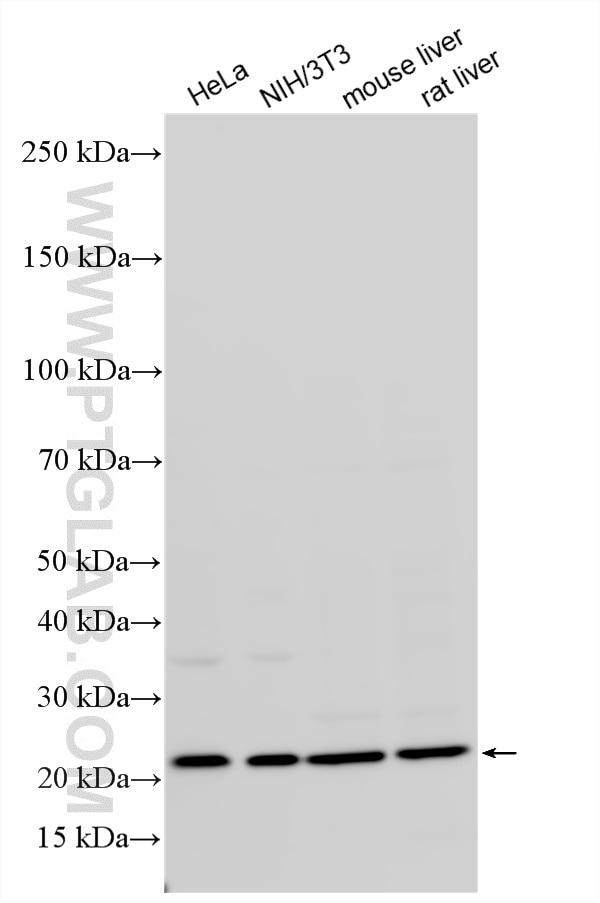
| Positive WB detected in | HeLa cells, HepG2 cells, NIH/3T3 cells, mouse liver tissue, rat liver tissue |
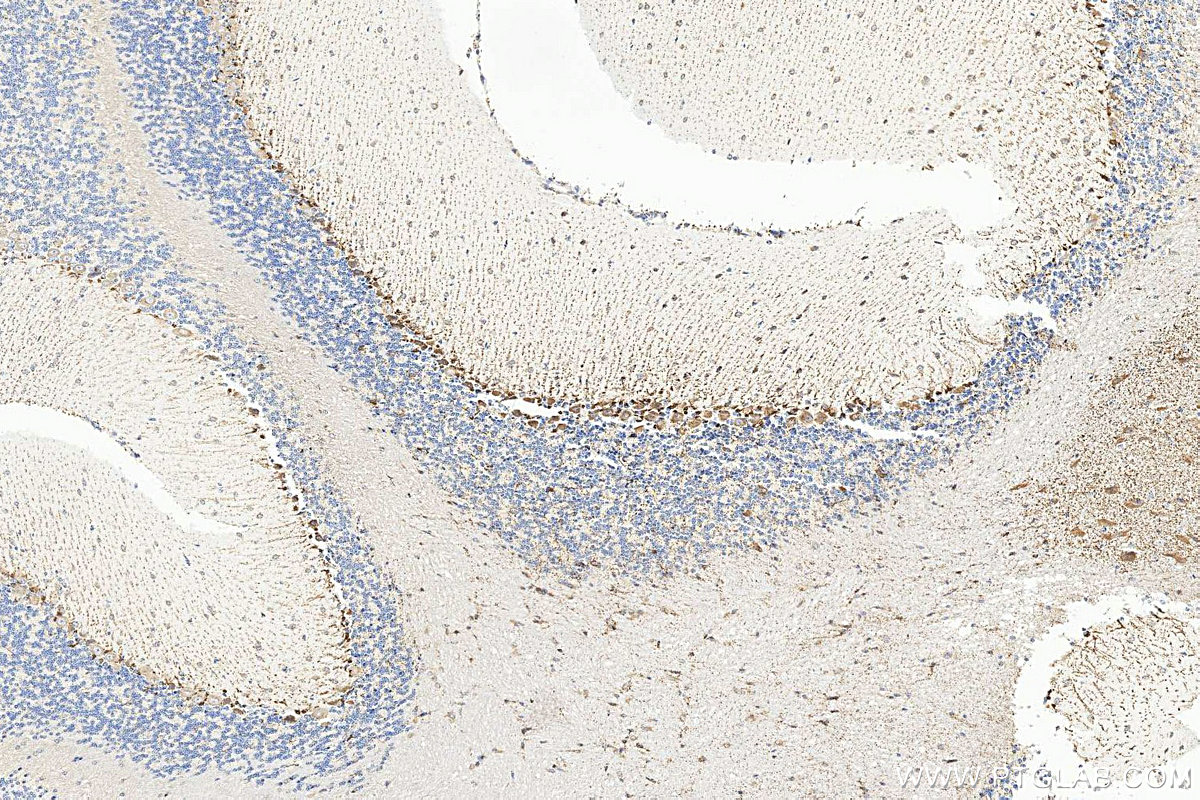
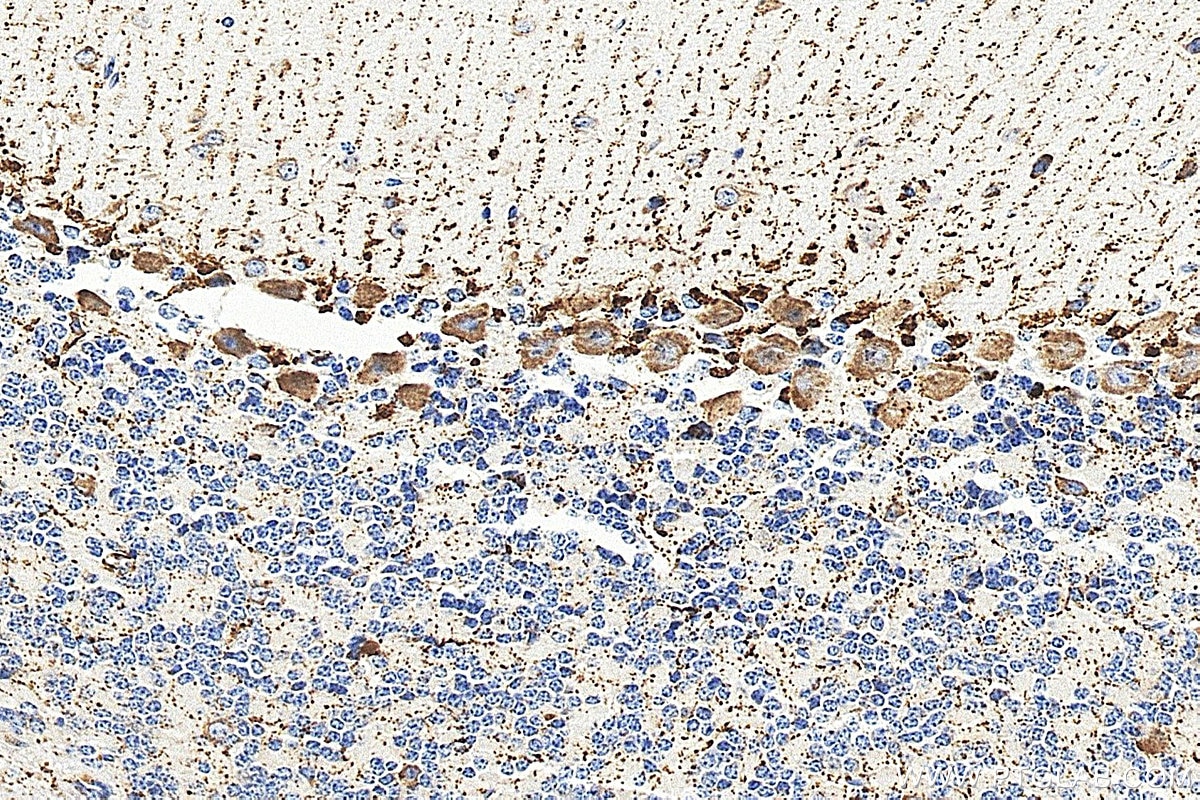
| Positive IHC detected in | mouse cerebellum tissue, human placenta tissue Note: suggested antigen retrieval with TE buffer pH 9.0; (*) Alternatively, antigen retrieval may be performed with citrate buffer pH 6.0 |
Recommended dilution
| Application | Dilution |
|---|---|
| Western Blot (WB) | WB : 1:5000-1:50000 |
| Immunohistochemistry (IHC) | IHC : 1:50-1:500 |
| It is recommended that this reagent should be titrated in each testing system to obtain optimal results. | |
| Sample-dependent, Check data in validation data gallery. | |
Product Information
14491-1-AP targets RPS7 in WB, IHC, IF, ELISA applications and shows reactivity with human, mouse, rat samples.
| Tested Reactivity | human, mouse, rat |
| Cited Reactivity | human, mouse |
| Host / Isotype | Rabbit / IgG |
| Class | Polyclonal |
| Type | Antibody |
| Immunogen |
CatNo: Ag5892 Product name: Recombinant human RPS7 protein Source: e coli.-derived, PGEX-4T Tag: GST Domain: 1-194 aa of BC061901 Sequence: MFSSSAKIVKPNGEKPDEFESGISQALLELEMNSDLKAQLRELNITAAKEIEVGGGRKAIIIFVPVPQLKSFQKIQVRLVRELEKKFSGKHVVFIAQRRILPKPTRKSRTKNKQKRPRSRTLTAVHDAILEDLVFPSEIVGKRIRVKLDGSRLIKVHLDKAQQNNVEHKVETFSGVYKKLTGKDVNFEFPEFQL Predict reactive species |
| Full Name | ribosomal protein S7 |
| Calculated Molecular Weight | 22 kDa |
| Observed Molecular Weight | 22-25 kDa |
| GenBank Accession Number | BC061901 |
| Gene Symbol | RPS7 |
| Gene ID (NCBI) | 6201 |
| RRID | AB_11232411 |
| Conjugate | Unconjugated |
| Form | Liquid |
| Purification Method | Antigen affinity purification |
| UNIPROT ID | P62081 |
| Storage Buffer | PBS with 0.02% sodium azide and 50% glycerol, pH 7.3. |
| Storage Conditions | Store at -20°C. Stable for one year after shipment. Aliquoting is unnecessary for -20oC storage. 20ul sizes contain 0.1% BSA. |
Background Information
Ribosomal protein S7(RPS7) belongs to the RPs, which is structural compoent of the ribosome invilved in protein synthesis. It interacts with and inhibit mdm2 mediated p53 degradation function. Also RPS7 has a essential role in early development. RPS7 involves in the maturation of ribosomal RNAs in the large or the small ribosomal subunit production pathway
Protocols
| Product Specific Protocols | |
|---|---|
| IHC protocol for RPS7 antibody 14491-1-AP | Download protocol |
| WB protocol for RPS7 antibody 14491-1-AP | Download protocol |
| Standard Protocols | |
|---|---|
| Click here to view our Standard Protocols |
Publications
What published studies show
The RPS7 antibody (catalog number 14491-1-AP) has 8 total citations. These appear in journals including Cell, Nature Chemical Biology, Cell Death & Disease, British Journal of Pharmacology, Scientific Reports, Experimental Cell Research, Biomedical Research International, and Urologic Oncology. Associated research fields span ferroptosis, hematopoietic stem cells, lung and prostate cancer tumorigenesis and metastasis, epithelial-mesenchymal transition, acute kidney injury, and gene therapy/antitumor research.
| Species | Application | Title |
|---|---|---|
Nat Chem Biol Identifying the functional contribution of the defatty-acylase activity of SIRT6. | ||
Cell Death Dis SMYD2 promotes tumorigenesis and metastasis of lung adenocarcinoma through RPS7. | ||
Br J Pharmacol A covalent molecular glue hijacks the E3 ligase MKRN2 to degrade the ribosomal protein RPS7 and induce synthetic lethality in p53-deficient NSCLC cells. | ||
Sci Rep Stabilization of SIRT7 deacetylase by viral oncoprotein HBx leads to inhibition of growth restrictive RPS7 gene and facilitates cellular transformation. | ||
Exp Cell Res Combination of DESI2 and endostatin gene therapy significantly improves antitumor efficacy by accumulating DNA lesions, inducing apoptosis and inhibiting angiogenesis. |
Reviews
What customers say
The single review for this product (rated 3/5) was from a Western Blot experiment using HEK293T cells at a 1:2000 dilution. The reviewer noted that the antibody produced numerous non-specific bands, which they found unusual given that ribosomal proteins are highly abundant and typically yield cleaner signals. Overall, the feedback suggests the antibody may require optimization for specificity in certain applications.
The reviews below have been submitted by verified Proteintech customers who received an incentive for providing their feedback.
H (Verified Customer) (07-09-2020) | This antibody has so many non-specific bands. Considering the fact that ribosomal proteins are so abundant, having these many non-specific bands is not usual for an r-protein antibody.
 |







