

Tested Applications
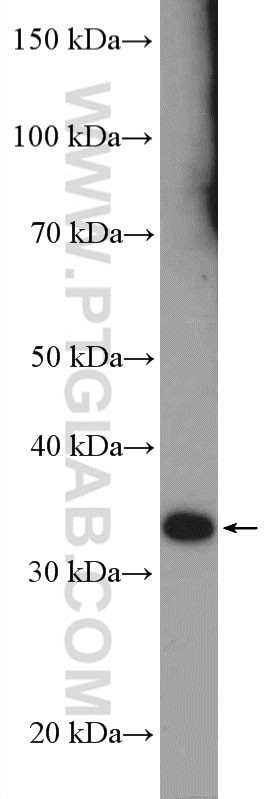
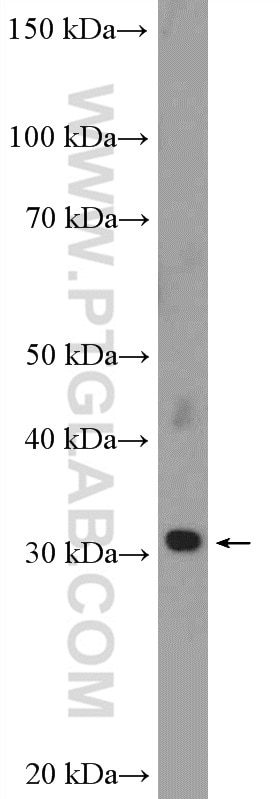
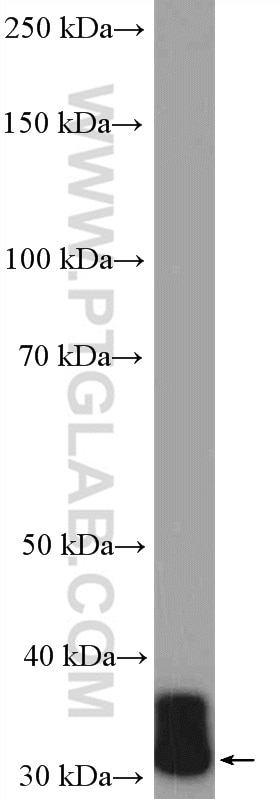
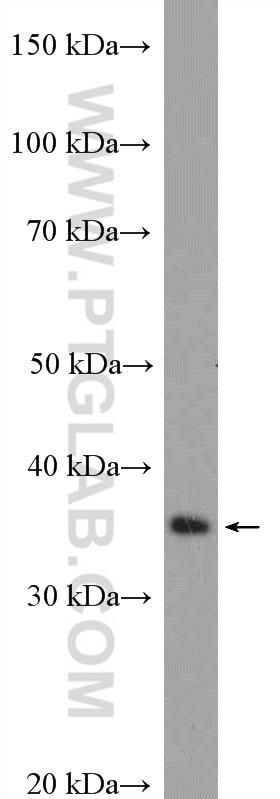
| Positive WB detected in | mouse testis tissue, NIH/3T3 cells, rat testis tissue |
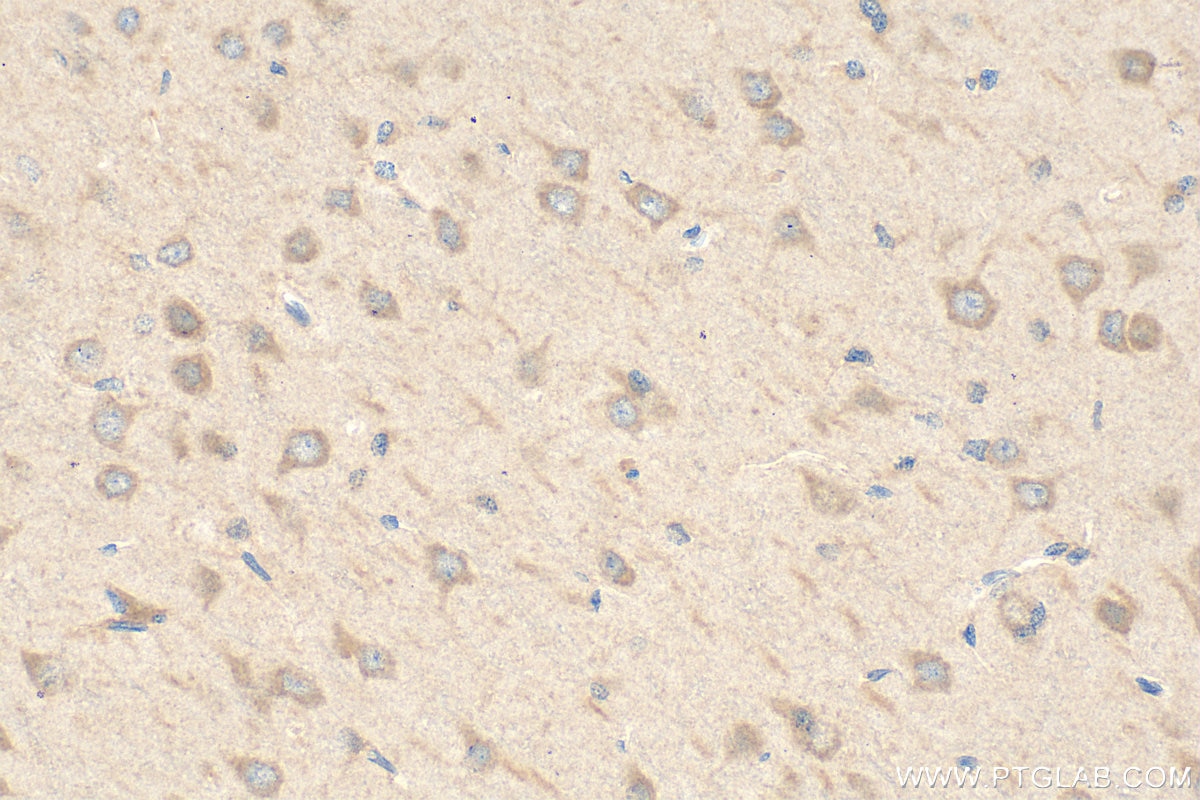
| Positive IHC detected in | rat brain tissue Note: suggested antigen retrieval with TE buffer pH 9.0; (*) Alternatively, antigen retrieval may be performed with citrate buffer pH 6.0 |
Recommended dilution
| Application | Dilution |
|---|---|
| Western Blot (WB) | WB : 1:500-1:1000 |
| Immunohistochemistry (IHC) | IHC : 1:50-1:500 |
| It is recommended that this reagent should be titrated in each testing system to obtain optimal results. | |
| Sample-dependent, Check data in validation data gallery. | |
Product Information
23253-1-AP targets RSPH9 in WB, IHC, IF, ELISA applications and shows reactivity with human, mouse, rat samples.
| Tested Reactivity | human, mouse, rat |
| Cited Reactivity | human, mouse |
| Host / Isotype | Rabbit / IgG |
| Class | Polyclonal |
| Type | Antibody |
| Immunogen |
CatNo: Ag19745 Product name: Recombinant human RSPH9 protein Source: e coli.-derived, PGEX-4T Tag: GST Domain: 1-276 aa of BC029519 Sequence: MDADSLLLSLELASGSGQGLSPDRRASLLTSLMLVKRDYRYDRVLFWGRILGLVADYYIAQGLSEDQLAPRKTLYSLNCTEWSLLPPATEEMVAQSSVVKGRFMGDPSYEYEHTELQKVNEGEKVFEEEIVVQIKEETRLVSVIDQIDKAVAIIPRGALFKTPFGPTHVNRTFEGLSLSEAKKLSSYFHFREPVELKNKTLLEKADLDPSLDFMDSLEHDIPKGSWSIQMERGNALVVLRSLLWPGLTFYHAPRTKNYGYVYVGTGEKNMDLPFML Predict reactive species |
| Full Name | radial spoke head 9 homolog (Chlamydomonas) |
| Calculated Molecular Weight | 276 aa, 31 kDa |
| Observed Molecular Weight | 31-35 kDa |
| GenBank Accession Number | BC029519 |
| Gene Symbol | RSPH9 |
| Gene ID (NCBI) | 221421 |
| RRID | AB_2879240 |
| Conjugate | Unconjugated |
| Form | Liquid |
| Purification Method | Antigen Affinity purified |
| UNIPROT ID | Q9H1X1 |
| Storage Buffer | PBS with 0.02% sodium azide and 50% glycerol, pH 7.3. |
| Storage Conditions | Store at -20°C. Stable for one year after shipment. Aliquoting is unnecessary for -20oC storage. 20ul sizes contain 0.1% BSA. |
Background Information
RSPH9 (Radial Spoke Head 9 Homolog) is a protein involved in the structure and function of cilia and flagella. Cilia and flagella are hair-like structures that extend from the surface of many eukaryotic cells and play critical roles in cell motility, sensory perception, and signaling. The RSPH9 protein is a component of the radial spoke, a structure within the axoneme (the core of cilia and flagella) that is essential for the regulation of ciliary and flagellar movement.
Protocols
| Product Specific Protocols | |
|---|---|
| IHC protocol for RSPH9 antibody 23253-1-AP | Download protocol |
| WB protocol for RSPH9 antibody 23253-1-AP | Download protocol |
| Standard Protocols | |
|---|---|
| Click here to view our Standard Protocols |
Publications
What published studies show
The RSPH9 Polyclonal antibody (Cat# 23253-1-AP) has 13 citations published across 12 journals including Cell, Science Advances, EBioMedicine, Cell Reports, Cell Molecular Life Sciences, Human Reproduction, Human Molecular Genetics, European Journal of Human Genetics, Asian Journal of Andrology, Science China Life Sciences, Biology Open, and eLife. The research fields center on cilia/flagella biology, radial spoke assembly, sperm flagellar defects, male infertility genetics, and ciliary gene-associated congenital diseases.
| Species | Application | Title |
|---|---|---|
Cell Structures of sperm flagellar doublet microtubules expand the genetic spectrum of male infertility | ||
Sci Adv Loss-of-function variants in ciliary genes confer high risk for tetralogy of Fallot. | ||
EBioMedicine CFAP70 is a solid and valuable target for the genetic diagnosis of oligo-astheno-teratozoospermia in infertile men | ||
Sci China Life Sci Adenylate kinase phosphate energy shuttle underlies energetic communication in flagellar axonemes | ||
Cell Rep Differential requirements of IQUB for the assembly of radial spoke 1 and the motility of mouse cilia and flagella | ||
Hum Reprod CALR3 defects disrupt sperm-zona pellucida binding in humans: new insights into male factor fertilization failure and relevant clinical therapeutic approaches |
Reviews
What customers say
The single review for this product is from Célia Tebbakh (October 2024), who used it for immunofluorescence on spermatozoa at a 1:100 dilution. She confirmed it works well but noted the concentration was slightly high, suggesting 1:200 would also be suitable. She gave the product a 5-star rating.
The reviews below have been submitted by verified Proteintech customers who received an incentive for providing their feedback.
Célia (Verified Customer) (10-28-2024) | I tested 1/100 to be sure that it works in IF but the concentration was a little high so 1/200 should still be fine.
|






