

Tested Applications
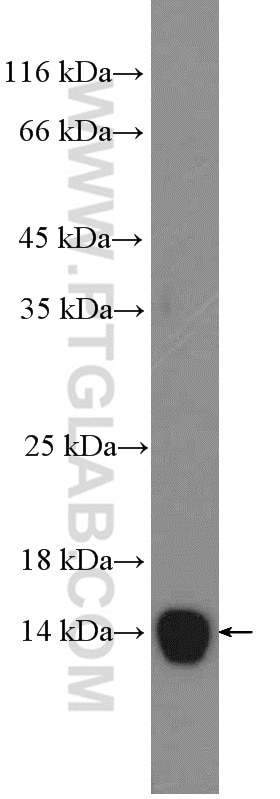
| Positive WB detected in | serum from mouse injected with bacteria |
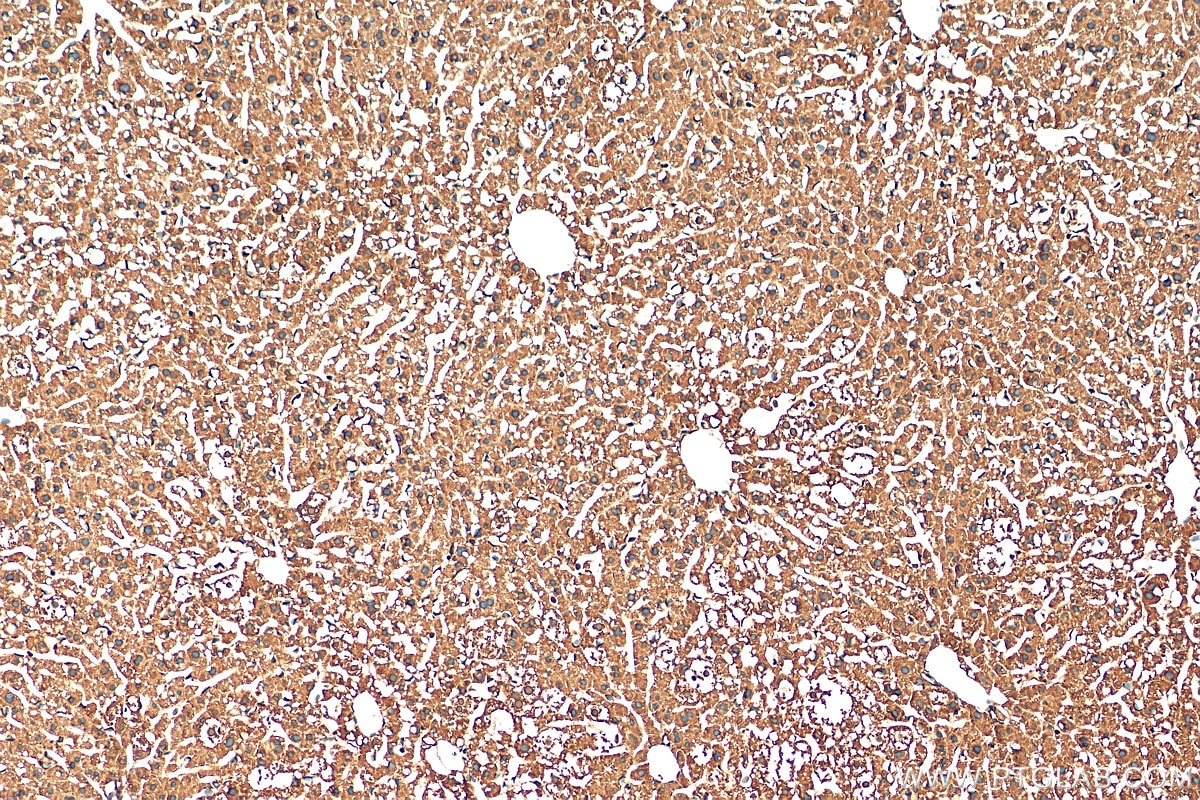
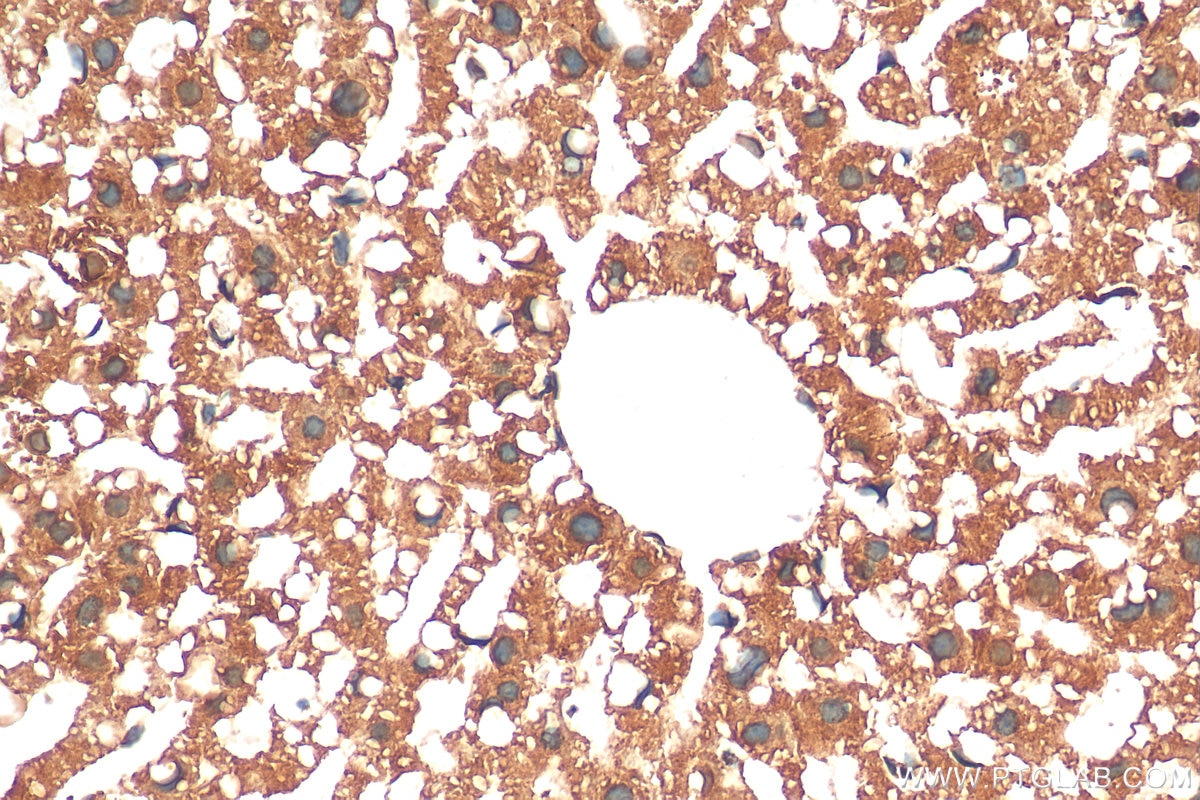
| Positive IHC detected in | mouse liver tissue Note: suggested antigen retrieval with TE buffer pH 9.0; (*) Alternatively, antigen retrieval may be performed with citrate buffer pH 6.0 |
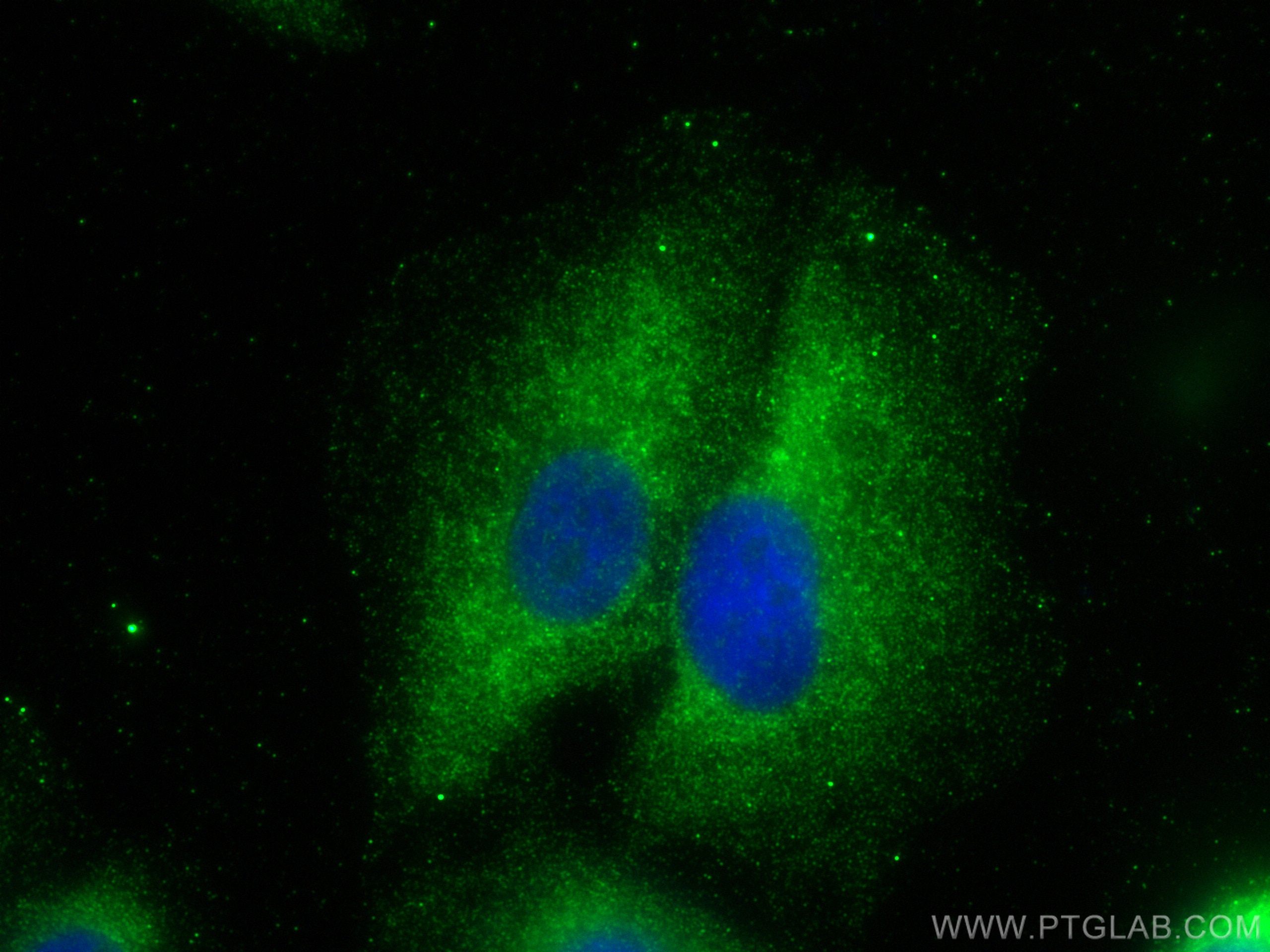
| Positive IF/ICC detected in | A549 cells |
Recommended dilution
| Application | Dilution |
|---|---|
| Western Blot (WB) | WB : 1:500-1:1000 |
| Immunohistochemistry (IHC) | IHC : 1:50-1:500 |
| Immunofluorescence (IF)/ICC | IF/ICC : 1:50-1:500 |
| It is recommended that this reagent should be titrated in each testing system to obtain optimal results. | |
| Sample-dependent, Check data in validation data gallery. | |
Product Information
13192-1-AP targets SAA in WB, IHC, IF/ICC, ELISA applications and shows reactivity with human, mouse samples.
| Tested Reactivity | human, mouse |
| Cited Reactivity | human, mouse |
| Host / Isotype | Rabbit / IgG |
| Class | Polyclonal |
| Type | Antibody |
| Immunogen |
CatNo: Ag3869 Product name: Recombinant human SAA2 protein Source: e coli.-derived, PGEX-4T Tag: GST Domain: 1-122 aa of BC020795 Sequence: MKLLTGLVFCSLVLSVSSRSFFSFLGEAFDGARDMWRAYSDMREANYIGSDKYFHARGNYDAAKRGPGGAWAAEVISNARENIQRLTGHGAEDSLADQAANKWGRSGRDPNHFRPAGLPEKY Predict reactive species |
| Full Name | serum amyloid A2 |
| Calculated Molecular Weight | 122 aa, 14 kDa |
| Observed Molecular Weight | 12-13 kDa |
| GenBank Accession Number | BC020795 |
| Gene Symbol | SAA2 |
| Gene ID (NCBI) | 6289 |
| RRID | AB_2877923 |
| Conjugate | Unconjugated |
| Form | Liquid |
| Purification Method | Antigen affinity purification |
| UNIPROT ID | P0DJI9 |
| Storage Buffer | PBS with 0.02% sodium azide and 50% glycerol, pH 7.3. |
| Storage Conditions | Store at -20°C. Stable for one year after shipment. Aliquoting is unnecessary for -20oC storage. 20ul sizes contain 0.1% BSA. |
Background Information
Human SAA proteins are a group of apolipoproteins mainly found in the high density lipoprotein (HDL) portion of plasma. The serum amyloid A (SAA) protein is an acute phase apolipoprotein reactant produced mainly by hepatocytes and under the regulation of inflammatory cytokines(PMID: 12011456). Reactive, secondary amyloidosis is characterized by the extracellular accumulation in various tissues of the SAA2 protein(PMID: 1463770). This antibody can recognize SAA1 and SAA2.
Protocols
| Product Specific Protocols | |
|---|---|
| IF protocol for SAA antibody 13192-1-AP | Download protocol |
| IHC protocol for SAA antibody 13192-1-AP | Download protocol |
| WB protocol for SAA antibody 13192-1-AP | Download protocol |
| Standard Protocols | |
|---|---|
| Click here to view our Standard Protocols |
Publications
What published studies show
The antibody targeting Serum Amyloid A (SAA), catalog number 13192-1-AP, has 10 total citations published in journals including Advanced Science, Journal of Allergy and Clinical Immunology, Journal of Crohn's and Colitis, Journal of Translational Medicine, Journal of Investigative Dermatology, International Immunopharmacology, Inflammation, Experimental Cell Research, Oncology Letters, and bioRxiv. Research fields span liver transplant injury, eosinophilic chronic rhinosinusitis, aberrant adipogenesis, hepatocellular carcinoma, sweat gland aging, macrophage polarization, coronary endothelial inflammation, intervertebral disc injury, and glioblastoma.
| Species | Application | Title |
|---|---|---|
Adv Sci (Weinh) SAA/FPR2 Signaling Between Pericentral Hepatocytes and Macrophages Exacerbates Zonated Liver Transplant Injury. | ||
J Allergy Clin Immunol Small Proline-Rich Protein 2A Drives Epithelial Remodeling in Eosinophilic Chronic Rhinosinusitis with Nasal Polyps via SAA2 Upregulation | ||
J Crohns Colitis Lysophosphatidylcholine-Induced Aberrant Adipogenesis in Mesenchymal Stem Cells and Impaired Antibacterial Function in Adipocytes of Creeping Fat | ||
J Transl Med Single-cell RNA sequencing reveals a B cell-related immunosuppressive landscape and a potential suppressor in hepatocellular carcinoma. | ||
J Invest Dermatol Dendritic cells remodel eccrine sweat gland niche metabolism through oxidative phosphorylation during aging. | ||
Int Immunopharmacol Artesunate attenuates serum amyloid A-induced M1 macrophage differentiation through the promotion of PHGDH |





