

Tested Applications
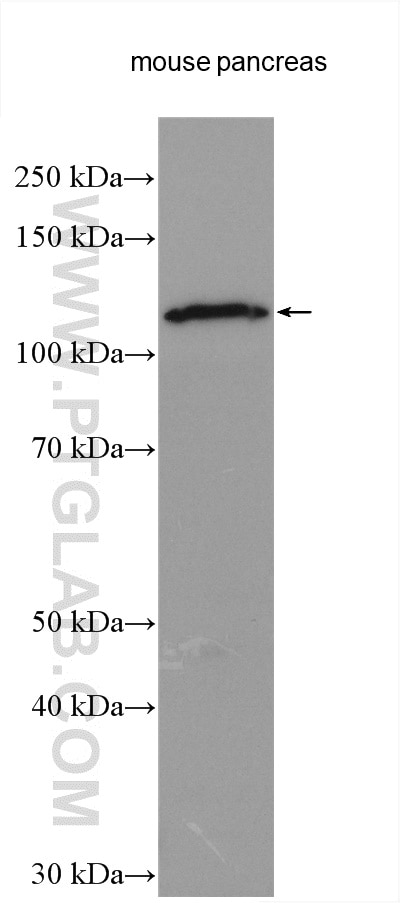
| Positive WB detected in | mouse pancreas tissue |
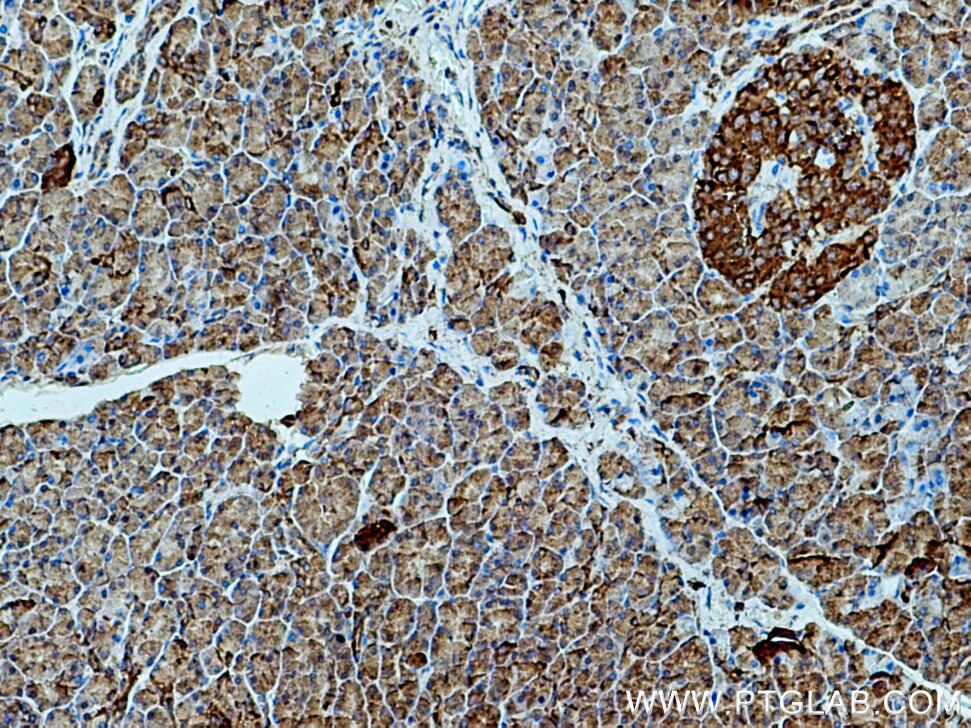
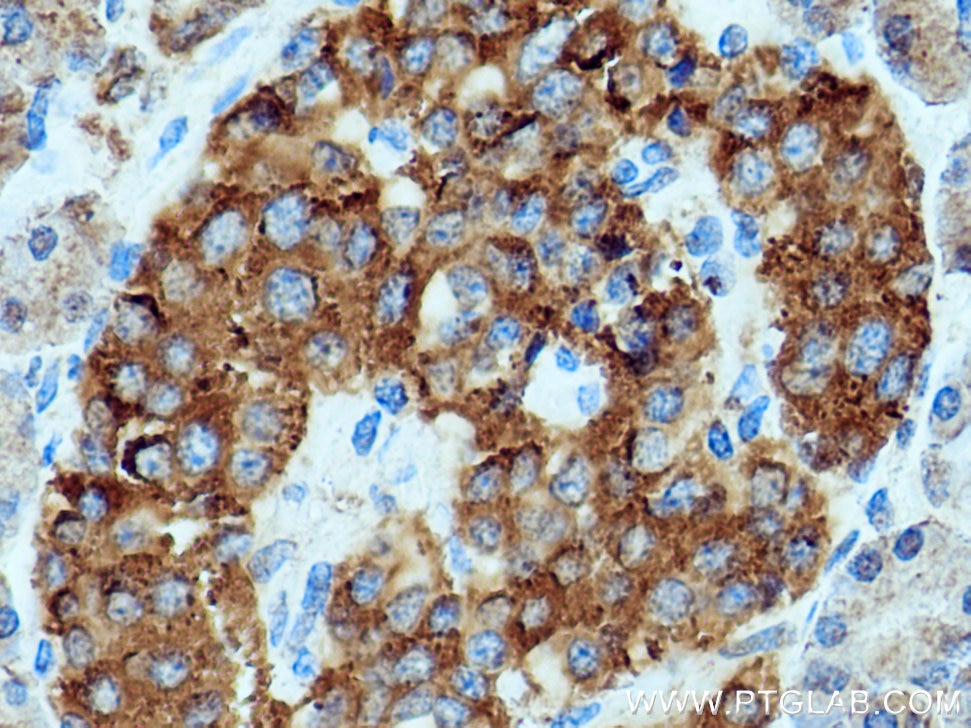
| Positive IHC detected in | human pancreas tissue Note: suggested antigen retrieval with TE buffer pH 9.0; (*) Alternatively, antigen retrieval may be performed with citrate buffer pH 6.0 |
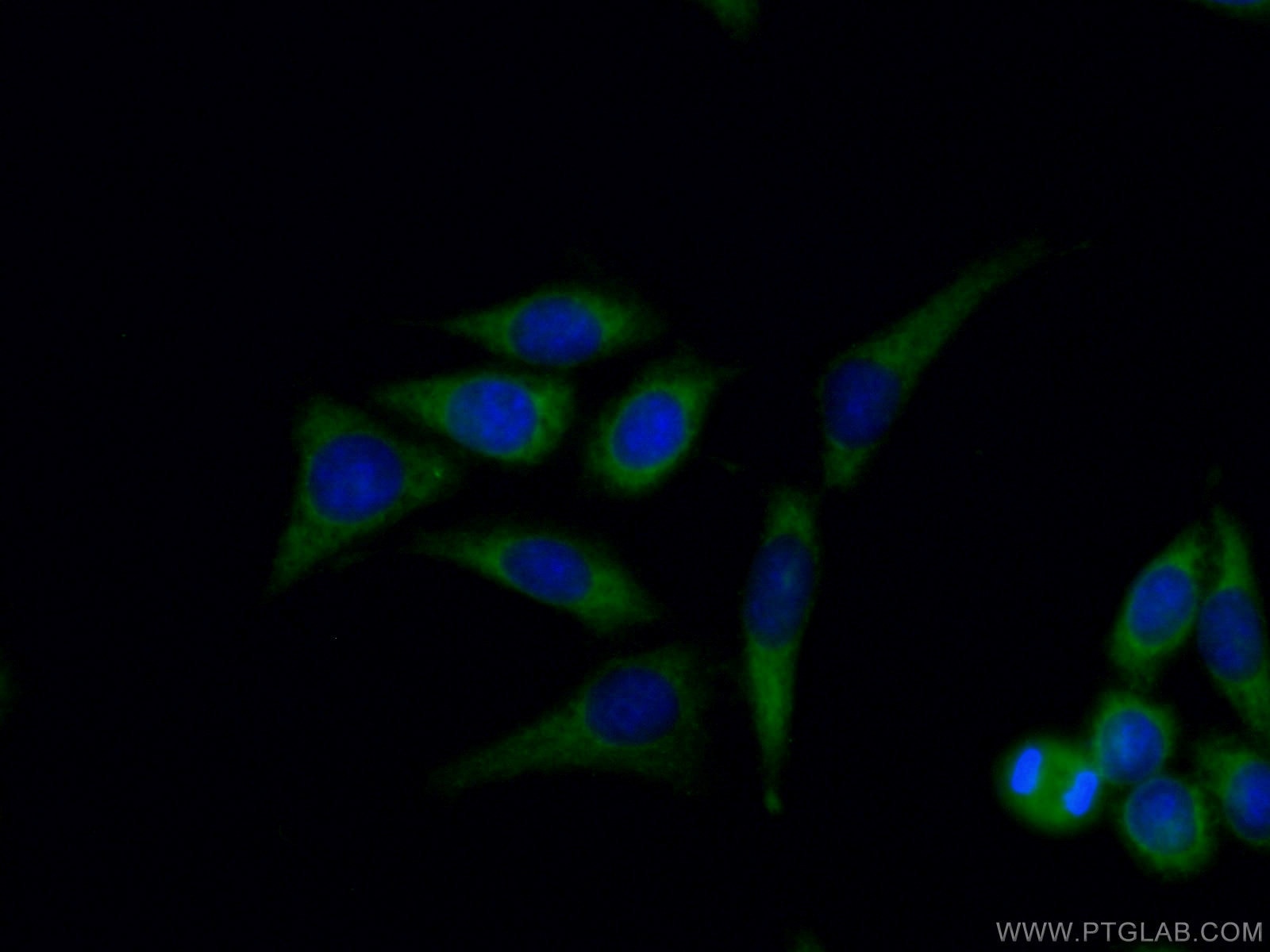
| Positive IF/ICC detected in | HeLa cells |
Recommended dilution
| Application | Dilution |
|---|---|
| Western Blot (WB) | WB : 1:500-1:1000 |
| Immunohistochemistry (IHC) | IHC : 1:50-1:500 |
| Immunofluorescence (IF)/ICC | IF/ICC : 1:50-1:500 |
| It is recommended that this reagent should be titrated in each testing system to obtain optimal results. | |
| Sample-dependent, Check data in validation data gallery. | |
Product Information
13673-1-AP targets SEC24D in WB, IHC, IF/ICC, ELISA applications and shows reactivity with human, mouse samples.
| Tested Reactivity | human, mouse |
| Cited Reactivity | human, mouse |
| Host / Isotype | Rabbit / IgG |
| Class | Polyclonal |
| Type | Antibody |
| Immunogen |
CatNo: Ag4657 Product name: Recombinant human SEC24D protein Source: e coli.-derived, PGEX-4T Tag: GST Domain: 783-1033 aa of BC035761 Sequence: TDALINFFAKSAFKAVLHQPLKVIREILVNQTAHMLACYRKNCASPSAASQLILPDSMKVLPVYMNCLLKNCVLLSRPEISTDERAYQRQLVMTMGVADSQLFFYPQLLPIHTLDVKSTMLPAAVRCSESRLSEEGIFLLANGLHMFLWLGVSSPPELIQGIFNVPSFAHINTDMTLLPEVGNPYSQQLRMIMGIIQQKRPYSMKLTIVKQREQPEMVFRQFLVEDKGLYGGSSYVDFLCCVHKEICQLLN Predict reactive species |
| Full Name | SEC24 family, member D (S. cerevisiae) |
| Calculated Molecular Weight | 1033 aa, 113 kDa |
| Observed Molecular Weight | 113 kDa |
| GenBank Accession Number | BC035761 |
| Gene Symbol | SEC24D |
| Gene ID (NCBI) | 9871 |
| RRID | AB_2877968 |
| Conjugate | Unconjugated |
| Form | Liquid |
| Purification Method | Antigen affinity purification |
| UNIPROT ID | O94855 |
| Storage Buffer | PBS with 0.02% sodium azide and 50% glycerol, pH 7.3. |
| Storage Conditions | Store at -20°C. Stable for one year after shipment. Aliquoting is unnecessary for -20oC storage. 20ul sizes contain 0.1% BSA. |
Background Information
COPII-coated vesicles mediate anterograde transport from the ER to the Golgi apparatus. COPII is composed of three parts: two coat protein complexes (Sec23/24 complex and Sec13/31 complex) and one small GTP-binding protein, Sar1 (PMID: 9568718). Sec24 subunit of the coat complex has been implicated in cargo recognition (PMID: 17316621). In mammal cells there are four Sec24 isoforms, termed Sec24A, Sec24B, Sec24C, and Sec24D (PMID: 10329445).
Protocols
| Product Specific Protocols | |
|---|---|
| IF protocol for SEC24D antibody 13673-1-AP | Download protocol |
| IHC protocol for SEC24D antibody 13673-1-AP | Download protocol |
| WB protocol for SEC24D antibody 13673-1-AP | Download protocol |
| Standard Protocols | |
|---|---|
| Click here to view our Standard Protocols |
Publications
What published studies show
The SEC24D antibody (Cat# 13673-1-AP) has 4 total citations published in Nature Cell Biology, EBioMedicine, Communications Biology, and Journal of Human Genetics. Research fields span lipid homeostasis and COPII vesicle biology, ovarian cancer proteomics and molecular reclassification, osteogenic differentiation via the ATF6/TGF-β/Runx2 pathway, and aberrant splicing in cole-carpenter syndrome. Applications include Western blotting and immunohistochemistry in mouse and human samples.
| Species | Application | Title |
|---|---|---|
Nat Cell Biol Manganese regulation of COPII condensation controls circulating lipid homeostasis | ||
EBioMedicine Proteomic profiling and molecular reclassification of high-grade serous ovarian cancer identifies prognostic subtypes and immunotherapy biomarkers. | ||
Commun Biol SEC24D depletion induces osteogenic differentiation deficiency by inactivating the ATF6/TGF-β/Runx2 regulatory loop | ||
J Hum Genet Elucidating the impact of a synonymous SEC24D variant on aberrant splicing in a patient with cole-carpenter syndrome 2. |





