

Tested Applications
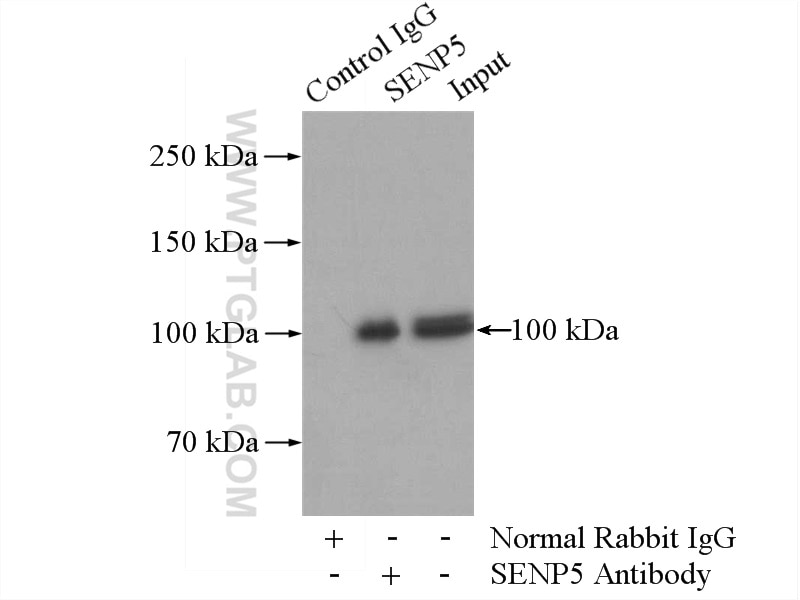
| Positive IP detected in | HeLa cells |
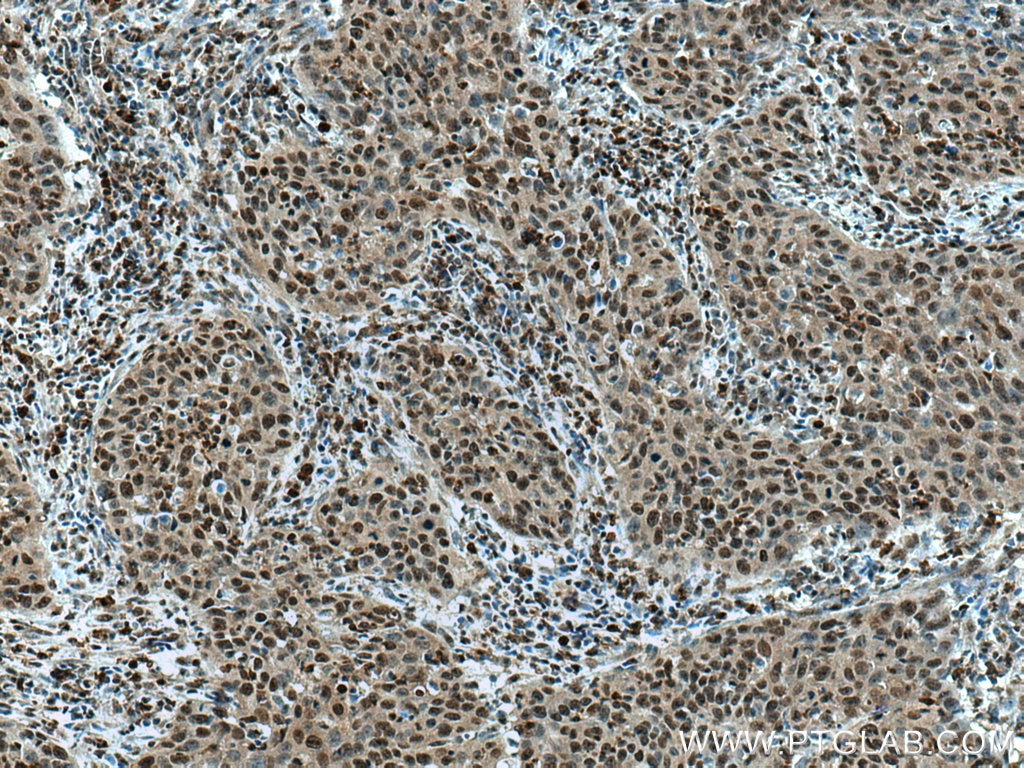
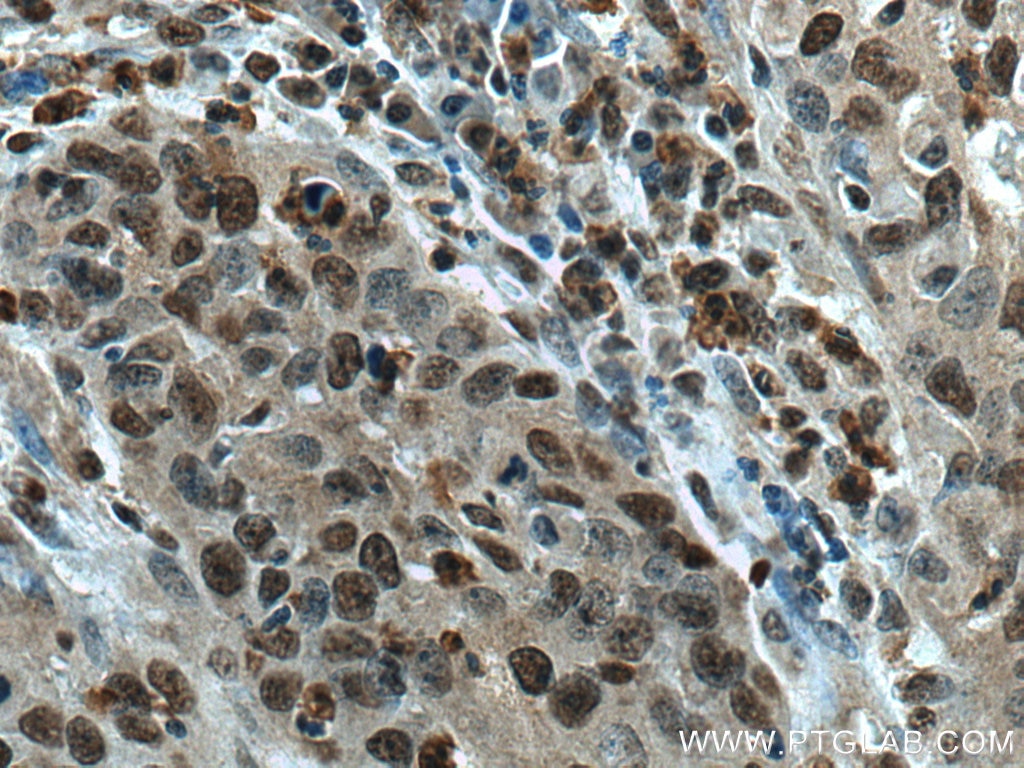
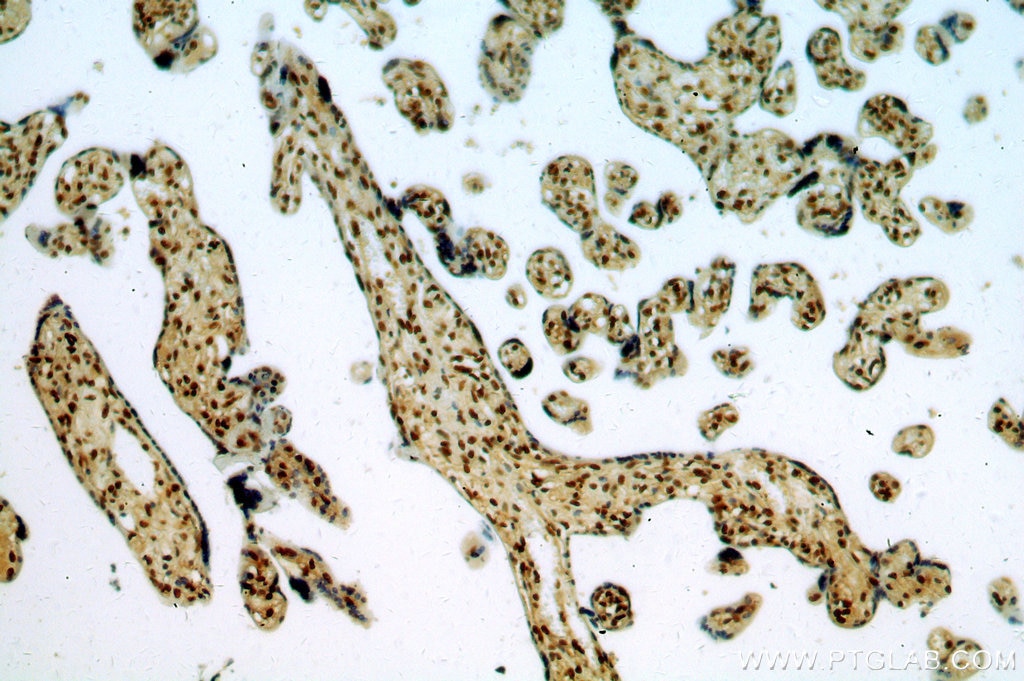
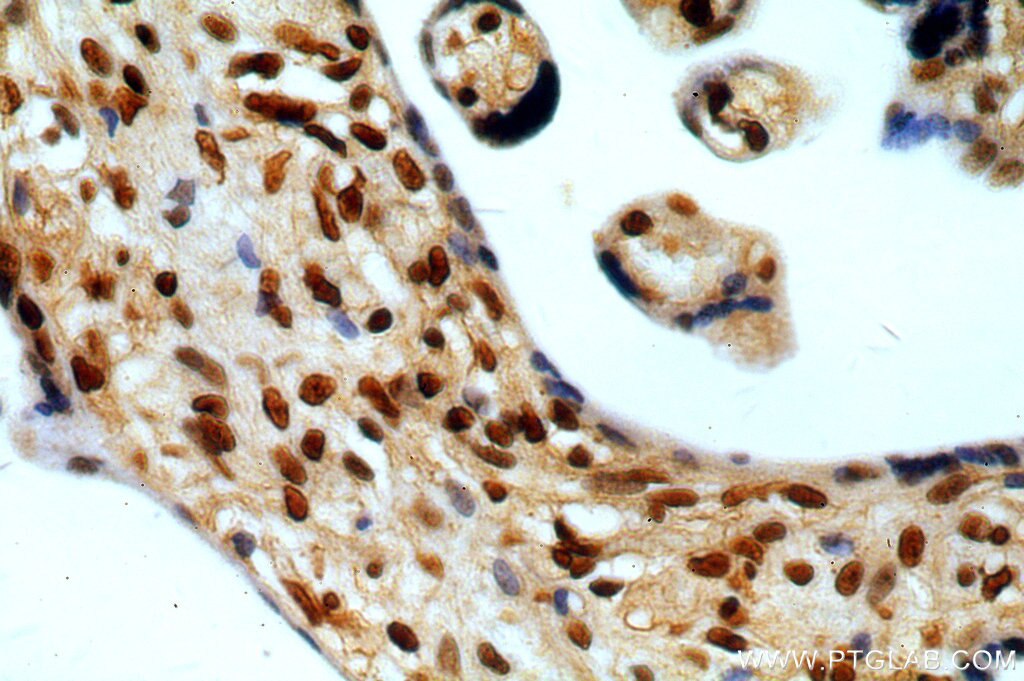
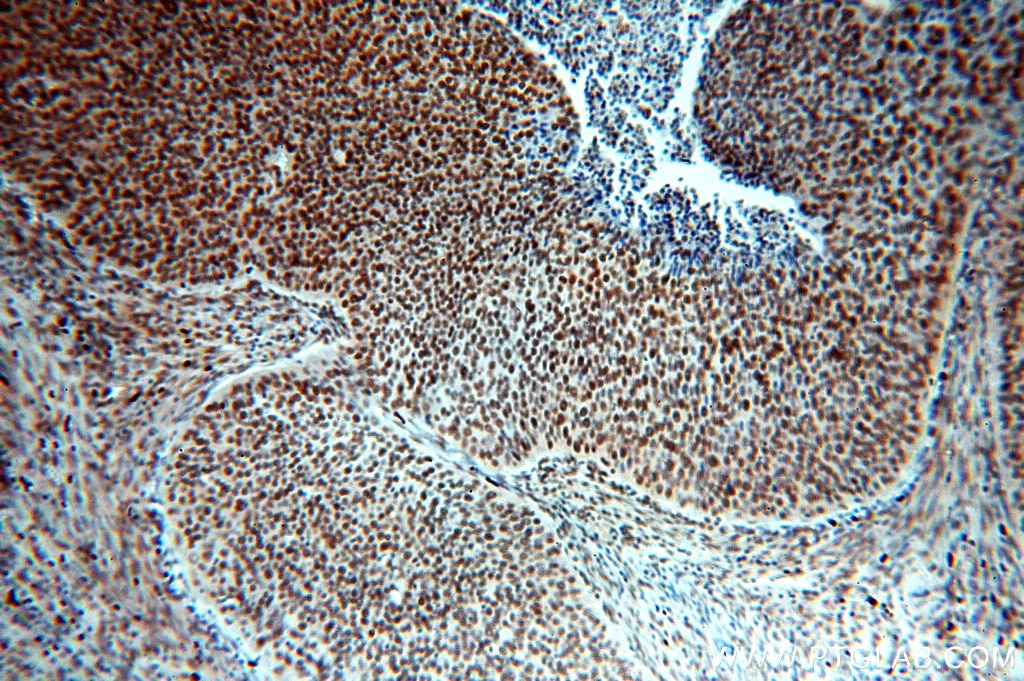
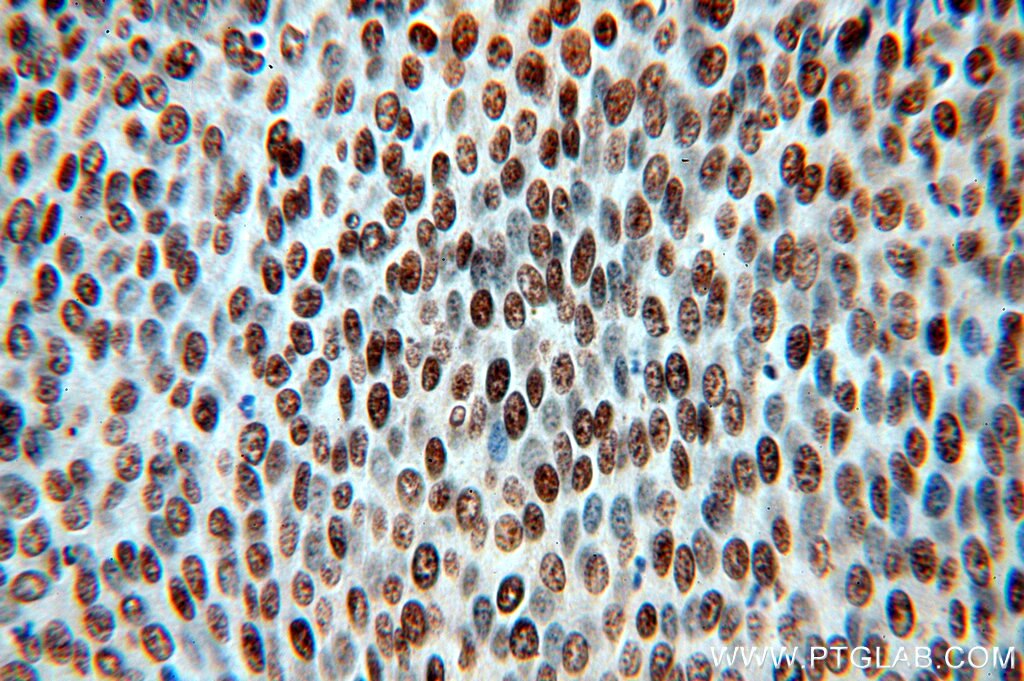
| Positive IHC detected in | human cervical cancer tissue, human placenta tissue Note: suggested antigen retrieval with TE buffer pH 9.0; (*) Alternatively, antigen retrieval may be performed with citrate buffer pH 6.0 |
Recommended dilution
| Application | Dilution |
|---|---|
| Immunoprecipitation (IP) | IP : 0.5-4.0 ug for 1.0-3.0 mg of total protein lysate |
| Immunohistochemistry (IHC) | IHC : 1:200-1:600 |
| It is recommended that this reagent should be titrated in each testing system to obtain optimal results. | |
| Sample-dependent, Check data in validation data gallery. | |
Product Information
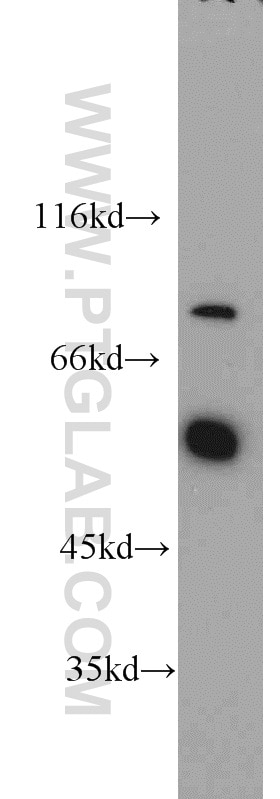
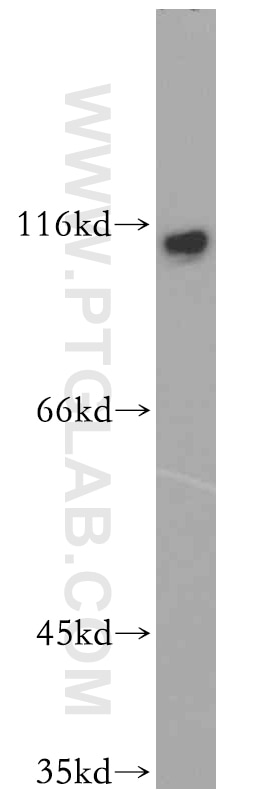
19529-1-AP targets SENP5-Specific in WB, IHC, IF, IP, CoIP, ELISA applications and shows reactivity with human, mouse, rat samples.
| Tested Reactivity | human, mouse, rat |
| Cited Reactivity | human, mouse, rat |
| Host / Isotype | Rabbit / IgG |
| Class | Polyclonal |
| Type | Antibody |
| Immunogen |
Peptide Predict reactive species |
| Full Name | SUMO1/sentrin specific peptidase 5 |
| Calculated Molecular Weight | 87 kDa |
| Observed Molecular Weight | 97 kDa |
| GenBank Accession Number | NM_152699 |
| Gene Symbol | SENP5 |
| Gene ID (NCBI) | 205564 |
| RRID | AB_10643377 |
| Conjugate | Unconjugated |
| Form | Liquid |
| Purification Method | Antigen affinity purification |
| UNIPROT ID | Q96HI0 |
| Storage Buffer | PBS with 0.02% sodium azide and 50% glycerol, pH 7.3. |
| Storage Conditions | Store at -20°C. Stable for one year after shipment. Aliquoting is unnecessary for -20oC storage. 20ul sizes contain 0.1% BSA. |
Background Information
SENP5, also named as FKSG45, belongs to the peptidase C48 family. SENP5 is a protease that catalyzes two essential functions in the SUMO pathway: processing of full-length SUMO3 to its mature form and deconjugation of SUMO2 and SUMO3 from targeted proteins. SENP5 has weak proteolytic activity against full-length SUMO1 or SUMO1 conjugates. It is required for cell division. The antibody is specific to SENP5.
Protocols
| Product Specific Protocols | |
|---|---|
| IHC protocol for SENP5-Specific antibody 19529-1-AP | Download protocol |
| IP protocol for SENP5-Specific antibody 19529-1-AP | Download protocol |
| WB protocol for SENP5-Specific antibody 19529-1-AP | Download protocol |
| Standard Protocols | |
|---|---|
| Click here to view our Standard Protocols |
Publications
What published studies show
SENP5-Specific Polyclonal antibody (Cat# 19529-1-AP) has 18 citations across journals including Autophagy, Nature Communications, Cell Reports, EMBO Reports, J Cell Sci, iScience, J Exp Clin Cancer Res, Int J Oncol, CNS Neurosci Ther, Eur J Med Res, Front Biosci, J Comp Neurol, Oncol Lett, and Cell Death Discovery. Research fields span SUMOylation/deSUMOylation, autophagy, cancer, mitochondrial dynamics, DNA damage repair, neurodevelopment, ferroptosis, and pyroptosis.
| Species | Application | Title |
|---|---|---|
Autophagy A fine-tuning mechanism underlying self-control for autophagy: deSUMOylation of BECN1 by SENP3 | ||
Nat Commun IRX3 controls a SUMOylation-dependent differentiation switch in adipocyte precursor cells. | ||
J Exp Clin Cancer Res SENP5 promotes homologous recombination-mediated DNA damage repair in colorectal cancer cells through H2AZ deSUMOylation
| ||
Cell Rep SENP7 deSUMOylase-governed transcriptional program coordinates sarcomere assembly and is targeted in muscle atrophy | ||
Cell Rep Mitochondrial SENP2 regulates the assembly of SDH complex under metabolic stress | ||
Int J Oncol Transcription factor E2F4 facilitates SUMOylation to promote HCC progression through interaction with LIN9 |










