

Tested Applications
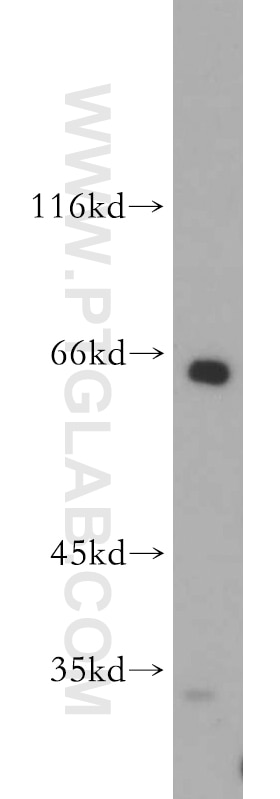
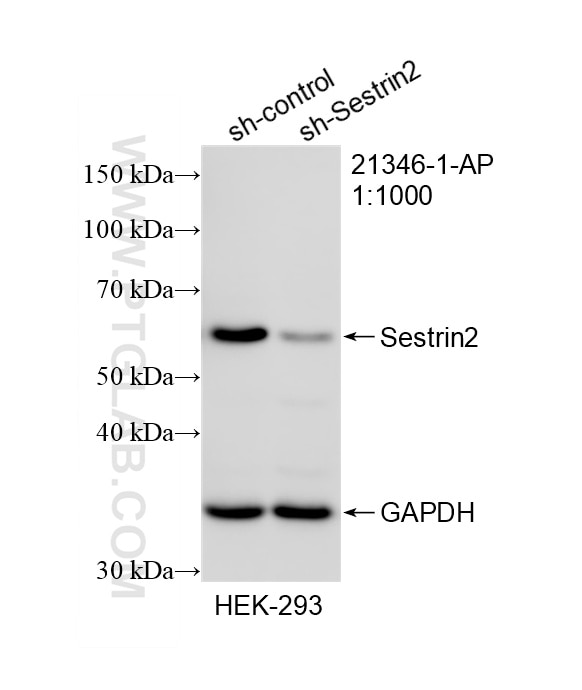
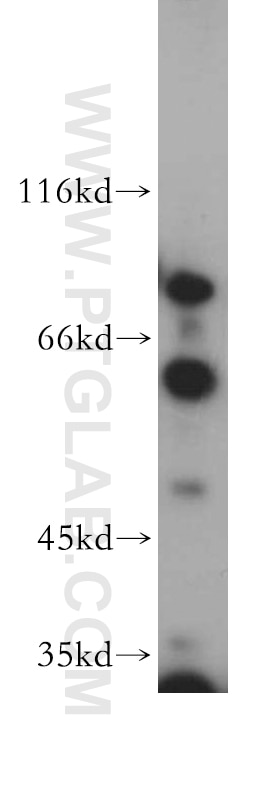
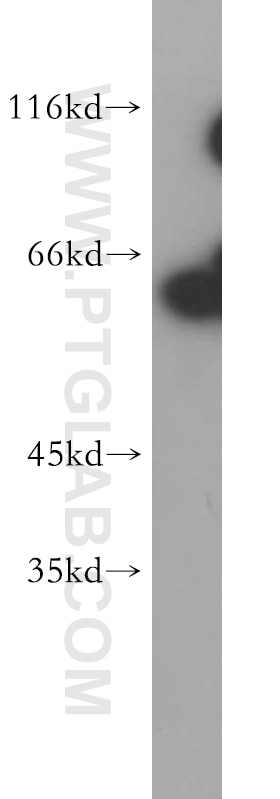
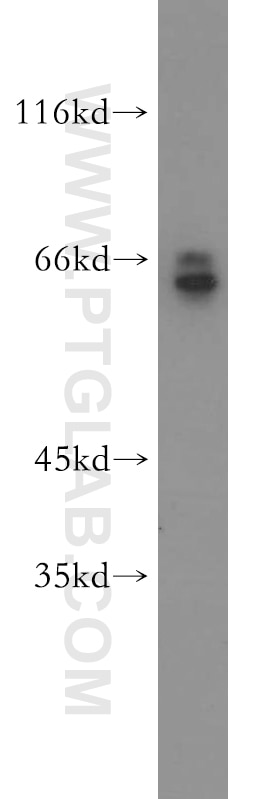
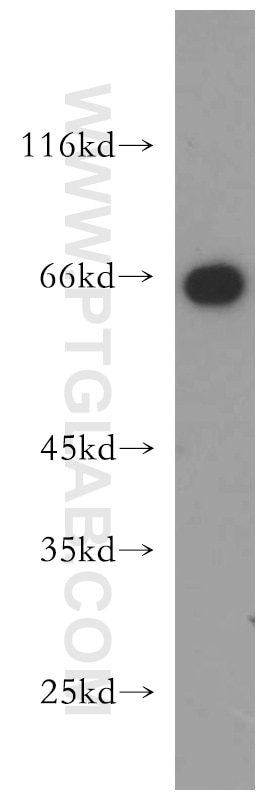
| Positive WB detected in | mouse thymus tissue, HEK-293 cells, HeLa cells, K-562 cells, mouse lung tissue, NIH/3T3 cells |
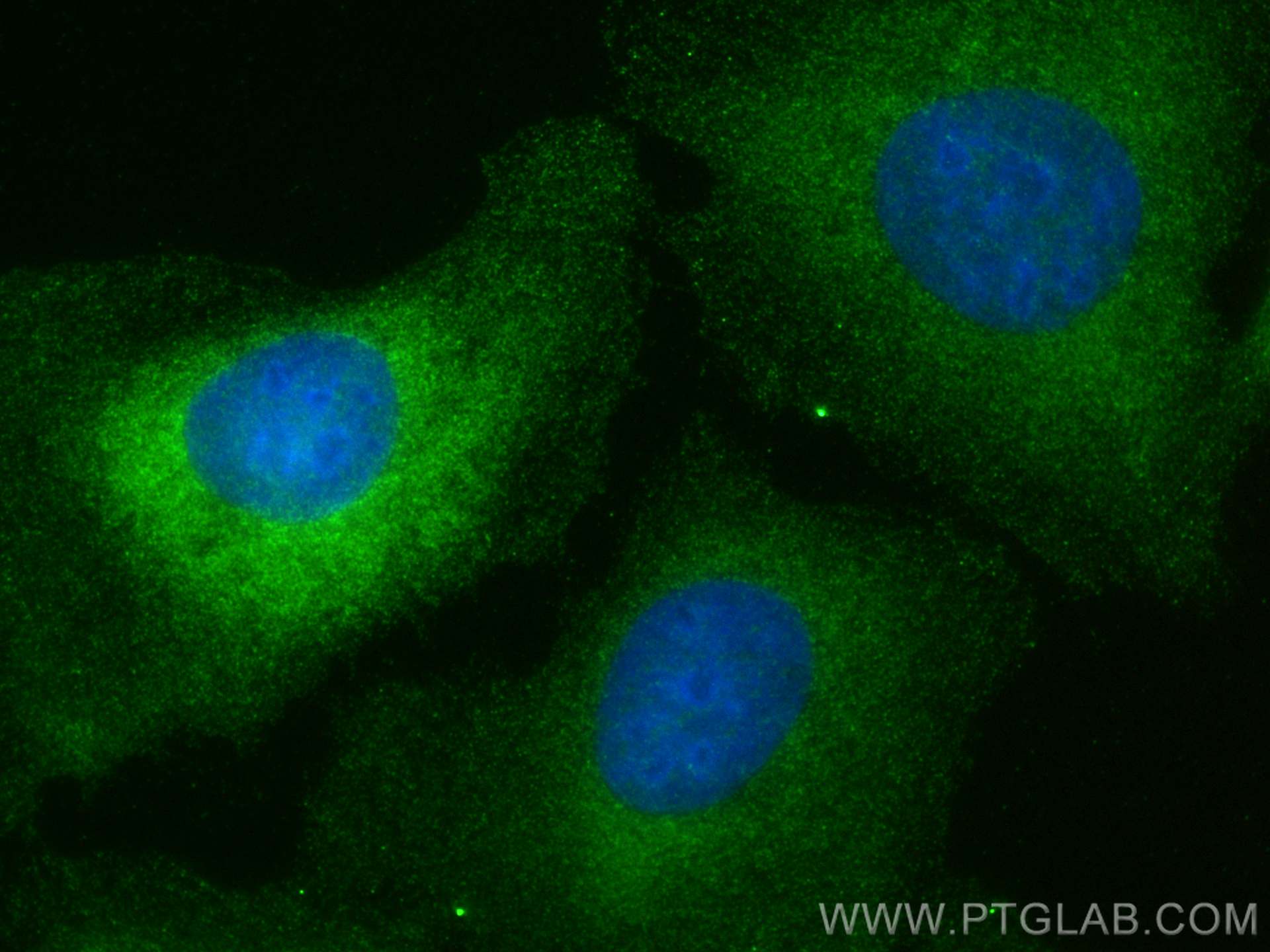
| Positive IF/ICC detected in | U2OS cells |
Recommended dilution
| Application | Dilution |
|---|---|
| Western Blot (WB) | WB : 1:1000-1:4000 |
| Immunofluorescence (IF)/ICC | IF/ICC : 1:200-1:800 |
| It is recommended that this reagent should be titrated in each testing system to obtain optimal results. | |
| Sample-dependent, Check data in validation data gallery. | |
Product Information
21346-1-AP targets Sestrin 2 in WB, IF/ICC, ELISA applications and shows reactivity with human, mouse samples.
| Tested Reactivity | human, mouse |
| Cited Reactivity | human, mouse, rat |
| Host / Isotype | Rabbit / IgG |
| Class | Polyclonal |
| Type | Antibody |
| Immunogen |
CatNo: Ag15669 Product name: Recombinant human SESN2 protein Source: e coli.-derived, PGEX-4T Tag: GST Domain: 1-117 aa of NM_031459 Sequence: MIVADSECRAELKDYLRFAPGGVGDSGPGEEQRESRARRGPRGPSAFIPVEEVLREGAESLEQHLGLEALMSSGRVDNLAVVMGLHPDYFTSFWRLHYLLLHTDGPLASSWRHYIAI Predict reactive species |
| Full Name | sestrin 2 |
| Calculated Molecular Weight | 480 aa, 54 kDa |
| Observed Molecular Weight | 60-66 kDa |
| GenBank Accession Number | NM_031459 |
| Gene Symbol | SESN2/Sestrin 2 |
| Gene ID (NCBI) | 83667 |
| RRID | AB_10733238 |
| Conjugate | Unconjugated |
| Form | Liquid |
| Purification Method | Antigen affinity purification |
| UNIPROT ID | P58004 |
| Storage Buffer | PBS with 0.02% sodium azide and 50% glycerol, pH 7.3. |
| Storage Conditions | Store at -20°C. Stable for one year after shipment. Aliquoting is unnecessary for -20oC storage. 20ul sizes contain 0.1% BSA. |
Background Information
Sestrins, including sestrin-1 (PA26), sestrin-2 (Hi95), and sestrin-3, are 48 to 65 kDa cystein sulfinyl reductases and they modulate peroxide signaling and antioxidant defense. These proteins selectively reduce or repair hyperoxidized forms of typical 2-Cys peroxiredoxins within eukaryotes. Expression of these proteins is regulated by p53, a tumor suppressor protein. Sestrin 2 is implicated in the regulation of cell growth and survival, in cellular responses to different stress conditions, and also acts as a positive regulator of autophagy. Sestrin 2 is approximately a 57.6kDa protein (480 amino acids).
Protocols
| Product Specific Protocols | |
|---|---|
| IF protocol for Sestrin 2 antibody 21346-1-AP | Download protocol |
| WB protocol for Sestrin 2 antibody 21346-1-AP | Download protocol |
| Standard Protocols | |
|---|---|
| Click here to view our Standard Protocols |
Publications
What published studies show
The Sestrin2 antibody (Cat# 21346-1-AP) has 16 citations across journals including Cancer Cell, Phytomedicine, Journal of Investigative Dermatology, Frontiers in Immunology, Cells, Neurobiology of Disease, International Journal of Molecular Sciences, Journal of Cerebral Blood Flow & Metabolism, Journal of Neurochemistry, Molecular and Cellular Biology, and eLife. Research fields span oncology (melanoma, rhabdoid tumors), neuroscience (neuroprotection, Alzheimer's, neuroinflammation), cardiovascular disease, metabolism (mTOR/AMPK signaling), and autophagy.
| Species | Application | Title |
|---|---|---|
Cancer Cell p53 Is a Master Regulator of Proteostasis in SMARCB1-Deficient Malignant Rhabdoid Tumors. | ||
Phytomedicine Rhoifolin prevents herpes simplex virus encephalitis by modulating SESN2 to regulate the Keap1/Nrf2 and AMPK/Nox pathways to inhibit neuro-oxidative damage in mice. | ||
J Invest Dermatol Metastatic melanoma cells rely on Sestrin2 to acquire anoikis resistance via detoxifying intracellular ROS.
| ||
Front Immunol Sestrin2 provides cerebral protection through activation of Nrf2 signaling in microglia following subarachnoid hemorrhage | ||
Neurobiol Dis Sestrin2 induced by hypoxia inducible factor1 alpha protects the blood-brain barrier via inhibiting VEGF after severe hypoxic-ischemic injury in neonatal rats. | ||
Cells Sestrin2 Mediates Metformin Rescued the Age-Related Cardiac Dysfunctions of Cardiorenal Syndrome Type 3 |








